The Top 20 Albums of 2018

The term “escapist” is usually applied to story-based art forms – like a 1,000-page high-fantasy novel or a blockbuster IMAX adventure. But in 2018, music was my escape hatch. The one thing every album on this list had in common was that it drew me into its unique sonic universe. Whether it was satirical hip-hop, sci-fi death metal, or romantic pop-country, I floated through it, gobsmacked by melody, moved by poetry. It was indescribably comforting to know that, no matter what atrocity was leading the news that day, the play button was an arm’s reach away.

https_images.genius.com469bb24dc0e092bff3f3003c8229ecf3.1000x1000x120. Young Fathers – Cocoa Sugar

This Scottish-by-way-of-Africa trio was one of 2018’s most successful genre omnivores, fusing lush, electronic R&B with bursts of twitchy grime and the occasional harmony-drenched sunshower. The third Fathers record, Cocoa Sugar, finds the group filtering its legion of influences through the framework of slow-build dance music, layering one subtle element on top of another in a determined attempt to reach that jumping-up-and-down moment of transcendence. “Border Girl” begins with three squelching bass notes and ends up with what might as well be 1,000 voices, beckoning for miracles. On “Lord,” the pristine first single, a falsetto gospel chorus greets us, only to drop out, leaving behind a unstable atmosphere of wispy piano, heavy bass drops, and chilly sentiments like “If wishes were horses / Then beggars would ride.” When the chorus makes its glorious return, we can almost feel the mane in our hands, and the wild breeze in our faces.

a3297919058_1019. Courtney Barnett – Tell Me How You Really Feel

After the runaway success of her 2015 debut, Courtney Barnett went through an extended bout of writer’s block. She tried writing only on a typewriter. She took a break to make a fun, freewheeling album with Kurt Vile. It was all worth it. Tell Me How You Really Feel is a darker, more conflicted work, a floodlight shining on a noisy world, overflowing with fake friends and sexist trolls. Everything you need to know about the album’s emotional grey areas is built into the first song title, “Hopefulessness.” Featuring a string tuning down, a tea kettle screeching, and lines like “It’s okay to have a bad day,” it’s not forthcoming with easy answers. The rest of the album is equally honest, but also sneakily catchy. Especially “Crippling Self Doubt and a General Lack of Confidence,” which boasts a delightful power-pop crunch that belies its title. When Barnett and her band launch into the chorus, it’s like they’re simultaneously having one of the most depressing and freeing adult realizations – everybody is making it up as they go along. “I don’t know anything!” they harmonize. If certain powerful men were strong enough to admit this, the world would be an unrecognizably better place.

220px-Teyana_Taylor_KTSE_Cover_Art18. Teyana Taylor – KTSE

Teyana Taylor knows a thing or two about staying positive. Even though she signed to Pharrell’s label way back in 2007, her debut album didn’t drop until 2014. And by the time LP2 finally arrived this summer, it had zero chance of untainted publicity, thanks to the public self-immolation of its executive producer, Kanye West. Which is a goddamn shame, because KTSE packs enough joy into its 23 minutes to counteract even the heaviest dose of dragon energy. The title stands for “Keep That Same Energy,” and Taylor’s commitment to the mantra is something to behold. Her voice is tinged with reflective wisdom. It’s a confluence of talent and life experience, a direct ancestor of The Miseducation of Lauryn Hill. West provides little more than spartan soul samples on most of these tracks, and it’s all Taylor needs. Until “WTP,” that is. A ballroom-inspired ’90s dance tour de force, complete with clips from Paris Is Burning, “WTP” closes this record with a deliriously satisfying blast of self-confidence. “Save your tears honey,” advises guest emcee Mykki Blanco. “You’re a motherfucking diva!”

https_images.genius.comd556b68ca7ed856d1efd2badd494260a.1000x1000x117. Jean Grae & Quelle Chris – Everything’s Fine

Study after study has shown that life in America is stressful AF. And the imaginative indie rappers Jean Grae and Quelle Chris have taken a deep dive into the causes of this collective anxiety, and our continuing addiction to baseless claims that it’s all gonna be okay. They bring in authoritative-sounding comedians like Nick Offerman and John Hodgman to repeat the album title over soothing elevator music, giving the record its own brand of insidious, hilarious propaganda. As a result, Everything’s Fine is that rare rap album where the skits are essential, because they put these formidable emcees on the offensive. Grae & Chris rap with fire and irony about police violence and lost childhoods, exposing the lie of the album title over hazy, atmospheric production. Grae is especially dynamic, her verses an encyclopedic whirlwind, her shit-talk positively elegant: “Fire, brimstone, magma, lava, Dylan, molten granite, dollars, kimchee / Longer it sits, stronger the MC.” On the next track, Offerman tries to make us forget. “Why would you have to do anything about issues that don’t directly affect you?” he purrs. This record is a herculean battle between truth and comfort; nutrition and junk. It’s like watching the news, if pundits were poets.

https_images.genius.com408f28c254a33a5d96647336a9e972cd.622x622x116. Tierra Whack – Whack World

Sometimes, limitations are an artist’s best friend. Like John Lennon having to belt out “Twist and Shout” with a hell of a cold, and only 15 minutes of studio time left to do it. 15 minutes also happens to be the running time of Philadelphia rapper Tierra Whack’s debut album – that’s 15 tracks, at precisely one minute a piece. I call Whack a rapper, but Whack World is so much more than a rap album. Within these cozy confines, she bounces from moody trap to sunshine pop, introspective R&B balladry and a full-on country twang. She sings about board games and dead pets, and raps with feeling about how she loves to see her mother laugh. Every transition feels effortless. And the same can be said about Whack World’s accompanying video, which depicts the artist’s ideas with the technicolor verve they deserve – imagine if Lemonade was shot in Pee Wee’s Playhouse. This album is a complete artistic statement; a celebration of an independent spirit, alive with humor and humanity. And it’s over in the time it takes to boil an egg. “Music is in my Billie genes,” she boasts. It’s the only explanation for how she could have pulled this off.

https_images.genius.comaee8d20d98f75c9f52ae97a5ebd8637c.1000x1000x115. Vince Staples – FM!

Exposing the illusion of California as a sun-dappled promised land has been a go-to writerly pursuit since Steinbeck was in his prime. But it’s hard to think of any artist who has broken this spell with the muscular precision of Long Beach rapper Vince Staples. On his perpetual motion machine of a third record, Staples plays with our expectations like an especially sly feline. Track one is called “Feels Like Summer,” and it outlines a different kind of heat wave, an ever-present danger that makes the artist sweat all year round. “Cold weather won’t stop no gunner / Wrong hat, wrong day, I’ll kill my brother,” Staples raps. (His everyday challenges would make the Beach Boys shit their shorts.) The genius of FM! is how Staples balances these grim street narratives with infectious energy. Whether he’s rapping about the sun coming out or the guns coming out, his flow is the great equalizer, delivering this stark street poetry with exhilarating percussive force, the perfect foil for the gritty minimalism of producer Kenny Beats. It’s the 2018 equivalent of Ice Cube’s “It Was A Good Day,” except the good times rarely last for a whole couplet, let alone 24 hours. When Staples raps, “Broad day, I’m ’round your way / SK, come out, let’s play,” it almost feels like kid on summer break, until we learn that an SK is a Soviet semiautomatic weapon. It’d be enough to make your head shake, if it wasn’t already bobbing like crazy.

https_images.genius.com24c0326732e628586966e81c5ca9ea27.700x700x114. Slugdge – Esoteric Malacology

It all started with a pun. UK metalheads Matt Moss and Kev Pearson couldn’t believe that out of all the sludge metal bands with animal obsessions, none had connected “sludge” with “slug.” So in 2012, Slugdge was born, complete with its own crackpot theological backstory, centered on a vengeful, slimeridden, interdimensional god named Mollusca. After years of wriggling its way through the metal underground, Moss and Pearson’s band truly burst from the soil in 2018, with the release of its fourth LP, Esoteric Malacology. The Lovecraftian mythology and Pythonian absurdity have reached delirious new heights – “The walls shall liquify beneath / The force of Rhaexorog’s harrowing screams.” And the duo has developed its own particular brand of pummeling prog-metal, proving that very heavy music can also be clear and accessible, without upsetting too many die-hards. The riffs writhe like tentacles, undulating to their own arcane rhythms as they rise to blot out the sun. Clean, worshipful harmonies sit shoulder to shoulder with low demonic growls. When it all comes together, like on the relentless track “Crop Killer,” Slugdge is metal at its most ridiculously fun – painstakingly crafted compositions played with whizbang ability, and delivered with utter dedication to a bonkers sci-fi narrative based on a tortured pun. All. Hail. Mollusca.

https_images.genius.com2a57c6ea1f460c4a71f44de202ea1330.620x620x113. Neko Case – Hell-On

“I’m an agent of the natural world,” proclaims Neko Case on her self-produced sixth LP. The singer/songwriter has long favored themes of mother earth as a sleeping giant; her discography is full of tornadoes and floods, pent-up cyclones and hovering bees. But Case has never written as caustically about our impending doom as she does here. “Don’t you tell me I didn’t warn you,” she sings omnisciently over the gloomy waltz of the title track. In fact, Hell-On finds the artist so appalled by our collective eco-ignorance that she goes full Howard Zinn, telling stories about groups that tend to be ignored by the conquering generals who write our history books – extinct lions, female sailors, traumatized children. If Case wasn’t such a skilled producer, all of this foreboding might make for a tough sit. But this is her lushest album yet, with each track possessing some kind of fulfilling sonic surprise. Like the ’60s pop bounce of “Bad Luck.” Or the swelling wave of a chorus that crashes over “Winnie”: “We were warriors!” The seven-minute “Curse of the I-5 Corridor” is a stone-cold spine-tingler, pairing the artist’s touching remembrances of her first days on the road with duet partner Mark Lanegan’s reassuringly scratchy basso. If we’re all going down with the ship, then what better time to sing?

Lucy Dacus_ Historian12. Lucy Dacus – Historian

Lucy Dacus songs unfold like realizations. Where pop artists tend to prefer briskly discovered a-ha moments, this Virginia singer/songwriter explores the periphery and then works her way in. So by the time we realize that addictions can be interpersonal, or that our homeland isn’t as homey as we hoped, or that death is coldly, poignantly final, the whole experience has been enriched by context, the volume rising steadily like the tide. Historian is Dacus’s first LP with Matador Records, who won a very public label war for her services. All signs point to the execs staying out of her way. Otherwise, the fantastic chorus from the opening track “Night Shift” would’ve been burned off within 30 seconds. Instead, Dacus spends more than three minutes painting a picture of a relationship in ruins, including an image of a man staring at his feet, waiting for his guilt to be lifted, that works pretty well as a metaphor for what’s wrong with the world. Then, only when we understand, does it happen. The chord progression changes; the band drops out; and Dacus sings, “You’ve got a nine to five / So I’ll take the night shift.” It’s more than a cool breakup line. It’s a rejection of everyday drudgery, and Dacus sings it more confidently each time, as if she’s realizing in the moment that she deserves better. Historian is full of songs like these. Ideas that develop in steady crescendo, until they blossom as breakthroughs – bright, and loud, and true.

Love-loss--and-autotune-by-Swamp-Dogg11. Swamp Dogg – Love, Loss and Auto-Tune

By the time an artist gets around to releasing their 22nd album, the best we can usually expect is a respectable return to form under the guidance of a savvy producer – a Time Out of Mind or American Recordings. But since he began dropping eccentric cult R&B records under the name Swamp Dogg in 1970, Jerry Williams Jr. has done anything but what we’d expect. His 22nd album is absolutely influenced by his producers, but its similarities to other late-career triumphs ends there. True to its title, Love, Loss and Auto-Tune layers Williams’s beautifully weathered tenor in pitch-correcting robotics. But it’s not like his voice needs help, or that the material requires some kind of chilly remove. Like Eno with a synthesizer, this is just a boundary-pusher exploring new frontiers. Whether he’s crooning a Nat King Cole standard, begging his love to wait up for him so they can sip “Dom Perignon ’69,” or busting out a spoken word screed about our fucked-up economy, the effect is absolutely unique – and stop-you-in-your-tracks emotional. This isn’t some novelty record. The love swells. The loss hurts. And the Auto-Tune elevates it all, more then any dumb guitar solo could.
https_images.genius.comf9fec989d8a03a8204fd4ff1189d2dd5.1000x1000x110. Sophie – Oil of Every Pearl’s Un-Insides

When the Scottish dance-pop enigma Sophie released a collection of singles in 2015, she gave it the perfect title – PRODUCT. Because this DJ and producer has made her mark by turning lifeless hitmaking technology against itself, resulting in shamelessly mechanical, outrageously plastic earworms. This astounding trademark sound is still evident on her proper studio debut, Oil of Every Pearl’s Un-Insides, but this time, her mission is a therapeutic one. It might be twisted and distorted beyond recognition, but Sophie begins this album by featuring her own singing voice for the first time, on a gentle, spectral ballad called “It’s Okay To Cry.” “I hope you don’t take this the wrong way,” she shares. “But I think your inside is your best side.” Then there’s “Immaterial,” a hand-clap-driven pop reverie that presents our metaphysical selves as our true selves, resulting in a pure expression of freedom. “Without my legs or my hair / Without my genes or my blood / With no name and with no type of story / Where do I live?” Throw in some classic Sophie anti-pop – “Faceshopping” sounds like a Casio being shoved down a garbage disposal, stray pieces skittering across the linoleum – and you’ve got an album unlike any other, that celebrates how each of us is unlike any other.

https_images.genius.comce9271c9c0f795669e05dfd21bf39cdd.1000x1000x19. Caroline Rose – Loner

Is it possible for an artist to be low-key ambitious? To explore all kinds of fertile new ground without being all in-your-face about it? Caroline Rose’s second album leads me to believe so. Loner finds the former Americana singer/songwriter leaving that down-home strumminess in the dust, using a phalanx of synth patches and a chameleonic singing voice to hearken back to ’60s garage rock, ’70s punk and ’90s trip hop. Along with co-producer Paul Butler, Rose manages to corral all of this mood- and genre-hopping into a small-group setting. Other than the keyboards, the instrumentation pretty much doesn’t change. All the hard work is left to the songs and players. And rightfully so. Loner should be, on paper, a fairly depressing record. Narrators sit alone at diner counters, and lose their sense of wonder in a homogenized world. But Rose approaches every song with a sardonic grin. She’s not hopeless; she’s bemused. And she’s at her absolute best when taking on the satirical role of a crass, Randy Newman-style huckster: “We’re gonna put you in the movies and on TV / All you’ve gotta do is put on this little bikini!” As the guitars churn and the synths rain down, the last thing we’re thinking about is the genre. We’re too busy being electrified.

https_images.genius.com8b54877e9543c6577be5d6e963e02452.750x750x18. Denzel Curry – Ta13oo

There’s a throughline connecting the rise of grunge in the ’90s, nü metal in the ’00s and Soundcloud rap in the ’10s – new generations flocking to the sound of young men venting. In all three cases, this has resulted in a lot of entitled, peacocking garbage. But with the release of Florida rapper Denzel Curry’s second LP, Soundcloud rap may have found its ideal torchbearer. Ta13oo features many of the building blocks of this much-derided/beloved genre. Confessional lyrics flow like open veins. Dark, electronic beats swoosh past like rusted throwing stars. A working knowledge of Nirvana, Korn and Stephen King is made clear. But Curry elevates the formula beyond your typical teen angst, by just writing and rapping his ass off. “Sky is the limit / I could die any minute / Got my mind in a skillet / Suicide not the mission,” he spits over the light, strolling synths of “Black Balloons,” beautifully encapsulating the painful uncertainties and careening energies of youth. He begins the record by pledging to always be there for a partner who suffered childhood abuse. He uses Kurt Cobain’s suicide as a cipher for materialism. He references Chowder and Jimmy Neutron and South Park and Black Sabbath. He reaches rap nirvana, over and over again.

https_images.genius.com22ebcc3f86cf57b0438e81d03b492955.1000x1000x17. CupcakKe – Ephorize

When a brilliant, charismatic rapper is just starting to blow up, there are few things more exciting for a listener – being there for that moment, pressing play on the album that could put them on the short list for Best Rapper Alive. Which is just what Ephorize has done for CupcakKe. The third LP from this prolific, seemingly unstoppable Chicago rapper was a significant leap forward from 2017’s excellent Queen Elizabitch – pairing her sharply honed lyricism and whitewater-rapids flow with club-ready production that sends all the positive vibes into the stratosphere. The artist is most famous for explicit, sex-positive bops, and she delivers one of her greatest here with the Statue of Liberty-referencing “Duck Duck Goose.” But Ephorize is equally defined by themes of personal growth and celebratory wokeness. “Most people already skipped this song cause it ain’t about sex and killin’,” she raps on “Self Interview,” a fearless recitation of her anxieties that ends with a vow to be true to herself. When this inward empathy explodes outward, CupcakKe is in rarefied air. “Boy on boy / girl on girl / Like who the fuck you like / Fuck the world!” she proclaims over the sax-laden dancehall groove of “Crayons.” It’s like we’re riding a rainbow rollercoaster, double guns drawn, the Best Rapper Alive at the controls.

DirtyComputer6. Janelle Monáe – Dirty Computer

Janelle Monáe’s talent has always been enough. Her ear for indelible hooks, adventurous arrangements and effective collaborators has made her records feel like signposts for the future of R&B – despite the fact that all of them were weighed down by an utterly confusing dystopian sci-fi premise. Until Dirty Computer, that is. Monáe’s third LP is technically a concept album. But for the first time in her discography, it doesn’t really matter. The songwriting reckons with real life. In this world. In 2018. “I’m not America’s nightmare / I’m the American dream,” Monáe declares over the confident ’80s pop synths of “Crazy, Classic, Life.” This is the album in microcosm – a stark acknowledgement of the challenges facing the black and LGBTQ+ communities in Donald Trump’s America, and a simultaneous declaration of exuberant badassery. It’s the most politically present, and openly romantic, she’s ever been – and the melodies bubble up and embrace us like they always have. “Pynk” turns an Aerosmith sample into a test tube of life-sustaining sunshine. “Screwed” boasts one of the snappiest guitar riffs of the year. And “Make Me Feel” finds Monáe doing justice to Prince’s memory by fusing funk and pop and lust and love into an interplanetary cocktail of truth. What a perfect time for her to shake things up, and give us all the feels.

https_images.genius.com639af7c3779547263444a0acdd2ffcde.1000x1000x15. Noname – Room 25

As we’ve learned the hard way in this country, the people who loudly brag about how strong and smart they are tend to be the weakest and stupidest of the bunch. On her patient, radiant second album, the Chicago rapper Noname calmly delivers verses about struggling to find yourself, the frustrating Venn diagram of sex and love, and the frightening impermanence of existence. It’s powerful because it’s not trying to sound powerful. Featuring live musicians playing low-lit, after-hours R&B vamps, Room 25 has a restorative quality. It’s hot soup on a cold day. When Noname admits “Everybody think they know me / Don’t nobody really know me,” producer Phoelix supports her with a synth patch that sounds like a music box – the sound of the adolescence she’s leaving behind. As she ponders the human condition on “Don’t Forget About Me,” the gentle snare hits and burbling organ are a balm. And on the opening “Self,” where she proves that quiet confidence can shatter foundations, we get an absolute motherfucker of a Fender Rhodes soul groove. It sounds like good news, like a long kiss, like maple syrup on your oatmeal. And Noname drops the verse of the year over it, hurling a pie in the face of rap’s patriarchal gatekeepers: “My pussy teaching ninth-grade English / My pussy wrote a thesis on colonialism / In conversation with a marginal system in love with Jesus / And y’all still thought a bitch couldn’t rap, huh?”

a3868691890_164. Khruangbin – Con Todo El Mundo

Khruangbin makes dreamy, contemplative funk instrumentals. But that description doesn’t do them justice. I’m not nearly cultured enough to properly convey what this Houston trio’s second album sounds like. It bears more passport stamps then every record on this list combined, incorporating Thai, Spanish and Middle Eastern influences into the kind of grooves that will turn any walk into a strut. Mark Speer’s acrobatic guitar playing is center stage, slithering its way through “Maria También” with venomous grace. But that song would be mere noodling without Laura Lee’s searching bass and DJ Johnson’s breezy drums. The end result sounds like Ennio Morricone recording for Stax. I could listen to it on repeat. This cosmic chemistry is all over Con Todo El Mundo, which showcases the most beautiful thing a band can be – an interconnected support system of otherwise-impossible sounds. When they dip their toes into jazz balladry on “Hymn,” Johnson’s congas and sleigh bells are the perfect top notes to the reverb-drenched guitar and beseeching bass. And when they do decide to add vocals to a track, it’s profoundly minimal. After the sand-dune-smooth riff that opens “Evan Finds the Third Room,” Lee voices what we’re all thinking: “Yes!”

b266198ecaf03cafb955bee91d331fa75e2398ad3. Esperanza Spalding – 12 Little Spells

“There’s a vibrational current between every fingertip and the unseen,” declares Esperanza Spalding on 12 Little Spells. In the context of the soundscapes she builds around it, this line feels like incontrovertible truth. Because the artist we could once describe as a “Grammy-winning jazz composer, singer and bassist” has reached heights of sonic expression that transcend genre. Or song structure. Or the physical plane. Only in this rarefied air could she take on this album’s lofty and amorphous challenge – sing a dozen songs about physical reactions to art, and transfer her own feelings to listeners. Spalding’s arrangements are largely percussionless, freeing up her bass lines to bob and weave around our expectations – even the low end is rising skyward. Resulting in music that makes us feel like that batty old man in Mary Poppins, floating to the ceiling in his pajamas, laughing at the wonder of it all. What’s even more amazing is that, at its heart, this is a pop album, meant to connect with as many of us as possible. Few things stuck in my brain in 2018 like the gentle, swaying funk of “Thang.” “‘Till the Next Full” evokes Hejira-era Joni Mitchell with its swirling, nocturnal acoustics. The title track swells like a old movie score, toeing the edge of dissonance but always choosing beauty. Making us feel the way the artist must have felt – entranced and inspired, our goosebumps rising like voices.

RobynHoney2. Robyn – Honey

Nobody used dance music as a weapon of resilience like Robyn did in the first decade of a scary new millennium. The Swedish singer, songwriter and producer wielded bass drum eighth notes like emotional armor, resisting despair’s powerful undertow, bravely choosing to dance on her own. But in the eight years since her absolutely essential Body Talk albums turned our insecurities into ecstasies, a lot happened in this artist’s life. Relationships ended. A close friend and collaborator passed away. And the world kept spinning ever more out of control. So it shouldn’t be a total shock that Robyn has left her suit of armor hanging on the castle walls. On Honey, the pain of the past comes flooding in, exposing universal human weak spots – nostalgia, grief, love. Instead of being repelled by otherworldly pop hooks, their power is captured, and harnessed for good. “Because it’s in the music / Yeah, we’re dancing to it / I’m right back in that moment / And it makes me want to cry,” she sings, in perhaps the clearest example of how her perspective has evolved since 2010. But the track’s rolling, playful bass line and frolicking synth strings communicate the therapeutic nature of her words. Robyn pulls off this trick all over Honey, processing these emotions through the language of adventurous dance-pop, without blunting their impact. It’s a genius songwriter at work. And when she takes a break from soul-searching, we get the avant-garde banger “Beach2k20,” an entrancing ’90s dance concoction during which Robyn has a muffled conversation with herself arranging a beach trip. The only words that bubble completely up to the surface are “Let’s go party!” You’d think nine tracks wouldn’t feel like enough after an eight-year absence. It’s as generous as music gets.

Golden-hour-Kacey-Musgraves1. Kacey Musgraves – Golden Hour

“Oh what a world / Don’t wanna leave / There’s all kinds of magic / It’s hard to believe,” sings Kacey Musgraves, on one of the many standout love songs that form the spine of her flawless third album, Golden Hour. For all its grandiosity, it never feels the least bit trite. Because this songwriter has no time for sunsets. The “magic” she feels is like seeing the Aurora Borealis. “These are real things,” she marvels. Golden Hour is largely about these “real things.” In fact, its songwriting is so focused, it makes me realize how so many of our idioms for romance have to do with not seeing straight. Clichéd love makes us “starry-eyed.” It “knocks us off our feet.” It makes us “crazy about” someone. Musgraves approaches the subject from a variety of angles, from the lovely ache of missing someone to the frightening joy of trusting them. And her vision never blurs. “I used to be scared of the wilderness, of the dark,” she sings. “But not anymore.” This clarity is also evident in Golden Hour’s production. It’s based in the honeyed pop-country gloss that defined her first two records, but takes some exhilarating liberties. “High Horse” is a swirling disco anthem. “Oh What a World” features a chorus of robotic voices. “Slow Burn” introduces a string motif that waxes and wanes like something off of Beck’s Sea Change album. But for all these feats of songcraft, the moment that moved me the most was as simple as can be. The band drops away, and it’s just Musgraves, at her piano, telling her love the one thing we all want to hear: “It’ll all be alright.”

Honorable Mentions (in alphabetical order): Against All Logic – 2012-2017; At the Gates – To Drink from the Night Itself; Behemoth – I Loved You at Your Darkest; Brockhampton – IridescenceCardi B – Invasion of Privacy; Mariah Carey – Caution; City Girls – Period; Cupcakke – Eden; Earl Sweatshirt – Some Rap Songs; Flatbush Zombies – Vacation In Hell; Future – Beast Mode 2; JPEGMAFIA – Veteran; Jonny Greenwood – Phantom Thread; Hermit and the Recluse – Orpheus vs. The Sirens; Horrendous – Idol; Jeremih & Ty Dolla $ign – Mih-Ty; Kero Kero Bonito – Time ‘n’ Place; Lil Wayne – Tha Carter V; Mammoth Grinder – Cosmic Crypt; Parquet Courts – Wide Awake!; Pistol Annies – Interstate Gospel; Natalie Prass – The Future and the Past; Pusha-T – Daytona; Rhye – Blood; Rico Nasty – Nasty; Saba – Care for Me; Screaming Females – All At Once; Sofi Tukker – Treehouse; Anna St. Louis – If Only There Was a River; Tenacious D – Post-Apocalypto; Kurt Vile – Bottle It In

Top 100 Albums of the ’90s (25-21)

Being There

25. Wilco – Being There (1996)

In 1996, things weren’t exactly going Jeff Tweedy’s way. It’d been a few years since the nasty breakup of alt-country pioneers Uncle Tupelo, and Tweedy’s new band wasn’t doing as well as his old partner Jay Farrar’s. So he literally doubled down, recording a double album and refusing to budge when his label balked. He called it Being There, after the 1979 Peter Sellers movie about a clueless man named Chance who floats to the top of society. “Misunderstood,” the album’s first song, starts as a ballad about not belonging, and ends with a thunderous punk catharsis: “I wanna thank you all for nothing!” It’s Tweedy trying the Chance method of getting famous, sharing what’s on his mind and letting the chips fall where they may. It’s selfish, and dynamic. But thankfully, Being There isn’t all vitriol. The brilliant multi-instrumentalist Jay Bennett joined Wilco for these sessions, burnishing every track in some way, be it a ringing pedal steel note or a heartfelt backing vocal. And Tweedy full-on embraces his love of classic rock, from the shameless Stones rip-off “Monday” to the T. Rex boogie of “I Got You.” He may have missed the point of that movie – Chance is a stand-in for every idiot who’s coasted to the White House on white male privilege – but he made himself a masterpiece all the same.

BizarreRideIIthePharcyde

24. The Pharcyde – Bizarre Ride II The Pharcyde (1992)

There’s something inherently rewarding about talented people not taking themselves seriously. Like Meryl Streep playing an ego-drunk Danielle Steele villain in She-Devil. Or Werner Herzog narrating an episode of Parks & Recreation. Or a quartet of accomplished dancers forming a goofy rap group called The Pharcyde. After landing a record deal on the strength of a song full of mom jokes (e.g. “Your mama’s got a peg leg with a kickstand”), Fatlip, Slimkid3, Imani and Bootie Brown poured all their youthful energy and comedic chops into Bizarre Ride II the Pharcyde. Whether they’re rapping about getting high, or arrested, or ignored by a woman, their rapid flows, class-clown antics, and legitimate moments of clarity formed the backbone of a record that was so much more than funny. These guys were smart enough to avoid the kind of wooden sketch comedy that marred many a ’90s rap album – instead, they freestyled about hypothetical presidential power over a vamping live band. Oh, and did I mention Bizarre Ride is a clinic in sample-based beatmaking? J-Swift’s celebratory, jazz-inflected production has aged wonderfully – it’s entirely possible the inventor of the confetti gun was listening to it when inspiration struck.

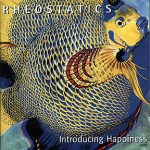
Introducing_happiness_album_cover23. Rheostatics – Introducing Happiness (1994)

Sire Records had no idea what to do with Rheostatics’ fourth albumEven though it featured “Claire,” by far the biggest hit of this Ontario cult quartet’s career, Introducing Happiness was a carnival of clashing ideas – the deep cerulean of a sci-fi ballad, next to a lime green fever dream of a giant hummingbird, blurring into the mercury-silver glow of a jazz ode to the Russian lunar cycle. Factor in singer Martin Tielli’s anti-Vedder quaver and guitarist Dave Bidini’s explosive, angular noodling, and the Buzz Bin probably felt out of reach (although the Flaming Lips, this band’s closest American counterpart, managed to pull it off). Who cares about this 24-year-old industry context, you say? Well, you may have forgotten just how deeply odd, and disarmingly pretty, this album is. You may have forgotten about “Cephallus Worm/Uncle Henry,” which sounds like a room of amateur impressionists covering “Purple Haze” through a fog of nitrous oxide. You may have forgotten about lines like “I’m dripping water on your gills / You’re such a beautiful thing.” These guys had been given a second chance to prove themselves as a commercial force, and this is what they made. God bless them.

https---images.genius.com-8d8af1e45dbeada213405d9aa7a539d6.1000x1000x122. Björk – Debut (1993)

There’s a moment on Björk’s solo debut where we get a chance to step back and truly take stock of what we’re hearing. In the middle of the deliriously catchy raver “There’s More to Life Than This,” the singer pulls us out of the club – a door slams, muffling the music behind it. It’s a disorienting experience; I thought my speakers had shorted out the first time I heard it. But before I could start messing with the wires, Björk was singing again, in full-throated a cappella – “We could nick a boat / And sneak off to this island!” When the beat comes back, it’s a whole new kind of high. This, right here, is what it was like to listen to Björk in the ’90s. Anytime we thought “perfectly enjoyable” was good enough, we felt a pull at our sleeves, away from complacency and toward a previously unimaginable Icelandic adventure. Debut isn’t quite as richly layered as her future triumphs, but the building blocks alone make it a classic – the insanely creative techno production, the vintage movie musical balladry, a voice with a majestic ornithology all its own. There’s more to life than this, but only because Björk’s next album was even better.

https---images.genius.com-cd0a26733cc459710d0986b7b64de8f0.1000x1000x121. Bob Dylan – Time Out of Mind (1997)

In the summer of 1997, Bob Dylan was hospitalized with a fungal infection that was attacking his heart. He’d already had his 30th album, Time Out of Mind, in the can by then. Its songs weren’t inspired by this particular crisis. But it’s a haunting, melancholy struggle just the same – a man on the verge of becoming a boomer relic, coming to terms with the mortality of his mind and body. Here was rock’s most renowned lyrical obfuscator, writing with eerie clarity about failed marriages, stale hopes, and looming shadows. “I got no place left to turn / I got nothin’ left to burn,” he sings on “Standing in the Doorway.” He’s spent. But ironically, Time Out of Mind was Dylan’s most fulfilling work in decades. With producer Daniel Lanois back in the fold – he produced Dylan’s underrated 1989 album Oh Mercy – these songs of woe get the sonic TLC they deserve. From the ominous, echoing organ of “Love Sick” to the sauntering blues vamp that makes the 16-minute “Highlands” feel like a reasonable length, Lanois’s warmly evocative touches remind us that while the narrators are alone, the musicians are anything but. “It’s not dark yet / but it’s getting there,” Dylan confesses. His talent has rarely shone brighter.

The Top 10 Bands of the 1970s

It’s been a while since I randomly ranked something. So why not list my ten favorite bands of the decade when the rock group was supposedly king? In eighth grade I would’ve told you that the ’70s was the only decade a music fan needed. Zeppelin and Floyd were my world. I’ve gotten less stupid since then, but as you can see here, 13-year-old me is still in there somewhere.

To be clear: solo artists are not eligible. But bands that were crucial to a solo artist’s body of work – e.g. The Heartbreakers, Crazy Horse – are in the running. Why? Because this is the only sliver of the universe that I can control. My cyber-roof, my rules. To the list machine!

Television

10. Television

The sound of a single bird chirping can be pleasant. But combine it with other feathered friends, and it’s an entirely different experience – a psychologically restorative level of ambient noise. Such is the guitar interplay of Tom Verlaine and Richard Lloyd. On the two albums that Television released before breaking up in 1978 – the jaw-dropping, all-time-great debut Marquee Moon and its merely fantastic follow-up Adventure – the duo plays like a pair of skylarks, instinctually aware of one another as their riffage soars heavenward. These CBGB regulars did more for punk artists drawn to artful forms of rebellion than any other ’70s band. Two albums were all they needed.


Sly and the Family Stone

9. Sly and the Family Stone

If Sylvester Stewart could’ve somehow just retired in 1970, he could’ve spent the rest of his life teaching seminars on how to use effusive, unbridled positivity as a weapon. Instead, he spent the decade dimming the lights, retreating to his home studio/heroin den, refusing to sing a simple song. But before fading into obscurity, he gave us the two finest Sly and the Family Stone albums. The murky, conflicted There’s a Riot Goin On walked through the valley of personal and political corruption. And Fresh came out the other side, doing justice to its title with pristinely funky treatises on thankfulness and peace of mind. In the ’60s, Sly and the Family Stone took us higher. In the ’70s, they helped us cope.

black-sabbath-57

8. Black Sabbath

“What is this that stands before me?” sings Ozzy Osbourne on “Black Sabbath,” the opening song on his band’s 1970 debut. I’d imagine a lot of listeners felt the same way. Because Black Sabbath was a true original, frighteningly ahead of its time. Like many English bands of this era, the Birmingham quartet was drawn to the intoxicating pentatonics of American blues music. But they were never content to just rip it off. Black Sabbath, and the three equally masterful albums that followed it, favored slower tempos and lower registers, letting each minor chord marinate in its own midnight. In the process, they invented heavy music as we know it. Tony Iommi made it okay for guitarists to value atmosphere more than muscle. And Osbourne showed how the right vocal inflection could make even the hokiest weed pun sound utterly, believably haunting. What stood before us was a revolution.


f2edb8d843741e35998265648d611fa0--buckingham-nicks-fleetwood-mac

7. Fleetwood Mac

When I was a young man, the soft, multi-platinum sheen of peak Fleetwood Mac did nothing for me. It just felt harmless and inconsequential to someone who’d never had real adult feelings. But in my thirties, I heard “Over My Head,” seemingly for the first time. That song was the key to a treasure chest of unparalleled grown-person songwriting, made even more profound by the hard-won wisdom in Stevie Nicks’s voice. The band’s trio of ’70s classics – Fleetwood Mac, Rumours and Tusk – are full of nuanced, conflicted, reassuringly human observations about love and aging. Qualities that don’t really come into focus until you reach a certain age, and start needing that reminder to keep thinking about tomorrow.


ledzeppelin

6. Led Zeppelin

Critics were famously dismissive of Led Zeppelin in its heyday. To an extent, the band deserved it, having gotten famous by passing off American blues songs as their own, while not exactly caring about lyrics. But starting in 1970, Zeppelin stopped coasting on these hyper-masculine thrust-fests. The traditional folk and country of Led Zeppelin III, Tolkien-inspired proto-metal of Led Zeppelin and kaleidoscopic cloudburst of Houses of the Holy make for one of the most stunning growth spurts in rock history. The swagger of the world’s biggest rock band is still there, but it has evolved from male confidence to artistic confidence. Instead of giving us every inch of their love, these guys were exploring every corner of their imaginations.


artworks-000059776370-09xxpo-t500x500

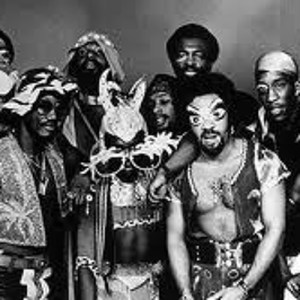
5. Parliament/Funkadelic

Like a Kleenex is a tissue, like a Xerox is a photocopy, Parliament is funk. The music George Clinton’s group released in the 1970s could be experienced on a variety of levels, each of them incredibly rewarding. 1) As the greatest bass-driven, shout-along party music ever recorded, 2) As compositional big band achievements that deserve professorial study alongside Duke Ellington, 3) As an audacious social statement that upended the perception of black culture as an alien presence in America. When Parliament/Funkadelic emerged from its mothership, it was The Day the Earth Got Down. They expanded the possibilities of funk music, inventing new ways to utilize synthesizers and guitar solos, giving a whole new attitude to the art of spoken word.  “Most of all you need funk,” they advised, with a sense of joy and purpose that’s healthier than the air we breathe.


71EmvGZRmJL

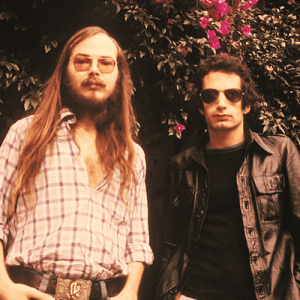
4. Steely Dan

In the beginning, Steely Dan flirted with the idea of sounding pretty. Its 1972 debut had two lead singers – the honey-throated David Palmer and the feistily froggy Donald Fagen. The songs were good enough to work with Palmer’s lite-FM falsetto croon, but luckily, Fagen and his guitarist/songwriting partner Walter Becker had left him in the dust by ’73. Because then they proceeded to geek the fuck out on one fantastic, ridiculously polished record after another. The more money that rolled in, the more Steely Dan became a studio creation, with Fagen and Becker directing top session players to satisfy their every obsession. Their style was always leaping around, from jazz and blues to bossa nova and country, but it always carried that same expensive sheen, and that same knack for insidiously catchy chord progressions. When paired with Fagen’s biting, imperfect voice, singing about cast-offs and criminals and pathetic old men, every fussed-over note gains something that no other classic rock band ever gave us – a sense of humor that’s dry as Ritz.


artworks-000076506071-kxkkaf-t500x500

3. Queen

Lots of bands made rock operas in the 1970s. Only Queen did operatic rock. Because only they had a frontman who could pull it off. Freddie Mercury had the god-given stuff – golden pipes, compositional brilliance, preternatural charm. But he also had that opera singer quality, a technically perfect vocalist that is able to convey how heartbreakingly imperfect life can be, through intonation alone. Like most folks my age, I first heard “Bohemian Rhapsody” on the Wayne’s World soundtrack, alongside the likes of Cinderella and the BulletBoys. It was like seeing a unicorn at the zoo. I had no idea what the song was about, but at the end, when Mercury sang “Nothing really matters,” I got a lump in my throat. I’d never heard such a fatalistic phrase delivered with such warmth. Queen could deliver scorching proto-metal songs about ogres and toweringly theatrical pop epochs, with equally hair-raising results. Because Freddie Mercury somehow made it all magical, and real.


650bb4fa6febfcca1ac44034a9fe54c4--pinky-swear-roger-waters

2. Pink Floyd

When bands become huge, that success tends to dictate what happens next. Radiohead hid behind electronics; Pearl Jam stopped making videos; U2 explored the depths of its own butt, etc. Pink Floyd was immune to such childishness. Its colossal 1973 album, The Dark Side of the Moon, was already the band’s eighth LP. Its very public fallout with founding visionary Syd Barrett was five years in the rearview. Roger Waters, David Gilmour, Richard Wright and Nick Mason had already seen it all. So they had no problem taking years between each ensuing masterpiece, making sure that every synth exuded that specific ethereal warmth; that every guitar solo swayed just enough to hypnotize us; that every bitter observation on war, the record industry, lost friendships and absent fathers was balanced out by just the right amount of British wit. As a result, even 40-plus years of zombified classic rock radio programmers have not been able to kill them. To this day, moments like Wright’s opening synth suite on “Shine On You Crazy Diamond,” Gilmour’s solo on “Another Brick in the Wall (Part II),” and Waters’ vocal work on “The Trial” make me drop everything and pay attention. Because even with millions in the bank and the world at their fingertips, Pink Floyd didn’t have their pudding until they ate their meat.


https_images.genius.com16d48257facf04ea987f32818db3bb7c.500x500x1

1. The JB’s

The year just happened to be 1970 when James Brown introduced his brand new band, after the previous one had left him high and dry over a pay dispute. “The JB’s” included original Famous Flames member Bobby Byrd and a bunch of unknowns, including a young bass player named William “Bootsy” Collins. With stunning immediacy, they introduced a whole new style to the mainstream – a gritty, spacious, heavily syncopated sound retroactively known as “deep funk.” On songs like “Super Bad,” “Soul Power” and “Get Up (I Feel Like Being a) Sex Machine,” there were no need for catchy choruses. The groove was the hook. For the first time, Brown was playing with musicians that were as raw and fiery as he was. As the decade wore on, and Bootsy left to join Parliament/Funkadelic, ringers like trombonist Fred Wesley and saxophonist Maceo Parker returned to the fold. And the JB’s continued to churn out the world’s nastiest rhythms and riffs, in the process building the foundation of the yet-to-be-invented genre destined to replace rock and roll in the hearts of young America. Rap would not exist  without the 1970 single “Funky Drummer,” where Clyde Stubblefield played the kind of groove that samples were made for – simple, insinuating, poetic. Like the entirety of The JB’s catalog, it’s not impressive in a technical, look-what-I-can-do kind of way. These guys were some of the best players around, but they valued the feel of the music more than the intricacy of their solos. By ceding the spotlight to James, they shone brightest of all.

Top 100 Albums of the ’90s (30-26)

And we’ve entered the top 30 of our Albums of the ’90s list. Spoiler alert: All of them are better than Better Than Ezra.

30. Radiohead – The Bends (1995)

In 1993, at the height of grunge’s marketability, Radiohead released “Creep,” a single that nailed the genre’s central oxymoron – self-loathing art that draws a crowd. Suddenly, these guys were getting what seemed like their 15 seconds. Except they didn’t relish their dalliance with stardom. It made them feel alienated and exhausted, to the point where they started to seriously ponder the fleeting nature of life itself. And then they made an album about that. “You can crush it, but it’s always here,” warns Thom Yorke on the opening track of The Bends, as if the reassuring swirl of Wurlitzer and guitar was the only thing keeping the reaper off his back. Guitarist Jonny Greenwood utilizes way more than his volume knob this time around, creating atmospheres of aching wonder and wanton destruction. From the consumer culture nightmares of “Fake Plastic Trees” to the raw existentialist dread of “Street Spirit,” Radiohead confront one unfixable, harrowing reality after another, while writing choruses that blot out the world. Instead of eating hot dogs like most of us do when we feel like nothing matters, they made an attempt at shared catharsis. Self-loathing had made way for selflessness.

29. Portishead – Dummy (1994)

Seattle wasn’t the only rain-spattered town to become famous for its gloomy music scene in the ’90s. Bristol, UK, was ground zero for “trip hop” – a fusion of rap, electronica and post-punk that played like the soundtrack to a Bond movie where his greatest nemesis is loneliness. In 1994, the genre landed its own Nevermind, in the form of Portishead’s bewitching debut. Dummy was a trip-hop blueprint, with an emphasis on the blue – singer Beth Gibbons confronts the day-to-day realities of depression in an absolutely haunting voice. The music fits her like a shroud. Theremins cry over echoing minor chords. Single words become garbled and transformed by bandleader Geoff Barrow’s emotive scratching. “In this moment/How can it feel this wrong?” Gibbons asks, like a forgotten spirit trying make herself heard. In that moment, you know why people decide to investigate that mysterious sound in the attic. Some part of us wants to be haunted.

28. The Beta Band – The Three E.P’s (1998)

In 1994, an album called Chant hit #3 on the Billboard charts. It featured old recordings of Spanish monks doing what the title promised, and was marketed as a surefire stress reliever. It sold two million copies. My dad had one of them. I have no idea if the Scottish “folktronica” outfit The Beta Band were Chant fans, but their music strives for a similar kind of transcendency – not exactly the status quo in indie rock back then. Over the course of three EPs, the band explored the limits of patient, circular songwriting, finding a throughline from “Alice’s Restaurant” to ambient techno – a mix of acoustic guitar strumming and entrancing electronic noise that feels like it could go on forever without losing steam. (The only artists less concerned with radio play? Those monks.) All three of these extended players were collected on this single disc, and while it did land them a minor hit with the slow-build stoner ballad “Dry the Rain,” these guys were after something deeper than mere hooks. The Beta Band didn’t just catch your ear. It absorbed you, tip to tail.

27. Mos Def – Black On Both Sides (1999)

I’m a sucker for artist autobiographies. There’s always the chance those pages contain a deeper understanding of a performer’s state of mind during the creative process – ideally resulting in an even closer relationship with their art. Rap is the only genre that regularly weaves these meta commentaries within the music itself; emcees often explain what drives them to write rhymes, how the process makes them feel, and why they’re so much better at it than you. And I can’t think of any rapper who has written about writing better than Mos Def on his solo debut. “My restlessness is my nemesis / It’s hard to really chill and sit still, committed to page / I write a rhyme, sometimes won’t finish for days / Scrutinize my literature from the large to the miniature,” he raps. He devotes a whole chorus to Rakim’s classic bars about being trapped between the lines. He wrestles with his responsibilities as an artist but decides to soldier on and follow his Umi’s advice: “Shine a light on the world.” Black On Both Sides does just that, with golden-hour production that makes samples sound like backing bands, leaping from R&B to jazz to hardcore without ever losing that comforting sheen. Fluid, openhearted, and buried deep in the pocket, it’s got all I ever need to know.

26. Mariah Carey – Mariah Carey (1990)

It started with one note. A strange, reverberating synthesizer, drawing us in like a UFO tractor beam. Then the chimes tinkle, the vocals do a melismatic dance, and we’re there, swaying to the timeless doo-wop melody of Mariah Carey’s first single, “Vision of Love.” To an aspiring R&B singer at the time, that note must have felt like the X marking the spot of their way forward, their opening chord of “A Hard Day’s Night.” The song, and the self-titled album it anchored, introduced Carey as a writer and singer with an innate ability to craft worldbeating hits from R&B and gospel ingredients. Her fingerprints have been all over pop music ever since – Beyoncé has credited “Vision of Love” with inspiring her to do vocal runs. That powerhouse of a voice naturally gets all the attention, elevating this record’s twinkling Whitney arrangements into something more profoundly human. But Mariah Carey remains a spine-tingling listen because of the crispness and unexpectedness of the writing – like “Someday,” with its finger-wagging prognostications of regret. Or “It’s All In Your Mind,” which rubs Tiger Balm onto a partner’s trust issues. Or the closer, “Love Takes Time,” which features a narrator that didn’t follow the lesson of the song title, staring in the mirror, trying to forgive themselves. Three of the four songs I’ve mentioned here were #1 hits. This was pop music that gave you so much more, right from note one.

Top 100 Albums of the ’90s (35-31)

Here are the next five entries in my seemingly never-ending Top 100 Albums of the 1990s – wherein we get a devil’s haircut, witness the birth of the riot grrrl movement, remember when god told Prince to stop being so funky, and more! (You can check out the full list here.)

35. Beck – Odelay (1996)

After scoring an accidental smash hit with the slacker-M.C. cut “Loser,” Beck struggled with what to do next. He recorded an entire album of dour lo-fi folk and then scrapped it, eventually opting for the other extreme – a technicolor patchwork collage of golden age hip hop and singalong country that’s almost passive-aggressively catchy. He brought in The Dust Brothers (who weaponized ’70s radio hits so deftly for the Beastie Boys), to give a kitschy, sample-heavy sheen to his roots rock compositions. He wrote cryptic magnet-poetry lyrics that sounded good, but meant nothing, making an enduring meta statement about the inherent emptiness of pop hits. He used his disdain for the mainstream to create the most universally beloved album of his career. It’s as ironic as it is iconic. Does it get more ’90s than that?

34. Bikini Kill – The CD Version of the First Two Records (1994)
When we press play on an old recording, chances are we’re going to feel some kind of distance from it. This is not the case on the first two EPs from riot grrrl pioneers Bikini Kill, re-released on one CD back in ’94. Kathleen Hanna leads the quartet through one 4-track punk thrasher after another, driven by the kind of unquantifiable energy that’ll have you driving 10 mph faster without realizing it. And her lyrics remain as exhilaratingly confrontational as her screams. “Does it scare you, boy, that we don’t need you?” she snarls. It’s amazing (and depressing) how relevant these songs remain. The patriarchy is still hurting us all, but the hairline fractures are getting easier to see. The louder we play this, and the more seriously we take its outrage, the faster we can watch them grow.

33. Prince – The Black Album (1994)

If there’s one thing that’s guaranteed to sound forced, it’s a rock star’s late-career attempt at shoring up their street cred. Unless you’re Prince, that is. In 1987, Prince made The Black Album to appease critics who accused him of selling out. It was the filthiest funk music he’d ever laid to tape, P-Funk and Sly-indebted vamps shot through with odd lyrical obsessions, with little regard for running times. He makes fun of rappers for not singing, steps into the mind of a celebrity stalker, and pitch-bends his voice to become the gun-waving chauvinist villain “Bob George.” Famously, the artist changed his mind about releasing The Black Album at the last second, convinced of its “evil” after a visit from god (or his ecstasy dealer). It sat on the shelf until 1994, when we all got to hear how wrong he was. Prince, playing funk guitar like he’s got something to prove? There is no clearer force for good.

32. Handsome Boy Modeling School – So, How’s Your Girl? (1999)

It’s gotta be hard enough for a band with multiple songwriters to deliver a clear, consistent aesthetic. But a group with two lead producers? It would seem almost impossible, given the complete control the best producers usually demand. Yet in 1999, the renowned hip hop knob-twisters Prince Paul and Dan the Automator joined forces to make an undisputed classic. So, How’s Your Girl? is many things – a silly concept album based on a Get a Life episode; a how-to manual for deploying guest artists; a summit meeting of peak ’90s rap and electronica. But most strikingly, it’s a pure distillation of the playfully deployed golden-age samples of Paul and the dramatic sci-fi soundscapes of Dan. Handsome Boy Modeling School eventually fizzled out due to artistic differences. But we’ll always have this album, and its grand, magnetized agreements.

31. Old 97’s – Fight Songs (1999)
The summer Fight Songs came out I worked at a nursery, loading cedar chips into trunks and getting odd rashes from trees. And if my boss overheard what I was singing to myself as I worked, she would’ve had to consider an intervention. “Lonely / Baby I’m not lonely / I’ve got my imaginary friends” went this record’s most inescapable chorus, the high harmonies lingering over bright, strummy production. I could’ve used better friends back then, it’s true. But this was a case of whistling while you work – Fight Songs remains one of the catchiest damn things I’ve ever heard. Few artists have been able to take typical country-western themes of despair and simultaneously heal them through melody like this. Rhett Miller didn’t add an ounce of grit to his vocals, lending sincerity to sad-sack anthems like “Busted Afternoon,” “Jagged” and the aforementioned “Lonely Holiday.” The walls might’ve been closing in, but the ceiling was opening up.

My Best Pictures

Hello, Oscar junkies! We’re only two days away from that global TV event that’s just like the Super Bowl, except you watch what’s in between the commercials instead! Usually this is the place where I bemoan the bland/whitewashed/Hollywood-worshipping nature of the odds-on favorite. But I have some reasons to be hopeful this year, and goddammit I’m gonna make the most of it.

Reason #1: Upsets are a thing now

For two years running, the expected winner has lost. Spotlight beat out The Revenant in 2016, and last year, Moonlight upset La La Land.

Reason #2: Celebrating diversity in Hollywood is kinda sorta starting to become a thing now

It would be ignorant to expect Academy voters to be seriously swayed by the #TimesUp, #MeToo and Black Lives Matter movements. One Moonlight nod does not erase 89 years of American Beautys. But notions of equal representation in film have never been so prominent. An optimist could assume that in this revolutionary new context, one might think twice about voting for Three Billboards Outside of Ebbing, Missouri, the movie version of every think piece that told us we need to empathize with blue-collar Trump voters.

Reason #3: Reasons to have Oscar optimism don’t come along every day.

I’m still smarting from Crash beating Brokeback Mountain over here. So let me have my moment and predict a win for Get Out, the most relevant, intensely entertaining movie I saw in 2017. I really think it will happen! What the hell is wrong with me?

While I’m surfing this newfound wave of Oscars optimism (a.k.a. “riding the golden man”), why not talk about the movies that I’d nominate for Best Picture? Here’s the list, in alphabetical order:

Call Me By Your Name

Call Me By Your Name looks like how falling in love feels. Luca Guadagino’s sumptuous coming-of-age story wrenches every drop of chlorophyll out of its Italian countryside setting. As our main character Elio finds strength, encouragement, and exhilarating joy in his budding relationship with his father’s assistant Oliver, Guadagino fills our eyes with lush vegetation, fresh water and bountiful fruit. Their happiness is palpable, and Elio’s father notices. And what he eventually tells his son is a lesson in how all such love should be treated – as a precious resource, given all the freedom in the world to grow.

A Dark Song

This slow-burn Irish horror film is like its protagonist Sophia – determined, patient, and in search of something extraordinary. Writer/director Liam Gavin spends a majority of his first feature letting us wonder about the schlubby occultist hired by Sophia to summon her guardian angel, using a real-life ritual called the Abramelin Operation. Is it all for real? Or is he just some creep? When we finally get our answer, so does Sophia, who rises like a phoenix from her grief, surrounded by a level of visual splendor that must’ve taken a lot of willpower to save for the end.

Get Out

Every horror fan has found themselves urging a character to leave the dark basement/ancient burial ground/abandoned mental hospital they’re bravely wandering around in. In Jordan Peele’s prescient “social thriller” Get Out, that dangerous, haunted place is America. It’s the story of Chris, a black man meeting his white girlfriend’s parents for the first time. What happens on this family’s finely manicured home turf is a terrifying, crystal clear allegory for our country’s twisted obsession with the cultural and physical appropriation of an entire race. In this idyllic little hamlet, there are most definitely not very good people on both sides.

Happy Death Day

“What if Groundhog Day was a slasher movie?” sounds like one lazy-ass pitch. But that perfectly describes Happy Death Day, which turned out to be a clever rumination on the weight of social pressure on young people. As our main character Tree finds herself in a time loop that always ends in murder, she gains more self-confidence with each repeated day. She’s more true to herself in public; she takes time to process her grief; she investigates, and successfully unmasks, her murderer. Refreshingly unpredictable, empathetic and self-aware, this is something I’d happily experience again. And again.

John Wick: Chapter 2

Gone are the days of Commando, where the relationship between John Matrix and his daughter is established by the end of the opening credits, leaving as much time as possible for quippy, campy carnage. But the second installment of the John Wick series contains some echoes of that 1980s no-nonsense muscle. Keanu Reeves returns as the titular grieving husband and dog lover, and it only takes a few minutes for him to be on the run from hundreds of highly trained, heavily armed vigilantes. It’s one extended action sequence after another, blocked with the style and precision of ballet – bodies undulating through space, armories akimbo.

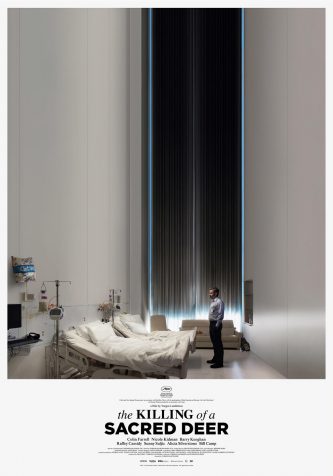
The Killing of a Sacred Deer

Director Yorgos Lanthimos makes this list for the second year running, with this deeply disturbing tale of a troubled teen leveraging a doctor’s warped priorities to wreak havoc on his family. Lanthimos’s characters all talk in stilted, disinterested monotones, resulting in a funhouse mirror abstraction of suburban life that shifts from awkwardly hilarious to intensely chilling as the film unfolds. Barry Keoghan gives an unforgettable performance as the vengeful, blackmailing, child-poisoning Martin. Colin Farrell and Nicole Kidman relish their chance to play Martin’s socially stunted victims. By the end, the story gets as dark as anything I saw in 2017, without ever striking a tone that wasn’t completely its own.

Phantom Thread

The main character of Paul Thomas Anderson’s intoxicating eighth feature is Reynolds Woodcock, the head of a couture fashion house in 1950s London. Or at least, that’s how most people see him. Until he meets a waitress in a country pub named Alma, who sees him entirely. There’s a reason why a central crisis in Phantom Thread involves a wedding dress. It’s a story about marriage, and the very specific kinds of human synergy that make the the most successful ones work. Anderson gives Alma and Reynolds a push-pull narrative that reaches a level of intensity others could see as grounds for divorce. But for this particular husband and wife, there couldn’t be anything more nourishing.

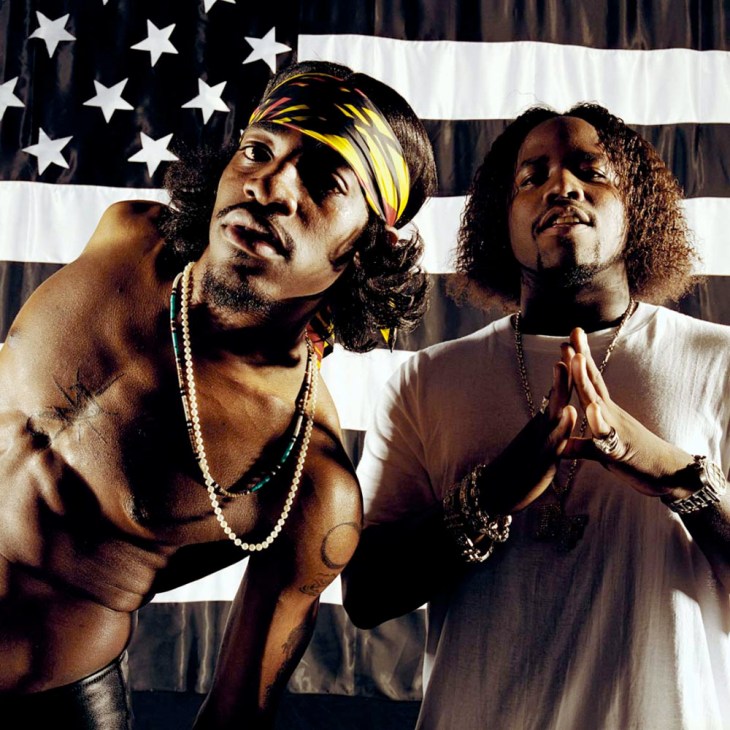
The Top 10 Outkast Songs

Until Big Boi and Andre 3000 came along, it wasn’t cool for rappers to brand themselves as outsiders. They could be antiheroes, or media moguls, or poets, or rock stars – but outcasts? Aliens? Georgians? Outkast rose from the hip hop backwater of Atlanta by not pretending they were from New York. They made records with the patience of a BBQ chef, backloading them with luxuriously long, funk opuses, showcasing their love for George Clinton more deeply than Dr. Dre ever could. They exuded confidence on the mic by being themselves, rapping in rapid-fire triplets over organically produced funk and R&B compositions, establishing Southern rap as we know it. Even their failures were bold and individualistic, like Andre’s off-key Prince impression/electro-jazz opus The Love Below. It’s no coincidence that rap artists have reveled in being different ever since. Lil Wayne is “not a human being.” Young Thug rocks designer parasols and celebrates Slime Season. Migos tops the charts while dressed like 19th century fur trappers. Largely because of these two dope boys in a cadillac, who scored a massive hit by bragging, “I am for real.”

Here are the 10 best Outkast songs, now and forever until the inevitable comeback album. Playlist below.

10. “Git Up Git Out” (1994, Southernplayalisticadillacmuzik)

This Southern-fried, horn-fueled triumph from Outkast’s debut is the funkiest self-help seminar of all time: “You need to git up, git out and git something / How will you make it if you never even try?”

9. “Aquemini” (1998, Aquemini)

On a song that uses a portmanteau of the rapper’s Zodiac signs as its title, they expound on the impermanence of it all, over a cascading opiate of a groove. You never want it to end. But like everything, it does.

8. “Da Art of Storytellin’, Part 1” (1998, Aquemini)

Boasting a hypnotic, descending melody that aliens should use to calm us upon arrival, this song also delivers on the promise of its title, especially when Andre 3000 fits an entire tragic story arc in one verse.

7. “Elevators (Me and You)” (1996, ATLiens)

“We done come a long way like those long-ass cigarettes,” shares Andre on “Elevators,” the first truly special Outkast single. The beat doesn’t slap; it sinks into a cavern of reverb, making this reflection on success sound more like a séance than a celebration.

6. “I’ll Call Before I Come” (2000, Stankonia)

To this day, the idea of a man being a considerate lover does not jive with our toxic, “they only care about one thing” concept of masculinity. Yet 18 years ago, Outkast teamed up with Three Six Mafia’s Gangsta Boo to make a witty, boisterous summer jam about putting your partner’s pleasure first. The older it gets, the more incredible it sounds.

5. “Babylon” (1996, ATLiens)

This harrowing, slinky masterpiece of mood is drenched in lapsed Catholicism. As Andre outlines how religion demonizes sexuality and Big Boi takes down every preacher that blames rappers for crime waves, the background vocals ominously hum.

4. “The Whole World” (2001, Big Boi and Dre Present … Outkast

In 2001, Big Boi and Dre were on top of the world. But on this single, they were also feeling the weight of it. Over a careening carnival beat, they vented about the appropriation of black culture, and the extremist hatred that the 2000 presidential election did nothing to quell. Dre’s opening lines are as honest as a hit song ever gets: “Yeah I’m afraid / Like I’m scared as a dog / But I’ve got a new song / And I want y’all to sing along.”

3. “So Fresh, So Clean” (2000, Stankonia)

Unlike most of their peers, Outkast wasn’t in the myth-building business. They just rapped about how they felt, whether that was vulnerable, or proud, or sexy. So when they claimed “ain’t nobody dope as me” over a slick-as-hell Joe Simon sample, we believed them. That’s the kind of self-confidence that catches.

2. “SpottieOttieDopaliscious” (1998, Aquemini)

Here is where we started to wonder if the alien metaphors were metaphors after all. This otherworldly seven-minute slow jam blurs the line between rap and spoken word, exhaling between verses with a horn arrangement that dances up our spines, on the way to flooding our pleasure sensors. We hear Andre talk about a drunken night at the club, and Big Boi opine for the mother of his child – “Her neck was smelling sweeter / Than a plate of yams with extra syrup.” The vibe was so relaxed, it almost made us feel like we were spending time with these guys, finding out what was on their minds as they so casually blew ours away.

1. “B.O.B.” (2000, Stankonia)

Outkast’s best song is fueled by an almost dangerous level of energy. “B.O.B.” is a sky-splitting sonic boom; when it’s over, you can smell the ozone. Its beat is a monster that would swallow up most rappers – snare hits spray the vicinity like AK-47s while a pipe organ soundtracks the funeral of our preconceptions. What a thrill it is to hear Andre 3000 and Big Boi enter this maelstrom and tame it. “Like a million elephants and silverback orangutans, you can’t stop a train,” flexes Dre, perfectly describing the breathtaking energy, speed and dexterity on display. Many of the songs on this list could be described as “electrifying.” This one could power the Eastern seaboard.


The Top 25 Songs of 2017

So you’ve read my Top 20 Albums of 2017 and find yourself wanting more. Here you go, person who doesn’t exist! It’s my Top 25 Songs of 2017. My all-time favorite songwriter is on here. A segment from a radio show is on here. And Fergie is on here? Yes, Fergie is on here. There’s a full playlist below, after I’m done yammering.

25. Fergie ft. Nicki Minaj – “You Already Know”

Over a dynamite interpolation of Rob Base and DJ EZ Rock’s “It Takes Two,” Fergie catches fire, outrapping her legendary guest against all odds.

24. Laura Marling – “Soothing”

“I banish you with love,” croons Laura Marling over one of the grooviest bass lines of the year. Getting dumped never sounded so good.

23. Young Thug – “Do U Love Me”

This preternaturally melodic rapper sings a love letter to himself over a sprightly dancehall beat, teaching us the difference between ego and self-confidence.

22. Randy Newman – “She Chose Me”

If you’re lucky enough to know how it feels to have a partner you don’t deserve, this stark ballad from our greatest living songwriter hits hard.

21. Courtney Barnett & Kurt Vile – “Continental Breakfast”

Two brilliant slacker/songwriters, singing about their intercontinental friendship over a loose, rolling groove. Should be played in lieu of presidential speeches to the UN from now on.

20. CupcakKe – “Barcodes”

This sex work empowerment anthem is a blast of exuberance from a Chicago rapper on the rise. “Pay the damn price or go home to your wife,” CupcakKe demands, backed by the funkiest horns we heard all summer.

19. Bebe Rexha – “I Got You”

A pop song about building trust, with a chorus that feels like falling into somebody’s arms.

18. Brockhampton – “Gummy”

We get a few seconds of lush, harp-trilling Disney music before the plug is pulled, the feedback squeals, and rap’s most energetic crew takes off.

17. Kreator – “Side By Side”

The loudest anti-fascist music in 2017 was made by Germans. The pealing riffs and pummeling drums of “Side By Side” are almost as explosive as the rallying cries.

16. Offset & Metro Boomin – “Ric Flair Drip”

Metro Boomin beats don’t hook us. They mesmerize us. So while Offset unleashes his masterful triplet flow on “Ric Flair Drip,” it’s the producer’s dark, pinging synths that linger on in our memory.

15. Carly Rae Jepsen – “Cut to the Feeling”

On paper, lyrics about breaking through the ceiling, dancing on the roof and playing with the angels are pretty cliché. But when paired with the sonic equivalent of carbonated helium, they’re perfect.

14. Nnamdi Ogbonnaya – “Hop Off”

The dive-bomb bass and chirping synths are fun enough on their own. Then one of the most elastic voices in hip hop jumps in, and we reach a whole new plane of party.

13. Thundercat – “Tokyo”

An electro-jazz-yacht-rock bass virtuoso sings about how a great vacation can bring out the kid in us: “Gonna eat so much fish I think I’m gonna be sick / Gonna blow all my cash on anime!”

12. Power Trip – “Executioner’s Tax (Swing of the Axe)”

The headbanger of the year, with a riff that chugs like a locomotive from hell, and a chorus that demands to be shouted at top volume, like a bloodthirsty Queen of Hearts.

11. Big Boi – “All Night”

The still-underrated half of Outkast made this year’s anthem for the blissfully monogamous. “Hit you with your bonnet on by the nightlamp,” he raps, over a big toothy smile of a piano loop.

10. SZA – “Drew Barrymore”

This devastating breakup song was inspired by Drew Barrymore’s insecure character Josie Geller in Never Been Kissed. There’s no Hollywood ending here. But when the strings swell, so do our hopes for one.

9. Black Thought – “Hot 97 Freestyle 12/14/17”

Sometimes, nothing is flashier than stamina. Like when the voice of The Roots hopped on Funkmaster Flex’s radio show and unleashed 10 minutes of fiery, perfectly crafted bars. By the end, he was sweating. And so were we.

8. Feist – “I’m Not Running Away”

I can’t shake this tune. Bold declarations of loyalty are held up by little more than Feist’s stark, bluesy guitar. She finds a kind of rhythm that drummers can’t reach.

7. Drake – “Passionfruit”

Over a swirling dream of a dancehall groove, a narrator mourns a fading long-distance relationship. It’s emotional and entrancing – in other words, a signature Drake summer smash.

6. Jeremih – “I Think of You”

Jeremih seriously flirts with MJ status here, making sunset references sexy again over an utterly joyful, marimba-inflected beat.

5. Julia Michaels – “Uh Huh”

This accomplished pop songwriter has apparently saved the best material for herself – especially this starry-eyed acoustic gem that crescendos to an instant high of a chorus.

4. Calvin Harris ft. Frank Ocean & Migos – “Slide”

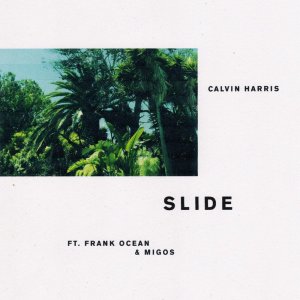
A smooth-as-ever Frank Ocean sings about moments when “whatever comes, comes through clear” over a breezy disco groove from Calvin Harris. Corona wishes they could bottle this.

3. Haim – “Little of Your Love”

Our finest purveyors of ’80s adult contemporary singalongs serve up a chorus so effervescent, it made this especially heavy year feel lighter.

2. Kendrick Lamar – “DNA”

Over the levitating sitar n’ bass rumble of the year’s best rap song, Kendrick Lamar brags about his ability to reach nirvana in yoga class. As his rapid-fire syllabic mastery carries us away, we get a real idea of what he’s talking about.

1. Kesha – “Woman”

The New York Times ran a story last July about the health benefits of cursing – including stress relief and higher pain tolerance. The best song of 2017 definitely backs up these findings. When Kesha sings “I’m a motherfuckin’ woman!” punctuated by the profoundly funky Dap Kings horns, the combination of positive vibes and disregard for pop norms is exhilarating. Unlike the way our president talks, “Woman” is not vulgar. It’s defiant, and important, and very, very good for us.

Honorable Mentions: 2 Chainz – “Sleep When U Die”; Bob Dylan – “Braggin'”; Nick Hakim – “Cuffed”; Hus Kingpin – “Wave Palooza”; Jonwayne – “TED Talk”; Kamiayah – “Dope Bitch”; Kesha – “Hunt You Down”; King Gizzard & The Lizard Wizard – “Crumbling Castle”; Kendrick Lamar – “Element”; Aimee Mann – “You Never Loved Me”; Migos – “Slippery”; Frank Ocean – “Chanel”; Angel Olsen – “California”; Pallbearer – “Thorns”; Syd – “Got Her Own”; TT the Artist – “Real Bitch Problems”; Tove Lo – “Disco Tits”; Ulver – “Nemoralia”; White Reaper – “Eagle Beach”; Your Old Droog – “Grandma Hips”


The Top 20 Albums of 2017

Music is the best. Nothing that happened this year could change that. For every stress-inducing headline, there was a soothing melody. For every messy situation, there were 16 perfectly constructed bars. Every time we wanted to scream, a great metal song provided an outlet. Here are just 20 of the recordings that made life easier for me this year. The next time you can’t believe what you’re hearing, start listening.


20. Nick Hakim – Green Twins

Nick Hakim approaches his brand of earnest R&B like a master restauranteur, valuing the ambiance as much as the meal. On his debut LP, the gifted Brooklynite refuses to just point and say “isn’t this catchy?” It’s seductive. At first listen, the reverberating piano chords of “Needy Bees” are merely soothing; by listen five, they’re inescapably beautiful, supporting every twist and turn of the melody. As a songwriter, Hakim is refreshingly astonished by things like love, and dreams, and pregnancy. He attains poignancy through simple language, including one of the most romantic sentiments of the year: “If there’s a god / I wonder what she looks like / I bet she looks like you.”

19. Ulver – The Assassination of Julius Caesar

As a legend of the Scandinavian black metal scene, Kristoffer Rygg understands the mechanics of slow-building soundscapes and folkloric songwriting. And on his 11th album fronting the shapeshifting outfit Ulver, Rygg applies these talents within the eyeliner-smudged confines of 1980s goth-pop. It’s remarkable how well it works. Over the nine-plus minute expanse of “Rolling Stone,” the band rides a throaty synth riff until we’re in its thrall. And on “Nemoralia,” Rygg goes full Depeche Mode, his voice floating over hauntingly catchy synths, connecting the pagan feast of the goddess Diana to the tragic demise of the princess of the same name. Obsessed with ancient history and aglow with gloomy beauty, this is a master class in how to experiment with genre without losing yourself in the process.

18. CupcakKe – Queen Elizabitch

This Chicago rapper first garnered attention in 2015 with exuberant, X-rated club tracks like “Deep Throat.” But her music is as much about tension as it is about release. Her second mixtape, Queen Elizabitch, is full of empowering, sex-positive summer jams – she’s got clever genitalia metaphors for days. But these moments are complemented by darker tales pulled from the artist’s childhood, when she spent years living in homeless shelters. After hearing her spit fire about having to share clothes with friends or watch rats run over her mother’s feet, the calendar-exploding swagger of “33rd” and the horn-fueled sex-work anthem “Barcodes” become more than tracks to dance to. They’re states of mind to aspire to.

17. Drake – More Life

Ever the savvy brand manager, Drake decided to follow up his massively successful 2016 by pursuing a little less market saturation. More Life isn’t exactly a “playlist,” as its cover proclaims. But it is a gorgeously sequenced, decidedly low-stakes affair. The Toronto rapper steps down from his chilly CN Tower perch and ups the Celsius levels with forays into pulsing dancehall, UK grime and Atlanta trap. A lengthy guest list promotes the party atmosphere – Young Thug, Quavo and Skepta are given all the bars they need to steal the show. And whether he’s reflecting on pre-fame Applebees runs or picking through the ruins of a relationship, our headliner sounds more comfortable on the mic than he has in years.

16. Aimee Mann – Mental Illness

When it comes to depicting complicated emotions with just a handful of syllables, Aimee Mann is an all-time great. On her ninth album, Mann unpacks feelings of regret, and abandonment, and stubborn hope, in tight stanzas that shimmer with the clarity of a breakthrough in therapy. “It happens so fast / And then it happens forever,” she sings, immediately breaking the hearts of anyone who wishes they could have that one crucial moment back. Buoyed by cozy strumming-and-strings arrangements, Mental Illness glows with a truly reassuring thought: someone else out there feels this way.

15. Jonwayne – Rap Album Two

The first line on this L.A. rapper’s second album isn’t your typical hip hop boast – “You never seen a man so calm in your life.” Released after the artist announced a break from touring due to his struggles with alcohol, Rap Album Two makes good on that initial claim in low-key, redemptive fashion. Jonwayne is a steady, comforting force as a rapper, his reflective bars gelling with serene, meditative loops. As he pours his heart out about his demons, and how he fears his art will suffer without them, the quiet understanding in his voice makes it obvious it’s not an act. “I need to slow down / But I need a good friend to come and tell me how,” he raps. It takes a significant amount of calm to admit that on wax.

14. King Gizzard & The Lizard Wizard – Murder of the Universe

This Australian psychedelic rock septet went on a studio bender in 2017, releasing five full-length albums and showing no signs of letting up. All are worthwhile listens, but Murder of the Universe is the crown jewel – a breathless fusion of propulsive riffs and sci-fi fever dreams that reminds us how fun a concept album can be. As spoken-word narration guides us through tales of human/beast mind-melds, balrog fights and cyborgs who would give anything to understand how it feels to vomit, the Gizzard’s relentless dual-drummer attack feels capable of carrying us anywhere – even to the end of it all.

13. SZA – Ctrl

SZA songs are the sonic embodiment of the phrase “hopeless romantic.” On her striking debut album, she cuts to the quick of how it feels to get cheated on: “I could be your supermodel if you believe / If you see it in me,” she sings to a philandering ex, mourning the self-confidence that could have been. The production is intimate, with little reverb added to contemplative guitar figures and raw, one-take vocals. But there’s a reason this record is called Ctrl. SZA is not wallowing here. She’s settling scores via slow jam, directly confronting assholes by exposing how they’ve hurt her. All while refusing to lose faith in love.

12. Brockhampton – Saturation II

This summer, the self-described hip hop boy band Brockhampton filled up two mixtapes with enough personality and adrenaline to distract the grumpiest pessimist. The first was like hearing young wizards beginning to master their power. On the second, they start wielding their magic. Saturation II finds bandleader Kevin Abstract and producer Romil Hemnani zeroing in on a shared vision: rappers getting shit off their chests over party-ready golden-age beats. It’s compulsively listenable music, full of instantly memorable choruses and effective, cathartic verses. How they made a record featuring seven rappers feel this light is beyond me. All I know is, I want more.

11. Power Trip – Nightmare Logic

God bless the power chord. Just three notes splitting an octave to create a simple, beautiful symmetry. As the Dallas thrash band Power Trip proved this year, these compact sonic gifts can be utilized to brutal, exhilarating ends. These guys aren’t just out to detonate your eardrums on their punishing second LP. Chaos isn’t their game. Instead, Nightmare Logic is a relentless succession of irresistible guitar riffs, which were crafted with as much attention to rhythm as volume level. Whether it’s the chugging eighth notes of “Executioner’s Song” or the circular triplets that kick off “If Not Us Then Who,” this shit swings. As frontman Riley Gale cries out against “the slumber of reason” in his strangled yawp, those power chords roil and slither underneath, girding us for whatever nightmare the world’s gonna belch up next, reminding us of the power inherent in noise.

10. 2 Chainz – Pretty Girls Like Trap Music

2 Chainz has been a reliable source of fun, wordplay-encrusted bangers since “I’m Different” kicked off his second wind in 2012. But the Atlanta veteran has never made a record like this. Pretty Girls Like Trap Music finds the rapper formerly known as “Tity Boi” slipping wistful drug-game reminiscences in between inspired bursts of fantastical materialism (this time he’s got a see-through fridge). His knack for painting pictures is buoyed by a vibrant and versatile slate of beats – the opening “Saturday Night” features a dramatic torch song groove from the always-in-demand Mike Will Made It. “I went to work and I made an abundance / Gucci flip flops with the corns and bunions,” 2 Chainz raps over the sinister synth strings and throbbing bass of “Riverdale Rd.” All that hard work is paying off.

9. Haim – Something to Tell You

If you didn’t already feel grateful for Wilson Phillips, the rise of Haim should correct that problem. On its second album, this trio of California sisters continues to revel in the supermarket pop of yesteryear, harmonizing about big-time emotions over even bigger drums and effervescently processed guitars. The best songs are the singles, which pair catchy choruses with quirky production wrinkles – on “Want You Back,” it’s a horse’s whinny; on “Little of Your Love,” it’s someone falling asleep at the pitch bender. The sum and total of this commitment to fizzy pop hooks is a significant amount of joy. Even during this very, very difficult year, it made me sing in my car like a fool – helping me hold on for one more day.

8. Nnamdi Ogbonnaya – Drool

In 2014, while pursuing a degree in electrical engineering and playing drums in several bands, Nnamdi Ogbonnaya wrote this on his Chicago apartment wall: “You’re not normal, so why are you trying to be?” Three years later, the restless artist turned his focus to rapping and made a record that is thrillingly, definingly weird. Drool weaves together squelching synths, programmed drums and rat-a-tat sing-raps like distorted DNA strands, with Ogbonnaya exploring his full vocal register in the process. It’s not as intimidating as that sounds. “Hop Off” marries thrumming bass with chirping organ runs, and when the rapper enters the fray, we get within a stone’s throw of the radio. It’s purposefully off-kilter, yet easy to enjoy – a sign we’re dealing with a serious talent. We should follow him closely, even if he doesn’t necessarily want us to.

7. Kreator – Gods of Violence

The legendary German thrash band Kreator released its 14th album one week after Inauguration Day. It was a bomb to my headphones, and a balm to my nervous system. “Resistance must rise when freedom has died,” screamed Millie Petrozza in a voice as violent and alive as it was in ’85. Gods of Violence is full of visceral rallying cries like this. It stares fascists in the face, catalogs their sins, and tells them to beware the power of the people, over jet-fuel drums and riffs full of manic, Pixie-stick energy. It’s a goddamn reckoning. And by the time we make it to the penultimate track, “Side By Side,” Petrozza has decided that catharsis isn’t enough. So he makes an oath: “As we crush homophobia / We’ll never let the shame turn our vision to ice / And I’ll remain by your side.”

6. Feist – Pleasure

A decade after a song called “1, 2, 3, 4” made her a star, Leslie Feist is thinking even simpler. Her fourth album, Pleasure, finds new depths within her moonlit folk aesthetic. It’s been six years in the making, and it feels like it’s been in a slow cooker for that entire time. Each arrangement has been boiled down to its essential elements, finding its rhythm in the marrow. The fortunes of “I’m Not Running Away” rest completely on a swaying blues guitar riff, and it’s as exciting as a high wire act. “Any Party” relies on a chorus of non-singers to deliver its grand romantic refrain. “Century” breaks down time itself into its smallest components. And through it all, Feist’s voice is strong and clear, never straining to get its point across. It’s the sound of an artist in complete control.

5. Thundercat – Drunk

Through his session playing alone, bassist Stephen “Thundercat” Bruner has made his mark. Erykah Badu’s New Amerykah and Kendrick Lamar’s To Pimp a Butterfly are just a few of the modern classics that have entrusted their low ends to him. But as the cover to his third solo album depicts, the potential of this artist is only beginning to emerge. Drunk is the work of a versatile, funny, kaleidoscopically imaginative songwriter. The music is rooted in his fluid, beautiful bass lines, and it’s one hell of a gumbo: fiery jazz, chittering electronica and straight-faced yacht rock. In a voice that shifts into falsetto with ease, the artist sings about mundane late night rituals and fun Japanese vacations with the same awestruck, childlike energy. As a result, Drunk makes you feel the opposite of wasted.

4. Laura Marling – Semper Femina

Happily ever after is great and all. But if we felt nothing but fairytale bliss, we wouldn’t get to appreciate art that traffics in shades of grey. Like Laura Marling’s stunning sixth album, for example. Each of the nine tracks on Semper Femina takes its own distinct sonic path as it searches for meaning in an unfulfilling relationship. “Soothing” rides a mournfully funky bass line. “The Valley” basks in pastoral acoustics. “Nothing Not Nearly” brings in stabs of fuzzbox guitar. And it’s all tied together by Marling’s empathetic pen. As she deals with love, and loss, and love that doesn’t go away even though it’s lost, she maintains a passion for the whole flawed phenomenon of human coupling that’s as impressive as the impeccably produced surroundings. On the final chorus, Marling makes her mission statement clear, just in case we weren’t paying attention: “Nothing matters more than love.”

3. Pallbearer – Heartless

It’s appropriate that Pallbearer uses Roman numerals instead of typical track numbers on its staggering third album. The Arkansas quartet has written an honest-to-god symphony – a grand, interconnected composition that takes its time to unfurl, demanding to be seen as a whole. Heartless draws a direct line from the cavernous power chords of doom metal to the immersive atmospherics of Pink Floyd’s “Shine On You Crazy Diamond.” In between long, seamless suites of guitar music, which bellows and soothes as it seeks our emotional core, singer Brett Campbell belts gorgeous vocals about the end of the world. It’s like hearing tectonic plates moving, conspiring our demise in ancient, beautiful ways.

2. Kesha – Rainbow

“I’m waiting for my spaceship to come back to me / And I don’t really  care if you believe me,” sings Kesha on her ambitious, assured comeback album. Released in a year when “I believe the women” began to be said out loud, in public, Rainbow is both a zeitgeist-capturing statement of what it means to be a survivor and a canny, genre-bending ’10s pop album par excellence. Kesha deftly augments the pulsing dance-pop we’ve come to expect with elements of arena rock, modern country, piano balladry and twee folk. She belts out sweeping anthems of empowerment, threatens a would-be cheater with a wink and a smile, and looks to the skies for hope, revealing an impressive vocal range for the first time on tape. Rainbow sounds better than anything Kesha ever recorded with her longtime producer Dr. Luke, who the artist sued in 2014 for sexual assault. She lost that lawsuit in all-too-familiar fashion. But no court can stop this album, this free-spirited outpouring of emotion, from inspiring others to believe – in UFOs, in basic human decency, and in themselves.

1. Kendrick Lamar – DAMN

In March 2015, Kendrick Lamar released a song called “How Much a Dollar Cost,” about ignoring a panhandler who turns out to be God. Throughout the sprawling crisis of faith that was his To Pimp a Butterfly album, this was one of the most overt pleas to trust in humanity. Then, a year and a half later, Election Day came to prove him wrong. Lamar didn’t make any public statements after Donald Trump’s victory. I can’t imagine how it’s affected him. But this spring, with the release of his laser-focused fourth album, it became clear that the effect on his art has been extraordinary. Determined instead of conflicted, realistic instead of religious, DAMN outlines a vital artist’s transformed approach to navigating a fucked-up world: Have faith in yourself. It’s a “back to basics” record both psychologically and sonically, where the artist has stripped away everything he can’t count on in the world and started over from there. That’s why DAMN is, to me, the best album of 2017. It’s titanically satisfying music that’s driven by the kind of visceral, personal feeling that will never stop being relevant. “Ain’t nobody praying for me,” the rapper shares, over and over again, throughout this album. The first time he says it, it’s a plea. Eventually it becomes a mantra. By the end, it’s a declaration of independence. We may not be praying for you, Kendrick. But to our great benefit, we’re listening.

Honorable Mentions: 21 Savage, Offset & Metro Boomin – Without Warning; Courtney Barnett & Kurt Vile – Lotta Sea Lice; Beachheads – Beachheads; Big K.R.I.T. – 4eva Is a Mighty Long Time; Bjork – Utopia; Bob Dylan – Triplicate; Hus Kingpin – 16 Waves; Kamaiyah – Before I Wake; Migos – Culture; The Mountain Goats – Goths; Randy Newman – Dark Matter; Angel Olsen – Phases; Syd – Fin; Waxahatchee – Out in the Storm; Young Thug – Beautiful Thugger Girls

Top 100 Albums of the ’90s (40-36)

We continue our countdown of the greatest albums to be released in the decade when America thought David Schwimmer was really something. You can check out the full list here.

40. Nirvana – Nevermind (1991)

Nirvana’s second album probably has more baggage than anything on this list. It’s been credited with loosening the Baby Boomers’ stronghold on pop culture, and inspiring the thrift-store fashion and blasé attitude of a new generation. It’s remarkable how little this mountain of hyperbole affects the experience of listening to it today. Sure, Nevermind no longer feels revolutionary – as one of the last world-dominating albums of heavy guitar music, it has more in common with Metallica’s Black Album then originally thought. But it’s as much of a blast as ever, the riffs and melodies gelling in ways that still feel exciting. A major key to this longevity: Kurt Cobain had no shame about letting his influences show, whether they were hip in ’91 or not. So while these songs buzz with the artful noise of The Pixies, they’re also girdered by the pop constructs of The Beatles. And “Smells Like Teen Spirit,” that legacy-defining hit, lifts heavily from a Boston song. As a result, whether we’re hearing the irresistible “yeah yeah” chorus of “Lithium” or the primal screams of “Territorial Pissings,” our urge isn’t to break any rules. It’s to sing along.


39. Me’Shell Ndegéocello – Peace Beyond Passion (1996)
Like most people, the first time I heard Me’Shell Ndegéocello was when she duetted with/propped up John Mellencamp on a smash-hit cover of Van Morrison’s “Wild Night.” Her fluid bass playing breathed new life into one of Morrison’s catchiest riffs, turning a stale idea into one of the funkier things we heard at the supermarket in 1994. Two years later, Ndegéocello’s second solo effort delivered on that song’s promise and then some. Peace Beyond Passion is full of rich, meditative R&B grooves that have only a passing interest in chart success. While her band is full of ringers – Billy Preston on organ, Joshua Redman on sax, Bennie Maupin on bass clarinet – her talents shine brightest. Her bass playing is incredibly expressive. Her singing voice is a deep, reassuring rasp. And her songwriting is bold. I love thinking about all the Mellencamp fans that must’ve checked out the first single – a heartbreaking, six-minute takedown of homophobia called “Leviticus: F****t” that boasts an irresistible three-note groove. It’s an eye-opening lesson about what funk can do. Ndegéocello is totally fine with you dancing to it. Just remember that she’s invited all of humanity to the party.

38. GZA – Liquid Swords (1995)

The sleeve of this record says “GZA,” but it’s hard to think of it that way. Because while Liquid Swords is indeed a showcase for Wu-Tang Clan’s most cerebral, cold-blooded storyteller, it’s even more so for its producer. RZA’s run from ’93 to ’97 was jaw-dropping in both its quality and quantity. It should be spoken of in the same hushed, reverential tone as Brian Wilson’s mid-’60s streak. And Swords is the purest expression of his vision. Dramatic samurai flick dialogue sets the tone for beats that pulse with the dark exhilaration of vengeance fulfilled. On “Duel of the Iron Mic,” chopped pianos and mechanical thunderstorms underscore GZA’s tale of “bloodbaths and elevator shafts.” “Cold World” dresses the melody from Stevie Wonder’s “Rocket Love” in icy, dissonant strings. “4th Chamber” pairs a floating sitar loop with beds of frayed, crunching power chords. These are themes for flawed heroes, navigating a world where violence is unavoidable. “I got your back / But you best go watch your front,” goes the chorus to this album’s first single. On it, RZA fills our speakers with trumpets, as sad and proud as a military funeral.

37. Slayer – Decade of Aggression (1991)

It’s hard to capture the feel of any live show on tape – to transport listeners to that venue, in that moment, without sacrificing the clarity of the performance. But to nail what it felt like to see thrash titans Slayer in 1990? That’s pretty much a goddamn miracle. And it’s what producer Rick Rubin pulled off with this 10th anniversary double-disc set. Not only does Decade of Aggression give us a fantastic mix of the band’s punishing, quicksilver onslaught – so crisp you can hear every syllable hurtling from Tom Araya’s throat – but it gives us just enough of the ambience of venues like the Lakeland Coliseum, smack dab in the center of death metal’s Florida heartland. Rubin lets a full 40 seconds of crowd noise go by until the extended intro of “Hell Awaits” kicks in. A chorus of demons start hissing in a backwards language. Their numbers grow. The volume rises. The anticipation is palpable. Then Jeff Hanneman lays into the hyperactive Sabbath riff, and you can smell the sweat flying from 10,000 dirtbags, headbanging with abandon. No matter where this comes on, in my car or my cubicle, I make it 10,001.

36. Mobb Deep – The Infamous (1995)

The concept of “keeping it real” is about as relevant as raising the roof these days. But Mobb Deep’s second album will always stand as a reminder of just how grim things can get when you take this credo seriously. Emcees Prodigy and Havoc weren’t interested in glorifying the challenges of their day-to-day lives in the Queensbridge projects. So they painted pictures of anxiety and pain, fierce loyalty and sudden loss. Walks home alone at night are pregnant with terror. Decisions aren’t made until potential prison bids are weighed. Yet, completely due to the power of their flow and production that bends piano keys like Twizzlers, The Infamous had hits. There will probably never be another song like “Shook Ones Pt II,” which brought the dark night of the soul to the dance floor. “Ain’t no such things as halfway crooks,” the chorus proclaims over a bewitching, slithering beat. It’s about how the streets leave no room for pretenders. If you’re still sensitive enough to be shaken by life, you don’t know how lucky you are.