Netflix Recap: Meek’s Cutoff

If you looked at my instant watching activity for the last few days, you would see that I’ve watched several episodes of the BBC show Merlin. Why would I endure this Smallville-ization of the Arthurian legend? Is it possible to be a masochistic Anglophile? Thankfully, I’m not going to answer those questions here. Instead I’m going to talk about something else I watched recently that makes me seem cooler – the haunting Kelly Reichardt movie Meek’s Cutoff.

Although it features effective, restrained performances from stars Michelle Williams and Paul Dano, the unforgiving landscape should get top billing in this minimalist tale about 19th century settlers who make the regrettable decision to leave the Oregon Trail. Reichardt and screenwriter Jonathan Raymond understand that frightened people clomping through the desert aren’t going to bust out many soliloquies, resulting in a relatively quiet, realistic study of people looking death in the face. And when the visuals are as arresting as they are here, Williams’ stern, heavily bonneted face and Dano’s bug-eyed expressions are all you need. Paranoia abounds from the first minute, where it becomes clear that the settlers don’t trust their guide, the eccentrically brusque Stephen Meek (played by Sweensryche favorite Bruce Greenwood, who plays against his A Dog Named Christmas type, with mixed results). When a Native American crosses the group’s path and eventually becomes Meek’s unwilling replacement, the gap between cultures is as vast as those stunningly arid landscapes.

Reichardt has a thing for the “getting lost” metaphor – Old Joy, her 2006 film about two men attempting to recapture their lost friendship on a camping trip, dealt with the pair losing their way with a mesmerizing sense of patience. Meek’s Cutoff is filmed in a similar style, lulling you with extended shots of the settlers fording rivers and chasing handkerchiefs in the wind. But whereas Old Joy ended with the clear sense that the characters had drifted apart, Meek’s closing shot is harrowingly open-ended. You get the idea that, with paranoia and mistrust worming their way into the settlers’ brains, something bad is on the horizon. Call it American History 101.
What I Learned From “Instinct”

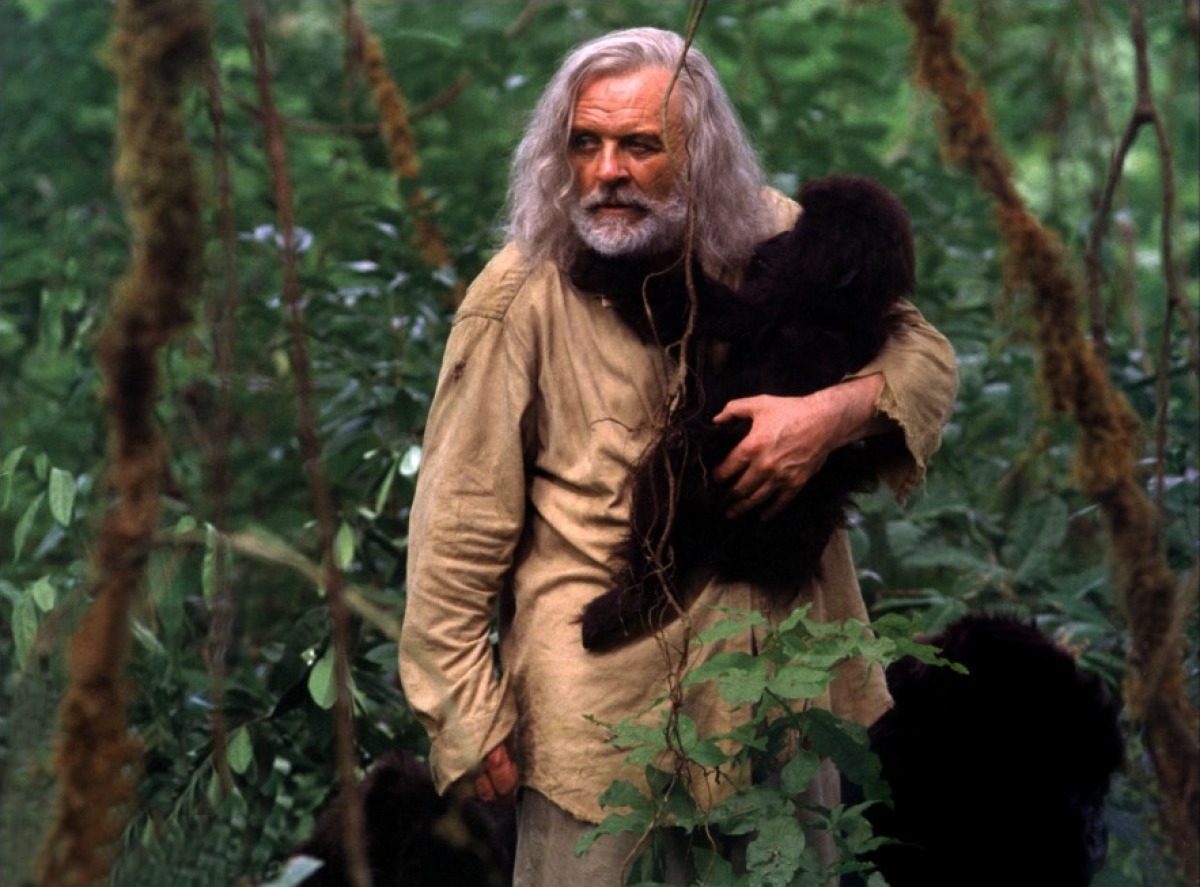
I had so much fun telling you what I learned from The Edge that I’ve picked another post-Silence of the Lambs Anthony Hopkins thriller to glean morals from. Instinct is a movie that – get this – pits a plucky young professional against a brilliant, violent man. Released in 1999, this was Sir Anthony’s fifth “I have bills to pay” movie in a row (after Meet Joe Black, The Mask of Zorro, Amistad and The Edge). He plays Ethan Powell, a genius psychologist who lives off the grid with a pack of gorillas for two years and is arrested for murder in Rwanda. Powell seems to act more like ape than man, never speaking and lashing out violently. Until the ambitious psychologist Theo Caulder (Cuba Gooding, Jr.) makes it his mission to bring Powell out of his monkey trance, and the movie really starts to blow.

Lesson One: Psychology is super easy.

The first 20 minutes of Instinct frames Hopkins as a live wire, somebody lost to civilization for so long that seasoned psychological minds think he’s a lost cause. The Rwandan government wanted to hang him. When his daughter came to visit him, he didn’t even look at her. He beat the shit out of some people at the airport. Then Gooding, Jr. shows up to counsel Hopkins in prison, and he pretty much gets him talking right away. Take note, armchair shrinks: When there’s a psychopathic ape man in front of you, just look wide-eyed and frightened, and ask him questions about his family. He’ll perk right up.

Lesson Two: Prison guards are horrible, horrible people.

The U.S. prison that Hopkins is transferred to is called Harmony Bay, which is of course underfunded, falling apart and staffed by assholes. One of Instinct’s major story lines is a game that the guards play with the prisoners, giving each one a card from a deck, and only allowing the prisoner who gets the ace of diamonds to receive a half-hour of outdoor time, something all of them are technically entitled to. What the prison has to gain by this stupid and cruel system is never explained, but it does set things up for a painfully melodramatic sequence that sees Gooding, Jr. bucking the establishment by putting the prisoners’ names in a box, and then selecting one at random. You know, like a hero would do.

Lesson 3: Prisoners are wonderful, wonderful people.

You can’t establish the fact that prison employees are evil without prisoners that one can sympathize with. Hence, even though we hear plenty about how Harmony Bay is overflowing with dangerously psychotic criminals, we don’t hear much at all about what they did to get locked up in such a terrible place. Which gives director John Turtletaub the freedom to paint them as a rag-tag bunch of eccentrics just waiting to be psychologically rescued (think One Flew Over the Cuckoo’s Nest, except with serial killers). Oh yeah, and we eventually learn that Hopkins didn’t really kill anybody – his gorilla pals were shot by Rwandan soldiers, but he called himself a killer because he felt guilty about it. You know why it’s so hard to find a sensitive man that you want to spend the rest of your life with? Because they’re all serving life sentences.

Lesson 4: Living with animals gives you super strength.

Because Instinct is actually a cloudy glop of environmentalist dogma instead of a movie that asks interesting questions about our own primality, the filmmakers couldn’t be subtle with the very few Hopkins-as-crazy-ape-man scenes. So when he kicks people’s asses in airports and prisons, he doesn’t just beat them – he physically overpowers them with the ease of a superhero. How could gorillas give this ability to a senior citizen in chains? It doesn’t matter, because the movie isn’t really about that kind of thing anyway.

Lesson 5: Ponytails signify recovery.

I don’t want to let Turtletaub off the hook, but Gooding, Jr.’s wet noodle of a performance makes me want to give the director some slack. The actor portrays Caulder as a whimpering snob, a person not cut out to counsel the mentally disturbed. So Turtletaub has to resort to things like wig manipulation to make us believe that Caulder is indeed helping Powell get better – after, like, four sessions, Powell begins to pull back his matted nest of psycho hair into a slick ponytail. Which means that he’s recovering his sanity, because it takes a civilized man to wear the scrunchie of self-discovery.

Franz List: Unintentional Scares

Hey, list fiends. Halloween is creeping around the corner like a scary ghost. Which means it’s time for a list about being scared about stuff. Last year we counted down the “funnest” horror movies of all time, exploring such feel-good titles as The Gingerdead Man and Sleepwalkers. This year, we analyze some pop culture that isn’t supposed to be scary, but still manages to make me pee in my pants a little.

1. Unexpected Cookie Monster
John Lennon, “Hold On”

When I fell in love with John Lennon’s Plastic Ono Band, I was doing a lot of driving – my incredible girlfriend (now my wife) was going to school an hour and a half away, and I sped my Dodge Neon down there every chance I got. On one of these voyages, I heard “Hold On” for the first time. A sparse, sauntering lullaby, “Hold On” is a quiet moment on an album informed by scream therapy. But at the 1:08 mark, just as you start to settle into the song’s aesthetic, a gravelly voice flies out of leftfield, stating “Cookie.” When I first heard this, I whipped my head around in the driver’s seat, fully expecting to see a wild-eyed drifter in the back, making to stab me with a rusty switchblade. Turns out that was John himself, imitating Cookie Monster for reasons I still don’t understand. But that moment has stuck with me – when he sings “It’s gonna be all right” on the chorus, I’m not convinced.

2. The Famous Amos Penis Scene
Burlesque

There’s not much that isn’t frightening about Burlesque, the 2010 musical about a wooden small-town girl who flees to the L.A. of an alternate universe, where one can become a huge star as a burlesque performer, because the general public cares about burlesque. Christina Aguilera wanders through the shots like a lobotomy victim, Cher looks like a Madame Tussauds monster, and the songs are horrible, but those things are to be expected. Not so the scene where Aguilera’s excruciating flirtations with love interest Cam Gigandet come to a head – Gigandet does an extended strip tease that’s intended to be cute (enter the bedroom fully clothed, come back into the living room under some pretense but a little more naked, repeat). Then, just as we’re lulled into a catatonic acceptance of this sequence’s “romantic” endgame, Gigandet walks up to Aguilera with a box of Famous Amos cookies covering his dong. “Wanna cookie?” he asks. It’s gross. It’s nonsensical. It’s not even the funniest box of cookies that one could use to conceal their genitals (Otis Spunkmeyer, anyone?). When you’re done screaming, this is the kind of insult to your intelligence, and your sweet tooth, that lives on in your nightmares.

3. Arnold Knows Best
Commando 

The daddy-daughter montage during the opening credits of Commando is intended to be the brief calm before the storm – because like any brilliant action film, this 1985 Schwarzenegger classic knows to get the character development out of the way as quickly as possible, and get right to the ass-kicking. But nothing in the ensuing shoot-em-up is as frightening as the beginning of this sequence, which finds an especially bulgy Arnold chopping wood. A shadowy presence approaches, and the music implies that this must be a bad guy. Arnold sees his enemy in the reflection of his axe, and at the last second, he spins around and … grabs his daughter Jenny, laughing and shaking her awkwardly. Is this a game they play, where the kid tries to sneak up on her father while he’s wielding an axe? It doesn’t matter, because now they’re goofing around at ice cream stands and feeding fawns in the wild. Still, although the entire premise of Commando is that Arnold loves his daughter so much that he’d annihilate an island nation to save her, you’ve gotta wonder if she’d be safer with the terrorists.

4. You WHAT into me?
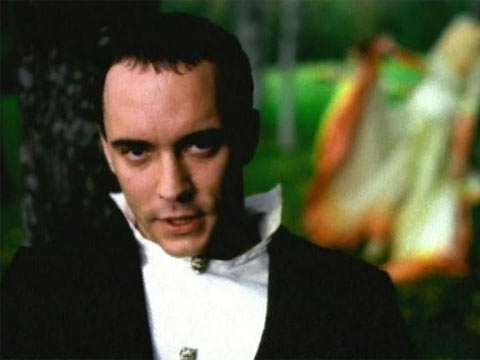
Dave Matthews Band, “Crash Into Me”

Like most Dave Matthews Band ballads, “Crash Into Me” meanders along inoffensively, pairing pleasant open chords with loving sentiments like adult contemporary hits are supposed to. It’s exactly the kind of tune that shouldn’t have a chorus about having unprotected sex with Dave Matthews. “Crash into me/And I come into you,” Matthews warbles, making for one of the most uncomfortable and messy-sounding come-ons in rock history.

5. Boohbah

As if the concept of tripping human-animal hybrids with TVs for stomachs wasn’t creepy enough, Boohbah ups the ante on grotesque, oddly fascinating programming for babies. The Boohbahs are furry, fluorescent-colored creatures who look like mauled genitalia – bumpy oval heads peeking out of big furry sacks. When they’re not chanting “Booh-bah” like a children’s choir, they’re bobbing their heads up and down and making fart noises. Saying their names in a certain order is a surefire way to raise the dead – Humbah, Zumbah, Zing Zing Zingbah, Jumbah, Jingbah …

6. America’s Sweetheart Has A Seizure
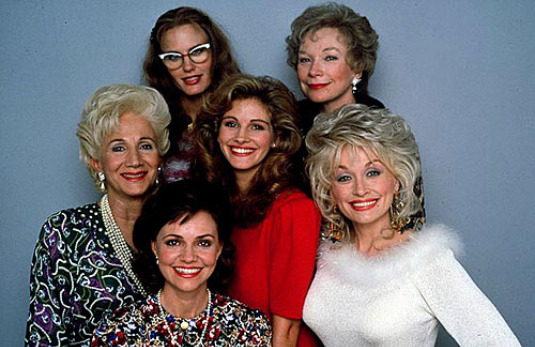
Steel Magnolias

Southern women are sassy and strong. That’s basically the plot of Steel Magnolias. Even when one of them dies tragically, it only serves to underline the point that these ladies are more resilient than a million Tom Skerritts. So when Julia Roberts has a horrifying diabetic seizure in Dolly Parton’s salon chair, with Sally Field and Olympia Dukakis watching, it’s a harrowing chink in the armor of these superhuman Southern belles. But that’s not necessarily scary. What is scary is that Roberts looks like a tapeworm monster in this scene. Which probably explains why I curl up in the fetal position when I hear the words, “Drink your juice, Shelby.”

7. Did you kill my son?
Changeling

Some of the scariest sci-fi stories involve the alien takeover of human consciousness, from Invasion of the Body Snatchers to The Thing. How else can we explain how Angelina Jolie behaves in Clint Eastwood’s underwhelming 2008 period piece Changeling? She plays a woman whose child is kidnapped, only to have the authorities try to pass off some other kid as hers. You’d think there’d be some righteous fury here, something to give the audience the sense of catharsis that results in Oscar nods. But Jolie is bewilderingly robotic. When confronting the man who she thinks is her son’s murderer, the script requires her to ask the question “Did you kill my son?” about 400 times. And while Jolie tries to mix it up, first asking politely and then yelling it in the guy’s face, there isn’t a trace of human emotion to be found – by then, the pod people had completely taken over.

What I Learned From The Edge

Welcome, tens of Sweensryche readers! Today sees the unveiling of a new feature – “What I Learned From …” – in which we explore the lessons that Hollywood movies cram into our eye sockets, so that they can slowly worm their way into our brains and eventually alter our behavior. Today, we focus on the 1997 thriller The Edge, in which Anthony Hopkins, Alec Baldwin and an African-American are stranded in the bear-infested wilds of Alaska. Guess who gets eaten?

Lesson 1: Obscenely rich people have better survival instincts.

Hopkins plays Charles Morse, who is a billionaire from doing something or other. Morse can build a compass out of a paper clip and a leaf, treat the grievous injuries of his companions, and kill a bear in one-on-one combat, all while exuding a Dalai Lama-level sense of calm. Baldwin plays the fashion photographer Robert Green, a character you would imagine does well for himself. But he’s not as rich as Morse, which logically means he’s also weaker, dumber and on the verge of a nervous breakdown.

Lesson 2: Obscenely rich people are Christ-like. 

Within the first five minutes of The Edge, it’s clear that Robert is having an affair with Charles’ model wife, Mickey Morse (!). They attempt to give him a heart attack with a bear suit birthday prank, after which Mickey gives Charles a watch with a lazily phrased engraving, and Robert gives him a knife. Not to mention all their “stolen” looks at each other. Anyways, the viewer isn’t supposed to be sure about all of this, because at the film’s dramatic peak, Robert admits to the affair, and shares that he was plotting to kill Charles all along. (Greed clouds the minds of poorer people, making them ill-suited for survival in the wild. See Lesson 1.) After being outwitted, Robert is impaled at the bottom of a bear trap. What does Charles do? He tries to save him. Before Robert dies, he sees the error of his ways, and confesses to the Hopkins Christ. We assume he goes to heaven.

Lesson 3: Bears are sociopaths.

Every time a bear appears in The Edge, it is ready to maul the shit out of every human being in its path. And it’s not just because they’re hungry: When Charles is teetering on a log that’s spanning some whitewater rapids, a bear comes up and shakes it until Charles falls. Fucker just wanted to see him die.

Lesson 4: Fashion photographers love stoic Native Americans.

How did these guys get themselves into this ursine kerfuffle, you say? Well, it’s because they were in Alaska for Robert’s photo shoot of Mickey (played with glassy-eyed irrelevance by Elle MacPherson), and Robert got sick and tired of the same old model stuff. After seeing a framed photo of a weathered Native American dude on the wall of their lodge, Robert decides they need to go out and find him instead. Because what do fashion magazines love more than the quiet pain of indigenous people?

Lesson 5: If you’re cheating on your husband, and you’re getting him an engraved watch for his birthday, do not also get one for your lover as part of the same order. Then, do not leave the receipt inside the box that holds your spouse’s watch.

The Greatest Scene in the History of Motion Pictures

I watched Legion today, a hastily plotted Book of Revelations sci-fi shoot-em-up with an important, if confusing, twist – the bad guy is God, who has lost faith in the human race for some reason. In the middle of trying to figure out how any human being could have a chance against a vengeful, all-powerful being (with or without the help of a rebel angel with a British accent), this happened.

Sure, I might be overstating things with that headline. But I’d like to hear counter arguments. What’s better, “Rosebud”? That dude couldn’t even hold on to a snow globe – no way he’s gonna crawl on any ceiling.

Who’s gonna win, whether I like it or not.

So, the Oscars are on Sunday. And for a reason I still find tough to define, I’m going to watch them. I expect hosts James Franco and Anne Hathaway to do a passable job – Franco does have some comedic chops, evidenced by his SNL and 30 Rock guest spots. But after the way Ricky Gervais made celebrities squirm, gasp and complain at the Golden Globes, any attempt at humor is going to seem like a Dave Barry column. Guaranteed, neither host will make Robert Downey Jr. get up and call the event “hugely mean-spirited with mildly sinister undertones.” Which is too bad.

Anyhoo, here are my picks for who’s gonna win this silly thing that I care about:

Best Supporting Actor

Who Will Win: John Hawkes, Winter’s Bone. The safe money’s on Christian Bale, whose “I luv my bruddah!!!” histrionics are a hardware magnet. But while WB might be an underdog on Sunday, but it’s also the kind of underdog story that wins Oscars. And Hawkes’ performance as the bad-ass-with-a-heart-of-gold Teardrop is both beautifully fashioned and easy to adore.

Who I’m Rooting For: Hawkes. Though if Geoffrey Rush wins, I’ll be content – his crisp comedic performance got me through The King’s Speech.

Best Supporting Actress

Who Will Win: Melissa Leo, The Fighter. If Bale loses, this is the only other category in which the Academy can reward all the melodrama. Plus, Leo’s a hard-working, somewhat unsung character actor, which always makes for a good story.

Who I’m Rooting For: Jacki Weaver, Animal Kingdom. Her performance as a sickly sweet matriarch was a high point of this well-crafted tale of an Australian crime family. Hailee Steinfeld’s turn as the bull-headed heroine Mattie Ross is also very much deserving.

Best Actor

Who Will Win: Colin Firth, The King’s Speech. While Firth approached this role with the respect and restraint it deserved, the end result just wasn’t all that compelling. Even Bridget Jones’s Diary made better use of his oozing good-naturedness. But, it’s a role that requires altering your vocal patterns (read: ACTING!), so he’ll win.

Who I’m Rooting For: Jeff Bridges, True Grit. It would be awesome if he could pull a Hanks. I’d also applaud if they honored Jesse Eisenberg’s cold, obnoxious turn in The Social Network.

Best Actress

Who Will Win: Natalie Portman, Black Swan. Did you hear that she trained to be a ballerina for this? (read: ACTING!)

Who I’m Rooting For: Annette Bening, The Kids are All Right. While this family dramedy was just all right, Bening’s performance was spot-on as usual, refusing to get all Oscar winner-y when her character gets cheated on, preferring to weather most of the storm on the inside – you know, like real people do.

Best Screenplay (Adapted)

Who Will Win: Aaron Sorkin, The Social Network. Probably the only no-brainer of the night.

Who I’m Rooting For: Sorkin, but the Coens adaptive work is certainly worthy as well.

Best Screenplay (Original)

Who Will Win: Lisa Cholodenko & Stuart Blumberg, The Kids are All Right. The Academy’s gonna want to throw a bone to this movie in some way, to show they support old-fashioned family-centered stories.

Who I’m Rooting For: Mike Leigh, Another Year. Haven’t seen this yet, but the guy’s in a league of his own.

Best Director

Who Will Win: Tom Hooper, The King’s Speech. It’s between Hooper, whose feel-good period piece is certainly well-crafted, and David Fincher, whose steady hand made a cynical, dialogue-driven character study go down easy.

Who I’m Rooting For: Joel and Ethan Coen, True Grit. If they hadn’t won a few years back, perhaps they’d be in the running, a la Scorsese’s compensatory win for The Departed. They did, though, which is too bad, because their vision of this simple American story is as stark, troubled and inspiring as the country itself.

Best Picture

Who Will Win: The Social Network. The Academy will let us know that they still adore light, drab, “important” fare like The King’s Speech, but by giving the big prize to the “Facebook movie,” they’ll also let us know that they’re “with it.”

Who I’m Rooting For: True Grit. My favorite of the bunch, by a lot. TSN’s backs-and-forths are electric, but stacked side by side with the Coens’ simple tale of redemption, it’s all too obvious that, at least in 2010, less was more.

The Oscars have arrived.

Just watched the announcement of the Oscar nominees for Best Picture:

Black Swan – Haven’t seen it, not sure if I can take another two hours of Darren Aronofsky treating me like an idiot (and Natalie Portman crying).
The Fighter – Also haven’t seen it. Pretty much know what this has to offer, and I like my triumphs of the human spirit without screamy man speeches.
Inception – Mindblowing visuals. Headache-inducing story.
The Kids are All Right – A charming enough family drama that benefits greatly from the existence of Annette Bening.
The King’s Speech – A charming enough British period piece that benefits greatly from the existence of Geoffrey Rush.
127 Hours – My indifference to this one has resulted in me not having seen it. Crazy, huh?
The Social Network – A look at what megalomania looks like in the 21st century, propelled by fabulously constructed, rapid-fire dialogue.
Toy Story 3 – Missed the first and second parts of the series, and have heard from many folks that this installment will make me miserably sad. Maybe I’ll wait until summer to take in the trilogy.
True Grit – Jeff Bridges’ blustery performance is a treat, but the way the Coens make room for him in this simple adventure story is equally enthralling.
Winter’s Bone – Where Deliverance was gratuitous, these backwoods are stark, quietly frightening, and ultimately hopeful.

Franz List: Worst Pictures

How can you tell I’m not a real movie critic, beyond my lack of knowledge and questionable writing ability? I care about the Oscars. In 1992, when Silence of the Lambs cleaned house, I was watching the event for the first time. And considering that Silence of the Lambs was pretty much the greatest movie I’d ever seen, I thought this award show was pretty cool (despite Billy Crystal’s insufferable bullshit). Since then, however, I’ve felt like Clarice Starling – horrified and fumbling in the darkness.

With Oscar season upon us – nominations will be announced on January 25, with the ceremony set for February 27  – I figured why not relive some of those horrible moments? Here’s my list of the five worst movies to win the Academy Award for Best Picture in my lifetime.

5. Shakespeare in Love (1998)
What if Romeo & Juliet was autobiographical? This is the concept behind Shakespeare in Love, a movie that would be inane enough if it didn’t poison a grade A cast with the likes of Gwyneth Paltrow and Ben Affleck. If whimsy’s what you’re after, there’s more than enough here to choke an ox.

What I was rooting for: The Thin Red Line. While I’m not one for war movies, and found Terence Malick’s meditative style a bit tedious, at least the thing was beautiful.

4. Crash (2005)
Do the Trite Thing.

What I was rooting for: Brokeback Mountain. Thought I’d actually be happy this time, as a movie I adored was the odds-on favorite. I hadn’t learned my lesson.

3. Titanic (1997)
There’s usually something moving about characters who carry flames for a lost lover, deep into old age. But when James Cameron tried to find a common thread between this type of romance and one of history’s most epic tragedies, the result was as unfeeling as the iciest of Arctic waters.

What I was rooting for: L.A. Confidential. Even though Russell Crowe is a walking cliché, it’s film noir done right.

2. American Beauty (1999)
In the real world, when a middle-aged man gets his mid-life crisis Corvette, it’s embarrassing. In American Beauty, when he does this times 100, he’s a hero. And beyond telling us to worship at the altar of the male ego, the movie teaches us a valuable lesson about closeted homosexuals: They will murder you!

What I was rooting for: The Sixth Sense. One of the most imaginative ghost stories I’ve ever seen; the best of a very weak field.

1. Forrest Gump (1994)
A man does whatever he’s told – including going to war – without once questioning if it’s in his best interests, and lives an impossibly exciting life. A woman fights for what she believes in, and dies of AIDS. I’m pretty sure Dick Cheney wrote this.

What I was rooting for: Pulp Fiction. Like, duh.

I Love You Phillip Morris finally breaks out.

America loves a good con man. And damn, does America love Jim Carrey (even Yes Man made $97 million domestically). So why was it so damn hard to find a U.S. distributor for Carrey’s whimsical con man romance I Love You Phillip Morris? Well, because America doesn’t exactly love gay people.

Carrey plays Steven Russell, a real-life shyster genius who broke out of prison four times, in increasingly imaginative fashion, for the express purpose of reuniting with his lover, Phillip Morris (played with Southern Belle-ish innocence by Ewan McGregor). It’s an outrageous true story, in the sense that Russell was outrageously sociopathic and the Texas authorities were outrageously stupid. But U.S. distributors found the romance to be the outrageous part, and as a result, a movie that was screened at Cannes in 2009 didn’t hit American screens until the end of 2010.

I’m just happy the thing got released at all. It’s the first comedy of Carrey’s career that isn’t dominated by the star’s rubber-faced gesticulating – a credit to first-time directors Glenn Ficarra and John Requa, who clearly have a knack for black comedies with hearts of gold (they co-wrote Bad Santa as well). It would’ve been fun enough to just watch Russell commit insurance fraud, launder money and impersonate attorneys – when he recklessly improvises in a judge’s chambers, you really realize you’re rooting for him. But I Love You Phillip Morris is more generous than, say, Catch Me If You Can, giving us clever jabs at corporate America, warm and fuzzy memories of dong-shaped clouds, spirited middle fingers to the man, and brief, tender glimpses of two people in love.

Yes, Carrey’s lack of subtlety is problematic at times, if only because it triggers memories of talking assholes. But Steven Russell was anything but a subtle dude. If the opposite were true, he wouldn’t have gotten caught so easily, and the most outrageous thing about this story – an injustice of a life sentence – might have been avoided.

See It/Flee It: Dumb and Cheesy Wins the Race

See It: Best Worst Movie (2010)


I’m embarrassed to admit that I’ve never seen Troll 2, a 1992 low-budget horror movie that’s been labeled “the worst film of all time,” and has garnered a fan base with a Rocky Horror-esque sense of loyalty. It’s the story of a family who enters the town of Nilbog for some reason, where goblins disguised as people try to turn them into plants. Or at least that’s what I’m able to cobble together after watching Best Worst Movie, a documentary about Troll 2‘s journey to the top of the “so bad it’s good” heap. By focusing primarily on George Hardy, the excessively nice Alabama dentist who happened to star in Troll 2, director Michael Paul Stephenson (another T2 cast member) doesn’t just tell the ultimate underdog story in horror movie history – it depicts a man who changes from a humble guy who’s in on the joke to a spotlight-seeker who thinks he can act. Part hilarious, part pitiful, and completely sensitive to the emotional nature of fandom, Best Worst Movie is a must for anyone who has appreciated the odd, addictive beauty of a real camp classic.

Flee It: Chariots of Fire (1981)


Here’s another movie obsessed with the underdog – Hugh Hudson’s gauzy, Academy Award-winning ode to the British runners of the 1924 Olympics. But unlike the charmingly delusional heroes of Best Worst Movie, the two main characters of this meticulous period piece are about as convincing as Troll 2‘s goblin costumes. And it’s not like their true stories didn’t have meat on the bones. Eric Liddell (Ian Charleson) was a religious fanatic who refused to run his Olympic race because it fell on the Sabbath. Harold Abrahams (Ben Cross) used the anti-Semitism of his Cambridge elders and peers as his prime motivation to win gold. But neither situation gets dramatic traction here, because Chariots of Fire is too busy treating sports movie clichés like high art. Liddell’s the wily veteran who has to be talked into running; Abrahams goes through a training montage with his instructor (played by Ian Holm, a real bright spot); the crusty old deans doubt the youngsters every step of the way. In the few scenes where Chariots of Fire does try to shed light on the religious tensions that should’ve been its primary focus, it tosses them off with some less-than-inspired dialogue. When Liddell explains to his devout sister why he must compete, he sounds like it’s really a non-issue – “I believe God made me for a purpose, but he also made me fast.”