 24. Beck – Sea Change (2002)
Not to say that Beck isn’t an inventive artist, but ever since he hit the mainstream, he’s released two kinds of records – the freak funk/white boy hip-hop thumpers and the richly textured, countrified beauties. And while both approaches have merit, I’ve always been a sucker for the latter. Sea Change, while full of the simple vocals and lazy pedal steel runs that made Mutations such an unexpected treat, is a different animal from that 1998 masterwork. Deep despair exudes from every pore, as the artist explores the desolate terrain of a failed relationship, describing the nature of lonesome tears and lost causes over the most finely crafted productions of his career. “Paper Tiger” might be about the illusion of strength being exposed, but lord it’s a sexy melody, with string charts that stab and weave with boldness and elegance. The haunting folk picking of “It’s All In Your Mind” just stays with you. The slowly drifting “Guess I’m Doing Fine” gives us a sweet harmonica line that’s as heartbreaking as the narrator’s resignation – “It’s only lies that I’m living/It’s only tears that I’m crying/It’s only you that I’m losing/Guess I’m doing fine.” A sad, gorgeous album for the ages.
 23. Wilco – Yankee Hotel Foxtrot (2002)
Looking back at all the weird industry drama that surrounded this album – Reprise refusing to release it, and then eating a steaming pile of crow after it went on to become Wilco’s best-selling record, with Nonsuch looking like hipster geniuses after the smoke had cleared – it still doesn’t make any sense. Yankee Hotel Foxtrot is an offering of gentle, sun-speckled rock, not half as adventurous as the two Wilco records that preceded it. The double-album indulgences of Being There were just fine with Reprise, ditto the relatively unexpected, stomping power-pop of Summer Teeth. YHF’s opening song, “I Am Trying to Break Your Heart,” is as strange as it gets, taking a stuttering drum loop and building on it for seven minutes, but the result is a swirling country-rock atmosphere, with no “Misunderstood”-ish catharsis. Jeff Tweedy’s boyfriend-scorned lyrics are vibrant and Dylan-esque (“Disposable Dixie cup drinker/I assassin down the avenue”), but by no means provocative. The album floats through relatively calm waters from here, from the bouncing acoustic pop of “Kamera” to the reverb-dripping ballad “Radio Cure” and the Petty-esque concert nostalgia of “Heavy Metal Drummer.” After bursting out of their cocoon in the ’90s, Wilco isn’t reinventing themselves here. They’re settling into a groove that they’re still riding at decade’s end – when a phase of your career begins with an outright masterpiece, why change gears?
 22. Sparklehorse – Dreamt For Light Years in the Belly of a Mountain (2006)
When I interviewed Mark Linkous around the time of this album – his “band” Sparklehorse’s fourth, and best – a fair amount of time was spent discussing the five-year gap between it and its predecessor, It’s A Wonderful Life. Linkous spoke timidly about the suffocating depression that kept him out of the studio, and the fear that by the time the follow-up finally came out, everyone would have forgotten about him. Not necessarily the feelings of a prolific artist, yet here he is, for the third time on this list – Linkous may be self-loathing, but he’s never made a bad album. Dreamt For Light Years in the Belly of a Mountain sticks to the formula that worked so well on Life, running fragile songs of estrangement through one staticky filter after another, resulting in a ham radio transmission of mind-bending brilliance. But it’s more focused than its predecessor, opening with the bizarro Beach Boys melody of “Don’t Take My Sunshine Away” and the poltergeist keyboards of “Getting It Wrong,” guiding the listener through landscapes of lyrical pain and sonic imagination with the steadiest of hands. Fuzz rockers “Ghost in the Sky” and “It’s Not So Hard” add some welcome punch to the proceedings, without seeming out of place. And then there’s the title track, 10 and a half minutes of minimalist, subterranean chords and heart monitor beeps that ends the proceedings in an unforgettable fashion. It’s the best final track of the 2000s, a instrumental that fortifies the spirit in a way that words can’t capture. Linkous might not have been in the best place when he put this album together, but he gave his listeners a dreamworld.
 21. The Flaming Lips – Yoshimi Battles the Pink Robots (2002)
I don’t know what’s more remarkable, the mind-bending, widescreen head trip that was The Soft Bulletin, or the fact that The Flaming Lips were able to follow it up with an effort of comparable brilliance. Yoshimi Battles the Pink Robots had the awkward task of continuing a veteran band’s mid-career reinvention, as the Lips expanded their scope from freaky, ragged alt-rock jams to freaky, harmony-soaked album rock. And it did so with a collection of majestic tunes about mortality and human-android fights. Wayne Coyne’s voice is as bizarrely heavenly as ever, like an angel that’s been sucking helium, soaring over slowly unfolding ballads like “In the Morning of the Magicians” and dancing through refracted pop charmers like the title track. Yoshimi is a resounding work of sonic ingenuity, The Flaming Lips’ second in three years.
 20. The Roots – Game Theory (2006)
When Black Thought lays into his first verse on the title track of Game Theory, it’s as good as hip-hop gets. The live drums clatter deep in the pocket, the keyboards attack the beat with short, quick stabs, and the MC weaves his words through it all with passion that can’t be bullshitted. And this is but one of the many goosebump-raising moments that The Roots gave us on their seventh album, the result of a tectonic shift in their approach – gone are the warm, funky backpacker jams, replaced by colder, harder, more confrontational songs that lash out of your speakers. The album is named after the mathematical study of human behavior in situations where the success of their own decisions depends on the decisions of others, and these tracks are stuffed with feelings of being trapped, controlled and lied to. On the adrenalized cut “Here I Come,” the cops announce they’re going to release the hounds on Black Thought. When he responds by spitting the song title over and over, his defiance is electrifying, the indomitable spirit of the words making for a thrilling catharsis.
 19. Radiohead – In Rainbows (2007)
Radiohead has always been a band with a big sound, whether it was the anthemic alternative rock of The Bends, the alienated art rock of OK Computer or the increasingly atmospheric experiments of subsequent albums. Which makes the relative leanness of In Rainbows its most immediately distinctive quality. From the fluttering electronica of “15 Step” to the soft, circular piano chords of “Videotape,” this was the most direct, boiled down effort from the band in at least a decade. And it’s also the most emotional. Thom Yorke has always been brilliant at delivering his bleak worldview in a spooky, disaffected way, making it all look easy with that alien birdsong of a voice. But here, he compares himself to “an animal/Locked in your hot car,” a desperate, sexy metaphor for unrequited love. This sharpened focus and visceral writing does wonders for the songs, which are some of the band’s best. “Nude” is the most stunning of the bunch, with Yorke’s multi-tracked vocals ebbing and flowing into each other, eventually spiralling into the heavens like an untainted soul.
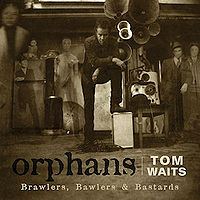
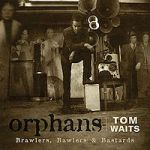 18. Tom Waits – Orphans: Brawlers, Bawlers & Bastards (2006)
To get any Tom Waits albums in this, his fourth decade of recording, is a blessing. So when Orphans came out, it was a ridiculously gratifying day. An embarrassment of Waits-ian riches spread out over three thematically arranged discs – the rumbling, bluesy “Brawlers,” soft, haunting “Bawlers,” and odds and ends-ish “Bastards” – the collection is incredibly meaty, with maybe a track or two that aren’t up to the legendary singer/songwriter’s standards. Every side of latter-day Waits is represented, from the weird, sea shanty clangs of “Fish in the Jailhouse” to the crackling croon of “You Can Never Hold Back Spring,” the boozy lounge of “Altar Boy” to the hilarious spoken word of the hidden track “Missing My Son.” And all of his soundtrack and compilation cuts from recent years wash up on this album’s shores, the best being his cover of the Disney staple “Heigh Ho,” a creepy, railroad dirge that barely echoes the original. There’s just so goddamn much to love here, as if the guy hadn’t already done enough to deserve music fans’ unconditional devotion.
 17. M.I.A. – Kala (2007)
It’s always easier to say that an album is reminiscent of another artist’s work, instead of using, like, adjectives and things. With her second album, Kala, M.I.A. gives no quarter to critics who like taking this easy way out – nothing this decade was tougher to classify. It’s dance music, underground hip-hop, Bollywood, old-school rap and worldbeat. Or it’s simply pop music, because whether the singer/songwriter’s rapping over a droning, otherworldly beat or singing over an irresistible string loop, the hooks are huge, with barbs that sink way deep. “Jimmy” is an incredible, exotic disco freakout. The hyperactive, staccato techno of “XR2” makes uppers unnecessary. And “Paper Planes” is a triumph of a summertime single, featuring ringing gunshots, a Clash sample and a Wreckx n Effect shout out. Other artists have found success by cherry-picking influences from around the globe to add some new wrinkles to their sound. M.I.A. is those influences personified, cranked up loud and bathed in bright, fluorescent light.
 16. Coldplay – Parachutes (2000)
Parachutes is a gentle, unassuming record, not your typical big-splash debut from rock superstars-to-be. It’s influenced by explosive, era-defining artists, but it isn’t the least bit explosive, and isn’t trying to be a definitive statement of where popular music was in the early 2000s. But what it is – ten wide-eyed alt-pop songs about love, hope and longing – is magnificent. Future albums found the band expanding the humble approach it displayed on Parachutes, with mixed results. Singles like “Clocks” and “Viva la Vida” might sound better in a hockey arena, but they don’t have the sweet simplicity that’s omnipresent here. The beautiful bass line on “Sparks,” the three-note guitar centerpiece of “Everything’s Not Lost,” the sparse folk picking of the title track – none of it commands hero worship, just that hint of a smile that shows you’ve heard something special.
 15. Tenacious D – Tenacious D (2001)
Tenacious D’s schtick isn’t exactly original – unattractive, overweight guys who think they’re cool, sexy geniuses. But what Jack Black and Kyle Gass accomplished on their short-lived HBO series and this, their debut album, is something grander than a play on the overconfidence of the American male. Sure, jokes abound about the duo’s sexual prowess – the menage a trois proposition tune “Double Team,” for instance – but Tenacious D is ultimately a spot-on satire of heavy metal tropes. JB’s bloated rock star ego bullies the soft-spoken KG throughout, boasting about inventions like “cock pushups” and “inward singing” and claiming that Dio needs to “pass the torch” to him (“You’re too old to rock/No more rockin’ for you!”). Black’s showy inflections and Dungeons & Dragons vernacular are straight-up hilarious, and Gass plays the straight man beautifully. But you’d expect a comedy album to be funny. What’s amazing about Tenacious D is the quality of the songs. With guests like Dave Grohl and Page McConnell providing gutsy backing tracks, Tenacious D’s crisp two-part harmonies and acoustic interplay sound fantastic throughout. Separate from all the kielbasas and karate fights, the epic “Tribute,” Beatlesque break-up ditty “Friendship” and thrash freakout “Explosivo” are top-notch tracks in their own right. They might not have written the greatest song in the world, but as far as musical comedy goes, Tenacious D reigns supreme.
 14. Eels – Blinking Lights and Other Revelations (2005)
“The sky is dark now, but it’s the best dark I’ve ever had,” sings Mark Oliver Everett (or “E”) on this exquisite, sky-streaked-with-grey double album. The line encapsulates the thematic struggle that’s been the driving force of E’s work since his 1998 watershed Electro-Shock Blues – even though it feels utterly hopeless when a loved one dies, there’s still hope to be found in the darkness. With a couple memorable exceptions, these 33 songs are plaintive affairs, positioning E’s detached, slightly weathered voice over a variety of gentle arrangements – from the saxophone-fueled country of “Son of a Bitch” to the ominous glockenspiels of “Trouble With Dreams” and the piano-French horn interplay of “If You See Natalie.” The eclectic instrumentation is worthy of the double album treatment, and moreso are E’s songs. They’re full of unflinchingly sad, strangely energizing moments, like the bouncy, hopeful “Losing Streak” and the confessional booth closer “Things the Grandchildren Should Know.” “Mother couldn’t love me/But that didn’t stop me from liking her,” he sings on “Son of a Bitch” – a heartbreaking sentiment for sure, but one with potential happiness lurking deep under the surface. Blinking Lights is full of moments like these, making for a treasure trove of a listening experience.
 13. Randy Newman – Harps and Angels (2008)
Randy Newman’s music has always been the perfect blend of the orchestral and the satirical – he’s the kind of artist that places a string-soaked ode to a dying father alongside a sprightly number about the upsides of a nuclear holocaust. And while provocative young songwriters tend to soften as they get older and more successful, Newman hasn’t lost a drop of his bitterness. On Harps and Angels, his 10th album and first in close to a decade, the singer/songwriter is fed up with capitalism’s empty pleasures – the scary bravado of the Bush administration, the crappy way our nation of immigrants treats new immigrants, the women that are only with him for his money – and he takes all of them on with dripping sarcasm. Like the song “Laugh And Be Happy,” where he encourages illegal aliens to “smile right in their face/because pretty soon, you’re going to take their place.” Or “Piece of the Pie,” which lampoons the American dream over clashing brass and percussion – “Living in the richest country in the world/Wouldn’t you think you’d have a better life?” Add a couple sincere, openhearted love songs to the mix, like the regret-laden “Losing You” and the timeless “Feels Like Home,” and you’ve got yet another unforgettable slice of Bayou-seasoned Americana, from our most delightfully embittered old man.
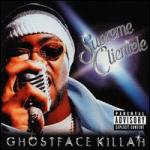 12. Ghostface Killah – Supreme Clientele (2000)
Energy is pretty much a prerequisite for rappers. Sure, there’s a place for chilled-out, jazzy hip hop, but when MCs are just losing their heads, delivering their syncopated scribblings in loud, sweaty, electrifying bursts, it’s what the music’s all about. And of the adrenaline junkies in the genre, Ghostface Killah is the most entrancingly hot-blooded. In the Wu-Tang context, his high-powered, temper tantrum verses shine alongside the more methodical approaches of MCs like Raekwon or Inspectah Deck. Which is the main reason why his solo career has been the most consistently rewarding of the bunch. On Supreme Clientele, the artist throws everything he’s got at us – whether he’s exploring the darkened shadows of a Staten Island Saturday night, boasting about how he’s made it, or talking to a basehead at the local crack house, he does it with convincing, overpowering emotion. His verses are more effective and wide-ranging than ever, moving from hard-boiled project tales to juvenile skits and teen nostalgia with dexterity. And the beats follow his lead – “Nutmeg” slams into your headphones with authority, a dusty soul string loop segueing into an insistent flute on the verses. RZA produces a handful of tracks, most notably “Buck 50,” a slinky, spy-movie vamp with slow-buliding B3 chords, and “Child’s Play,” which accompanies Ghost’s high school memories perfectly with some Biz Markie-ish piano chords. As that track fades out, the MC reflects on his first crush and how he’d buy “little butter crunch joints” after school. Whether it’s happening in a dark alley, a shimmering penthouse or the recesses of his memory, Ghostface Killah shares it with overwhelming energy, resulting in the most passionate hip hop performance of the 2000s.
 11. Bob Dylan – Love & Theft (2001)
It came as no surprise that Love & Theft was so much fun. The album was a 180 from its predecessor, 1997’s candid, elegant Time Out of Mind, which was haunted by the artist’s rather serious health problems at the time of its creation. But that record, so obsessed with the end of things, marked the total rejuvenation of Bob Dylan – both physically and artistically. His brush with the reaper behind him and freshly won Grammy and Academy Awards under his belt, the rock legend was suddenly relevant to mass audiences again. Love & Theft dropped a few years into this resurgence, and it’s an appropriately playful melange of blues, country and Tin Pan Alley. The tales of woe are still there, but they’re broad-stroke metaphors more akin to classic Dylan, like the exquisite “Mississippi,” a Time Out of Mind-era tune about feeling trapped and hopeless. “Well, the emptiness is endless, cold as the clay/You can always come back, but you can’t come back all the way,” Dylan sings – sentiments that could easily work as a mantra for a sad, aging man. But here, in the context of ringing guitar licks and a delightful, ascending chord progression, they’re uplifting. And Love & Theft just keeps giving from there, from sprightly vocal jazz (“Moonlight”) to loud, bounding blues (“Lonesome Day Blues”) and working man’s bluegrass (“High Water”). It’s an inexplicable thrill to hear Dylan sing these legacy-worthy songs with grizzled authority, his impeccable band in tow. Apparently you can come back all the way.
 10. Missy Elliott – Under Construction (2002)
In a lot of ways, Under Construction was a typical Missy Elliott/Timbaland adventure, full of elastic, fluttering beats and sharp lyrical twists that embrace rhythms like soul mates. But on her fourth album, Elliott was in a back-to-basics state of mind. So amongst all the boundary-pushing music and wordplay, you’ve got prominent Run-DMC breaks, cuts with “funky fresh” in the title and a track that features Missy and Jay-Z having a mutual nostalgia trip. As a result, Timbaland’s beats are leaner and catchier than ever, the spare drum machines and theremin wails of “Work It” forming the foundation for what was far and away the best single of 2002. Ludacris’ guest spot on the album’s other monstrously addictive single, “Gossip Folks,” is the best of his career – something about Tim’s stuttering, Looney Tunes groove brought out the best in the guy. But of course, Missy Elliott is the star here. She flips the script on chauvinistic rappers on “Pussycat,” leaves other MCs and ex-boyfriends in the dust on “Funky Fresh Dressed” and raises her glass to rap history on “Back in the Day,” her verses spilling over with infectious confidence, marvelous metaphors and clever pop culture references. And she also shines when she’s on her soapbox, using a handful of spoken word passages to ask rappers to go back to the days when battling was about skills, and critics of raunchy female rappers to check their double standards at the door. Simultaneously reflective and forward-looking, and supremely entertaining from beginning to end, the impact of Under Construction is awfully hard to overstate.
 9. Of Montreal – Hissing Fauna, Are You the Destroyer? (2007)
Before this album, Of Montreal was a reliable psychedelic pop outfit; you could trust Kevin Barnes and company to dish out the kind of music that crashes out of your speakers like a tidal wave of happy pills. But this album is a different story. Hissing Fauna, Are You the Destroyer? is full of the wild lyrical jaunts and ambitiously stacked harmonies of Barnes’ earlier records, but this time around, he’s not talking about parades and LSD trips – he’s dealing with the dissolution of his marriage, with stunning frankness. In this thematic context, the band’s impeccably crafted dance tunes become as nightmarish as they are blissful, like the deliriously catchy “Heimdalsgate Like A Promethean Curse,” in which Barnes begs his anti-depressants to kick in on the chorus. The astonishingly harmonic “Gronlandic Edit” details the interior thoughts and daily routine of a recluse. Then there’s the 11-minute “The Past is a Grotesque Animal,” a slow-building, mind-blowing depiction of an argument that’s as intense as rock music got in the 2000s. The vagaries of love have never been the inspiration for such a kaleidoscopic treat.
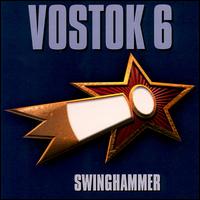
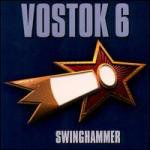 8. Kurt Swinghammer – Vostok 6 (2000)
Our fascination with space, and with love, is boundlessly magnetic. Such is Vostok 6. Kurt Swinghammer’s concept album about Russian astronaut Valentina Tereshkova, the first woman in space, is a stunningly imaginative take on a historical event and an airtight, shuffle-proof production. But although the Pink Floyd comparisons abound, this is thoroughly an album of its time, a thought-provoking exploration of human relationships in an increasingly alienating world. Swinghammer has a great time getting his sci-fi on, using soft, rolling synthesizers to give the listener a floating sensation, only to jar you awake with blasts of robotic new wave. From the gentle acoustics and stratospheric keyboards of the blast-off song “Blue” to the six-minute instrumental closer “Dawn,” the record is marked by an otherworldliness of the 2001 Star-Child variety – a warm, womb-like sensation that’s not of this earth. And on top of all the spot-on space music and Cold War-era references, there’s a wonderful romance. “Falling Star” is the centerpiece of Vostok 6, in which Tereshkova’s lover stares at the night sky and contemplates her eventual descent from the heavens. “The snow in Russia, I’ve heard/Is only the chalk dust of your words,” Swinghammer sings in his rich baritone, backed by a tapestry of electronic loops, acoustic strumming and harmonica. It’s about the headiest romantic situation imaginable – your love floating in space, everything that comes from the sky feeling like a message from her.
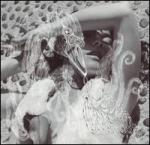 7. Bjork – Vespertine (2001)
As uncompromisingly different as Bjork’s music has always been, sounding like the dance-pop experiments of an intergalactic diva, it’s also stuffed with the kind of raw emotion that couldn’t be anything but human. Vespertine is the most emotionally direct album of the Bjork oeuvre, detailing the inexplicable sensations of new love, both physical and psychological, over majestic, wintry arrangements. While it may not be a dance floor-primed, eccentric confection like Post, the artist’s fourth album is unapologetically beautiful, from the swooning strings of “Pagan Poetry” to the cathedral choir sampling of “Unison.” As always, Bjork’s voice soars with incomparable power, bending and twisting through these soundscapes like the rarest of birds. And her descriptions of love incarnate are simple and profound, like on the magnificent track “Cocoon,” which finds Bjork delivering the lines, “He slides inside/half awake half asleep/We faint back into sleephood/When I wake up the second time in his arms/Gorgeousness/He’s still inside me.”
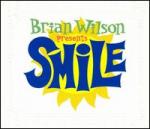 6. Brian Wilson – Smile (2004)
Before hunkering down to listen to Smile, Brian Wilson’s attempt to complete his unfinished follow-up to Pet Sounds almost 30 years after abandoning it, I felt some hesitation to press play. After all, the set was preceded by two thoroughly disappointing Wilson releases, the cringe-inducing Pet Sounds Live and the unfortunately prophetic Gettin’ In Over My Head. And I’d gotten used to the mixed bag he’d offered since his comeback album in 1988 – songs that occasionally sparkle and soar, but more often hit the ground with a big, out-of-touch thud. How could be possibly slay the white whale of rock albums, putting an end to decades of crappy bootlegs and blossoming mythologies, when he couldn’t hack a Pet Sounds revue? It just didn’t seem possible. Which makes Smile’s success all the more glorious. Wilson’s songwriting is at its most ambitious and playful from the outset; the singer/songwriter and his incredible band get churched-up on the a capella “Our Prayer,” which segues into the white-boy doo-wop of “Gee,” an ode to The Crows tune of the same name that in turn morphs into the stunning “Heroes And Villains.” As advertised since ’67, Smile is a seamless pop suite, utilizing wacky songlets like “Barnyard” and “Vega-Tables” to keep everything flowing smoothly. Hearing how familiar tunes from late-’60s Beach Boys albums fit into this puzzle is revelatory – “Cabin Essence” is indelibly unique no matter the context, but here it sounds like a troubadour that’s finally found his resting place. And it’s the record as a whole that makes it one for the ages. Sure, the parts are pristinely executed – the arrangements are inventive, the vintage instruments are convincing, and while Wilson’s voice has seen better days, he hits his notes with confidence and surrounds himself with transcendent singers throughout. And a handful of cuts could be pulled as pop singles (duh, “Good Vibrations”), but Smile was written decades before stereos had shuffle buttons, and is definitely meant to be played accordingly. This is pop music of the highest order, put together so flawlessly, you barely have time to catch your breath.
 5. Antony and the Johnsons – The Crying Light (2009)
Good music is fun to listen to and easy to identify with. Great music transports you to another world. The Crying Light is great music, an impeccably produced, soul-searching record, marked by ambitious arrangements and Antony Hegarty’s indelible, quavering voice. This is a white man in his late 30s who sounds like the reincarnation of Nina Simone, pouring sincere expressions of pain and pleasure into lyrics that aren’t afraid to get markedly poetic. In Hegarty’s world, hearts don’t break, they sob. Lovers don’t kiss his lips, they kiss his name. Celebrations of Mother Nature rub shoulders with a devastating account of an epileptic seizure. And the singer’s hypnotic way with words makes them ideal bedfellows for these arrangements, which employ small string sections, spare pianos, subdued guitar picking and dancing woodwinds in a way that’s both elegant and humble. The Crying Light is an album dominated by soft, shy balladry, yet it demands your attention. God-given talent isn’t a background kind of thing.
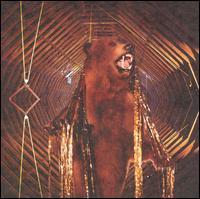
 4. My Morning Jacket – It Still Moves (2003)
The arguments for It Still Moves as My Morning Jacket’s best work are similar to those for Revolver as the ultimate Beatles record – it documents the moment that the band’s influences gelled into a sound that’s completely theirs, just as their songwriting abilities reached a dizzying peak. Jim James’ affinity for the country-rock of Neil Young and the dream-pop of Jeff Buckley is as clear as day, but the light country shuffle of “Golden,” swooning romance of “Just One Thing” and provocative note bends of “Run Thru” could only have come from his band. His voice is a supernatural force, whether it’s navigating us through stormy fuzz-rock freakouts or bewitching us with the most beautiful harmonies this side of Pet Sounds. MMJ messed with its formula on ensuing releases, like any remarkable band should. But while those experiments have been fruitful, none of them quite had the magic of It Still Moves. Greater forces are at work here.
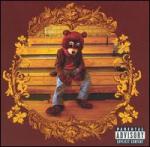 3. Kanye West – The College Dropout (2004)
The College Dropout has everything you could hope for in a hip hop record. Ambitious, deeply musical production. Clever lyricism. Passionate rapping. Wonderful guest MCs. An overarching concept that lends itself to both humor and social commentary. Moments of poignant positivity. Moments of infectious braggadocio. Surefire singles. Great slow jams. And one magnetic personality that holds it all together. As instantly appealing as every cut on Kanye West’s debut is, they’re also full of unexpected wrinkles, like the spiritual outcries of “Jesus Walks,” the prejudices of Gap store managers on “Spaceship” and the jubilantly defiant, anti-establishment sentiments of “We Don’t Care.” The album’s closer is a 16-minute block of storytelling, where Kanye recounts his rise to prominence, and the initial skepticism he faced as a producer trying to make it as an MC. The syllabic mastery on display here makes those skeptics look like fools – and we have them to thank for the fire that West injects in this, his supreme achievement.
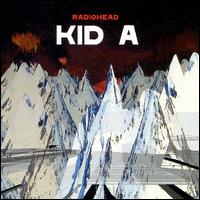
 2. Radiohead – Kid A (2000)
Kid A begins with a run of warm, inviting notes from a Fender Rhodes, only to immediately eschew all feelings of coziness by piling on layers of robotic voices, which beckon and whisper underneath lyrics about sucking on lemons. The song, “Everything In Its Right Place,” makes it clear right off the bat that Radiohead’s follow-up to OK Computer was going to be something entirely different, a fearless furrow into a cold, binary world, where obtuse electronic squeals and eerily mumbled vocals take the place of tightly constructed choruses and guitar solos. OK might be the band’s best collection of tunes, but Kid A is its bravest, and ultimately most rewarding. Whether it’s the hyperactive brass section that closes out “The National Anthem,” the spazzed-out drum machine bliss of “Idioteque” or the gorgeous, shooting star guitars of “How To Disappear Completely,” every track contains some kind of inventive twist, which join forces to create a lonely, beautiful universe – when Thom Yorke sings “I’m not here/This isn’t happening,” over an expanse of synthesizers, one gets the sensation of being an astronaut staring at the void. From the deceptive welcome of its beginning to its fragile, awe-inspiring end, Kid A doesn’t just entertain lovers of adventurous rock music, it makes us feel like we’re part of something bigger.
 1. Outkast – Stankonia (2000)
There’s hip hop. There’s rock and roll. Then there’s Stankonia. Outkast’s fourth album is a massive achievement, a fusion of styles left to soak in each other’s juices until they possess one unique, mindblowing flavor. In a sense, it’s a logical step forward from 1998’s Aquemini, but that album was a stunner as well, seemingly leaving the duo nowhere to go but down. Instead, Big Boi and Dre went left, right, diagonal and every which way. Its slick, Dirty South synth-funk is still the foundation of it all, lending itself beautifully to the catchy gangsta satire of “We Luv Deez Hoez” and the endearing sex etiquette anthem “I’ll Call Before I Come.” Parliament-Funkadelic’s influence still breathes out of every pore, from the invented vernacular of the album title to its introduction – “Welcome to Stankonia, the place from which all funky things come.” With those aforementioned surefire fan-pleasers under their belt, Big Boi and Dre got to work on their pop crossover jams, every single one of which is a game-changing, creative coup. “So Fresh, So Clean” possesses one of those instantly memorable Outkast choruses and a simple, polished-to-a-sheen R&B groove that showed up every contemporary artist in the genre at the time. “Ms. Jackson” is as buoyant as hip hop gets, using backwards snare hits, simple synth chords and “Wedding March” interpolations as the backdrop for some of best interplay of the duo’s career. The concept of apologizing to their “baby’s mama’s mama,” pledging loyalty to her daughter and grandchild, is smart, sweet and a bit cheeky, and the two MCs milk it for four-and-a-half glorious minutes. But as ingenious as those cuts are, they’re overshadowed by “B.O.B.” – as was every other song released in the 2000s. After creating the most propulsive beat imaginable, full of crazy drum machine fills and a minor-key synth loop, Dre and Big Boi absolutely feast on it. “Like a million elephants and silverback orangutans/You can’t stop a train,” spits Dre over the supercharged tempo, and he might as well be talking about this album, an astounding work of art that’s stuffed to the brim with imagination, humor, ego, sex, drugs and the ever-permeating desire to get your ass on the dance floor.

 I’ve been spending way too much of my time lately writing about the best musical moments of this soon-to-be-finished decade. So I figured, why not get a little negative?












 It’s remarkable that the new Dolly Parton box set is the first release of its kind. For at least 20 years, Parton’s incredible career has demanded this kind of panoramic overview. As she grew from a precocious country chirper to a lovable TV personality, Nashville powerhouse, pop star, movie scene-stealer and cultural icon, the singer/songwriter has always been that rare musical bird that adapts to ever-evolving tastes without surrendering her intangibles. This four-disc set reaches across just as many decades, resulting in a complete, and completely satisfying, study of Parton’s rise from the hills of East Tennessee to the hills of Hollywood.
 Mom and dad,
 49. My Morning Jacket – Evil Urges (2008)
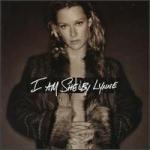 48. Shelby Lynne – I Am Shelby Lynne (2000)
 47. Whiskeytown – Pneumonia (2001)
 46. Sparklehorse – It’s A Wonderful Life (2001)
 45. Portishead – Third (2008)
 44. Grizzly Bear – Yellow House (2006)
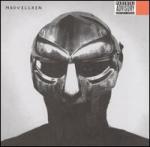 43. Madvillain – Madvillainy (2004)
 42. Ed Harcourt – Here Be Monsters (2001)
 41. Scott Walker – The Drift (2006)
 40. PJ Harvey – Stories From The City, Stories From The Sea (2000)
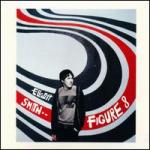 39. Elliott Smith – Figure 8 (2000)
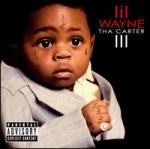 38. Lil Wayne – Tha Carter III (2008)
 37. Outkast – Speakerboxxx/The Love Below (2003)
 36. The Weakerthans – Reunion Tour (2007)
 35. The White Stripes – De Stijl (2000)
 34. LCD Soundsystem – Sound of Silver (2007)
 33. Andrew Bird & The Mysterious Production of Eggs (2004)
 32. Neko Case – Middle Cyclone (2009)
 31. Jill Scott – Who is Jill Scott (Words and Sounds, Vol. 1) (2000)
 30. Kanye West – Late Registration (2005)
 29. Aesop Rock – Labor Days (2001)
 28. Amy Winehouse – Back To Black (2006)
 27. Common – Be (2005)
 26. Blackalicious – Blazing Arrow (2002)
 25. Feist – The Reminder (2007)

 sweensryche.com