Netflix Recap

Stuff that I’ve “watched instantly” recently:

The Hot Chick (2002)

My wife and I were both feeling a bit under the weather, so we thought we’d opt for the dumbest comedy we could find. And when Rob Schneider’s face popped up on our TV screen, cucumbers covering his nipples, his face covered in a mud mask and a “What did I get myself into this time?” expression, we thought we’d found just the right level of idiocy. But after about 20 minutes of The Hot Chick, we were scrambling for the stop button. Here’s the premise: An ancient Abyssinian princess is betrothed to a horrible prince, and escapes her fate by using a pair of magical earrings to switch bodies with her servant. 2,000 years later, these same earrings end up in a New Age Creations-like store at the mall, where they’re shoplifted by a valley girl, who then ends up switching bodies with Clive Maxtone, a mentally disturbed petty thief who fills his bag with nacho cheese when there’s not enough money in the cash register. Adam Sandler shows up at the beginning, as a dreadlocked employee of the mall store, only to blatantly rehash the “you can put your weed in there” SNL sketch, which wasn’t all that funny in the first place. We didn’t last long enough to see what kind of wackiness ensued, but based on the movie poster, I assume it’s a bunch of lightly homophobic gags about how funny it to watch a guy doing girl stuff.
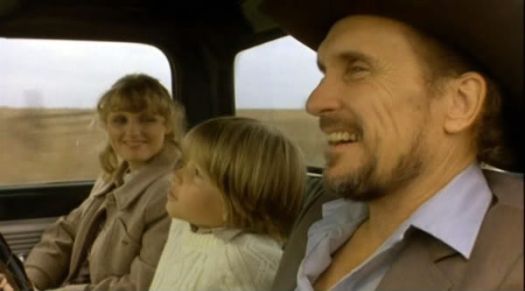
Tender Mercies (1981)

After feeling burned by the comedy route, we took a 180 and checked out this tranquil country drama. While I haven’t seen the much-ballyhooed Crazy Heart, it must be indebted to this powerful character study from director Bruce Beresford. The story of an alcoholic, washed-up country singer who tries to come to terms with his past, with the quietly intense love of a county road motel owner  lighting the way, Tender Mercies could easily have gotten out of hand dramatically (see Exhibit A). But thanks in part to a career-defining turn from Robert Duvall as the main character, Mac Sledge, this is a story of redemptive strength that plays things close to the vest. Awash in craggy, knowing looks, his weathered voice rarely rising above a mumbled twang, Duvall inhabits the space of a guy who’s seen it all, and isn’t all that interested in seeing any of it again. Horton Foote’s Academy Award-winning screenplay is full of simple, profound backs and forths, including the one of the sweetest and most matter-of-fact marriage proposals you’re bound to see. During one of Mac’s bouts of anger, he goes to a bar/restaurant, where he bristles at the waiter’s questions, snapping, “I don’t know what I want yet.” But by the end, as he tosses a football with his stepson, you get the sense that he’s changed his answer.

Law & Order: Criminal Intent (2001-pres.)

Few things in life are as formulaic as an episode of Law & Order, and the same can be said of its offspring. Criminal Intent, however, is the only version that landed Vincent D’Onofrio, whose performance as Detective Robert Goren crackles with a spastic vulnerability that’s deeper than any L&O character deserves (I will not suffer Chris Noth). Still, everything else is much the same – some unsuspecting folks stumble upon a body, the first suspect isn’t guilty, somebody who shows up for a short period of time early on ends up being the killer, and, of course, they always catch him/her. But there’s something soothing about all of this predictability – if I’m having trouble sleeping, an episode of CI works like a lullaby.
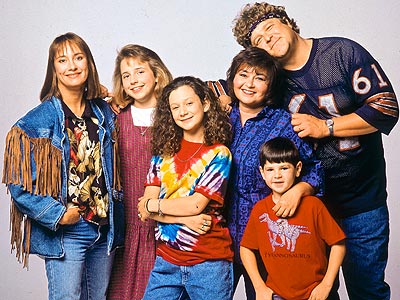
The Conners: A sitcom family in a class of its own.

About a month ago, the magical, free-time-sucking beast that is Netflix’s “Watch Instantly” feature entered my life. As a result, I am reading less, getting seriously disoriented every time I have to go outside, and watching shit like “Legends of the Fall” – now, those Anthony Hopkins stroke-induced facial paralysis scenes are only a click away.

The upside? “Watch Instantly” offers all nine seasons of Roseanne, an example of the rarest thing you’ll ever see on broadcast television – a sitcom that is both wickedly funny and disarmingly realistic. As I started to retrace my steps through the Conner family saga, I wondered if it would still hold up after 20 odd years. Fact is, at its best, the show’s probably even more relevant today, thanks to a markedly un-gimmicky comedic formula. This isn’t a show about middle class Americans with jokes thrown in – the stresses and struggles actually set up the zingers, positioning Rosie and her brood as the kind of people who find their strength through their sense of humor. Instead of wacky misunderstandings, the hilarity stems from the stress of tax day, having a snot-nosed teenager as your boss, and telling your daughter that she doesn’t have a college fund. And as well-crafted as it all is, none of it would’ve translated without such a talented cast – John Goodman and Laurie Metcalf both turn in nuanced, honest and hilarious performances, giving Roseanne a foundation that allows her to just be herself, delivering sarcastic put-downs with a skill that’s yet to be matched by any sitcom star.

After the first five seasons, the writers started to stray from the formula, but some of these diversions are fun, especially a pair of season 7 clip shows that includes Roseanne comparing notes with June Cleaver, Ruth Martin and Norma Arnold, much to their dismay. The drama starts to get laid on a little thick when Dan’s father issues get the best of him, and Darlene’s on-again off-again relationship with David becomes a bit of a bore. But what more could you expect from a show in its seventh, eighth and ninth seasons? The only thing that’s tough to forgive was the temporary replacement of Lecy Goranson, the actress who played Becky, with Sarah Chalke during seasons 6 and 7. It’s never good when shows do this, and especially bad when the new performer changes the way the character behaves – Goranson’s Becky was smart and argumentative; Chalke’s was quiet and passive.

Much has been made of the final season’s lottery storyline and meta-confessional finale, and for good reason. It went against everything that made the show unique, and more importantly, the jokes just weren’t as funny. But taking this journey with the Conners for a second time, rooting for them as they take one step forward and two steps back through season after season, it still feels good to see their dreams come true.

What I Got For Christmas

Santa was wicked nice to me this year. But his handwriting looks a lot like my wife’s …

Cee Lo Green – The Lady Killer

Green’s first release that takes his “Soul Machine” moniker completely to heart – an inspired block of productions worthy of classic Motown, of love songs that swoon and ache with equal passion.


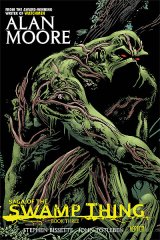
Saga of the Swamp Thing: Book Three

Yes, Watchmen is great. But I’ll take Alan Moore’s lovely, metaphysical Swamp Thing series any day. This is a horror comic that makes you ask big existential questions – once it sinks in, it swallows you whole.


Antony & The Johnsons – Swanlights

Antony Hegarty continues to ponder our dying world and its implications on our souls, over the lushest productions of his career. Somehow, you walk away from it all feeling uplifted.


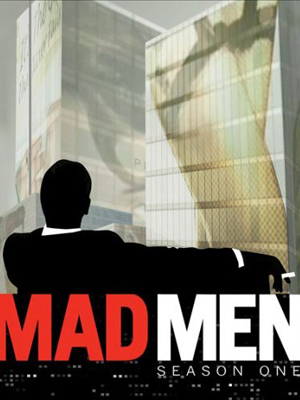
Mad Men: Season One

The poisonous nature of lies, depicted with intelligence, humor and insane precision. Go Peggy.

An Awesome Show

If you’ve ever watched an infomercial because you thought it was funny, or sat in awe of a bad public access TV show, then the singular comedy universe of Tim and Eric is right up your alley. All of the shows the duo has created for Cartoon Network’s Adult Swim late-night programming block (only one of them a cartoon) have been obsessed with the marketing of crappy products, the use of outdated technology and the performances of wildly untalented people. And last night at the Town Ballroom, Tim Heidecker and Eric Wareheim shared their latest stage show with a packed-to-the-rafters crowd of folks who had already taken deep draughts of the T&E Kool-Aid. If you haven’t seen their video announcing the tour, watch it now, and understand why my wife and I had been counting down the days until we could see it.

Mainly, this was a promotional jaunt to support the guys’ upcoming holiday show, airing Dec. 5 – the Tim and Eric “Chrimbus Special” – so the set began with a blast of twisted, fake holiday cheer. Tim and Eric took the stage wearing their gloriously hideous Chrimbus outfits, a mix of horrible wigs, bronzed skin, bedazzled vests and boob-high green pants that make them look like frightening, super-sized oompa loompas. The first skit centered around Eric’s refusal to get Tim a Chrimbus present, after Tim had already spent $279 on a car stereo at Circuit City for Eric’s gift (it lets you set your six favorite FM radio stations!). The bit’s mix of innocence and insanity was an ideal beginning for a night of comedy that was about fostering a sense of community more than anything else.

There’s a quality to the duo’s signature show, Tim and Eric Awesome Show Great Job!, that inspires fanaticism, and it’s not just the funny characters and catchy, silly songs. This is comedy with a language all its own – freakish, unibrowed babies are “chippies,” fathers and grandfathers are “pep peps,” the term “for your health” has taken on monumentally hilarious connotations. If you watch Tim and Eric and “get it,” you’re more than a viewer. You’re part of something.

So while this show featured jokes about getting your balls drained, a body suit with flopping genitalia, and a brilliantly sloppy closing set by Tim and Eric’s band Pusswhip Banggang, the pervading attitude was childlike, not childish. When the duo hit the stage to promote their “new movie,” Blues Brothers 2012, they talked about the film’s sponsor, Terminix, more than anything else. Which set the stage for a song that laundry-listed random American brand names, ending with a shout out to The Arizona Jeans Company – “I need my ‘Zona Jeans!” It wasn’t exactly satire, nor was it raunchy, or slapstick – it was silly, random, obsessed with being unstylish, and permasmile-inducing. In other words, pure Tim and Eric.

See It/Flee It: Emmy Edition

For some reason, I viewed a significant amount of the 2010 Emmys on Sunday evening. Few of the winners deserved their hardware, of course, but host Jimmy Fallon was the least deserving of the spotlight. His Gen-X Billy Crystal schtick – changing the lyrics of pop songs to make them about the nominees – was only slightly less appalling than a half-assed Silence of the Lambs showtune. And his attempts at off-the-rails zaniness might have succeeded if he wasn’t so cripplingly uncomfortable on camera. Introducing presenter Tom Selleck as “my dad” and running over to hug him, saying “I knew you were real”? Funny on paper. But when Fallon delivered it with his trademark “Look, I’m jokin’ around” mannerisms, it bombed. But enough of that. Here’s an Emmy-nominated show that’s good, and an Emmy-nominated movie that’s bad.

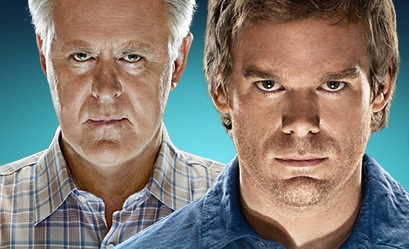
See It: Dexter (Season Four)

Poke holes in this popular Showtime series if you want – its heroic serial killer concept certainly gives you lots of room to do so – but four years in, it’s more absorbing than anything on the tube, and most offerings at the multiplex. After an underwhelming third season, which was anchored on the ho-hum relationship between Dexter Morgan (Michael C. Hall) and his unlikely apprentice, hotshot D.A. Miguel Prado (the redwood of wooden actors, Jimmy Smits), season four gets back to what made the show irresistible in the first place – Dexter, himself a sociopath, hunting a supremely creepy, heretofore untraceable serial killer, intrigued by what they have in common and determined to destroy him nonetheless. The psycho in question is the Trinity Killer, a man who has killed in cycles of three, in the same meticulous fashion, for decades. And what might sound like James Patterson tripe on paper is brought to life with hair-raising efficiency by John Lithgow, whose Emmy-winning guest turn is a masterfully controlled depiction of insanity. The actor rarely uses more than the posture of his massive frame and his wildly expressive eyes to let you know he’s more monster than middle-aged man – when he does fly off the handle, it’s almost a relief. Lithgow’s performance is also good enough to smooth over the clichéd moments, including some hackneyed jokes about baby-induced sleep deprivation (Dexter and his wife Rita got married and had a kid to close out season three, if you care). After seeing the heart-stopping, bloody finale and thinking back on the season, Trinity’s helpless, horrifying face overshadowed all.

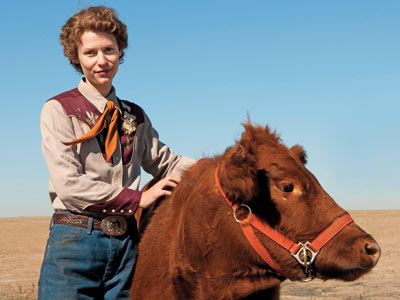
Flee It: Temple Grandin

This HBO original movie was one of the biggest winners on Sunday, proof that American viewers remain suckers for feel-good, “me against the world” true stories, even if they fail at making you feel more than just good. What’s especially frustrating about Temple Grandin is what it could’ve been. All the raw materials of a memorable, out-of-the-box bio-pic are here – the title character is thoroughly enthralling, a resilient, brilliant, autistic woman who revolutionized the slaughterhouse industry with her cattle-sensitive designs. This is prime territory for a bold visual approach, to show audiences what life was like through Grandin’s eyes, resulting in the kind of dramatic tension you don’t see every day. Instead, director Mick Jackson’s movie is such a formulaic heartstring yanker, it makes you wonder if HBO bought the script from Lifetime. A lot of lip service is given to the fact that autism is misunderstood, whether it’s a motivational speech from her mentor/high school science teacher (David Strathairn) or a weepy flashback from her mother (Julia Ormond). And as Grandin, Claire Danes puts her all into the vocal impersonation and various emotional breakdowns (the stuff that wins Emmys, which she ended up doing), but never quite goes beyond cartoonish mimicry. By the end, you understand that Grandin is a remarkable person indeed. You don’t understand much else about autism, but man, do you feel warm and fuzzy.

See It/Flee It: Crimes Against Humanity

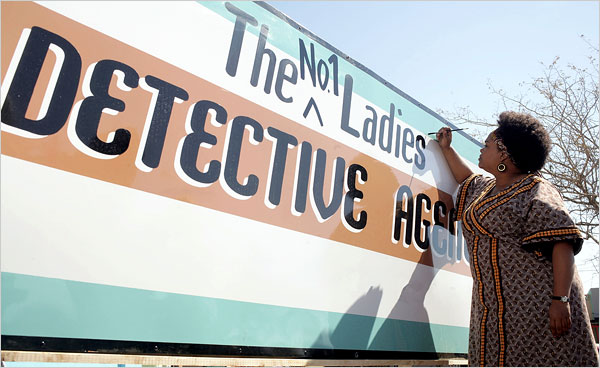
See It: The No. 1 Ladies’ Detective Agency

Everything about this seven-episode BBC series has been done to death – the friendly sleuth with a god-given talent for nabbing bad guys, a buttoned-up sidekick, burgeoning love interest and turbulent past. Except for the setting, that is. Like the Alexander McCall Smith novels it’s based on, The No. 1 Ladies’ Detective Agency is set in Botswana, a country in Southern Africa. And the fact that it was also shot there gives the show its soul – for all of its lighthearted touches and lovable characters, it’s the stunningly beautiful backdrops and unique cultural/geographical elements that stick with you. In the middle of figuring out a mystery, main character Mma Ramotswe – played with down-to-earth vibrancy by Jill Scott – stops to watch a pair of giraffes roaming a few feet from her car. The culprit of a long-running mystery turns out to be a roving band of baboons. When Ramotswe trails the daughter of a wealthy client, she’s led through a bustling open-air market of kaleidoscopic colors. Not to say there’s nothing else to offer than the window dressing here. The mysteries are cleverly constructed, especially a classic poison-related whodunit, and it’s impossible not to root for Ramotswe – to get her business off the ground, solve every case that comes her way, and stand strong when a dark period of her past rears its ugly head. But as much as you’ll love this lady detective, her native country is the real star.

Flee It: The Lovely Bones

After spending a decade in the ether of massive CGI blockbuster-dom, director Peter Jackson and his loyal co-screenwriters, Fran Walsh and Philippa Boyens, must have thought it was time to scale things back a bit – hence their adaptation of The Lovely Bones, the Alice Sebold novel that got to the guts of the grieving process in such an engaging way. Unfortunately, the hopelessly trite, saccharine mess they made of Sebold’s work proves they should stick to the fantastical. Jackson’s film doesn’t get beyond a back-of-the-DVD-case synopsis of the story – 14-year-old Susie Salmon is brutally murdered by a neighbor, after which her spirit goes to “the in-between,” a place between earth and heaven that allows her to watch over the people she loves, as well as her murderer. Most of the novel is concerned with how Susie’s family and friends deal with their intense grief, each in their own way. Jackson chooses to either eliminate or gloss over 90% of this insightful human struggle, making it awfully hard to sympathize with these characters – which shouldn’t be a tall order for a story with this kind of dramatic heft. Part of the problem is Mark Wahlberg, whose sad, dopey take on Susie’s father is completely unwatchable. Everybody else is a composite – Jackson apparently deemed the mother’s character unworthy of attention; Susie’s egghead love interest Ray Singh becomes pointless eye candy; Ruth Connors, the artsy outcast obsessed with the spirits of murdered girls, is barely present. And for what? A pile of god-awful, candy-coated CGI sequences of Susie frolicking in “the in-between.” And one unforgivably flaky moment, nowhere to be found in the novel, that depicts Susie’s spirit making a dead flower blossom in her father’s hands. Scenes like these make Jackson’s intentions clear – his Lovely Bones is so enamored with the supernatural, it doesn’t bother to remind us how it feels to be alive.

Go Greenwood!

Last night, I did what I do most Sunday evenings – eagerly watch The Simpsons, and then sit though an hour-and-a-half’s worth of pointless pop culture references and “shocking” jokes, courtesy of Seth MacFarlane. My appetite for cartoons is that strong, I guess. But that’s beside the point. In the midst of MacFarlane’s uninspired programming block, a commercial aired for the upcoming Paul Rudd/Steve Carell vehicle, Dinner For Schmucks. After a few seconds, it seemed like this was going to be the next stupid slapstick blockbuster du jour, with Carell taking the pratfalls instead of Ben Stiller.

That is, until BRUCE FRICKIN’ GREENWOOD appeared on screen. That’s right, that Bruce Greenwood, the star of the criminally overlooked Hallmark Hall of Fame masterwork, A Dog Named Christmas (that’s him above, circa 1998. I can’t tell which one’s the stallion!). Apparently my man G-Wood plays Paul Rudd’s pompous boss, a role that couldn’t possibly have the depth of ADNC’s George McCray, a father who doesn’t want his son to rent a dog for Christmas because it reminds him of the dog he had in Vietnam, which was killed by a land mine. But once the dog saves everybody from a mountain lion, including a dachshund and her puppies, George has a change of heart, even though his son gives him the rather short-sighted name “Christmas.”

So if you’re a Greenwood buff, Dinner For Schmucks is reason to rejoice. At least until A Ferret Named Thanksgiving gets green-lighted.

Greenwood fans, please post your fav nicknames for our hero here. I got the ball rolling with G-Wood, and I’ll throw a couple more out there: Brucey Juice and Wooder.

George and Ringo saved by copyright law

This week, American Idol did a Beatles-themed night, which they called “Lennon/McCartney Songbook Week.” I’m guessing they weren’t allowed to say “The Beatles” for legal reasons, which protected “Something,” “Octopus’s Garden,” “While My Guitar Gently Weeps,” “I Want To Tell You” and other George and Ringo-penned classics from getting the amateur karaoke treatment. Even so, I’d rather watch The Apple Dumpling Gang on a loop than watch those jerks crap on a legacy. Well, watching The Apple Dumpling Gang sounds kinda fun, actually. Don Knotts is straight gangsta.

A late Christmas gift

Mom and dad,

Sorry it took so long to give you your present this year. I was too busy watching A Dog Named Christmas, and basking in the afterglow of watching A Dog Named Christmas. I hope you’re satisfied with a link to my review of the 2009 Kissmas Bash instead – if you needed any more proof that Kris Allen is horrible, well, here you go.