The Oscars have arrived.

Just watched the announcement of the Oscar nominees for Best Picture:

Black Swan – Haven’t seen it, not sure if I can take another two hours of Darren Aronofsky treating me like an idiot (and Natalie Portman crying).
The Fighter – Also haven’t seen it. Pretty much know what this has to offer, and I like my triumphs of the human spirit without screamy man speeches.
Inception – Mindblowing visuals. Headache-inducing story.
The Kids are All Right – A charming enough family drama that benefits greatly from the existence of Annette Bening.
The King’s Speech – A charming enough British period piece that benefits greatly from the existence of Geoffrey Rush.
127 Hours – My indifference to this one has resulted in me not having seen it. Crazy, huh?
The Social Network – A look at what megalomania looks like in the 21st century, propelled by fabulously constructed, rapid-fire dialogue.
Toy Story 3 – Missed the first and second parts of the series, and have heard from many folks that this installment will make me miserably sad. Maybe I’ll wait until summer to take in the trilogy.
True Grit – Jeff Bridges’ blustery performance is a treat, but the way the Coens make room for him in this simple adventure story is equally enthralling.
Winter’s Bone – Where Deliverance was gratuitous, these backwoods are stark, quietly frightening, and ultimately hopeful.

Franz List: Worst Pictures

How can you tell I’m not a real movie critic, beyond my lack of knowledge and questionable writing ability? I care about the Oscars. In 1992, when Silence of the Lambs cleaned house, I was watching the event for the first time. And considering that Silence of the Lambs was pretty much the greatest movie I’d ever seen, I thought this award show was pretty cool (despite Billy Crystal’s insufferable bullshit). Since then, however, I’ve felt like Clarice Starling – horrified and fumbling in the darkness.

With Oscar season upon us – nominations will be announced on January 25, with the ceremony set for February 27  – I figured why not relive some of those horrible moments? Here’s my list of the five worst movies to win the Academy Award for Best Picture in my lifetime.

5. Shakespeare in Love (1998)
What if Romeo & Juliet was autobiographical? This is the concept behind Shakespeare in Love, a movie that would be inane enough if it didn’t poison a grade A cast with the likes of Gwyneth Paltrow and Ben Affleck. If whimsy’s what you’re after, there’s more than enough here to choke an ox.

What I was rooting for: The Thin Red Line. While I’m not one for war movies, and found Terence Malick’s meditative style a bit tedious, at least the thing was beautiful.

4. Crash (2005)
Do the Trite Thing.

What I was rooting for: Brokeback Mountain. Thought I’d actually be happy this time, as a movie I adored was the odds-on favorite. I hadn’t learned my lesson.

3. Titanic (1997)
There’s usually something moving about characters who carry flames for a lost lover, deep into old age. But when James Cameron tried to find a common thread between this type of romance and one of history’s most epic tragedies, the result was as unfeeling as the iciest of Arctic waters.

What I was rooting for: L.A. Confidential. Even though Russell Crowe is a walking cliché, it’s film noir done right.

2. American Beauty (1999)
In the real world, when a middle-aged man gets his mid-life crisis Corvette, it’s embarrassing. In American Beauty, when he does this times 100, he’s a hero. And beyond telling us to worship at the altar of the male ego, the movie teaches us a valuable lesson about closeted homosexuals: They will murder you!

What I was rooting for: The Sixth Sense. One of the most imaginative ghost stories I’ve ever seen; the best of a very weak field.

1. Forrest Gump (1994)
A man does whatever he’s told – including going to war – without once questioning if it’s in his best interests, and lives an impossibly exciting life. A woman fights for what she believes in, and dies of AIDS. I’m pretty sure Dick Cheney wrote this.

What I was rooting for: Pulp Fiction. Like, duh.

I Love You Phillip Morris finally breaks out.

America loves a good con man. And damn, does America love Jim Carrey (even Yes Man made $97 million domestically). So why was it so damn hard to find a U.S. distributor for Carrey’s whimsical con man romance I Love You Phillip Morris? Well, because America doesn’t exactly love gay people.

Carrey plays Steven Russell, a real-life shyster genius who broke out of prison four times, in increasingly imaginative fashion, for the express purpose of reuniting with his lover, Phillip Morris (played with Southern Belle-ish innocence by Ewan McGregor). It’s an outrageous true story, in the sense that Russell was outrageously sociopathic and the Texas authorities were outrageously stupid. But U.S. distributors found the romance to be the outrageous part, and as a result, a movie that was screened at Cannes in 2009 didn’t hit American screens until the end of 2010.

I’m just happy the thing got released at all. It’s the first comedy of Carrey’s career that isn’t dominated by the star’s rubber-faced gesticulating – a credit to first-time directors Glenn Ficarra and John Requa, who clearly have a knack for black comedies with hearts of gold (they co-wrote Bad Santa as well). It would’ve been fun enough to just watch Russell commit insurance fraud, launder money and impersonate attorneys – when he recklessly improvises in a judge’s chambers, you really realize you’re rooting for him. But I Love You Phillip Morris is more generous than, say, Catch Me If You Can, giving us clever jabs at corporate America, warm and fuzzy memories of dong-shaped clouds, spirited middle fingers to the man, and brief, tender glimpses of two people in love.

Yes, Carrey’s lack of subtlety is problematic at times, if only because it triggers memories of talking assholes. But Steven Russell was anything but a subtle dude. If the opposite were true, he wouldn’t have gotten caught so easily, and the most outrageous thing about this story – an injustice of a life sentence – might have been avoided.

See It/Flee It: Dumb and Cheesy Wins the Race

See It: Best Worst Movie (2010)


I’m embarrassed to admit that I’ve never seen Troll 2, a 1992 low-budget horror movie that’s been labeled “the worst film of all time,” and has garnered a fan base with a Rocky Horror-esque sense of loyalty. It’s the story of a family who enters the town of Nilbog for some reason, where goblins disguised as people try to turn them into plants. Or at least that’s what I’m able to cobble together after watching Best Worst Movie, a documentary about Troll 2‘s journey to the top of the “so bad it’s good” heap. By focusing primarily on George Hardy, the excessively nice Alabama dentist who happened to star in Troll 2, director Michael Paul Stephenson (another T2 cast member) doesn’t just tell the ultimate underdog story in horror movie history – it depicts a man who changes from a humble guy who’s in on the joke to a spotlight-seeker who thinks he can act. Part hilarious, part pitiful, and completely sensitive to the emotional nature of fandom, Best Worst Movie is a must for anyone who has appreciated the odd, addictive beauty of a real camp classic.

Flee It: Chariots of Fire (1981)


Here’s another movie obsessed with the underdog – Hugh Hudson’s gauzy, Academy Award-winning ode to the British runners of the 1924 Olympics. But unlike the charmingly delusional heroes of Best Worst Movie, the two main characters of this meticulous period piece are about as convincing as Troll 2‘s goblin costumes. And it’s not like their true stories didn’t have meat on the bones. Eric Liddell (Ian Charleson) was a religious fanatic who refused to run his Olympic race because it fell on the Sabbath. Harold Abrahams (Ben Cross) used the anti-Semitism of his Cambridge elders and peers as his prime motivation to win gold. But neither situation gets dramatic traction here, because Chariots of Fire is too busy treating sports movie clichés like high art. Liddell’s the wily veteran who has to be talked into running; Abrahams goes through a training montage with his instructor (played by Ian Holm, a real bright spot); the crusty old deans doubt the youngsters every step of the way. In the few scenes where Chariots of Fire does try to shed light on the religious tensions that should’ve been its primary focus, it tosses them off with some less-than-inspired dialogue. When Liddell explains to his devout sister why he must compete, he sounds like it’s really a non-issue – “I believe God made me for a purpose, but he also made me fast.”

Surely, a comedy genius.

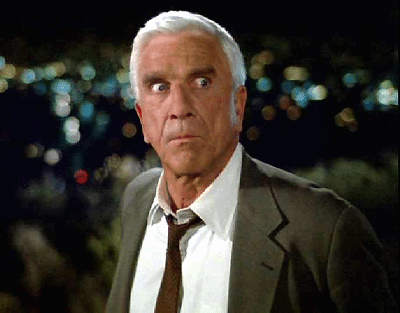
When I was 10, my parents took my brother and I on a vacation to Boston. It was the first big city I’d ever seen. But I only really remember one thing about that trip – seeing The Naked Gun in a cool underground theater. The perfect mix of brilliant one-liners, elegantly staged slapstick sequences and spot-on comic acting, the movie was the funniest thing I’d ever seen. And the main reason it all worked was Leslie Nielsen, who passed away Sunday at the age of 84. Nielsen played Lt. Frank Drebin like a steely-eyed king of the asphalt jungle, scorned by his ex-wife, struggling to find meaning in the world, murdering people at Shakespeare in the Park. He was the straight man and the funny guy, never cracking a smile yet delivering jokes with impeccable comic timing. In today’s comedy universe, nobody’s pulling that off. And while TNG is his masterpiece, Nielsen gave us much more, from Airplane to Police Squad, the quality Naked Gun sequels, and the inspired bit parts in Scary Movie 3 and 4.

I miss you already, Mr. Nielsen. I’m sure that in heaven, if you get somebody a harp for Christmas, they won’t ask you what it is.

A Boy and His Dog …

I caught the end of the 2000 Frankie Muniz vehicle My Dog Skip over the weekend. Skip dies. And the movie ends with this speech from the narrator, a grown-up version of Muniz’s character in full Wonder Years mode: “He and my mama wrapped him in my baseball jacket. They buried him out under our old elm tree, they said. That wasn’t totally true, for he really lay buried … in my heart.” I was surprised to find myself crying, until I realized that I had puked with my mouth closed, and that vomit was leaking out of my eye sockets.

Franz List: Horrors!

Hey, Franz here. While horror movie-related lists are a dime a dozen in October, I can’t refrain from making one myself. I did get more specific than just listing the scariest flicks of all time, however (He’s Just Not That Into You would’ve been in the top five for sure). Here are ten horror movies that are just fun to watch – we’re not talking about directors digging into your psyche to mine your deepest fears, or trying to make you think at all for that matter. “A hell of a good time” is the only criterion.
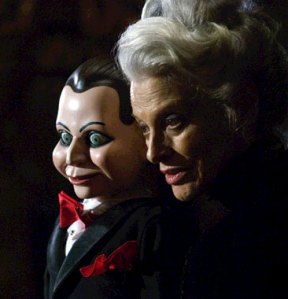
10. Dead Silence (2007)
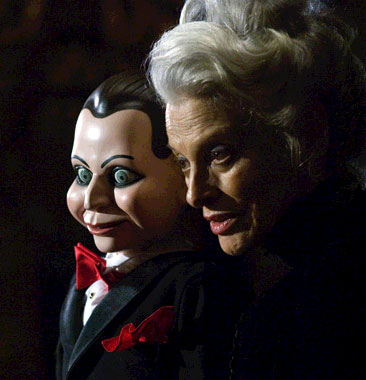
In movieland, grizzled cops have predictable vices – booze, acting like a loose cannon, and … that’s about it. But in Dead Silence, Donnie Wahlberg plays a grizzled cop whose obsession is grizzliness itself. The character, Detective Jim Lipton, is more prone to pulling out an electric razor than a gun. It’s an awesome running gag amidst a beautifully idiotic, post-Puppet Master plot line, a steady reminder that the filmmakers aren’t taking their vengeful-ventriloquist-from-beyond-the-grave story seriously.

9. Halloween V: The Revenge of Michael Myers (1989)
While the first two installments of the Halloween saga were genuine thrillers, with Michael Myers playing the relatively believable role of a psycho ward escapee on a killing spree, ensuing sequels got progressively more unrealistic, and more fun. Halloween V is my favorite, if only because Donald Pleasance, who plays Myers’ long-time psychiatrist Dr. Sam Loomis, is at his sweetest and frailest, trying with all his might to convince the authorities that Myers’ niece has a psychic connection, that she knows he didn’t die when he fell down that mine shaft at the end of Halloween IV. His earnestness garners some genuine sympathy in thoroughly stupid surroundings.

8. The Brood (1979)
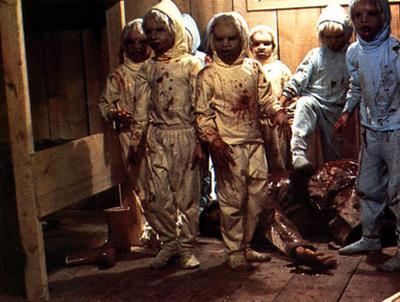
A horror movie designed to freak out a generation of privileged, self-absorbed therapy addicts, this 1979 David Cronenberg weirdfest tells the story of a psychotherapist who invents a way for his patients to create physical manifestations of their negative feelings. Which, of course, leads to bloodthirsty troll children in adorable winter coats wreaking havoc at the whim of their “mother,” played by an understandably dazed Samantha Eggar. It might be overlong and hard to follow, but The Brood’s uber-twisted Grapes of Wrath-acid-trip ending will wake you up right quick.

7. Silver Bullet (1985)
After a paraplegic Corey Haim murders a werewolf priest by shooting him in the face, the girl who played Anne of Green Gables turns to him and asks “Are you alright?” He responds, “All except for my legs. I don’t think I can walk.” Cue the laughter. Oh yeah, and Gary Busey is there.
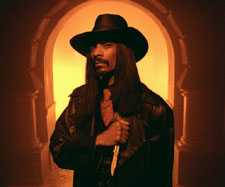
6. Bones (2001)
The clichés at the center of Bones sound too daunting to overcome. Snoop Dogg plays a ’70s numbers runner called Jimmy Bones, whose spirit haunts his old nightclub in the form of a red-eyed dog. But as Jimmy’s beloved neighborhood crumbles under crack’s ironclad grip, Jimmy’s spirit gets pissed, and his movie gets wildly entertaining. This is Evil Dead-meets-Superfly, pairing gallons of fake blood, arguments with severed heads and out-of-leftfield parallel universes with real ghetto commentary and a feasible love story. Snoop clearly relishes the role, and is magnetic throughout. And while the surprise ending isn’t necessary, that doesn’t make it any less cool.

5. Santa Buddies: The Legend of Santa Paws (2009)
The Lord is my shepherd, I shall not want. He makes me lie down in green pastures; He leads me beside quiet waters. He restores my soul; He guides me in the paths of righteousness For His name’s sake. Even though I sat through Santa Buddies, a movie about a post-apocalyptic future in which packs of talking dogs fly around the world every Christmas, spewing Christian propaganda and perpetuating black and female stereotypes everywhere they go, I fear no evil, for You are with me; Your rod and Your staff, they comfort me.
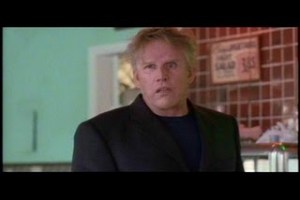
4. The Gingerdead Man (2005)
Gary Busey’s second appearance on this list is for a horror-comedy masterpiece that takes the rules from Child’s Play and applies them to a six-inch high gingerbread man. After psycho killer Millard Findlemeyer gets the death penalty, his witch mom mixes his ashes into some gingerbread dough, which she drops off at a bakery where Sarah Leigh (hilarious!) works – the woman whose testimony sealed Millard’s fate. Of course, somebody bakes the dough into a cookie shape, the cookie kills the shit out of people even though all you’d have to do is stomp on him or spray him with a hose, and everything is left open for a hopefully endless string of sequels. Plus, there’s the ultra-convenient 70-minute running time – you can watch this puppy on your lunch break.
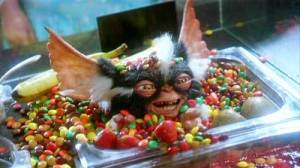
3. Gremlins 2: The New Batch (1990)
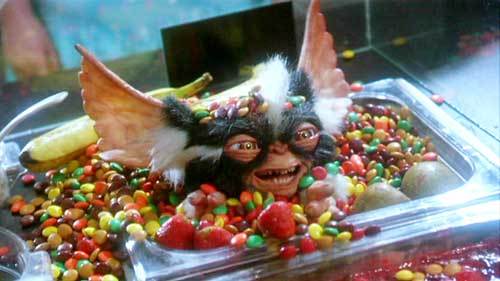
As dark and imaginative as Gremlins was – it remains the ultimate cautionary tale about the evil that lurks inside all very cute things – the sequel is much more fun. Director Joe Dante returns for The New Batch, and does all the crazy stuff he probably wanted to do in the first, Chris Columbus-penned film, ending up with an anarchic, horror-comedy gem. When Gizmo shows up in a state-of-the-art NYC office building (where his old owners Billy and Kate both happen to work), he gets wet and spawns a brand new litter of havoc-wreaking bi-ped lizards. As the Gremlins infiltrate research labs and TV studios, become super-intelligent and transform into bat- and spider-like creatures, they create a chaos that’s both hilarious and cathartic – if only today’s massive corporations could be taken over with such ease and panache.
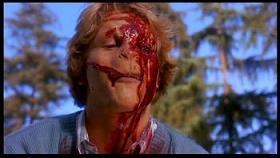
2. Sleepwalkers (1992)
Of the reams of junk that Stephen King has slapped his name on, the screenplay for Sleepwalkers is his campiest, most gloriously tossed-off accomplishment. A small town is terrorized by a mother and son who are telekinetic, vampiric shapeshifter werewolves that must feed on the life force of virgin women to survive. Director Mick Garris delivers it all with the requisite wink and a nudge, creating two of the most unforgettable horror/comedy moments of all time – a graveyard fight with a corkscrew-in-the-eye coup de grace, and a climactic slow dance between the main character Tanya and the half-dead monster Charles. Not to mention a catchphrase that should’ve took the world by storm – “Stop looking at me, you fucking cat!”


1. Trick ‘r Treat (2007)
This straight-to-DVD effort is the easily the best Halloween movie of the 21st century, and stands up there with anything John Carpenter has churned out over the years. An anthology of horror story vignettes that weave together in wonderfully clever fashion on one eventful Halloween night, Trick ‘r Treat gives us spooky urban legends, vengeful ghosts, werewolves, a sadistic principal, and Sam, a tiny trick or treater in a creepy, burlap bag Jack-o-Lantern costume. Writer/director Michael Dougherty lets us see the events unfold in provocative, Tarantino-esque ways, without overcomplicating things – amidst the swirl of converging plot lines, Dougherty anchors everything on the crippling guilt of one old man. So while Trick ‘r Treat is loads of fun to watch, it’s also an important reminder for horrorphiles – nothing is scarier than a story told well.


See It/Flee It: Emmy Edition

For some reason, I viewed a significant amount of the 2010 Emmys on Sunday evening. Few of the winners deserved their hardware, of course, but host Jimmy Fallon was the least deserving of the spotlight. His Gen-X Billy Crystal schtick – changing the lyrics of pop songs to make them about the nominees – was only slightly less appalling than a half-assed Silence of the Lambs showtune. And his attempts at off-the-rails zaniness might have succeeded if he wasn’t so cripplingly uncomfortable on camera. Introducing presenter Tom Selleck as “my dad” and running over to hug him, saying “I knew you were real”? Funny on paper. But when Fallon delivered it with his trademark “Look, I’m jokin’ around” mannerisms, it bombed. But enough of that. Here’s an Emmy-nominated show that’s good, and an Emmy-nominated movie that’s bad.

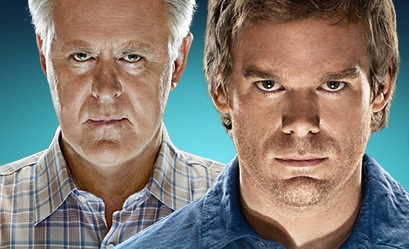
See It: Dexter (Season Four)

Poke holes in this popular Showtime series if you want – its heroic serial killer concept certainly gives you lots of room to do so – but four years in, it’s more absorbing than anything on the tube, and most offerings at the multiplex. After an underwhelming third season, which was anchored on the ho-hum relationship between Dexter Morgan (Michael C. Hall) and his unlikely apprentice, hotshot D.A. Miguel Prado (the redwood of wooden actors, Jimmy Smits), season four gets back to what made the show irresistible in the first place – Dexter, himself a sociopath, hunting a supremely creepy, heretofore untraceable serial killer, intrigued by what they have in common and determined to destroy him nonetheless. The psycho in question is the Trinity Killer, a man who has killed in cycles of three, in the same meticulous fashion, for decades. And what might sound like James Patterson tripe on paper is brought to life with hair-raising efficiency by John Lithgow, whose Emmy-winning guest turn is a masterfully controlled depiction of insanity. The actor rarely uses more than the posture of his massive frame and his wildly expressive eyes to let you know he’s more monster than middle-aged man – when he does fly off the handle, it’s almost a relief. Lithgow’s performance is also good enough to smooth over the clichéd moments, including some hackneyed jokes about baby-induced sleep deprivation (Dexter and his wife Rita got married and had a kid to close out season three, if you care). After seeing the heart-stopping, bloody finale and thinking back on the season, Trinity’s helpless, horrifying face overshadowed all.

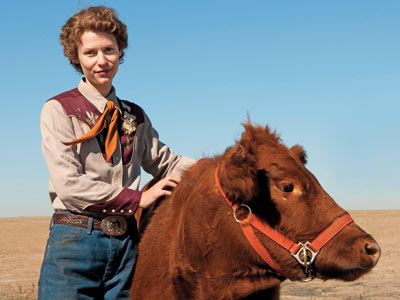
Flee It: Temple Grandin

This HBO original movie was one of the biggest winners on Sunday, proof that American viewers remain suckers for feel-good, “me against the world” true stories, even if they fail at making you feel more than just good. What’s especially frustrating about Temple Grandin is what it could’ve been. All the raw materials of a memorable, out-of-the-box bio-pic are here – the title character is thoroughly enthralling, a resilient, brilliant, autistic woman who revolutionized the slaughterhouse industry with her cattle-sensitive designs. This is prime territory for a bold visual approach, to show audiences what life was like through Grandin’s eyes, resulting in the kind of dramatic tension you don’t see every day. Instead, director Mick Jackson’s movie is such a formulaic heartstring yanker, it makes you wonder if HBO bought the script from Lifetime. A lot of lip service is given to the fact that autism is misunderstood, whether it’s a motivational speech from her mentor/high school science teacher (David Strathairn) or a weepy flashback from her mother (Julia Ormond). And as Grandin, Claire Danes puts her all into the vocal impersonation and various emotional breakdowns (the stuff that wins Emmys, which she ended up doing), but never quite goes beyond cartoonish mimicry. By the end, you understand that Grandin is a remarkable person indeed. You don’t understand much else about autism, but man, do you feel warm and fuzzy.

Inception: Wake me for the cool parts

I scored free passes to a sneak preview of Christopher Nolan’s hotly anticipated sci-fi/action opus Inception last night. And although I hadn’t been exposed to all that much of the hype, I had been tainted enough to go in hoping for a jaw-dropping spectacle.

What I got was a mess. An ambitiously constructed, sporadically clever mess, but a mess nonetheless. Inception is basically a cross between Ocean’s Eleven and Flatliners – a group of slick, attractive guys (and token girl) who perform elaborate heists in the dreamworlds of their victims. Tempted by the promise of one last score, involving the tricky process of “inception” – planting an idea in a subject’s head and making him think it was his – Dom Cobb (played a little too forcefully by Leonardo DiCaprio) assembles a crack team of subconscious bandits to make it happen. But a “projection” from his turbulent past does everything it can to sabotage the mission.

The concept is interesting enough, and sets the stage for some amazing sequences, where activity in the real world bends the laws of physics in the dream (a zero-gravity fight scene being the most memorable). But if you’re looking to go beyond the fantastical to elicit some kind of meaning – something the film practically demands with its oh-so-serious score and pseudo-religious lingo – get ready for a headache. Cobb’s backstory is intriguing at first, his questionable relationship with his now-deceased wife (Marion Cotilliard) giving some emotional resonance to all the high-octane action. But after what seems like dozens of scenes with DiCaprio and Cotilliard staring morosely at each other, this initial intrigue evaporates. And as the plot lines get progressively more complicated – boy meets girl in real life, then they get trapped in a dream world and live together there for 50 years, then they return to reality but aren’t sure if it’s really reality, then continue to see each other in dreams after one of them dies, or something like that – it becomes impossible to care.

Nolan must have thought this sort of heavy-handedness would provide the dramatic heft necessary to upgrade Inception from sci-fi popcorn flick to philosophical tour de force, but it only succeeds in dragging everything down, making an already bloated two-and-a-half hour run time feel like three.

Which is too bad, because there’s an awfully fun summer movie hiding beneath all the weepiness and high-minded ideas. The chase scenes are taut and imaginative, CGI sequences of exploding cafes and runaway freight trains are beautifully executed, and the supporting cast is pretty wonderful. Joseph Gordon-Levitt gives a masterfully reserved performance as Cobb’s sidekick Arthur, including a total charmer of a scene with sort-of love interest Ariadne (a workmanlike Ellen Page), and Tom Hardy is a godsend as Eames, the smarmy, sarcastic “Forger” (a guy that impersonates people in dreams).

But Inception is out to show you more than a good time, and becomes a murky metaphysical puzzle as a result. You’re gonna be better off exploring dream worlds of your own.

See It/Flee It: Monsters and Monstrosities

See It: Nightbreed

Some of the most effective fantasy/horror films involve a reshuffling of the heroes and villains deck – an awkward way of saying that the monsters become the good guys. And lately, a prevalent source for stories like these has been Guillermo del Toro, the visionary director of The Devil’s Backbone, in which the ghost of a murdered boy is a misunderstood hero, and Hellboy, where a top-secret government bureau of monsters and freakazoids protects an unassuming public from paranormal danger. Del Toro’s affinity for stories like these, and obsession with elegantly freaky creatures, means he must have watched Nightbreed on a loop back in the day. Clive Barker wrote and directed this 1990 adaptation of his novel Cabal, and the resulting tale of a forgotten society of shapeshifters, undead sages and imaginatively deformed beings – and the police witch hunt bent on destroying it – is an inspired allegory for any kind of uprising of the downtrodden. That might be high-falootin’ talk about a movie that depicts an obese housewife getting murdered in her kitchen, or a guy in makeup that’s a cross between Jar-Jar Binks and Darth Maul hissing “Y’all come back now, y’hear?” But Nightbreed is well made – Barker isn’t a master storyteller like Del Toro, but his creatures are beautifully bizarre, with the exception of the one I just referenced and another that looks like Jay Leno with a condom hat and douche bag goatee. And it’s decently acted – Craig Sheffer’s turn as main character Aaron Boone is strong, effectively toeing the line between humanity and monstrosity, and David Cronenberg is unforgettable as the mad psychologist/serial killer Philip K. Decker. Regardless, Barker must have been doing something right, because by the explosion-heavy climax, when the residents of Midian decide to fight back against their oppressors, the desire to see them triumph comes from a real place.

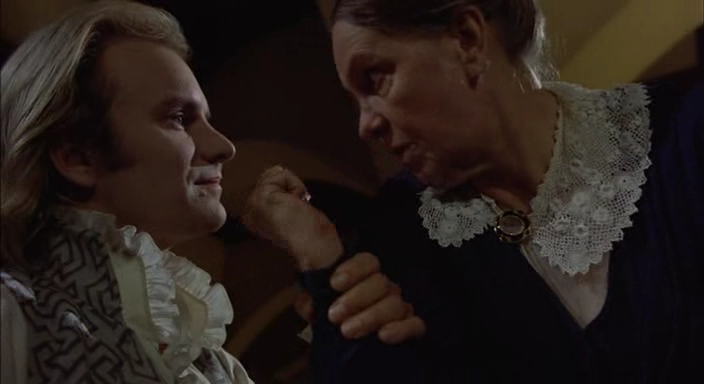
Flee It: The Bride

The characters of Count Dracula, The Wolfman, Mummy, and the Drs. Frankenstein and Jekyll have been the subjects of so many bad movies. And 1985’s The Bride has gotta rank as one of the lamest. A reimagining of James Whale’s iconic The Bride of Frankenstein, the film stars Sting as the tortured outcast Baron Charles Frankenstein, and Jennifer Beals as Eva, the creation he cobbled together from various corpses to be a mate for his original monster (tenderly portrayed by Clancy Brown). But for a reanimated, coat-of-many-colors abomination, Eva has no visible scars or abnormalities. She just looks like that girl from Flashdance in period garb, with pouffy ’80s hair intact. And this is the least of The Bride’s problems. The Frankenstein character is vicious and tormented; in his perverse love for his creation lie the seeds of his own destruction. But Sting’s attempts at brooding are so wooden, he comes off better suited to a Twilight installment. More importantly, director Franc Roddam’s movie doesn’t add anything to the legend of either monster, save a subplot of monster #1 befriending a circus performer and Eva growling at a house cat because Frankenstein hadn’t taught her they exist – “I thought it was a little lion,” she explains afterwards. (Sting’s lesson plans must be comprehensive, because we’re supposed to believe his pupil had learned about everything on earth, except for cats.) Of course, the twisted Count gets his, the two monsters reunite and run off together. But we’ve already learned these lessons before – you can’t live healthily without accepting death as a reality, don’t judge a book by its cover or it’ll kill you with its superstrength, etc. Beyond establishing the facts that Sting has great bone structure and Beals is awful, all The Bride teaches us is that lovers of classic horror stories will sit through some horrible stuff, just to get the faintest taste of the original.