Netflix Recap

Stuff that I’ve “watched instantly” recently:

The Hot Chick (2002)

My wife and I were both feeling a bit under the weather, so we thought we’d opt for the dumbest comedy we could find. And when Rob Schneider’s face popped up on our TV screen, cucumbers covering his nipples, his face covered in a mud mask and a “What did I get myself into this time?” expression, we thought we’d found just the right level of idiocy. But after about 20 minutes of The Hot Chick, we were scrambling for the stop button. Here’s the premise: An ancient Abyssinian princess is betrothed to a horrible prince, and escapes her fate by using a pair of magical earrings to switch bodies with her servant. 2,000 years later, these same earrings end up in a New Age Creations-like store at the mall, where they’re shoplifted by a valley girl, who then ends up switching bodies with Clive Maxtone, a mentally disturbed petty thief who fills his bag with nacho cheese when there’s not enough money in the cash register. Adam Sandler shows up at the beginning, as a dreadlocked employee of the mall store, only to blatantly rehash the “you can put your weed in there” SNL sketch, which wasn’t all that funny in the first place. We didn’t last long enough to see what kind of wackiness ensued, but based on the movie poster, I assume it’s a bunch of lightly homophobic gags about how funny it to watch a guy doing girl stuff.
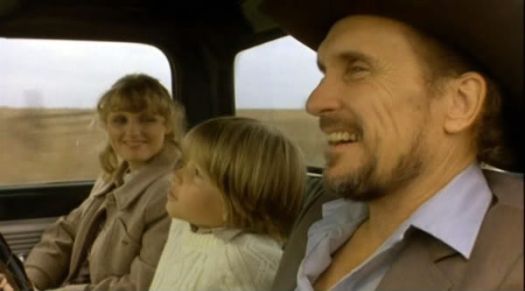
Tender Mercies (1981)

After feeling burned by the comedy route, we took a 180 and checked out this tranquil country drama. While I haven’t seen the much-ballyhooed Crazy Heart, it must be indebted to this powerful character study from director Bruce Beresford. The story of an alcoholic, washed-up country singer who tries to come to terms with his past, with the quietly intense love of a county road motel owner  lighting the way, Tender Mercies could easily have gotten out of hand dramatically (see Exhibit A). But thanks in part to a career-defining turn from Robert Duvall as the main character, Mac Sledge, this is a story of redemptive strength that plays things close to the vest. Awash in craggy, knowing looks, his weathered voice rarely rising above a mumbled twang, Duvall inhabits the space of a guy who’s seen it all, and isn’t all that interested in seeing any of it again. Horton Foote’s Academy Award-winning screenplay is full of simple, profound backs and forths, including the one of the sweetest and most matter-of-fact marriage proposals you’re bound to see. During one of Mac’s bouts of anger, he goes to a bar/restaurant, where he bristles at the waiter’s questions, snapping, “I don’t know what I want yet.” But by the end, as he tosses a football with his stepson, you get the sense that he’s changed his answer.

Law & Order: Criminal Intent (2001-pres.)

Few things in life are as formulaic as an episode of Law & Order, and the same can be said of its offspring. Criminal Intent, however, is the only version that landed Vincent D’Onofrio, whose performance as Detective Robert Goren crackles with a spastic vulnerability that’s deeper than any L&O character deserves (I will not suffer Chris Noth). Still, everything else is much the same – some unsuspecting folks stumble upon a body, the first suspect isn’t guilty, somebody who shows up for a short period of time early on ends up being the killer, and, of course, they always catch him/her. But there’s something soothing about all of this predictability – if I’m having trouble sleeping, an episode of CI works like a lullaby.

An Easter playlist

Easter pales in comparison to Christmas – it’s Jesus’s comeback album, which, while enjoyable, just can’t compare to his debut. But one thing that Easter does have over the Yuletide is a lack of musical accompaniment. Without a “Rockin’ Around the Butter Lamb” to dominate our stereos, we can play whatever we damn well please. Here’s what I plan on spinning this Sunday:

Mark Morrison – “Return of the Mack”

“And they found the stone rolled away from the tomb, upon which it became clear. The mack hath returned.”


A Tribe Called Quest – “The Hop”

Just drums, a standup bass loop, some light electric piano and the effortless flow of Q-Tip and Phife Dawg. One of the most addictive cuts from one of history’s most addictive groups.


Jefferson Airplane – “White Rabbit”

Dude, that fucker on the PAAS box is looking at me. He knows something, man. It’s like I’m naked. He can see everything. HE CAN SEE EVERYTHING!!!!!!


Beastie Boys – “Egg Man”

A way better theme for an egg hunt than the stupid-ass bunny hop, this is the only song I know of that’s cool enough to sample Curtis Mayfield and reference Pink Flamingos.


AC/DC – “Highway to Hell”

Lent is over. Satan in the hiz-ouse!


Bjork – “Hidden Place”

A song about the beauty and fragility of sexual intimacy, or a metaphor for kids searching for baskets filled with shit from the drugstore?


Peter Tosh – “Legalize It”

It’s time to decriminalize Easter grass, people. Shredded plastic is processed from oil, which is all natural, man.


Chumbawamba – “Mary Mary (Stigmatic Mix)”

As you know, this was on the Stigmata soundtrack, a movie that was ironically full of plot holes. It appears that the song isn’t available on mp3, but I imagine it’s about how Jesus got knocked down, but then got up again.

What’s In My Discman, April 2011

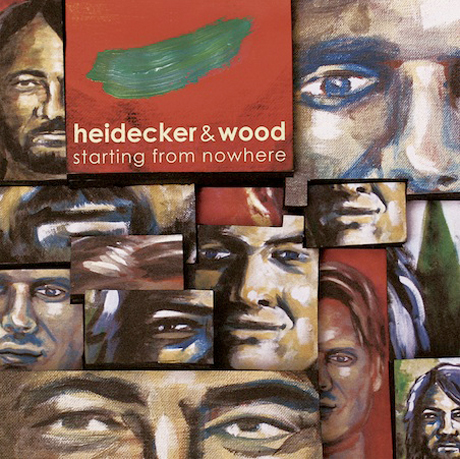
Heidecker & Wood – Starting From Nowhere (2011)

Subtlety is pretty non-existent in Tim Heidecker’s most well-known work, the wee-hour bong-hit variety show supreme, Tim and Eric Awesome Show, Great Job! So when fans take Heidecker & Wood’s debut album for a spin (the other half of the duo is Tom Goes to the Mayor and Awesome Show music director Davin Wood), its relatively serious yacht rock underpinnings will come off as shockingly soft. But once the surprise wears off, Starting From Nowhere reveals itself as both a meticulously crafted homage to ’70s sensitive guy music and a calmly ridiculous bit of comedy. Take “Cross Country Skiing,” which opens the album. There aren’t any notable one-liners on the lyric sheet, but it’s an earnest folk song about a patently unexciting white person sport, and that’s funny. H&W employ the same quality melody/silly lyric formula as Tenacious D or Flight of the Conchords, but the comedy band duo comparisons end there. Heidecker’s delivery is soft and genuine, enough off-key to tell you he’s more comedian than vocalist, but bereft of any “hey, I’m being funny” elocution. This record is stuffed with clutch examples of bad lyric writing (my favs at the moment: “What are the questions we ask when we’re asking questions?” and “A canyon and a man can live in peace”), but they’re rarely spotlit, making them easy to miss the first time around. And that’s just fine with these guys. After all, Wood’s arrangements and melodies are such accomplished homages to Chicago, Steely Dan, Air Supply and Crosby Stills & Nash, chances are you’ll be humming along before you’re laughing out loud.

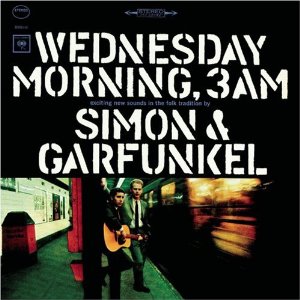
Simon & Garfunkel – Wednesday Morning, 3 a.m. (1964)

With Heidecker & Wood on the brain, I was inspired to revisit this album, undoubtedly the cheesiest, most uneven effort of Simon & Garfunkel’s rarely flawed partnership. (The inclusion of “Bleecker Street” on a season 4 episode of Mad Men also contributed to this unexpected urge.) Missing the literary folk boom by a couple years, the album tanked initially, going clang with an audience that was already following Dylan to bold new territory. And it would be understandable if anybody didn’t get past the first track, a cornball run-through of the hymn “You Can Tell the World” that’s exactly what Christopher Guest was making fun of with The New Main Street Singers. But the balance of the record holds up better than I remembered, from the endearing innocence of “Bleecker Street” to the harmonic showcases of “Benedictus” and “Peggy-O.” And, of course, the original, acoustic version of “The Sound of Silence,” whose elegance is evergreen. On the whole, Simon’s writing still needed a bit more polish, but it’s all too evident here that the duo already had wuss rock lightning in a bottle.

Eels – Electro-Shock Blues (1998)

To round out what has become the softest Discman trilogy yet, it’s the second and arguably best effort from Mark Oliver Everett (aka “E”). After losing both his mother and sister in a short period of time, the one-man phenomenon behind Eels made a record that was understandably cynical and sad. And while Electro-Shock Blues might’ve been an open vein lyrically (e.g. “My life is shit and piss”), its music provided the balance necessary to make it a valuable document of the human condition. Among the many gorgeous acoustic ballads here, there’s the lurching Tom Waits rhythms and found sounds of “Cancer for the Cure,” the dance-folk Beck breaks of “Last Stop: This Town” and the sexy Morphine rumble of “Hospital Food.” Hence, by the time E admits to finding a new appreciation for being alive on the closing “P.S. You Rock My World,” you’re not only far from depressed – you’re wishing the whole beautiful thing wouldn’t end.

“Get it? It’s a metaphor!” –Darren Aronofsky

Yesterday, I watched Black Swan, a movie I had low, low expectations for. All of the previews and reviews made it seem like just another predictable psychological thriller, about a ballerina starring in “Swan Lake,” and the stuff that happens in “Swan Lake” happening to her.

And that’s precisely what it is. The stuff that happens to the White Swan in “Swan Lake” happens to Nina, a prima ballerina whose ensuing nervous breakdown is the only real storyline in the film. While this isn’t necessarily the meatiest concept for a movie, it could make for a visually interesting experience, with the viewer searching for the symptoms of Nina’s breakdown as she eventually loses enough of her mind to actually believe she’s the character she’s playing.

But holy shit, is this movie not that.

Instead of giving his audience the opportunity to take part in the experience, director Darren Aronofsky makes damn sure we don’t miss a thing, cramming practically every frame with as much ham-fisted symbolism as it will hold, telling us what to think like we’re a brood of insipid children. LOOK! Nina’s wearing white and surrounded by stuffed animals! LOOK! Lila the “bad” ballerina is wearing black … and smoking! LOOK! Nina’s mother paints pictures of her younger self and plasters them all over the walls!

The script is almost as relentless as the direction, refusing to give us characters that are anything more than cartoonish stereotypes (the innocent girl, the Jezebel, the past-her-prime star, the crazy stage mom, the foreign asshole ballet instructor), and repeating itself to the point where drinking games become fatal. And other than a few moments that could live on as camp classics (e.g. Barbara Hershey screaming “This role is destroying you!”), the dialogue is as clutzy and embarrassing as everything else.

Then there’s Natalie Portman, whose lauded performance did little to change my opinion of her as a one-note actress. She cries because she’s scared, does ballet stuff, cries because she’s crazy, does more ballet stuff, and then cries because she’s content. Only when placed side by side with the inferior talents of Mila Kunis does she seem Oscar-worthy.

By directing this paint-by-numbers story like it’s going to be a silent movie, throwing in gobs of stylized violence, and combining it with a script that just repeats the same tired motifs – sexual repression is bad, psychotic parents are bad  – Aronofsky has made a film that’s going to give a major headache to anybody expecting a nuanced work of art.

Perhaps Aronofsky knows something we don’t know, and made this movie as a coded message to the few who could read between the lines. Maybe the government and the textile industry are in cahoots, secretly manufacturing clothing that can control the thoughts and behaviors of human beings – white tank-tops make you all wide-eyed, fidgety and weird; black tank-tops make you smoke cigarettes and act like a whore.

Or maybe he, and the three male screenwriters, just weren’t cut out to make a movie about a destructive mother-daughter relationship, and the psychological burden placed on young women in the ageist and sexist ballet world.

One thing is for sure. I’m never seeing another one of his movies again. And I mean it this time.

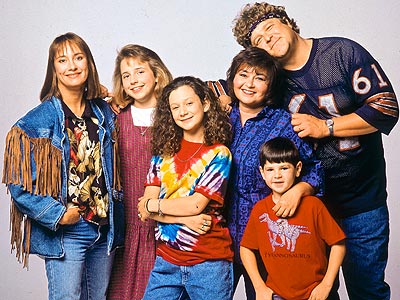
The Conners: A sitcom family in a class of its own.

About a month ago, the magical, free-time-sucking beast that is Netflix’s “Watch Instantly” feature entered my life. As a result, I am reading less, getting seriously disoriented every time I have to go outside, and watching shit like “Legends of the Fall” – now, those Anthony Hopkins stroke-induced facial paralysis scenes are only a click away.

The upside? “Watch Instantly” offers all nine seasons of Roseanne, an example of the rarest thing you’ll ever see on broadcast television – a sitcom that is both wickedly funny and disarmingly realistic. As I started to retrace my steps through the Conner family saga, I wondered if it would still hold up after 20 odd years. Fact is, at its best, the show’s probably even more relevant today, thanks to a markedly un-gimmicky comedic formula. This isn’t a show about middle class Americans with jokes thrown in – the stresses and struggles actually set up the zingers, positioning Rosie and her brood as the kind of people who find their strength through their sense of humor. Instead of wacky misunderstandings, the hilarity stems from the stress of tax day, having a snot-nosed teenager as your boss, and telling your daughter that she doesn’t have a college fund. And as well-crafted as it all is, none of it would’ve translated without such a talented cast – John Goodman and Laurie Metcalf both turn in nuanced, honest and hilarious performances, giving Roseanne a foundation that allows her to just be herself, delivering sarcastic put-downs with a skill that’s yet to be matched by any sitcom star.

After the first five seasons, the writers started to stray from the formula, but some of these diversions are fun, especially a pair of season 7 clip shows that includes Roseanne comparing notes with June Cleaver, Ruth Martin and Norma Arnold, much to their dismay. The drama starts to get laid on a little thick when Dan’s father issues get the best of him, and Darlene’s on-again off-again relationship with David becomes a bit of a bore. But what more could you expect from a show in its seventh, eighth and ninth seasons? The only thing that’s tough to forgive was the temporary replacement of Lecy Goranson, the actress who played Becky, with Sarah Chalke during seasons 6 and 7. It’s never good when shows do this, and especially bad when the new performer changes the way the character behaves – Goranson’s Becky was smart and argumentative; Chalke’s was quiet and passive.

Much has been made of the final season’s lottery storyline and meta-confessional finale, and for good reason. It went against everything that made the show unique, and more importantly, the jokes just weren’t as funny. But taking this journey with the Conners for a second time, rooting for them as they take one step forward and two steps back through season after season, it still feels good to see their dreams come true.

What’s in my Discman, March 2011

James Blake – James Blake (2011)

The cover of James Blake’s debut album is a nice bit of synesthesia – a portrait of the artist soaked in icy blue undertones, his face blurred to the point where he’s looking at you from two different places at once. It’s the perfect visual interpretation of Blake’s voice on this record, a silky, soul-inflected alien in a purely electronic world. On “The Wilhelm Scream,” it’s rich and full, dancing lightly over atmospheric synths; on “Lindesfarne I,” it’s distorted and chilling, comparing hope to kestrels through washes of pitch correction. Blake pines for happiness throughout, over distant, subterranean electronics that belie his optimism. It’s a Sade album for a Terminator future, where a singer clearly has soul, and the machines try to strip it from him every step of the way.

ZZ Top – Eliminator (1983)

The trio of Gibbons, Hill and Beard were always thinly veiled rip-off artists, but they tended to be damn good at it, fusing John Lee Hooker’s riffs and attitudes with the kind of classic rock hooks that fit snugly on the Dazed and Confused soundtrack. On Eliminator, those mainstream tendencies completely took over, and it was a blessing. By polishing up their guitar sounds and throwing some love songs into the mix, ZZ Top found the balance they needed to make a great record. Instead of sounding like a guy who’s bullshitting his buddies, a la “I’m Bad, I’m Nationwide,” Billy Gibbons sounds sincere in his appreciation of legs, suits and TV dinners, letting his guitar do the bragging with one indelible riff after another – “Gimme All Your Lovin’,” “Got Me Under Pressure” and “Sharp Dressed Man” is one of the strongest opening sequences in ’80s rock.

Das Racist – Shut Up, Dude (2010)

The second mixtape Das Racist released last year, Sit Down, Man, was a Discman constant for me, along with the Wallpaper remix of their corporate homogenization novelty song “Combination Pizza Hut and Taco Bell.” Now that I’ve circled back and picked up their debut mix Shut Up, Dude, it’s crystallized in my brain – few things are more fun these days than listening to these guys. The lyrics might be delivered with a stoner’s irreverence, but they’re meticulously packaged blasts of verbal candy, delightfully off-kilter (“We can eat gruyere as if we care/We can eat Roquefort, or we can kick it like Rockport”) and rich in pop culture (references include Saved By the Bell, Tim Meadows, The Land Before Time, Look Who’s Talking Now and Jake Gyllenhaal). And given that it’s a mixtape, Das Racist can rap over anything, whether it’s a choice Madlib beat or a hyped-up slice of Billy Joel’s “Movin’ Out.” The result is mischievous, way smart and party ready, and a reminder of how much fun rap is when it doesn’t have to worry about intellectual property law.

Who’s gonna win, whether I like it or not.

So, the Oscars are on Sunday. And for a reason I still find tough to define, I’m going to watch them. I expect hosts James Franco and Anne Hathaway to do a passable job – Franco does have some comedic chops, evidenced by his SNL and 30 Rock guest spots. But after the way Ricky Gervais made celebrities squirm, gasp and complain at the Golden Globes, any attempt at humor is going to seem like a Dave Barry column. Guaranteed, neither host will make Robert Downey Jr. get up and call the event “hugely mean-spirited with mildly sinister undertones.” Which is too bad.

Anyhoo, here are my picks for who’s gonna win this silly thing that I care about:

Best Supporting Actor

Who Will Win: John Hawkes, Winter’s Bone. The safe money’s on Christian Bale, whose “I luv my bruddah!!!” histrionics are a hardware magnet. But while WB might be an underdog on Sunday, but it’s also the kind of underdog story that wins Oscars. And Hawkes’ performance as the bad-ass-with-a-heart-of-gold Teardrop is both beautifully fashioned and easy to adore.

Who I’m Rooting For: Hawkes. Though if Geoffrey Rush wins, I’ll be content – his crisp comedic performance got me through The King’s Speech.

Best Supporting Actress

Who Will Win: Melissa Leo, The Fighter. If Bale loses, this is the only other category in which the Academy can reward all the melodrama. Plus, Leo’s a hard-working, somewhat unsung character actor, which always makes for a good story.

Who I’m Rooting For: Jacki Weaver, Animal Kingdom. Her performance as a sickly sweet matriarch was a high point of this well-crafted tale of an Australian crime family. Hailee Steinfeld’s turn as the bull-headed heroine Mattie Ross is also very much deserving.

Best Actor

Who Will Win: Colin Firth, The King’s Speech. While Firth approached this role with the respect and restraint it deserved, the end result just wasn’t all that compelling. Even Bridget Jones’s Diary made better use of his oozing good-naturedness. But, it’s a role that requires altering your vocal patterns (read: ACTING!), so he’ll win.

Who I’m Rooting For: Jeff Bridges, True Grit. It would be awesome if he could pull a Hanks. I’d also applaud if they honored Jesse Eisenberg’s cold, obnoxious turn in The Social Network.

Best Actress

Who Will Win: Natalie Portman, Black Swan. Did you hear that she trained to be a ballerina for this? (read: ACTING!)

Who I’m Rooting For: Annette Bening, The Kids are All Right. While this family dramedy was just all right, Bening’s performance was spot-on as usual, refusing to get all Oscar winner-y when her character gets cheated on, preferring to weather most of the storm on the inside – you know, like real people do.

Best Screenplay (Adapted)

Who Will Win: Aaron Sorkin, The Social Network. Probably the only no-brainer of the night.

Who I’m Rooting For: Sorkin, but the Coens adaptive work is certainly worthy as well.

Best Screenplay (Original)

Who Will Win: Lisa Cholodenko & Stuart Blumberg, The Kids are All Right. The Academy’s gonna want to throw a bone to this movie in some way, to show they support old-fashioned family-centered stories.

Who I’m Rooting For: Mike Leigh, Another Year. Haven’t seen this yet, but the guy’s in a league of his own.

Best Director

Who Will Win: Tom Hooper, The King’s Speech. It’s between Hooper, whose feel-good period piece is certainly well-crafted, and David Fincher, whose steady hand made a cynical, dialogue-driven character study go down easy.

Who I’m Rooting For: Joel and Ethan Coen, True Grit. If they hadn’t won a few years back, perhaps they’d be in the running, a la Scorsese’s compensatory win for The Departed. They did, though, which is too bad, because their vision of this simple American story is as stark, troubled and inspiring as the country itself.

Best Picture

Who Will Win: The Social Network. The Academy will let us know that they still adore light, drab, “important” fare like The King’s Speech, but by giving the big prize to the “Facebook movie,” they’ll also let us know that they’re “with it.”

Who I’m Rooting For: True Grit. My favorite of the bunch, by a lot. TSN’s backs-and-forths are electric, but stacked side by side with the Coens’ simple tale of redemption, it’s all too obvious that, at least in 2010, less was more.

Grammys are old-fashioned, but do they deserve a beating?

To the people out there who love complaining about the Grammys (and shooting arrows at the broad sides of barns, and shoving unhip kids into lockers), take a gander at some of the winners from last night’s ceremony: The Black Keys (pictured here, looking inspirationally dorky), Cee-Lo Green, Arcade Fire, Lady Gaga, Jay-Z, John Legend & The Roots, Jeff Beck, Eminem, Rihanna, Esperanza Spalding, Bruno Mars, La Roux, Neil Young, Them Crooked Vultures. If you wanted to make a list of quality mainstream artists in 2011, you could do a lot worse.

Admittedly, I’m not a big fan of the event. I didn’t watch last night’s broadcast. But after reading Trent Reznor’s recent interview with Entertainment Weekly, in which he continues his long-running attack on the Grammys by calling them [gasp] “out of touch,” I had to share my fed-up-itude with such misplaced snobbery. The Grammys have never been about being tuned in to the underground. It’s an industry event that tries to honor artists that are both artistically significant and financially viable – a major feat that’s only getting tougher. If you don’t like pop music, then you’re going to think it’s pointless. But seriously, you don’t like pop music at all?

Yes, it’s unsettling to learn that Train won for a live recording of the thoroughly terrible “Hey, Soul Sister,” especially when you realize that the original was released in 2009. But you’ve gotta face facts – millions of people love that f’n song. If you want to bitch about it, take it up with them.

Me? I’m going to crank up “Just the Way You Are” and sing along like an idiot. And it’s going to feel good.

The Oscars have arrived.

Just watched the announcement of the Oscar nominees for Best Picture:

Black Swan – Haven’t seen it, not sure if I can take another two hours of Darren Aronofsky treating me like an idiot (and Natalie Portman crying).
The Fighter – Also haven’t seen it. Pretty much know what this has to offer, and I like my triumphs of the human spirit without screamy man speeches.
Inception – Mindblowing visuals. Headache-inducing story.
The Kids are All Right – A charming enough family drama that benefits greatly from the existence of Annette Bening.
The King’s Speech – A charming enough British period piece that benefits greatly from the existence of Geoffrey Rush.
127 Hours – My indifference to this one has resulted in me not having seen it. Crazy, huh?
The Social Network – A look at what megalomania looks like in the 21st century, propelled by fabulously constructed, rapid-fire dialogue.
Toy Story 3 – Missed the first and second parts of the series, and have heard from many folks that this installment will make me miserably sad. Maybe I’ll wait until summer to take in the trilogy.
True Grit – Jeff Bridges’ blustery performance is a treat, but the way the Coens make room for him in this simple adventure story is equally enthralling.
Winter’s Bone – Where Deliverance was gratuitous, these backwoods are stark, quietly frightening, and ultimately hopeful.

Franz List: Worst Pictures

How can you tell I’m not a real movie critic, beyond my lack of knowledge and questionable writing ability? I care about the Oscars. In 1992, when Silence of the Lambs cleaned house, I was watching the event for the first time. And considering that Silence of the Lambs was pretty much the greatest movie I’d ever seen, I thought this award show was pretty cool (despite Billy Crystal’s insufferable bullshit). Since then, however, I’ve felt like Clarice Starling – horrified and fumbling in the darkness.

With Oscar season upon us – nominations will be announced on January 25, with the ceremony set for February 27  – I figured why not relive some of those horrible moments? Here’s my list of the five worst movies to win the Academy Award for Best Picture in my lifetime.

5. Shakespeare in Love (1998)
What if Romeo & Juliet was autobiographical? This is the concept behind Shakespeare in Love, a movie that would be inane enough if it didn’t poison a grade A cast with the likes of Gwyneth Paltrow and Ben Affleck. If whimsy’s what you’re after, there’s more than enough here to choke an ox.

What I was rooting for: The Thin Red Line. While I’m not one for war movies, and found Terence Malick’s meditative style a bit tedious, at least the thing was beautiful.

4. Crash (2005)
Do the Trite Thing.

What I was rooting for: Brokeback Mountain. Thought I’d actually be happy this time, as a movie I adored was the odds-on favorite. I hadn’t learned my lesson.

3. Titanic (1997)
There’s usually something moving about characters who carry flames for a lost lover, deep into old age. But when James Cameron tried to find a common thread between this type of romance and one of history’s most epic tragedies, the result was as unfeeling as the iciest of Arctic waters.

What I was rooting for: L.A. Confidential. Even though Russell Crowe is a walking cliché, it’s film noir done right.

2. American Beauty (1999)
In the real world, when a middle-aged man gets his mid-life crisis Corvette, it’s embarrassing. In American Beauty, when he does this times 100, he’s a hero. And beyond telling us to worship at the altar of the male ego, the movie teaches us a valuable lesson about closeted homosexuals: They will murder you!

What I was rooting for: The Sixth Sense. One of the most imaginative ghost stories I’ve ever seen; the best of a very weak field.

1. Forrest Gump (1994)
A man does whatever he’s told – including going to war – without once questioning if it’s in his best interests, and lives an impossibly exciting life. A woman fights for what she believes in, and dies of AIDS. I’m pretty sure Dick Cheney wrote this.

What I was rooting for: Pulp Fiction. Like, duh.