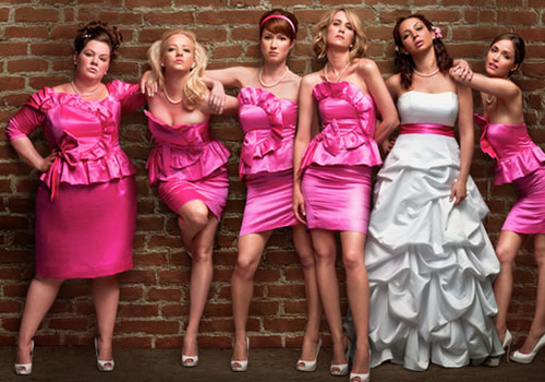
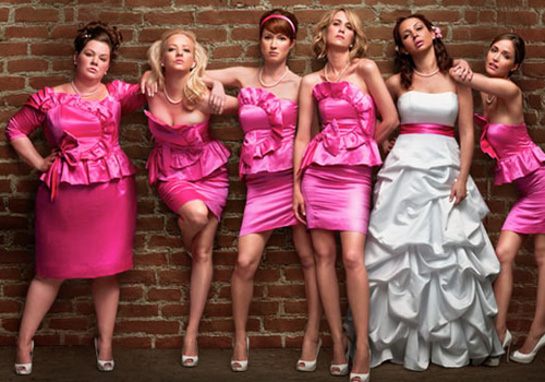
Ever since its release, a demographic-spanning group of friends and family recommended The Hangover to me with the loftiest hyperbole. “The funniest movie ever,” was a common utterance. Which of course meant that when I finally sat down to watch it, the highest grossing R-rated comedy in history couldn’t possibly live up to my expectations. Although I suspect that I would have hated it just as much without the hype, what with its hero christening his friend “Dr. Faggot” because he won’t stand up to his shrill, domineering wife (’cause there ain’t any other kind, right, brah?). Hence, I was really looking forward to Bridesmaids, Kristen Wiig’s take on the wacky wedding party tale that promised to cleanse my Bradley Cooper-hair gel-encrusted soul. And its first hour more than delivers, playing to all the strengths of its superb cast. Wiig’s lovable wise-ass persona lends itself nicely to her lead role as Annie, the downtrodden best friend of the freshly engaged Lillan, played by Maya Rudolph – in an early coffee shop scene, the actresses riff so comfortably together, you imagine they must be friends off-screen. Supporting players Wendy McClendon-Covey and Melissa McCarthy do their share of scene-stealing as well, and Jon Hamm is spot-on as Wiig’s booty-call bastard Ted. It’s the way this kind of movie is supposed to work – its plot is as formulaic as The Hangover or My Best Friend’s Wedding, it’s just written and performed by funny people, and gives them a broad canvas to do their thing. There are too many jokes that hinge on McCarthy’s size, and Rose Byrne’s snobby rich lady character is so cliche she’s barely a person, but for the most part, this is about as funny as ensemble comedy gets in Hollywood.
Flee It: The Second Half of Bridesmaids
Remember how the first hour of Bridesmaids was a fresh take on tired romantic comedy tropes? Well, Wiig, co-writer Annie Mumolo and director Paul Feig saved all of the derivative, boring gal pal stuff for the balance of the film. After a delightful flight to Vegas set piece that involves Wiig getting drugged and announcing that she sees a colonial lady on the wing, Bridesmaids becomes a slog, as we watch Annie’s life systematically fall apart. She gets booted from her apartment, loses her job, moves in with her mom, and has a supremely selfish nervous breakdown at Lillian’s bridal shower. McClendon-Covey pretty much vanishes, along with her hilarious, repressed housewife rage. McCarthy is thrown into the role of comic relief, and while she tries valiantly, her schtick suddenly feels out of place. And most importantly, that Wiig and Rudolph chemistry turns into the kind of schmaltzy BFF fluff that this movie was supposed to be satirizing. Oh yeah, and Annie’s romantic interest is Nathan, a funny, hard-working, non-threatening guy who cares about her problems. He’s as much of a cartoon as Ted, but far less fun. By the time we get to the final wedding scene, the free-form party of the first hour seems like a distant memory. So, while it’s much funnier than The Hangover, Bridesmaids still feels like a failed relationship – how could something with such potential end like this?
In the 1980s, the world of animated television wasn’t exactly diverse. So, even though I don’t remember exactly loving He-Man and the Masters of the Universe (my idea of bliss was a Fruit Roll-Up and an episode of Scooby-Doo), I definitely watched plenty of it. The story is Superman-meets-Conan, with a dash of Arthurian legend, concerning Adam, the prince of the planet Eternia. He’s got a magic sword that turns him into He-Man, a nattily clad hero with super-strength and a bottomless well of witty rejoinders for Skeletor, He-Man’s comparably nattily clad, seemingly undead nemesis, whose entire existence is defined by his desire to see what’s inside He-Man’s house. Only a handful of people know He-Man’s secret, despite the fact that he doesn’t even bother to alter his appearance – He-Man looks exactly like Adam, except his purple shirt and lavender breeches give way to some dinky chest armor and a brown Speedo.
I’ve been re-watching He-Man lately (thank you/I hate you Netflix), and that habit has become a gateway drug to episodes of She-Ra: Princess of Power, the creators’ savvy attempt at doubling the audience for their shitty cartoons by giving a shout out to the ladies. And after taking in the three-episode arc of She-Ra’s origin story, I can report that despite some unexpectedly dedicated writing, the series is as much a poorly disguised excuse to sell toys as the show that spawned it (of course, The Simpsons parodied it best).
Regardless of how half-baked these shows are, it is impressive that the producers devoted three episodes to tell the story of how She-Ra, He-Man’s twin sister, was kidnapped as a baby and taken to the planet Etheria by the dark lord Hordak, who’s like Skeletor except he makes pig sounds. The first episode finds The Sorceress, Eternia’s token bird-spirit-mystic-lady, having a dream about a sword that’s much like He-Man’s. It opens a magic portal to Etheria somehow, and Prince Adam and his obnoxious coward of a pet, Cringer, agree to go through it without much prodding, presumably because one doesn’t fuck with The Sorceress’s decrees. Etheria turns out to be the lame rip-off of Eternia that you’d expect it to be, with the rebel soldier Bow replacing Man-At-Arms as the Tom of Finland fantasy sidekick, Glimmer replacing Teela as the dipshit female warrior, and Madame Razz replacing Orko as the pathetically ineffective and annoying magician (the only difference – she’s Jewish!). At the end of the episode, He-Man discovers that the sword that got him into this mess belongs to Adora, the conveniently Barbie-like character who is an agent of Hordak’s vaguely suspicious sounding group that controls Etheria, The Evil Horde.
Episode Two, “Beast Island,” finds He-Man convincing Adora that The Evil Horde might be, you know, evil. And while we eventually learn that Adora is under the spell of Hordak’s left-hand necromancer, The Shadow Weaver, the depths of her stupidity here are hard to take as anything less than sexist. Eventually, in “She-Ra Unchained,” Adora breaks the spell and saves He-Man from Hordak’s energy-sucking machine, which he plans to somehow use to destroy the Whispering Woods, a place that sounds like a nursing home but is actually where the rebel holdfast is located.
Once she realizes that she “has the power,” Adora becomes She-Ra, and her horse becomes the rainbow-colored flying horse that every little girl would kill her parents for. Then, as He-Man and She-Ra are riding said horse away from danger, she casually drops the bomb on him – The Sorceress appeared to her in a vision, and told her that He-Man was her twin brother, and that she was stolen from their family by Hordak. As they flew away into the distance, He-Man seemed non-plussed. Perhaps it’s a realistic reaction to such soul-shattering news, and the characters express their sadness and rage about the situation in subsequent episodes. Which is as good a reason as any to keep watching, right?
As we get ready for a year’s worth of politicians explaining why the rich should get richer, we get an album from two of the most talented beneficiaries of the Bush tax cuts. And when you consider that on Watch The Throne, Jay-Z & Kanye West reach some spine-tingling heights on the backs of some crazy-expensive samples, this makes for a quintessentially American success story in 2011. Sure, it’s probably unfair that West might be the only producer out there with the clout to license “Try A Little Tenderness,” but there’s no use whining about it, because he also happens to be the best person for the job. The resulting cut, “Otis,” is a magnificent swash of braggadocio that boldly reframes Redding’s theme – in the place of a tender lover making life “easier to bear,” we now have obscene wealth. Both MCs egg each other on, resulting in some propulsive egomania (e.g. “Welcome to Havana/Smoking cubanos with Castro in cabanas”). It’s the precise formula we hoped for with this pairing – huge, luxurious productions, and a palpable sense of one-upsmanship on the microphone. The best example of it might be the RZA co-production “New Day,” which finds Jay and ‘Ye pleading with their hypothetical future children over a haunting beat that runs Nina Simone through AutoTune (!!!). It’s not a track by track masterpiece a la My Beautiful Dark Twisted Fantasy(the mix of pseudo-feminism and rock star hedonism on “That’s My Bitch” just wasn’t thought through), but on Watch The Throne, these superstars spread the wealth so generously, trickle-down economics almost starts to make sense.
Check out “New Day”:
Queen – Sheer Heart Attack (1974)
Everybody knows that Queen could do bombast better than anybody. But it doesn’t seem to be common knowledge that they could straight-up shred, probably because the unbridled adrenaline that fueled this, its third album, would take a back seat to grander production flourishes on later masterpieces. As a result, it might be the least polished record of the band’s oeuvre, and my favorite. Every aspect of the band’s personality is here in its rawest form – towering vocal harmonies, vaudevillian freakouts, proto-thrash exercises and earworm-infested pop gems. From the Moet & Chandon melody of “Killer Queen” to the muscular arena rock of “Tenement Funster,” the halcyon balladry of “Lily of the Valley” to the bloody-fingered metal of “Stone Cold Crazy,” Sheer Heart Attack proved that Queen could do it all, and do it better than your band.
Here’s the harrowing, record execs-are-the-devil rocker, “Flick of the Wrist”:
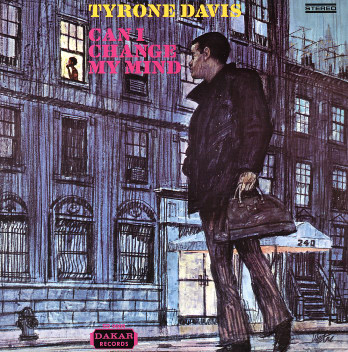
Tyrone Davis – “Can I Change My Mind” (1968)
This is an idyllic R&B confection that gives credence to that classic advice women get when they want to make a man interested – act like you could give a shit about him. Davis, a singer I hadn’t heard of until I stumbled across this song, shows that he should’ve been in the conversation alongside the Motown and Stax greats of the time. Over a clear-as-day guitar riff and some punchy horns, he gets every drop of regret out of the lyric, with an effortless delivery that’s firmly in the tradition of Davis’ Chicago soul forefather, Sam Cooke. “But y’all, the girl, she fooled me this time,” he sings, going on to explain his emotional discovery to us – he thought he wanted to leave his woman, but he just wanted to get a rise out of her. He’s unsuccessful, of course, which clears the way for the beautiful plea of the chorus.
In my orgasmically entertaining 2011 Oscar prediction post, I revealed that I was rooting for Mike Leigh to win Best Original Screenplay for Another Year, even though I hadn’t seen it. Based on the consistent excellence of his previous work, in which the writer/director developed characters in quiet, organic ways, I figured that Another Year would be yet another relatively profound study of everyday human beings.
Well, I have finally seen the thing. And wouldn’t you know it, I don’t just agree with my February 2011 self, I applaud me! Because Another Year is more than the latest reminder that Leigh is one of our finest storytellers – it’s his best movie in a while. A look at four seasons in the life of the happily married couple Tom and Gerri (no surnames are mentioned in the film, which could be a comment about the balance that’s essential to a great relationship, or more likely I’m overthinking things because I’ve had a few beers), Leigh’s creation is the rarest kind of movie in the 21st century – a commentary on the power of love that in no way resembles the plot of a Taylor Swift song. Tom and Gerri – portrayed with gentle confidence by Jim Broadbent and Ruth Sheen – are seemingly the lone signpost of warmth and positivity in the lives of their friends Mary and Ken; their easygoing, loving natures bringing both characters to tears in heartbreakingly believable scenes.
Lesley Manville gets the Oscar-baitiest role here as Mary, Gerri’s hopelessly adrift co-worker who is painfully alone, yet prefers a fantasy relationship with Tom and Gerri’s son Joe to the very real (and very awkward) proposition from the comparably miserable, compulsive eating Ken. But where, say, Darren Aronofsky would wring every last drop of melodrama out of a character like Mary – full of crying jags in the shower and screamy nervous breakdowns during traffic jams – Leigh leaves it all up to his great actress. When Joe brings his new girlfriend home for the first time, the look on Manville’s face is all you need to learn just how far gone she really is.
Over the four quadrants of his movie, marked by scenes of Tom and Gerri lovingly tending their garden plot, Leigh shows us the unhappiness of regular folks, dealing with sadness, disappointment and death through the eyes of two of the lucky ones. It’s a movie about how beautiful it can be to grow old together, without ever forcing its graying characters to act young and spunky in the name of a cheap laugh. Which is light years more meaningful, and genuinely more entertaining, than the eventual winner for Best Original Screenplay, The King’s Speech.
With the afterglow of Another Year still washing over me, I re-watched Topsy-Turvy, Leigh’s 1999 Gilbert and Sullivan biopic that remains his closest attempt to a big-budget Hollywood spectacle. Of course, it isn’t one of those, despite the faithful recreations of several of the duo’s productions, full of inspired costumes and ornate set designs. But it is a different experience from all of the other Leigh films I’ve seen, its compelling studies of the two leads competing with charming behind-the-scenes glimpses of the inner workings of late-19th century theater. Its two-and-a-half-hour running time and extended chunks of Gilbert and Sullivan productions make it sound like an insufferably boring thing, but as in Another Year, Leigh’s ability to draw honest performances from his actors turns something bland into meaningful entertainment. Especially wonderful here are Broadbent and Manville, playing against their Another Year roles. Broadbent is the blustery one here; his Gilbert is the epitome of a bitchy artist – fuming over negative reviews, complaining about the trappings of high praise. Manville, as Gilbert’s wife Lucy, delivers a performance full of the pursed looks and defeated sighs of a neglected spouse. In Topsy-Turvy’s penultimate scene, Lucy shares her idea for a play with her husband, as he sits on the side of her separate bed. It’s a deft depiction of a withered relationship before one last song and dance, a snapshot of Leigh and his actors at the top of their game.
Last week saw the release of Rave On Buddy Holly, a lovingly slapped together collection of artists interpreting the work of one of rock history’s most enduring phenoms. Which got me thinking about where these covers rank alongside other great versions of classic tunes. Here’s my list of the top 10 oldies covers of all time (we’ll classify “oldies” as stuff originally released in the ’50s and ’60s). One Rave Ontrack moved me so much, it threatened to be #1.
10. Elliott Smith – “Because” (1999)
Of all the crimes that American Beauty has committed (portraying women as nagging psychos, portraying homosexuals as murderous psychos, etc.), slapping this heartbreaking performance from Elliott Smith over the end credits is one of the worst. (If you aren’t sure if Sam Mendes takes himself too seriously, here’s your proof.) “Because” might be the most “spiritual” song in the Beatles catalog, one that asks huge questions in the humblest ways. But Smith, a patron saint of loneliness in pop music at the time, delivered these lines with less wonder and more existentialist dread. While the mid-song instrumentation is loyally aped, it doesn’t provide much of a catharsis. Because at the core of it all is Smith, building four-part harmonies all by himself, singing gorgeously into the void.
9. Elvis Costello & The Attractions – “I Can’t Stand Up For Falling Down” (1980)
There’s usually nothing more throwaway than a punked-out version of a slow-burning oldie. But there’s nothing usual about The Attractions, whose caffeinated take on Sam & Dave’s 1967 torch song is one of their most aggressively catchy recordings. Factor in Costello delivering those man-scorned lyrics in his beautifully bitter tenor, and you’ve got a cover that’s the opposite of disposable.
8. She & Him – “I Should Have Known Better” (2008)
You could argue that a Beatles cover is actually the coward’s way out – if you nail it, then you’re a genius who can reinterpret The Beatles. If you flub it, it’s a Beatles song, what did you expect? On their debut album, She & Him might’ve played it safe with this dreamy hula cover of my sixth-favorite Fab Four cut. But boy did they nail it. It’s a recording that’s perfect for the seaside, but thanks to a slower tempo and some shoegaze vocals, it never crosses over to the twee-side.
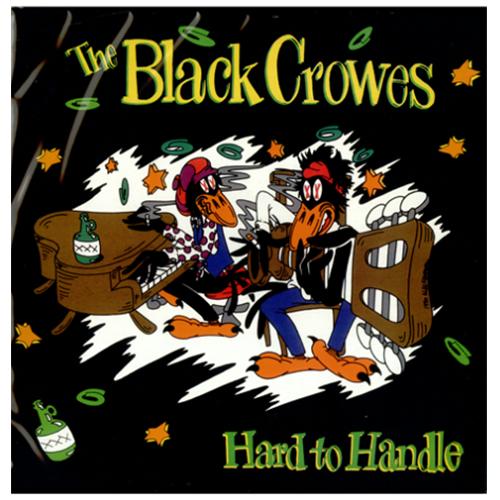
7. The Black Crowes – “Hard to Handle” (1990)
When the Black Crowes released this fiery sendup of an Otis Redding gem as the third single off its debut album, the mix of ’60s soul and Southern bar band boogie inspired me to make Shake Your Money Maker the first compact disc I ever bought. Considering that my earlier purchases included Natalie Cole’s “Pink Cadillac” cassette single, this cover will always sound like a profoundly new experience to me.
6. Nina Simone – “Just Like Tom Thumb’s Blues” (1971)
One of the finest interpreters of popular music takes a typically hazy Bob Dylan song – a guy goes to Juarez at Easter time, gets tired of making oblique literary references down there, and decides to go back to New York City – removes the jocular sneer, and replaces it with a gentle, sympathetic tone. Over light percussion and delicate jazz guitar, Simone digs deep, turning some of Dylan’s more sarcastic lines into deeply tragic moments (e.g. “My best friend the doctor won’t even say what it is I got.”).
5. David Bowie – “Let’s Spend the Night Together” (1973)
On this Aladdin Sane highlight, Bowie manages to make one of the Rolling Stones’ perennial come-ons sound even more coked-out, combining frantically mashed piano chords and blast-off synths with a lightning tempo. The hypercharged arrangement makes the narrator sound less confident, more desperate, and leagues sexier.
4. Cat Power – “(I Can’t Get No) Satisfaction” (2000)
Much like Simone did to Dylan, Cat Power does to the Stones, turning their iconic ode to unquenchable desire into a stripped, vulnerable folk song, exposing the constant pursuit of happiness for what it really is – a symptom of sadness and isolation.
3. Gram Parsons – “Love Hurts” (1973)
Before Nazareth screeched all over this tender Boudleaux Bryant original, people didn’t think of it as a regrettable one-night stand they had in the ’70s. The Everly Brothers captured its ache accordingly on its first recorded version. Roy Orbison crooned it over swelling strings and cooing backup singers, in the way only he could. And Gram Parsons and Emmylou Harris did it best, accompanied by a light acoustic arrangement that allowed their ragged, magnetic vocal chemistry to carry the day.
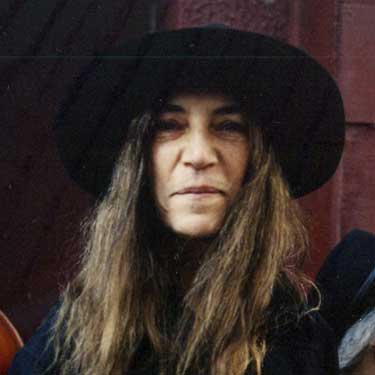
2. Patti Smith – “Words of Love” (2011)
Rave On Buddy Holly includes plenty of mimicry and experimentation, and as usual, the latter approach is more rewarding. But the finest moment of the compilation falls squarely between those two categories – Patti Smith’s delicate take on “Words of Love.” The artist had Holly’s greatest melody to work with, yet opted to deliver it simply and directly, over a dreamy, meditative soundscape. It’s a work of stunning beauty, and a clever one at that, fading out to the reassuring whirr of crickets in the evening.
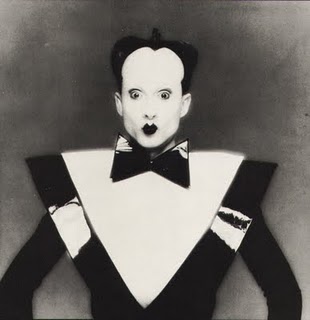
1. Klaus Nomi – “Lightning Strikes” (1981)
It’s easier to appreciate something truly unique when it’s placed in the context of something we’re already comfortable with. Such is Klaus Nomi’s cover of this 1965 Lou Christie smash. The original’s melodramatic delivery was a bit of a guilty pleasure, and its narrator was a straight-up sexual deviant. But Nomi transforms it all into a refreshing blast of avant garde pop, shifting between heavily accented song-speak and delirious bursts of falsetto over a chilly new wave beat. From note one of this cover, there’s no doubt who the original artist is.
[Oh, and for the record, the worst song in this category is James Taylor’s version of “How Sweet It Is (To Be Loved By You),” which manages to suck all of the joy out of the Marvin Gaye original, leaving behind a polished corpse of naptime folk. If Taylor can’t sound lovestruck with such generous source material, he must think a gift of drugstore perfume is guaranteed to get him laid.]
For four years now, I’ve known the glorious freedom of life without cable, a life that doesn’t include any mandatory weekly viewing of our favorite shows. My wife and I just wait for them to come out on DVD, then do it in a glorious marathon session. After which, we watch the DVDs. (Thanks for reading, angel.)
We finished up Season Three of Breaking Bad this week, and if there’s a better show on TV right now, my farts smell like freshly baked bread. Walt is too deep in the drug game to exit gracefully, his wife has left him, and his psyche is so shaky, he can go from gently singing “Horse With No Name” to getting maced for threatening a police officer in a matter of minutes. Bryan Cranston continues his masterful portrayal of a family man in a tough squeeze; you root for him thoroughly, no matter the depths he reaches, because every questionable move he makes involves sticking his neck out for Jesse, his depressed ex-junkie of a partner. But for the first time on the series, Cranston’s been one-upped. Giancarlo Esposito was introduced in season two as Gus, the clean-cut proprietor of a fried chicken fast food joint and the most calculating, cold-blooded drug lord you ever did see. Season three has him welcoming Walt into his fold, setting him up with an ingeniously hidden lab and treating him like the most benevolent of bosses. Esposito’s measured performance outshines everything around it – when he realizes his main rival has been vanquished via cell phone, he registers a quick, Cheshire smile, and it’s enough to give you chills.
Breaking Bad has always been satisfying as an allegory for the importance of conscience – as the 21st century Southwest border version of a father stealing a loaf of bread for his kids, Walt is the ultimate antihero, a guy whose middle fingers to authority make you want to stand up and cheer. By the end of this season, however, a do or die mentality takes over, and you start to wonder if Walt’s moral compass is finally starting to lose its magnetism. Which makes his desperately brave actions of the last five minutes downright exhilarating. This season might’ve been about the draining nature of divorce proceedings and the horrifying world of drug cartels (complete with bad-ass sociopathic gangsters in sharkskin suits), but Breaking Bad remains, first and foremost, a morality tale. And that’s what has me chomping at the bit for next summer’s marathon of season four.
Beyoncé just released an excellent new record. It’s her fourth, and it’s called 4. In August, Lil Wayne is scheduled to drop the fourth installment of his Carter series. It’s called Tha Carter IV. And my script for the next Look Who’s Talking movie is called Look Who’s Talking IV. It’s about four babies sent to Earth by God to battle the Four Horsemen of the Apocalypse. Instead of “rapture,” they way “wapture!” Anyways, in the midst of all this four play (sorry), I thought it’d be fun to look back at some other notable fourth albums from artists who were too lazy to come up with a decent title:
Led Zeppelin – Led Zeppelin IV (or Zoso, or whatever)
The IV to rule all IVs. On top of mastering the fusion of metal and blues in ways both guttural and poetic, IV was also the ultimate Trojan horse for nerds – after the crazy sexy swagger of the opening cuts “Black Dog” and “Rock and Roll,” you get a mandolin-fueled ode to Tolkien’s Battle of the Pelennor Fields, the songbird and hedgerow reverie of “Stairway to Heaven,” and a track with “Misty Mountain” in the title.
Scott Walker – Scott 4
Another masterful fourth record, this one from a tortured U.S. expat whose stint as a teen idol and popular crooner in Great Britain left him feeling uncomfortable, and determined to bust out of his MOR shell. It was by far his worst selling album when it was released in 1969, but Scott 4‘s vivid imagery and gorgeous arrangements cast an enchanting gloom, one that profoundly influenced rock iconoclasts to come (Bowie, Pop, Cave, etc.). And if this one isn’t quite dour enough for you, Walker’s 2006 horror-opera masterpiece The Drift (#41 in my Top 100 Albums of the 2000s) makes Scott 4 sound like the Aladdin soundtrack.
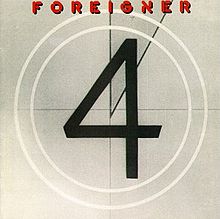
Foreigner – 4
Well, so much for good fourth albums. But as far as Foreigner goes, their 1981 smash possessed some of their more tolerable singles, especially “Urgent,” a decent bit of faux R&B that features one of the better rock and roll sax solos of a decade that was lousy with ’em. But you know what? Fuck Foreigner, because whilst doing research for this piece, I learned that they rejected the original Hipgnosis artwork for this album because it was “too homosexual.” The offending shot? A sleeping man with binoculars hovering over his head. Apparently, if it was up to Foreigner, they would be called “straightnoculars.” So, yeah, another reason why Foreigner sucks.
Blues Traveler – Four
As a 16-year-old in 1994, it was in my contract to buy this album. And it wasn’t a bad move, especially when you consider that I purchased Jagged Little Pill a year hence. Blues Traveler were always better experienced live, where their knack for segues resulted in a show that kept the jam-band crowd happy while still pleasing those with actual musical taste. “Run-Around” remains a pleasant enough pop tune, but its follow-up single “Hook” was a more rewarding assemblage of fluttering harmonica over a cheerful Afro-pop guitar riff. Not revolutionary listening, but after many hours spent with Tesla in my Walkman, Four taught me that light and fun can sometimes trump heavy and dumb.
Winger – IV
When asked why he decided to get his band back together in 2006 to make this album, Kip Winger explained, “One day I just woke up and heard the new Winger record in my head.” A fate I wouldn’t wish on anyone.
Godsmack – IV
Godsmack might be even bigger dicks than Foreigner. Here’s drummer Shannon Larkin, talking about why they named their fourth album IV: “We have this security guy, a big, tough guy named J.C. He’s another Boston guy. And in Boston it’s ‘fou.’ … He’d be hanging around backstage and chicks would walk by and he would rate them from one to 10. But if it wasn’t a 10, there was no one, two, three, five, six. It was always you were a 10 or a fou. He just pulled the funniest things. Sometimes, he’d just hold up four fingers and wouldn’t have to say it anymore and we’d all just bust out laughing. And then the funniest one, this guy walked by with a chick on each arm and he goes, ‘Hey, bub, two fous don’t make an eight!'” Ah, J.C. Always pulling the funniest things, like telling women that they’re ugly.
Today’s the first day of summer! Here are some tunes that’ll be perfect for that unforgettable summer car trip – you know, where you go to Home Depot to buy an air conditioner, so you can close all of your windows and watch reruns until the leaves start to turn.
1. Nicki Minaj – “Super Bass”
It’s no contest. This is the song of Summer 2011 – masterfully syncopated verses from one of the most creative rappers around; soaring, shiny synth hooks, and an infectious onomatopoeia (“boom-ba doop boop, boom-ba doom boop, yeah!”).
2. Prince – “Play in the Sunshine” Worried that the world’s going to shit and you’re never gonna find true happiness? Take a page from the Prince playbook, and dance your way to enlightenment to this exuberant blast of synth pop – “Some way, somehow, I’m gonna have fun.”
3. Gordon Lightfoot – “Carefree Highway” This makes me want to drive drunk.
4. Kylie Minogue – “Get Outta My Way” A beautiful summer day can make you feel invincible. Add an irresistible dance song with defiantly independent lyrics, and you might try to walk on water.
5. Lil Wayne – “Best Rapper Alive”
Speaking of bouts of egomania, this straight-faced claim of greatness from a pre-superstardom Weezy is guaranteed to get the adrenaline flowing while you mow your parents’ lawn.
6. The Velvet Underground – “Who Loves the Sun” What would the summer be without that crippling moment when you realize that all the good weather in the world won’t keep you warm at night?
7. Led Zeppelin – “The Ocean” “Singing in the sunshine/Laughing in the rain.” Not the most bad-ass lyrics in Zeppelin’s oeuvre, but when you throw in Page’s gnarly riff and Bonham’s massive beat, you’ve got something earth-shattering.
8. The Beach Boys – “Busy Doin’ Nothin'” Forget “California Girls.” This beautifully arranged cut (woodwinds!) about forgetting somebody’s number, then remembering it, then calling them and getting no answer, then writing them a letter, perfectly captures the vibe of a lazy summer day.
9. Outkast – “Skew it On the Bar-B” Whether you’re an old school player or new school fool, this cut showcases Andre 3000, Big Boi and Raekwon at the top of their game – it’s guaranteed to make your barbecue sizzle.
10. The Zombies – “Time of the Season” A sexy hit single from a British Invasion band previously known for expressions of towering wussery, this song’s percussive “ahhs” and “Who’s your daddy” pick-up lines could be seen as a relic of the late-’60s. But when the warm weather hits, that groove sounds like it was meant for today.
I’m a sucker for a singer with a deep voice. And with his third solo effort, Apocalypse, former Smog leader Bill Callahan’s pipes are so entrancing, he’s got a better chance of laying me down by the fire than Barry White ever did. This seven-song arc of sparse, haunted folk connects the dots between the stately isolation of cattle drivers and touring musicians, compares lost loves to wildflowers, and gives guilt-ridden Americans a mantra to soothe their bruised patriotism – “Everyone’s allowed a past they don’t care to mention.”
R. Kelly – Love Letter (2010)
I’m sure R. Kelly’s reasoning for the concept of his 10th album – a squeaky-clean collection of retro-minded love songs – wasn’t purely artistic. But although you can feel the fingerprints of his publicist all over Love Letter, from the “I’ll be loyal and true” message of every track to the Kelly-as-Ray Charles homage on the album cover, the music here is exceptional. Freed from the silly posturing and cringeworthy innuendo of his earlier work, Kelly just focuses on singing here – and his voice isn’t just supremely silky, it’s versatile, aping MJ’s pop outbursts on “Not Feelin’ the Love,” carrying the ’70s Motown balladry of “Just Can’t Get Enough,” and cutting loose at just the right moment on the staggering “When A Woman Loves.”
The Everly Brothers – The Everly Brothers Sing Great Country Hits (1963)
You could make the argument that this isn’t an essential Everly Brothers album. It was a bit of a contract fulfiller, recorded during a time when the duo couldn’t get access to material from Felice and Boudleaux Bryant, their songwriting muses who were responsible for most of their timeless hits. But separate these sessions from the history, and you get one of pop music’s all-time great interpreters of country & western, tackling a dozen gems of the genre. Phil and Don’s harmonies are as transcendent as ever over the light rockabilly of “Just One Time,” the bar band balladry of “Please Help Me I’m Falling,” and the soaring “Sweet Dreams” – a tune they were meant to sing if there ever was one.
I watched Legion today, a hastily plotted Book of Revelations sci-fi shoot-em-up with an important, if confusing, twist – the bad guy is God, who has lost faith in the human race for some reason. In the middle of trying to figure out how any human being could have a chance against a vengeful, all-powerful being (with or without the help of a rebel angel with a British accent), this happened.
Sure, I might be overstating things with that headline. But I’d like to hear counter arguments. What’s better, “Rosebud”? That dude couldn’t even hold on to a snow globe – no way he’s gonna crawl on any ceiling.











 sweensryche.com