“Deadly Women” is a bad show. So why does it kill me every time?

DW 3

A new study by a German forensic scientist claims that female murderers are “more creative” than their male counterparts – and that they pretty much have to be, because they usually kill people close to them, and those people are often men who are physically stronger. One would think that this theory would be fodder for a great documentary-style TV show, one that transports us to a different, disturbingly clever world each week. But Deadly Womenwhile being a true crime program about female killers, is most definitely not the show I just described. It’s lazy, formulaic and depressingly exploitative, and does its best to blunt the impact of its endlessly interesting subject matter. So why oh why do I love it so much? Here is my attempt to explain, in list form.

1. It’s camp gold.
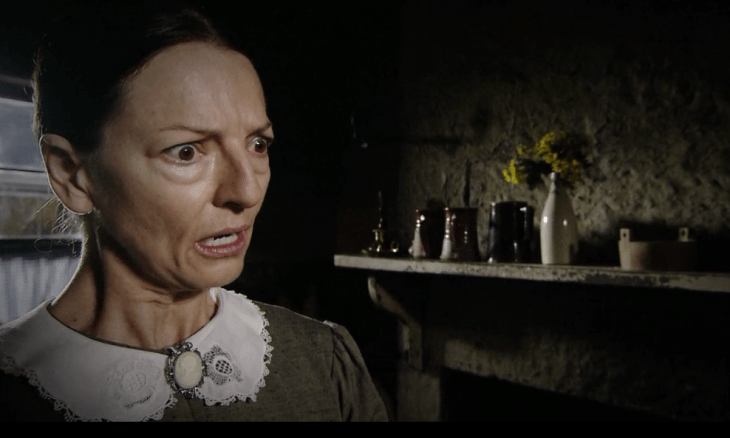
Deadly Women

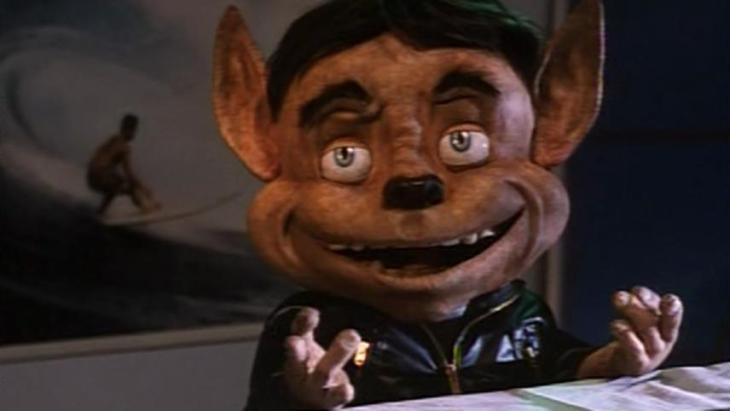
Take re-enactments that make Rescue 911 look like Shakespeare (and are often in period settings, like the screen cap I’ve so lovingly shared here). Combine them with talking head commentary that would seem obvious to a fifth grader. Add clunky, melodramatic writing of highest order – e.g. “Nicki Reynolds saw her mother as an obstacle, on the road … to murder.” Top it off with a penchant for graphic throat-slitting that’s bound to make you wince at least once an episode. And you’ve got a viewing experience like no other – a hysterically queasy formula for a brand new genre of entertainment. We’ll call it “True Crime-edy.”

2. The lengthening shadow of Robert Stack

Stack

One source of my DW fandom is the debt it – and the entire Investigation Discovery network, for that matter – owes to Unsolved Mysteries. I’ll never forget when that show went from being a fun way to get spooked on a school night to something genuinely terrifying. It was an episode that took a break from all the hauntings and alien abductions to focus on a real-life murderer who had never been caught. During the reenactment, the show revealed the killer by having a woman glance in her medicine cabinet mirror to find the psychopath standing behind her. It’s a clichéd trick, but it worked on me like a charm. I immediately looked outside the sliding glass door in our living room, half-expecting to see the frothing maniac standing there, knife in hand. Because this wasn’t just a TV show. This was a true story. And even the husky lullabye of Mr. Stack’s voiceover couldn’t soothe my jangled nerves.

Twenty years later, I think I’m still looking for something to terrify me in a similarly cozy way – and although DW cuts every conceivable corner while turning gruesome true stories into cornball melodramas, it still has the potential to freak me out in spite of itself. It’s a watered-down cocktail at best, but I keep bellying up to the bar.

3. Bad actresses staring at the camera

Every episode of DW is structured exactly the same – three stories loosely grouped under an amazing title, opening with an over-the-top voiceover segment that teases the carnage to come. At the end of this intro, when the title is announced (in a truly horrifying font), one of the reenactment actresses is asked to stare maniacally at the camera for an uncomfortably long period of time. It’s a ridiculous moment that also acts as a threat – “What are you grinning at, shithead?” the deadly woman seems to ask, as those snarky comments dry up in your throat. I’m gonna write captions to some of these classic stares, yet I admit, I’m kinda scared to …

DW Stare 1

When my Harold proposed to me, it was everything I’d dreamed of and more. We were on a sailboat at twilight; the ring was classically beautiful, not too ostentatious; the wine left a hint of pear on my tongue; the moonlight formed a silver border around his raven hair. “A million times yes!” I exclaimed. “I adore you, Harold Murder!!!” … I should’ve seen this coming.

DW Stare 2

You could say I’m a big fan of keeping secrets. But let’s keep it a secret how much I love secrets, because it’s those very secrets that make being secretive so fun! That being said, I’ll tell anybody who wants to listen about my secret to happiness – wearing my best blazer and standing by a lake on a foggy morn in 1987.

DW Stare 4

Even though his salad days were decades in the rearview, Nikki Sixx took the stage more determined than ever.

4. Candice DeLong

Candice DeLong

DW has some exceptionally bad reenactments – but that’s pretty much par for the course for a show like this. It’s when the show gives the spotlight to its commentators that it really hits its sweet spot. Most prominent, and thoroughly fabulous, of all is Candice DeLong, a former FBI profiler with a storied resume that includes hunting down the Unabomber in 1995. On paper, DeLong is perfect for this gig – the expert who can get into the heads of these violent protagonists, both from a criminologist’s and a woman’s perspective. But on camera, her commentary is profoundly uninsightful, yet delivered so smugly, you have to wonder if it’s some kind of performance art stunt. My wife and I have had long discussions on how this could be – Is DeLong just nervous? Is the DW editor a disgruntled ex who wants to make her look as bad as possible? Did she experience some kind of trauma in the field that makes her afraid to say anything beyond the most Perd Hapley-esque observations? DeLong is surely much smarter in real life than she appears to be on DW. But whatever the reason, statements like the following are a crucial component of good True Crime-edy (the italics properly reflect DeLong’s delivery):

Candice on women who marry men for money and then kill them:
“They use sex, and seduction, to get the wedding ring of the person that has the money.”
(“Fortune Hunters,” Season 4)

Candice on a woman who kept asphyxiating her babies:
“She was actually one of the worst people that could ever raise children.”
(“Bad Medicine,” Season 2)

Candice on a police officer who was also a sadistic killer:
“Antoinette Frank was the last person any police department should have ever hired.”
(“Born Bad,” Season 3)

Candace on a serial killer who poisoned her entire family:
“She enjoyed wielding the power of life or death, over another person.”
(“Hearts of Stone,” Season 5)

Candace on some more mothers who kill their children:
“It’s very hard to understand why someone would kill their children. They’re not thinking clearly.”
(“The Sacred Bond,” Season 4)

Candice DeLong Gun

Deadly Women is currently in the middle of its seventh season on the Investigation Discovery network; seasons 2-5 are streaming on Netflix.

Top 100 Albums of the ’90s (55-51)

And we continue our methodical countdown of some guy’s 100 favorite albums of the 1990s. For no particular reason, either! This next batch of five rounds out #100-51, and it includes a record that’s depressing as all hell, one that confronts sadness and decay in a sweet, kinda triumphant way, and one that’s by Soul Coughing, proving that this is a list about the ’90s. So read away! Or if you like, check out the whole list so far. I’ll be back in a month or so to crack into the top 50! (“Hooray,” you say to yourself flatly, not even pretending to hide your sarcasm.)

Harvest Moon55. Neil Young – Harvest Moon (1992)

In the ’90s, we started to get a good idea of how the legendary artists of the ’60s and ’70s were going to deal with aging. Paul McCartney would dye his hair and keep on writing love songs. Stevie Wonder would pretty much retire. Bob Dylan would shroud himself in mortality and end up resuscitating his muse. But no artist stepped into middle age as organically as Neil Young did on Harvest Moon – an album of gentle country songs about life passing by, made to be listened to on a big front porch in the twilight. The then 47-year-old certainly doesn’t ignore the darkness, singing about the aching desperation of divorce, a waitress haunted by regrets, and a man contemplating suicide in a minivan. But his gently quavering voice, sympathetic turns of phrase, and clear-eyed belief in true love (especially on the title track) tip the scales from depressing to life-affirming. Then there’s “Old King,” a jaunty bluegrass eulogy to a hound dog that’s about as much fun as anybody could have contemplating death. If you could prescribe treatment for the human condition, Harvest Moon would be FDA-approved.

Electro-Shock Blues54. Eels – Electro-Shock Blues (1998)

Moving on, from one ruminative, regret-laden work to what is arguably the Grand Poobah of ruminative, regret-laden 1990s albums. After losing both his mother and sister in a short period of time, Mark Oliver Everett – the one-man phenomenon behind Eels – made a record that wallows in raw cynicism and deep, lying-on-the-bathroom-floor sadness (at its lowest, quietest moments, you can almost smell the porcelain). Lyrically, Elecro-Shock Blues is an open vein (e.g. “My life is shit and piss”), and it would be light years from this list if those often-brutal sentiments weren’t balanced out by the production, which was eclectic enough to make a fan out of Tom Waits. Among the many gorgeous acoustic ballads, there’s the lurching rhythms and crackling found sounds of “Cancer for the Cure,” the dance-folk breaks of “Last Stop: This Town” and the sexy Morphine rumble of “Hospital Food.” Hence, by the time Everett rewards us on the closing “P.S. You Rock My World” by admitting to a new appreciation for being alive, we’re wishing the whole beautiful thing wouldn’t end.

In A Priest-Driven Ambulance53. The Flaming Lips – In A Priest-Driven Ambulance (1990)

Unlike most of the epic rock music released in the ’90s, The Flaming Lips’ magnum opus – 1999’s The Soft Bulletin – was a gorgeously un-ironic embrace of hope and belief. But it was also the natural endgame of a creative impulse that was first exhibited nine years earlier, on the band’s fourth album. In A Priest-Driven Ambulance finds Lips songwriter Wayne Coyne deep in a Christ obsession, his analytical and spiritual sides clashing, adding an exotic tension to the ragged helium of his voice. “While I’m still myself/Your blankets covered me,” Coyne sings on the triumphant psych-folk opening “Shine On Sweet Jesus,” swooning at the beauty of belief. But over the spare chords and insistent crickets of “There You Are,” there’s the sickening chill of doubt –  “It makes you think that God was fucked up when he made this town.” By decade’s end, The Flaming Lips stood firmly on the side of belief in something more. Without stunning metaphysical wrestling matches like this album, that level of peace wouldn’t have been achievable.

Ruby Vroom52. Soul Coughing – Ruby Vroom (1994)

Like countless hypersensitive, white suburban teenagers in the 1990s, I was magnetically drawn to albums like The Chronic and Enter the 36 Chambers – raw, confident, impeccably produced works of art that possessed an egomaniacal energy I could leech off of. But I was just as crazy about bands like Barenaked Ladies and Primus, whose strident dorkiness spoke to the chicken-armed X-Files fanboy in me. So when I first heard Ruby Vroom’s opening song, “Is Chicago, Is Not Chicago,” it was like hearing those two factions of my CD collection – and those two idealized versions of myself – gelling, and it kicked more ass than it had any right to. Few bass lines have ever burrowed as deep in the pocket as Sebastian Steinberg’s does here – the groove produced by Steinberg and drummer Yuval Dabay transcends the standard definition of rhythm, inciting a primal, emotional reaction that would make Elaine Benes feel like Gregory Hines. And when M. Doughty tells you that “Saskatoon is in the room” in his flat, nasal voice, you realize that post-ironic nerdy nonsense can play in the same sandbox as supreme-sonic-super-badness. That the silly shit you think is funny might not be the polar opposite of funky. That it’s not 100% ridiculous to dream that you could, one day, bring the motherfuckin’ ruckus.

Homogenic51. Bjork – Homogenic (1997)

Electronic music is fertile ground as a metaphor for sadness. Whether it’s Kanye West undergoing therapy-by-AutoTune on 808s & Heartbreak, David Bowie nailing what a “sense of doubt” sounds like during his Berlin period, or Portishead’s entire catalog, synthesized notes do a bang-up job representing a lack of emotional warmth. Which makes Bjork’s Homogenic a special album beyond the immediate bounty of its lush, philharmonic-tronica production. After the breathtaking genre whirlwinds of Debut and Post, Homogenic finds the artist working in one sonic cul-de-sac for the first time. The production makes you think twice about the originality of 21st century Radiohead – ghostly drum loops and synth patches give way to stunning string arrangements. It’s dizzyingly dour music that would make the perfect accompaniment to songs about winter, or war, or whatever kind of “sour time” you want to moan on about. But instead, Bjork uses them to sing about love as a connection that transcends the physical, that’s as inevitable as the tide, that surrounds us all whether we know it or not. Even when her music’s at its tamest, her impulses are anything but.

Catching Up With King: The Gunslinger

When I moved to Stephen King’s home state of Maine this summer, I thought it would be fun (if a bit cliché) to finally read his books in earnest, and discover how I really feel about his work. For this installment, I decided to “cowboy up” – which is a thing you can do, apparently – and take on Book One of the Dark Tower series – The Gunslinger.

“Everything in the universe denies nothing; to suggest an ending is the one absurdity.”
–The Man in Black

The_Gunslinger2

If one wanted to take a swipe at Stephen King, the length of his novels seems to be the obvious place to start. None of the books I’ve tackled here so far have been especially bloated, but his loyal readers are certainly no stranger to shelf-punishing hardcovers. Of course, this invites accusations of King having a problem with endings, or a puffed up idea of his own literary significance, or a celebrity that handcuffs his editors. But I’m pretty sure this line of criticism is a lazy one, because I just read The Gunslinger – the first entry in King’s seven-part-and-counting Dark Tower series, and the opposite of a 1,000 page door-stopper – and it left me wanting so much more.

When this book came out in 1982, it must have thrown King junkies for a bit of a loop. Written in simple, muscular language, The Gunslinger is a starkly different genre exercise then the supernatural/domestic clash fiction that made the author famous. King borrows from an eclectic array of fantasy tropes to build his world – including spaghetti westerns, 1950s post-apocalyptic sci-fi, Arthurian legend and the multiverse theory – boiling them down to the most basic of quest stories, where the obviously good guy (The Gunslinger) follows the obviously bad guy (The Man in Black), across a desert hellscape, getting closer and closer until he finally catches up with him. Plus, there’s a kid. It’s not a bad idea on paper – King writes the weirdo Sergio Leone script of his dreams, adding his own shadows to the good and the bad, but focusing most of all on the ugly, resulting in a Cormac McCarthy-meets-J.R.R. Tolkien mindfuck of a masterpiece. That’s what I wish this book was.

What it actually is, is way too slight. So few characters having even fewer conversations, with the emptiness of the landscape getting more play than anything else. I get that when your main character is the strong, silent, Eastwood type, your story isn’t going to be dialogue driven. But there isn’t much plot here to speak of either – Good Guy follows Bad Guy from Point A (desert) to Point B (mountains). Good Guy picks up Mysterious Boy. Good Guy bonds with Mysterious Boy. Good Guy makes Difficult Choice in regards to Mysterious Boy while following Bad Guy from Point B (mountains) to Point C (fire pit on other side of mountains). The End.

Now, I’m fully aware that context is playing a role here. I read The Gunslinger immediately after finishing The Shining, a gluttonous feast of character development that puts us inside the head of a gifted child, who becomes a portal into the heads of everybody else – while also carefully laying out the dark and complicated pasts of both a haunted hotel and the family trapped inside of it. I also read The Gunslinger with the knowledge that it’s the first book in a beloved fantasy saga – something I usually have a weakness for. So you could say I went in expecting The Fellowship of the Ring, and I got a few chapters of a shorter, picture-book version of The Hobbit.

While there are elements of the story that intrigue me and will compel me to read on – most especially the beautifully regaled flashbacks that make up The Gunslinger’s pre-apocalyptic, pseudo-Arthurian origin story – King’s world just isn’t in the same galaxy as a Middle Earth. Or even a Westeros, for all its obsessive-compulsive flaws. Maybe in future installments, King will abandon the cowboy novelist pose and just write his ass off while losing himself down all kinds of bizarre rabbit holes, fleshing out the scraps of promising meat from this skeletal beginning. Maybe there will be hundreds of pages of stuff that makes the story much longer than it probably needs to be. I can only hope.

Catching Up With King #1: Pet Sematary
Catching Up With King #2: The Shining

The Unintentionally Horrifying World of “Munchie”

munchie

There are certain things specifically created to entertain children that I usually find horrifying – clowns, mascots, satanic Chipmunk versions of Adele songs, etc. But then I’ll see how happy kids get when they see a giant anthropomorphic dog hobbling towards them, how they squeal with glee and run to it, delivering rapid-fire high-fives into its bloated, outstretched paws, and I’ll realize how challenging it must be to create entertainment that children truly love. Sometimes, what seems borderline grotesque to a jaded adult can make a kid deliriously happy. How a creator of children’s entertainment can tell the difference between what’s kid-friendly/adult-creepy and what’s just plain creepy across the board, I have no idea.

And neither did the creators of Munchie, a 1992 direct-to-video story of a lonely kid whose life is turned upside down when he stumbles across a motormouthed bat-dog-thing in an abandoned mine. Crafted like a family movie/coming-of-age comedy, Munchie devotes its major plot lines to the relevant, real-life problems of tween protagonist Gage Dobson (Jamie McEnnan). But it’s also a movie destined to horrify viewers of all ages, thanks to the menacing design, bargain-basement special effects and bizarre voice casting of Munchie himself.

We meet Gage during a low point of his adolescence – he’s getting bullied at school, his mom (Loni Anderson) is dating a cartoonishly oily jerk (Andrew Stevens), and his only friend is a demented old scientist who lives across the street (Arte Johnson). Gage is presented to us as an overly imaginative kid, through some fairly un-imaginative fantasy sequences (e.g. he pictures his principal with devil’s horns). It’s a smart move in theory, setting us up to believe that this kid could be fanciful enough to believe that something like Munchie could exist, instead of just puking and shitting himself simultaneously when seeing him for the first time. But this proves to be problematic later, when the movie’s “be careful what you wish for” moral becomes painfully clear.

For now, though, Munchie’s moving along like any competent afterschool special (save the pre-credits sequence, in which we learn that Munchie drives human beings to the brink of insanity). But then Gage gets fed up with life and goes for a walk, finds the conveniently accessible mineshaft, and the nightmare begins – a voice that sounds a whole lot like Dom Deluise beckons to Gage from a box with runes all over it; Gage opens it, and this happens:

mun04

Count yourself lucky that a) I haven’t paid the fee to allow video on this site; and b) Munchie clips on YouTube are scarce. Because as disturbing as the puppet looks, watching it move is what really makes the skin crawl. Director Jim Wynorski didn’t place a priority on the realism of Munchie’s movements, neglecting to sync up his eyes, mouth and hands in a way that resembles a regular living thing. It’s like Gizmo survived a horrible fire and we have to watch as he struggles to regain basic motor skills. And it doesn’t help that he really is voiced by Dom Deluise, whose jovial energy goes over like a hot pitcher of milk when you have the flu.

The movie goes to great lengths to tell us that Munchie is funny – he pulls pranks with banana peels; sings “Hello! Ma Baby;” talks repeatedly about having to “update his act;” throws a Risky Business-style kegger – but every corny gag just adds to the character’s cavernous uncanny valley. Adding to this queasy mix of creature-feature horror and Borscht Belt comedy is a shoehorned “Monkey’s Paw” moral – Munchie has the ability to grant Gage’s every wish, but he causes unintended havoc in the process. For example, when Gage wishes for the bullying to stop, Munchie’s solution is appallingly hypocritical – beat up a kid until he’s bloody and unconscious. The scene gives you a hollow feeling that no pizza skateboard can fill.

220px-600full-munchie-poster

As a result, we have a movie that encourages kids to use their imaginations, but also warns them to be careful what they wish for. It so badly wants us to love Munchie, but also not to trust him. As we’re forced to watch those directionless eyes lolling around on a face forever plastered in a frozen corpse-smile, at least it’s easy to do the latter.

Catching Up With King: The Shining

When I moved to Stephen King’s home state of Maine last month, I thought it would be fun – if a bit cliché – to finally read his books in earnest, and discover how I really feel about his work. For this installment, I let the Overlook Hotel tell me what to do – unsurprisingly, it chose The Shining.

“Has it ever occurred to you what would happen to my future, if I were to fail to live up to my responsibilities? Has it ever occurred to you? Has it?”
–Jack Torrance

200px-ShiningnovelEven though I’m merely two volumes into this little project of mine, I feel like I have a pretty solid grasp on what makes Stephen King’s best work tick. He doesn’t restrict his creepy crawlies to the supernatural realm, and that’s why his stories have struck such a resounding chord with a wide swath of humanity. Just like Pet Sematary, which twisted the intensity of parental love into something thoroughly unwholesome, The Shining takes a universally understood emotion and holds us hostage with it.

The feeling in question here involves the nature of free will, and the frightening implications of its absence. The Shining is as much a classic ghost story as a study of family dynamics, pitting the Torrances – father Jack, mother Wendy, and son Danny – in a battle against not only the hostile spirits of a haunted hotel, but also the rather shoddy track record of its own DNA. After losing his teaching job at a Connecticut prep school because of a violent incident with a student – a job that was already on shaky ground thanks to his alcoholism – Jack takes a job as the winter caretaker of the Overlook, a ritzy, destination hotel high up in the Rocky Mountains. The Torrances will be the only residents in the huge old structure for the entire season, during most of which they will be completely snowed in. It’s a setup that hasn’t always gone well – the previous caretaker murdered his family, for instance – but whatever. Jack sees it as the perfect way to get back on track, with his writing career and his family (in that order).

King’s metaphors can be a little on the nose, like the outdated furnace that can’t handle as much pressure as it used to, but the snowed-in hotel works sturdily as a symbol of what stands in Danny’s way. Despite all of Jack’s dreams and aspirations, he ended up a spitting image of his asshole father. Wendy isn’t on speaking terms with her cold, judgmental mother, and one of Jack’s go-to insults is to say she’s acting just like her. Like the Overlook, Danny’s home life is stacking the cards against him, and the obstacles are just getting scarier and more intimidating. Which brings us to the core question of the novel will all of us, whether we like it or not, become exactly like our parents?

The Shining would be one hell of a suffocating read if its answer was “Yes.” Thankfully, King’s opinion on the matter is more hopeful, coming in the form of the titular psychic gift that Danny possesses – the ability to read people’s thoughts, and to go deep enough within one’s self to see visions of the future (courtesy of a figure Danny calls “Tony”). When Danny meets Dick Hallorann, the Outlook chef, he has his first encounter with somebody else who “shines,” and it’s no coincidence that he’s by far the friendliest and most heroic character we meet, other than Danny himself. People who are able to step outside of themselves are more likely to have a greater understanding of others, King posits. And this understanding gives them the perspective necessary to make a deeper connection with their true self – their “Tony,” if you will – no matter what horrors might stand in the way.

The book ends with a conversation between Danny and Dick about how to overcome, and its poignancy goes down all the easier after such a long, dark, claustrophobic struggle. For me, this is what makes King’s novel a more meaningful achievement than Stanley Kubrick’s film (which still trumps the book as sheer entertainment). Where the latter has no regard for the Hallorann character and is satisfied with a purely physical escape for Danny, the former ends with the two telepathic heroes sitting by a Maine lake in the summertime, placing itself firmly on the side of healing, and freedom, and hope.

Catching Up With King #1: Pet Sematary

Top 100 Albums of the ’90s (60-56)

220px-RHCP-BSSM60. Red Hot Chili Peppers – Blood Sugar Sex Magik (1991)

Of all the mega-selling, on-the-charts-for-years rock albums, have any been as weirdly schizophrenic as Blood Sugar Sex Magik? After scoring a minor hit in 1989 with a rather grating cover of Stevie Wonder’s “Higher Ground,” Red Hot Chili Peppers used its next album to shamelessly court the mainstream. And spit in its face. And forget all about it because it had a boner. And then court it again. BSSM is on this list because it remains the band’s most fully realized work, a 17-track tapestry of immaculately crafted funk and richly realized, anthemic rock. When John Frusciante’s elegant guitar chatter intertwines with Flea’s lyrical bass lines on tracks like “If You Have To Ask,” “Mellowship Slinky” and “Apache Rose Peacock,” they prove that party music for buttheads can be as artful as anything else. But as always, the band’s X factor is singer Anthony Kiedis, whose political rants and sexual fantasies have always been as developed as your average 13-year-old (“Sir Psycho Sexy” is BSSM’s most ambitious song, and thanks to Kiedis and his vagina thesaurus, it’s also its most embarrassing). Yet, on this record, Kiedis also convincingly hates the honesty in his face, sees the world through the eyes of an addict, and gets endearingly goofy while covering Robert Johnson. This album is where the bravado of the penis-sock days met the polished, dad-friendly balladry that’s defined Red Hot Chili Peppers ever since. Why is that a good thing? If you have to ask, you’ll never know.

Blowout_Comb_Cover59. Digable Planets – Blowout Comb (1994)

To the delight of aspiring poets, kids who couldn’t get into bars, and white people with dreadlocks, coffee shops were all the rage in the 1990s. I can remember spending way too much time at a place in Buffalo called Stimulance, pretending to like cappuccino while sitting on ironically garbage-picked furniture. In retrospect, this fad had a few positive aftereffects – like the snob-worthy java you can find around every corner these days, and the all-too-brief popularity of groups like Digable Planets. Fusing the cadence of live poetry with the jazzy sensibilities of Native Tongues hip-hop, this Brooklyn trio scored a hit with 1993’s “Rebirth of Slick,” and used all of its resultant goodwill to make this sprawling, career-murdering, aggressively chilled-out masterwork. Eschewing samples in favor of live musicians, Blowout Comb makes the jazz-rap experiments of its peers sound like novelty tracks. Saxophones trill; vibraphones echo; live drums burrow deep in the pocket, and emcees Butterfly, Ladybug and Doodlebug deliver verses with soft, rhythmic power. Their voices are such a part of the aesthetic that you barely remember what you just heard, drifting happily from track to track. To listen to Blowout Comb is to experience new vistas of dreamy funk, which lull you into closing your eyes, as the summer sun glows behind them.

Basement_Jaxx_-_Remedy_-_CD_album_cover58. Basement Jaxx – Remedy (1999)

I was a loyal subscriber to Rolling Stone and Spin for most of the ’90s, and have a vague recollection of being told in no uncertain terms that electronica was going to be the next grunge. I certainly bought into that hype – spending $17 on Tricky’s Maxinquaye and trying very hard to like it, for example (I still don’t get it) – but it wasn’t until I was in college and heard Basement Jaxx that I thought those writers might not have been totally full of shit. Electronica never took off, I know, but maybe if something as funky, melodic, and unabashedly hook-filled as Remedy had hit five years earlier, we’d be left with more than mental images of that Prodigy guy’s seizure-dancing. Or maybe I’m just not a big electronic music guy (Daft Punk’s never really done it for me either), and Remedy is one of those records that only requires a pulse to enjoy. Either way, the thing is as fun to crank as ever, a dance record that uses digital elements as efficiently as a great punk band uses chords.

Ben_Folds_Five_-_Ben_Folds_Five57. Ben Folds Five – Ben Folds Five (1995)

Nerdy dudes can be like fine wine – once they reach a certain age, they turn to vinegar. Take Ben Folds, who was the driving creative force behind this album, an electrifying slab of sensitive guy rock and roll that purposely excluded guitar solos on one outcast anthem after another. “You can laugh all you want to/But I’ve got my philosophy,” he crooned, with a reactive confidence that sounded earned. With “Underground,” he delivered a spot-on, sardonic takedown of music scene snobbery that was simultaneously one of the most infectious pop songs of its time. And “Boxing,” a gorgeous waltz in the form of a tear-stained, existentialist letter from Muhammad Ali to Howard Cosell, remains a stunningly imaginative piece of songwriting. Ben Folds Five followed this with greater commercial success, including some lovely work here and there. But the formula was eroding even then – the band’s biggest hit was about how abortion is tough on men, and that was followed up by a single with the chorus, “Give me my money back, you bitch.” Folds’ talent is undeniable, but only on Ben Folds Five was it bottled correctly.

Soundgarden_-_Badmotorfinger56. Soundgarden – Badmotorfinger (1991)

Just like Metallica’s first crossover metal album was And Justice For All …, Soundgarden’s courting of the mainstream began here. And just like AJFA was superior in every way to its blockbuster follow-up, Badmotorfinger has held up over the years in a way that makes 1994’s massive hit Superunknown look like a pop culture relic. Now, I like Superunknown a lot. It’s #96 on this list because it did a fine job bridging the artful brutality of its previous work with pleasant-enough grist for the MTV heavy rotation mill. But Badmotorfinger is the greater accomplishment, because while it punishes your ears more than anything this side of Slayer, its melodies and ideas are so compelling, they invite you in. Religious iconography rubs shoulders with prisoners about to burst with rage. Kim Thayil’s riffs are as dark and sludgy as pure crude; Chris Cornell’s throaty, banished angel screams are somehow both operatic and thrillingly raw. It’s serious metal music made for all of us to enjoy, and it’s galaxies away from “Black Hole Sun.”

What I Learned From “Sally Hemings: An American Scandal”

SallyHemingsAnAmericanScandal-Still1

Is there a more underrated actor out there than Sam Neill? Not quite a leading man type, yet more substantial than a character actor, Neill tends to avoid Oscar-bait-level emoting, preferring a subtle, intangible kind of humanity that rarely feels out of place in a role – whether it’s an archeologist who can’t believe his eyes, a repressed frontiersman in colonial New Zealand, or a grieving parent framed by some devious-ass dingoes. Notice that I said “rarely” out of place. That’s because I recently watched Sally Hemings: An American Scandal, a 2000 Hallmark Channel mini-series that featured Neill as Thomas Jefferson. SH:AAS is as cheap and flimsy as its title would suggest, possessing all the hallmark touches we’ve come to expect from a Hallmark Channel project, save a subplot where a nice single mom finally finds love with Santa’s hunky-yet-approachable nephew. So here’s what I learned:

1. Sally Hemings and Thomas Jefferson met cute.

You see, Thomas Jefferson is at this party in Paris, and Sally Hemings shows up with her brother Mario Van Peebles. When Jefferson lays his eyes on her, he wonders aloud about who this girl could be, clearly thinking she’s some Parisian debutante he somehow hadn’t met before. But in reality, she’s his 14-year-old slave! There’s a wacky misunderstanding for ya! Don’t you just love love?

2. Sally & TJ were just like Audrey & Bogie.

I’m clearly not an expert on Jefferson or Hemings, ’cause I used to just assume that their relationship probably wasn’t much like the kind of love affair you’d see in an Audrey Hepburn movie. But Sally Hemings: An American Scandal set me straight on that, depicting their initial time together in Paris as the kind of coy May-December flirtation we saw from Hepburn and Bogart in Sabrina. And instead of running away to Paris like Linus and Sabrina do in that beautifully impulsive way, our star-crossed lovers run away from Paris back to the U.S., where everything turns out great! If only Billy Wilder had stuck with his original ending, where Linus has a surprise waiting for Sabrina in France – a life of endless toil on his Parisian brie plantation.

3. Sally Hemings could’ve left Monticello at any time, but she didn’t, because love.

At the end of Sally Hemings: An American Scandal, something scandalous actually does happen – Hemings (played by Carmen Ejogo, who gives it her best shot I guess) reveals a note in Jefferson’s handwriting that grants her freedom. A note that was written decades earlier in France! Which means that she chose to live as a slave, to have six children by a man who would never acknowledge them, not to mention acknowledge her entire race as being 100% human. Not that I’d question the integrity of this project, but according to a study by the Research Committee On Thomas Jefferson And Sally Hemings (conducted the same year SH:AAS was released), there is no written record that Hemings was ever granted freedom. Even after Jefferson’s death, she “would have been recognized as free in her local community but, without any legal ‘free papers,’ she could not have safely left the neighborhood where she was known.” Well, you know what, Research Committee on Thomas Jefferson and Sally Hemings? You can shut your faces, because this ain’t the History Channel we’re talking about. This is the motherfucking Hallmark Channel, and on the Hallmark Channel, it’s all about the love – the bubbly, inspirational, slave-on-president love.

4. Thomas Jefferson couldn’t have fathered Sally Hemings’ kids, because he lived in the sky.

798678_sallyhemingsanamericanscandalseriessell_poster

5. Thomas Jefferson’s life was boring.

Going by what I’ve learned from TV miniseries, John Adams was a colorful, highly influential, endlessly interesting figure in American history, and Thomas Jefferson was a guy who wore wigs and went to things in them. Neill plays Jefferson – one of the more eccentric and compellingly contradictory Founding Fathers – like a less enraged Alistair Stewart, his quiet, emotionally log-jammed jealous husband from The Piano. He gets a little fired up when other men seek Sally’s affections (remember about all the true love?), but over the course of the THREE HOURS of the miniseries, this Hallmark Jefferson is little more than a wallflower. Even when he’s signing the Louisiana Purchase, or teaching youngins in his old-guy makeup, or bemoaning the loss of Monticello to his debtors, it’s clear that only one thing could interest the great Sam Neill during this shoot – his paycheck.

Catching Up With King: Pet Sematary

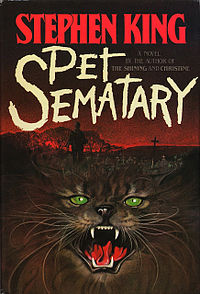
I read very little Stephen King growing up, partly because Douglas Adams was more my kind of thing, and partly because my brother read King and we took care not to infringe on each other’s pop culture obsessions (e.g. I loved Metallica, he loved Megadeth, and never the twain shall meet). But when I moved to King’s home state of Maine in June, I had the frightfully clichéd idea that now was the time for me to catch up on all the stories I’d heard so much about and/or seen in movie form. The first one I picked up might be the Maine-iest of all – 1983’s Pet Sematary.

“…Gage was still in his crib, sleeping in typical Gage fashion, spread-eagled on his back, a bottle within easy reach. Louis paused there looking in at his son, his heart abruptly filling with a love for the boy so strong that it seemed almost dangerous.”
–Stephen King, Pet Sematary

Pet Sematary

As somebody who doesn’t have kids, I’ve been told many times that everything changes once they enter your life, and not just your sleep patterns; your love for this small and helpless thing you helped create becomes so intense, it does something to the fiber of your being. Call me naive or unfeeling, but that scares the shit out of me. Which goes a long way towards explaining why Pet Sematary really got me good.

The plot is standard horror fare – Doctor Louis Creed moves his wife Rachel and two children (Ellie and Gage) from Chicago to a big old farmhouse in Ludlow, Maine, where he was recruited to run a college infirmary. He immediately befriends Jud Crandall, the 83-year-old man who lives across the highway (and regular trucker route), when Jud plucks a bee stinger out of Gage with unexpected dexterity. Jud proves to be a well of knowledge about the woods abutting the Creed property, eventually leading the whole family on a hike up to an old, seemingly harmless pet cemetery. Yet the trip really bothers both Rachel and Ellie, the specter of death not something they’re comfortable thinking about (especially Rachel, whose gruesome, bone-chilling memories of her late sister Zelda make for some of the book’s most visceral moments). Soon after, with the wife and kids away visiting the in-laws, the family cat Winston Churchill is run over by a passing semi, and Louis’ heart breaks at the thought of having to tell his daughter. Jud, who feels he owes Louis for saving his wife Norma when she had a heart attack, tells him there’s a special place they can bury it …

You probably have a good idea where the story goes from there. Suffice it to say that it’s not the last we see of the Creed family cat, and after a gut-wrenchingly tragic human death, things get a whole lot worse. But – and this is something I never really expected to think about King’s writing – the storytelling isn’t what makes Pet Sematary truly horrifying. It’s that the thing driving Louis to drag corpse after corpse into the woods is the same thing that parents always use as a selling point – a love so strong, it changes everything. In the blink of an eye, those unfathomably intense feelings for your fragile creation can transform into crippling fear, or worse – the kind of grief that forever warps the mind.

So while King’s writing is as satisfyingly pulpy as ever, gleefully regaling the sluggish movements of a reanimated house cat in sickening detail – right down to its un-Febreze-able grave-stench – his creation claws at something deeper within our hearts. Yes, this is the kind of scary story you could tell around a campfire. But it’s also one that confronts people who say they’d do anything for their child, and asks them, “Anything?”

On our next trip through King country, we’ll talk about The Shining, a King book that has the rare task of living up to its movie adaptation. I suspect I’ll agree with Stanley Kubrick’s decision to trim the hedge animals (from the script).

Top 100 Albums of the ’90s (65-61)

Dear hypothetical reader –

I haven’t posted in a little bit, I know. But don’t worry, I’m OK. In fact, I’m goddamn marvelous! My wife and I decided to pick up and move to Maine – Portland to be specific – and the breathtaking ocean vistas have made it hard to focus on how I feel about music and movies and stuff. Although I had a complete blast watching The Last Stand and am once again completely in Arnold Schwarzenegger’s sway. He’s the sheriff – of my heart. Anyways, let’s talk about some ’90s albums, shall we? It’s been a while since I left things dangling at #66 with Air’s Moon Safari.

 images-165. Alice In Chains – Dirt (1992)

I’m trying to figure out how to say something different from my take on Pearl Jam’s Ten earlier on this list, but the experience of listening to Dirt for the first time in a decade was similar. But before I crap on your memories, let’s be clear – this is a great metal album, steeped in a malaise that came from a frighteningly real place. It provides moments of clarity that feel like blasts of pain poking through the anesthetic. Alas, not being a teenager anymore means Dirt is not an album I will reach for often. What can I say, I like my bleakness with a chaser of hope these days. Plus, like vintage Eddie Vedder, Layne Staley isn’t as infallible as I once thought. He can truly haunt a song, a la Ozzy Osbourne in his prime. But also like Osbourne, it’s the only setting he’s got. The moments where Staley’s tortured crooning inhabits Jerry Cantrell’s demonically beautiful guitar riffs – e.g. “Them Bones” and “Would?” – are what made Alice In Chains special, and there are enough of them here to make Dirt a classic.

matthew-sweet-1991-girlfriend164. Matthew Sweet – Girlfriend (1991)

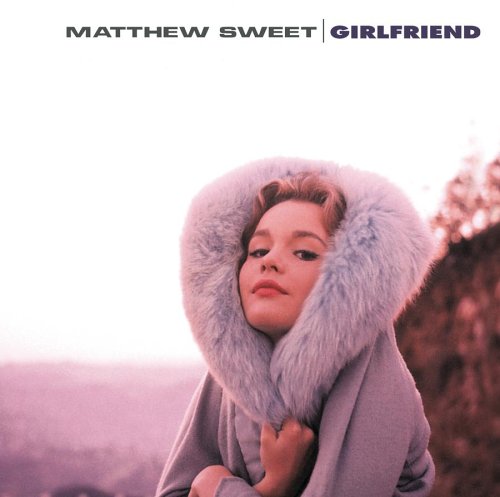
To people who grew up on The Beatles, ELO and Cheap Trick, and then had to endure mainstream rock radio throughout the ’80s, Matthew Sweet’s Girlfriend must have felt like a warm hug from mom. Pairing feelings of elation and vulnerability with shimmering power pop riffage and stacked-high vocal harmonies, Sweet’s third album has a timeless quality to it (the song title “Winona” is the only clue that this is from the ’90s). The songs explore the creation and destruction of relationships in universal terms – love makes self-deprecating feelings vanish; somebody falls for a preacher’s daughter; a guy who thought he knew his girl realizes he was wrong. Without getting specific, Sweet turns phrases like knives – “You can’t see how I matter in this world,” he pleads amongst the beautiful wreckage of “You Don’t Love Me.” His kinda nerdy, straightforward tenor makes all of the sentiments feel genuine, those hooks still as fresh and addictive as a long gaze into the eyes of the one you love.

images63. Randy Newman – Bad Love (1999)

After 1988’s Land of Dreams, Randy Newman took a long break from traditional record-making to focus on film music (and his so-so Faust musical). I’d bet the 11 years between Dreams and Bad Love made for the most lucrative period of his career. You might’ve thought that all those Oscar nominations and Pixar paydays would soften the guy, that when he got around to recording another batch of songs, they’d be somewhat pleasant – even, dare I say, optimistic. But Bad Love isn’t just a work of caustic satire typical of Newman’s oeuvre. It’s the bitterest, saddest, most unflinchingly personal work of his career. The songs depict families falling apart in front of televisions, dirty old men cursing at women half their age, native peoples suffering and dying. Which would make for untenable listening if most of this stuff wasn’t also hilarious – especially “The World Isn’t Fair,” an open letter to Karl Marx that finds Newman acknowledging his good fortune by talking about how preposterously undeserving of it he is. Like most self-absorbed people, Randy’s incapable of change here, and we’re all the richer for it.

MercuryRev-DesertersSongs62. Mercury Rev – Deserter’s Songs (1998)

It’s impossible for me to listen to Deserter’s Songs without constantly comparing it to a record that came out a year later – The Soft Bulletin. Mercury Rev’s fourth record shared the same producer as that Flaming Lips masterwork, the brilliant and clearly influential Dave Fridmann. So it’s no coincidence that both records possess the same ambitious, slightly disorienting template, mixing lush, Nelson Riddle arrangements with quirky, contemplative musings, like a band used backing tracks for a Great American Songbook tribute to write songs about spider bites, or moles with telephones for eyes. But while they might be the same type of animal, these records are also different breeds – Deserter’s being one that prowls across much darker emotional territory. As singer Jonathan Donahue spins yarns about nightmares and doomed relationships with an unvarnished Neil Young yodel, Fridmann piles on the woodwinds, strings and saw solos like an old-time Disney composer. It’s a birthday cake with a scotch egg in the center, a walk to the gallows that runs through Martha’s Vineyard, an album with a title drenched in self-imposed loneliness that makes good on it in the most unexpectedly stunning way.

220px-SmashingPumpkins-Gish61. Smashing Pumpkins – Gish (1991)

Gish is one of the most compelling debuts in rock history, and not just because it gives us an unfiltered look at what made Smashing Pumpkins one of the greatest arena-rock bands of the 1990s. It’s that in those very same qualities laid the seeds of the group’s demise. While by far the rawest recording that Billy Corgan has deemed acceptable for our ears, Gish is still marked by a proudly meticulous approach to rock record-making, its guitars layered richly to create walls of sound that envelop you with warmth, even while they strain your speakers to the limit. Of course, once Corgan got on the short list of successors to the Cobain throne and became obsessed with his own brand of stylized melancholy, the speaker straining stayed, and the warmth didn’t. And that just makes songs like “Window Paine” even more of a pleasure to experience in 2013 – a jaw-dropping ballad that features some of the most gorgeously punishing guitar playing of the ’90s. Hopelessly yearning for Corgan to make another record like this someday? That’s a worthwhile kind of melancholy.

Sam & Don

Image

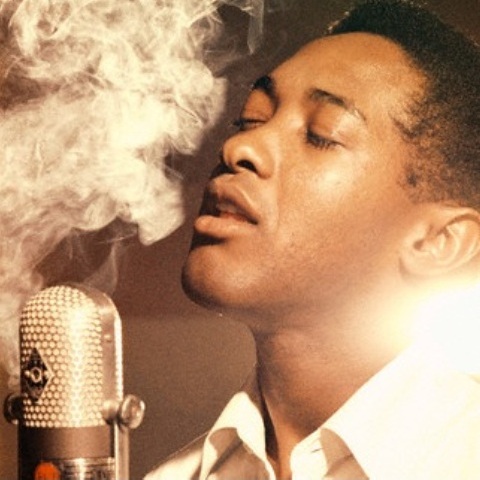
If you read my post yesterday, you massive global audience you, you know I’ve had the season premiere of Mad Men on my mind. The show’s exploration of mid-life crises is reaching new peaks of symbolic grandeur, and new depths of self-absorbed nihilism (e.g. an ad executive, wealthy from birth, complaining that life is nothing but a string of disappointments). With every new wincing cigarette pull from Don Draper, he’s seemingly one step closer to oblivion.

So when the Sam Cooke song “Smoke Rings” came on during my drive to work this morning, it felt like a cosmic pop culture connection – over a crooner-friendly, French horn-happy blues, Cooke ruminates about the product of his exhalations, like Draper staring into space on his Hawaiian vacation. “Please take me above with you,” Cooke pleads in the final refrain. It’s a gorgeously depressing idea, one that begs to play under the closing credits of this season of Mad Men. Start practicing that wince, and check it out here: