Top 100 Albums of the ’90s (75-71)

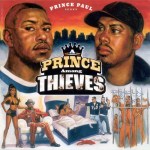
75. Prince Paul – A Prince Among Thieves (1999)

Given the gritty truths and intense melodramas that have been such a huge part of hip-hop – especially its 1990s golden age – it’s surprising that the genre has given us no stone-cold brilliant concept albums. Is what you’d say if Prince Paul had never made this, easily the greatest hip-hop concept album of all time, and one that I’d take over Tommy any day of the week. A Prince Among Thieves is the story of Tariq, an aspiring rapper and fast food worker who dreams of using his art to get rich and provide for his mother. When he lands a cherry meeting with Wu-Tang Clan, Tariq needs to raise some money to pay for studio time – his demo is a little rough – so he dips his toes into the drug game to make ends meet. While it’s predictable that this story would end tragically, Prince Paul infuses it with flash-forwards, Shakespearean betrayals and bursts of dark comedy, telling a tale that never gets confusing, and always keeps you on your toes. Paul’s production work is on the level with his classic De La Soul material – “Steady Slobbin'” and “What You Got” feature some of the most irresistible soul loops he’s ever dug up. The actors are totally convincing, and guest stars like Kool Keith, Chris Rock, Everlast and Big Daddy Kane make for a hell of a cast. Nobody shines brighter than the star though – Breeze Brewin’ is the main reason we sympathize so much with Tariq; he’s the perfect, unassuming hero in the skits, and his steady, tight flow is the backbone of the majority of the songs.

Take a listen to “What You Got,” whose funky sax loop and playful interactions between Tariq and his pal True are a sign that it comes early on in the story.

74. Roger Waters – Amused To Death (1992)

After releasing the final Pink Floyd album in 1983 – the underrated anti-war elegy The Final Cut – Roger Waters got into a weirdly allegorical groove, from his pervy-road-trip-as-metaphor-for-something-I-don’t-really-understand solo debut The Pros And Cons Of Hitchhiking to the guy-in-a-wheelchair-ends-capitalism follow-up, Radio K.A.O.S. Not to disparage those albums, both of which have aged far better than anything the David Gilmour-led edition of Floyd ever recorded, but everything about Amused To Death feels like Waters getting back to business, saying to hell with prog-rock librettos and writing the kind of acidic sociopolitical material that made The Wall and The Final Cut so unforgettable. “And the Germans killed Jews and the Jews killed the Arabs and the Arabs killed the hostages and that is the news,” his wonderful backup singer P.P. Arnold belts on “Perfect Sense, Part I,” and that’s the basic theme of the record – organized religion, governments and the media colluding to support humanity’s vilest sins. Because this is a solo Waters album, things do get too preachy for comfort from time to time (especially an uber-cheesy battleground play-by-play from Marv Albert). But you’ve gotta forgive him for these moments, because his rage is so pure, his hook-free arrangements so beautifully meditative, his vision so artful. He spends much of Amused to Death musing about what God wants (spoiler alert: it’s all bad stuff). Say what you want about the man upstairs, but he gave us Roger Waters, and that’s a check in the “pros” column for sure.

Tough to pick against “Perfect Sense, Part I,” but my favorite tune here is “Watching TV,” a heartbreakingly poignant take on the Tiananmen Square protests with some surprisingly effective guest vocals from Don Henley (the only saving grace of his career IMO. Yeah, “Boys of Summer” sucks too).

73. Helmet – Meantime (1992)

From the moment I first heard “Unsung,” which I’m guessing I saw on Headbanger’s Ball, Helmet’s major label debut became an album to save up my allowance and buy (quick side note – nothing will ever sound sweeter to me than the CDs I had to save for a month to be able to afford. Great music will always give me chills, but never again will I feel the blissful release of a record that lives up to my own, self-inflicted hype machine). And while the balance of Meantime didn’t possess anything quite as brutal as that amazingly simple riff, it was perfect for the kind of teen looking to project his weirdo angst on something harder and snarlier than Nirvana. Mixing the mammoth riffage and clipped shouts of Page Hamilton with drummer John Stanier’s deep-in-the-pocket breaks, Meantime was loud, nasty, groove-based hardcore, a sound that hurts just as good 20 years later. Sure, there’s plenty of pain-obsessed Trapper Keeper poetry – Hamilton’s jealous cheerleader screams of “You’re better … die!” being the lowest point. But the guitars are so punishing, and the rhythms so gut-punching, they would smother any attempt at refined lyricism like the runt of a litter.

Behold the brutal, brass tacks awesomeness that is “Unsung.”

72. Sleater-Kinney – Dig Me Out (1997)

“Words and guitar/I got it!” What better way to sum up the joyful noise of Dig Me Out than this chorus to one of its many unshakeable standout tracks? Sleater-Kinney’s third album, and first for Kill Rock Stars, provides equal helpings of molten punk shredding and bouncy British invasion melodies – it’s not a coincidence that its cover is an homage to The Kink Kontroversy. The record sounds for all the world like a trio of gals who love nothing more than plugging in and screaming their guts out. (Which reminds me, Screaming Females’ Ugly, one of my front-runners for the best album of 2012, would in no way exist if not for Dig Me Out.) This palpable exuberance is what makes Dig Me Out something special; instead of wallowing into lines like “I wear your rings and sores/In me, it shows,” singer Corin Tucker sets fire to them, her wild, quavering pipes proving that the death of grunge didn’t stop the Seattle scene from spitting out some startlingly talented, unpredictable voices. Of course, you can’t get by purely on energy. Dig Me Out is riddled with killer pop melodies, Carrie Brownstein’s shit-hot guitar playing, and deftly layered sequences that belie the whole garage band aesthetic – take “Words and Guitar,” where Tucker’s vocal devolves into a primal scream and Brownstein chimes in with a cheery backup vocal (“Can’t take this away from me/Music is the air I breathe”), all over a sun-kissed riff straight out of a Searchers song. Sleater-Kinney makes it all sound exhilaratingly simple, as sure a sign as any that we’re hearing a great band at its peak.

I’ve said enough about “Words and Guitar.” Get to listenin’.

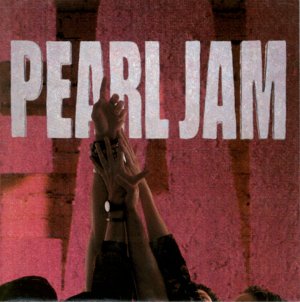
71. Pearl Jam – Ten (1991)

When I was 14, I considered Ten to be one of the Great Rock Albums, on a level with Led Zeppelin II or Back In BlackBut if you’ve read my introduction to this list, you’ll understand why I was nervous to listen to Pearl Jam’s monster debut front to back, for the first time in at least a decade – what Ten has inspired in its wake has been pretty horrifying. And I’d be lying if I said I didn’t cringe during “Once,” the album’s propulsive opening track. I can appreciate melodrama, but as Eddie Vedder growled “Once upon a time/I could love myself,” I realized how rough around the edges this gifted vocalist was in 1991. Vedder connected with listeners from the get because he sang with naked emotion, but on Ten, he often gets lost in these waves of feeling, his grunts and wails coming off almost comical. At the end of “Once,” Vedder lets loose his most heinous guttural burst (“YUH-HEA-HEA-YUH-HEA-HEA!!!!”), which I will now claim as the #1 reason Chad Kroeger, Scott Stapp and Chris Daughtry sound like they do. That’s all to explain why Ten is #71 on this list, instead of in the top 20. It remains a smorgasbord of killer guitar riffs, and is full of songs that shamelessly aim for arena nosebleeds, with none of the artsy experiments and ham-fisted politics that would make vs. and Vitalogy so uneven. And when Vedder calms down, his vocals are gorgeous – the ballads “Oceans” and “Release” are two of the album’s strongest cuts as a result. Then there’s “Alive,” perhaps the perfect example of how Pearl Jam combined the angst-ridden energy of grunge with the comfortable, crowd-pleasing tropes of classic rock – if you thought existentialist crises and guitar solos couldn’t mix, here’s your proof.

Eddie Vedder might’ve had some developing to do as a singer at the time, but on “Oceans,” his raw ability can’t be denied. An exquisite ballad that alone absolves him for his “hunger dunger dang”-related sins.

Top 100 Albums of the ’90s (80-76)

“So I thought you were counting these albums down in groups of 10?” absolutely nobody will ask when seeing this group of five ’90s albums. Well, I haven’t had a lot of time to write lately, and rather than have these sitting around like yesterday’s dirty diapers, I figured I’d bundle them up and take them down to the dump (a.k.a. post them). So there you go. Enjoy!

80. Propellerheads – Decksanddrumsandrockandroll (1998)

Whether they’re the result of the legitimate, organic rise of a new artistic sensibility, or something manufactured by critics who are magnanimous with their “next big thing” proclamations, all pop music trends are fads, destined to flame out. So instead of letting them dictate the way you walk, talk and dress, why not do something that will never go out of style – find a good groove and dance to it. This is the message of Propellerheads’ single “History Repeating,” a propulsive spy movie rave up, complete with a gutsy Shirley Bassey vocal, that realized the mainstream potential of electronica while mocking the hype machine that had been predicting just that for years. On the British duo’s first and only LP, they give several examples of the kind of tracks that could inspire critics to go all Nostradamus, doing monstrous things with drums and bass lines that could seemingly stretch on forever without losing their adrenaline-spiking energy. “Take California,” “Bang On!” or the Matrix-approved “Spybreak!” make driving to work feel like a million-dollar chase sequence. When sequenced with quieter, quirkier moments like the groovy kitsch of “Velvet Pants” and the loping, skater hip hop of “360 (Oh Yeah?)” (which features De La Soul at their effortless-sounding best), Decksanddrumsandrockandroll becomes an evergreen listen, an album that will always be as much fun as it was the day it came out. My flannel is long gone, and these beats are forever.

The understatement of the album comes on “Velvet Pants” – “It’s groovy, I guess.”

79. RZA – Bobby Digital In Stereo (1998)

By the time RZA got around to releasing an album under his own name, he was seen as a pretty solid hip hop double threat – a genius producer who had garnered respect as a rapper as well. Bobby Digital In Stereo solidified this status. Not only was it the treasure trove of dramatic, confrontational beats we’d come to expect (and this a year after the double-LP Wu-Tang Forever. Damn, were we spoiled), it was the first real revelation of RZA’s abilities on the mic. He dishes out some wild, brilliant tongue-lashings here, making the record’s kinda lame “digital v. analog” concept sound like the toughest street battle this side of Mobb Deep, and shouldering the burden of keeping the adrenaline flowing over the course of 17 tracks. That said, Bobby Digital drags just a bit in the middle, but it’s thanks to a glut of guest rappers (RZA only contributes six verses from tracks 8-15). And it pretty much doesn’t matter, because the man closes things in unforgettably explosive fashion. “My Lovin’ Is Digi” is grand and ridiculous and sublime; pairing a huge string loop with a chorus that’s sung with hilarious gravity: “Sometimes, I find someone fuckin’ with my pussy.” Then there’s “Domestic Violence.” Jesus Christ, “Domestic Violence.” An ugly, misanthropic argument between RZA and guest Jamie Sommers, the track is both a raw nerve of rage and bitterness, and a massively successful piece of entertainment. Hearing Sommers laundry list all the things about RZA that “ain’t shit,” how could you not join in?

78. Leaders of the New School – A Future Without A Past … (1991)

The title of Leaders of the New School’s debut album is a reference to youth, and all the hope and possibilities it implies. And it completely delivers on that idea. Charlie Brown, Busta Rhymes, Dinco D and DJ Cut Monitor Milo inject every track with endearing, juvenile energy – these guys weren’t just skilled MCs, they were kids whose dreams were coming true, and their joy informed everything they laid to tape during these sessions. This is what makes A Future Without A Past one of the upper-echelon Native Tongues albums; where A Tribe Called Quest and De La Soul were exploring the power of positive thinking, Leaders of the New School was about innocence. A loose schoolyard concept informs classic tracks like “Case of the P.T.A.,” where the guys reflect on how parents and teachers just don’t get it over a completely infectious New Jack Swing groove, and “Show Me A Hero,” a “Gambler”-lifting warning shot to bullies in which Busta steals the show just by reciting his height and weight. If the rising star’s commanding baritone tends to shine just a little brighter than his bandmates, it was all part of LOTNS’ perfect pH balance, leveling out the bizarre shrieks of Brown and the steadying force of Dinko. Hearing them gleefully playing off each other really shines a light on how much the group dynamic has faded from modern hip hop. If you ever get tired of hearing solo records littered with guest spots, crank this up loud, and rejoice in the blissful synergy. Who cares if it gets you detention?

Just try to deny the youthful energy of “Case of the P.T.A.”

77. Lou Reed – Magic & Loss (1992)

Lulu, Lou Reed’s much-maligned 2011 collaboration with Metallica, has joined the likes of Gigli and Glitter as shorthand for an artistic train wreck. And on paper, Reed’s 1992 effort Magic & Loss looks like something destined for a similar fate – a concept album about death from an aging auteur striving to prove he’s still relevant. But in reality, this is the polar opposite of Lulu’s fancifully misguided theater. Shaken by the actual death of a friend from cancer, Reed sat down and wrote lyrics that are as subtle as chemotherapy. He marvels at the fact that the same thing that killed people at Chernobyl was helping his friend buy time. He wrestles with ideas of spirituality, bowing to their sanctity one moment, deriding them as “mystic shit” the next. And through it all, no matter how crushingly depressing the songs become, Reed handles them with that classic sense of cool, his resigned sing/speak translating it all into something like hope. He’s always been great at tackling material rich in conflicting moods – “Perfect Day” kicks your ass every time, because it’s about happiness in the context of sadness. Magic & Loss is “Perfect Day” on steroids, then, an album that finds beauty and mystery in the brutal unfairness of life. “I’m sick of looking at me/I hate this painful body,” he sings over the lone, mournful guitar figure on “Magician,” a harrowing tale of a spirit longing for freedom that’s among his best work. Like the album it anchors, it’s riddled with loss, yet feels like magic.

Put on a leather jacket and your best contemplative expression, and give “Magician” a spin.

76. Depeche Mode – Violator (1990)

When you’re alone, you can rule your own universe. It’s a theme that’s been used for several classic pop songs about adolescence. But when I first saw the video for Depeche Mode’s “Enjoy the Silence,” I’d never heard “In My Room” or “I Am A Rock.” I was in 7th grade, an introverted kid who typically loved extroverted music – bands like Led Zeppelin, AC/DC and Guns n’ Roses  possessed such audacious confidence, it seemed like an interplanetary transmission to a boy like me. But the “Enjoy the Silence” video spoke to me on a deeper level, and could very possibly have been the first work of art to do so. It told me that I wasn’t the only one who shied away from social situations, that, in fact, it was a kingly pursuit to avoid the everyday noises of life. “Words are very unnecessary/They can only do harm,” sings David Gahan as he walks through one gorgeous landscape after another, dressed in a crown and cape and carrying a lawn chair, stopping from time to time to heed the direction of the song’s title. Violator is full of introspective struggles like this – my 12-year-old brain wasn’t savvy enough to understand these songs that wrestled with ideas of faith, and truth, and love. But those haunting goth-pop melodies were more than enough to make me obsessed; plus, as a Catholic school kid I could sense the delicious sacrilege that was being committed on “Personal Jesus.” I loved this album then, despite it standing out of my cassette collection like a sore thumb, and it has only become more poignant with age. The more I’ve discovered about why I love Violator, the more I’ve learned about the younger me, that awkward king of his own quiet world.

Here’s “Enjoy the Silence.” Please enjoy it, even though it’s interrupting your silence.

Top 100 Albums of the ’90s (90-81)


90. Cibo Matto – Stereo ★ Type A (1999)

As delightfully trippy as it was, Viva! La Woman, the first album from the duo of Miho Hatori and Yuka Honda, boasted a formula that seemed best suited to a one-off project – a band that names itself after the Italian translation for “crazy food,” and writes a bunch of weird acid-jazz songs about food. But luckily for us, instead of belaboring things, Cibo Matto expanded its artistic vision, along with its lineup, for its outstanding follow-up. Gastronomy is only a passing fancy here, with Hatori and Honda applying their distinctly strange lyrical touches to wider themes of love and cosmology. More importantly, they keep the non sequiturs to the verbal realm – Stereo ★ Type A ditches the muddier patchwork production of Viva! for widescreen accessibility. On the earwormy dance-pop of “Spoon” and “Lint Of Love,” the geek-rap of “Sci-Fi Wasabi,” and the light samba of “Stone,” Cibo Matto suddenly sounded like a group that was meant to make great records deep into the next millennium. Of course, they broke up in 2001.

Here’s the eminently funky “Spoon.” Feel free to cut a rug, or freak dance, or whatever the kids are calling it these days.

89. Barenaked Ladies – Maybe You Should Drive (1994)

Here’s the second wonderfully talented Toronto band to appear on this list, and hindsight hasn’t been kind to either. But unlike Moxy Früvous, who was just more of a live animal, Barenaked Ladies’ oeuvre is colored by the mainstream success it experienced later in the decade – success that can mostly be attributed to one completely obnoxious single, and a handful of innocuously bland tracks released in its wake. Listening to the band’s earlier work now, I can’t help but look for evidence of the “One Week” formula everywhere (finding it all over its debut, Gordon, for the record). But Maybe You Should Drive emerges from this pop forensics investigation largely unscathed. It’s the band’s most “grown-up” album, a collection of cleverly penned, XTC-indebted pop tunes and whisper-serious ballads. Steven Page was on a roll here, contributing his classic unrequited love song “Jane,” the country-pop beauty “You Will Be Waiting,” and the charmingly unabashed novelty cut “A.” And while Ed Robertson’s groovy folk melodrama “Am I The Only One?” might not clench my heart the same way it did 18 years ago, it still has its way with me when it comes on. I selfishly wish BNL stayed down this path, instead of beginning their inexorable decline with the forced cheerfulness of Born On A Pirate Ship. They most certainly wouldn’t have hit pay dirt in that fashion, which is why I don’t manage rock bands for a living.

Step into the shoes of a sensitive, creepily possessive dude, with the jazzy acoustic ballad “Am I The Only One?”

88. Arsonists – As The World Burns (1999)

As The World Burns begins with a clever nod to “A Day In The Life,” blending studio chatter with a clip of that string section burning chromatically through the octaves. The reference works, because while As The World Burns isn’t Sgt. Pepper’s, both albums share a similar goal – to off-set the expected with the occasional tripped-out detour. Arsonists gives you the adrenalized street-rap showcases you’d expect from a late-’90s Brooklyn hip-hop group, like “Backdraft” and “Shit Ain’t Sweet.” But they follow them up with “Pyromaniax,” a track that finds MCs Q-Unique and D-Stroy getting profoundly whacked over a goofy calliope loop, to the point where they’re doing a Monty Python-esque impersonation of a screaming Cockney couple (an experience that rivals dog whistles and backwards recordings in the fantastically strange department). It reminds me of a recent Wu-Tang show, where Method Man spent a good amount of time complaining about how today’s hip-hop artists have forgotten how to have fun. I’m not sure I agree with him, but listening to this album does make me see his point – we don’t hear too many records like As The World Burns these days, albums whose only goals are to stop people in their tracks, get them laughing, and keep them dancing.

“Pyromaniax” is the quintessential Arsonists song for sure, but my favorite is “Backdraft,” a powder keg of NYC hip-hop that storms out the gate, and impressively, never flags.

87. Tori Amos – Boys For Pele (1996)

As a teenage boy who spent the ’90s attempting to play keyboards and pretending to not be deathly afraid of girls, I was heavy into Tori Amos. Sure, I didn’t understand much of anything she was singing about, but it was art, man. Sensitive art that showed what an amazingly sensitive man I was. As I slowly grew out of this juvenile cocoon, met my ravishing wife, and realized that few things were more insufferable than a man who hopes his CD collection will get women to like him, Amos’ records started to lose the magic I so resolutely believed they had when I was 16. But Boys For Pele holds a shadow of that mystique to this day, possessing everything that the artist does best – complicated clusters of piano and harpsichord notes, seriously dramatic dynamic shifts, the occasional stone-cold groove, and lyrics that go where the flakiest lyricists fear to tread. Like any Amos album, it’s heavily indebted to Kate Bush, but Pele has her discography’s highest percentage of original ideas, from the neo-classical piano licks of “Father Lucifer” to the grinding harpsichord riffage of “Professional Widow” and the rainy day blues of “Little Amsterdam.” Most importantly, as a player, Amos is at her best here, keeping the show-offy passages to a minimum and letting the chords do their thing. I still look at it with more nostalgia than anything else, but in the context of all the boring dance tracks, labored literary references and bat shit characters that followed it, Boys For Pele has aged pretty darn gracefully.

“Little Amsterdam” is my favorite cut here, if only because it shows how good Amos could be when she kept things simple.

86. The Mighty Mighty Bosstones – Question The Answers (1994)

I mentioned this in my comments about Sublime earlier, but you probably didn’t read that, so I’ll say it again – I was once smitten with the mid-’90s mini-revival of ska/punk. As a quiet kid with plenty of pent-up energy, I loved these bands with seemingly boundless reserves of adrenaline, soaking up their irreverent material and catchy horn parts. But like anything that’s heavily templated, 95% of this stuff was too repetitive to make any lasting impact on my listening habits. The Mighty Mighty Bosstones are one of the few artists that survived this ska-pocalypse; they were a party band, yes, but one with a little depth and nuance beneath all the fun hooks. In my view, they were able to do what no other group could – staying comfortably within the restrictive ska-punk guidelines (horn section part, sped-up reggae verse, thrashy punk chorus, repeat) while crafting a sound that’s completely their own. Question The Answers was the zenith of the group’s rowdy-yet-accessible sound, combining “singer” Dicky Barrett’s Tom Waits-meets-Henry Rollins growl with some of the decade’s most skillfully arranged horn charts (the riff on “Hell Of A Hat” is that forever kind of cool). Jet-fueled punk tunes like “Dollar And A Dream” and “365 Days” contrast nicely with the poppy nostalgia of “Pictures to Prove It.” And the working-stiff lament “Jump Through the Hoops” closes everything with an effective mix of the boisterous and the forlorn. Put it all together, and you’ve got a record with wider shades of grey than any ska-punk band had a right to explore.

“Hell Of A Hat” isn’t the best complete song on the record. But that horn part. Damn.

85. Eminem – The Slim Shady LP (1999)

Remember when Eminem was funny? Before he was equal parts hero and pariah? Before he cared about haters and leaned on melodramatic drug metaphors? It’s understandable if you don’t, because the polarizing MC only had one album under his belt before he became a passionately beloved and despised superstar. The Slim Shady LP will always be his best musical accomplishment, because it couldn’t possibly be tainted by the rapper feeling like he had to respond or live up to anything. He could be a scrawny no-name white dude hilariously berating Dr. Dre for condoning non-violence, the moment that, for me, best encapsulates the joy of Eminem’s debut. The song, “Guilty Conscience,” was a brilliant concept – have Em play the devil, and Dre play the angel, appearing over the shoulders of a series of protagonists experiencing moral crises. By pitting this mega-talented youngster against his legendary old-guard producer, challenging him to be relevant again, reminding him how much fucking fun music could be, the track bristled with a thrilling kind of energy. Not to say Marshall Mathers couldn’t carry a tune on his own; the rest of the record finds him unfurling verses full of snarky humor and random blasts of open-vein honesty, over dance-floor ready beats that remind us these tracks were not meant to be taken too seriously. The most controversial cut is also one of the best – a blistering spoof of Will Smith’s squeaky clean “Just the Two of Us.” “’97 Bonnie and Clyde” puts the rapper in the shoes of a father driving his baby down to the beach, so he can dump his wife’s body in the ocean. Like a South Park episode that creates an entire plot line just so it can make fun of a celebrity, Eminem crafted this pitch-black satire for the express purpose of dissing Smith’s bland, pandering hit. Future albums would have snatches of this vibrant, rebellious personalitybut ultimately fail, because Eminem had become one of those people he so gleefully skewered on The Slim Shady LP – somebody who gives a fuck.

Of all the examples of Eminem’s singular talent in evidence here, the purest is “Brain Damage,” which shows the artist was at his best in the role of bullied outcast.

84. Urge Overkill – Saturation (1993)

After grunge and alternative rock exploded, A&R execs bent over backwards to sign any band with loud guitars and self-loathing issues. Criticize the approach if you will, but it did result in a major label contract for Urge Overkill, despite the fact that the band wasn’t all that grungey, sounding more like Elvis Costello moonlighting in a cock rock band (not exactly a template to get them on “120 Minutes”). Yes, Saturation, the group’s first effort for Geffen, shares some of the same glam influences as fellow Chicagoans Smashing Pumpkins, and a couple of the riffs possess a slight whiff of Seattle grit. But the pervading mood is Saturday night swagger, not Sunday morning regret. Whether they’re tearing through big, shiny rock anthems like “Sister Havana,” filthing things up with the bloozy riffage of “The Stalker,” or channeling the Ramones on the kinetic “Woman 2 Woman,” Urge Overkill put their desires to be bad-ass above any need to make deep emotional connections (the exception to the rule being the stunning ballad “Dropout”). Add singer Nash Kato’s rich, puckish tenor to the mix, and you’ve got one of the sexiest LPs to ever be pigeonholed as alternative rock. Urge Overkill might’ve worn flannel, but it was most definitely obscured by black leather jackets.

And after all that raving about UO’s manly swagger, I’ve gotta go with “Dropout” as my favorite Saturation track. A stripped-down plea to get away from a life of hanging out in Dairy Queen parking lots, it stands out like a nightingale in a biker gang.

83. Outkast – ATLiens (1996)

“Holding on to memories like roller coaster handle bars,” shares Andre 3000 on “E.T.,” one of the many subdued, introspective tracks on ATLiens. It’s an apt sentiment on a record that finds the motormouthed twosome exploring sounds that had little to do with the past, ending up with a record that could arguably be called the birthplace of Dirty South hip hop. Casting themselves as Peach State aliens with checkered pasts, uncertain futures and healthy egos, Andre and Big Boi were fully aware of the bold artistic leaps they were taking on their second album. Leaving the Death Row-Native Tongues hybrid of its debut in the dust, Outkast isn’t afraid to let the music simmer to a slow boil, building “Wheelz Of Steel” on little more than a mournful B3 loop, crafting something truly ominous with the soft vocal hums of “Babylon.” Equally important is the duo’s remarkably constrained vocals; both rappers manage to temper the volume of their rapid-fire verses, without sacrificing any of their intensity. ATLiens suffers a bit from the even more rarified air explored on ensuing Outkast albums, where its formula was expanded to include Parliament-sized funk workouts and world-beating pop singles. These days, it plays like the artful come-down after Stankonia’s life-changing mind fuck. Which is surely cooler than a polar bear’s toenails.

If I hadn’t played the title track to death over the years, it would be my choice here. Hence, I’m picking the harrowing, slinky “Babylon,” which finds Andre 3000 rapping about being born addicted to coke, and Big Boi struggling with Catholic guilt.

82. Emmylou Harris – Wrecking Ball (1995)

He’ll probably be best remembered for the massive hit records he produced in the ’80s, but it’s the deeply resonant career resurrections of the ’90s that impress me most about Daniel Lanois. The producer proved himself to be the polished, perfectionist counterpart to Rick Rubin, exhibiting an uncanny ability to put his own, richly detailed touches on albums by artists with their own fully developed egos (a decade working with Bono will do that). On Emmylou Harris’ 17th album, Lanois pulls off the most sophisticated trick of his career, de-twanging the arrangements for the legendary country songbird, relying on her inimitable voice as the only connective tissue between her previous work and this lushly produced blend of adult contemporary and Americana. It was a calculated risk, one that paid off beautifully. Wrecking Ball is a gorgeous offering of wide-screened, cloudy sky pop, on which Harris proves Lanois right with every syllable she sings. Her crystalline instrument infuses all the regret and hard-earned joy these tracks call for, bringing songs by Neil Young, Steve Earle, Gillian Welch, Jimi Hendrix and Bob Dylan to new levels of delicacy and poignancy, supported all the way by Lanois’ generous washes of reverb. It’s the kind of record that could start a spirited “what is country?” debate – is it the instrumentation and the subject matter, or is it a more intangible vibe? If you’re prepared to argue the latter, make Wrecking Ball your Exhibit A.

When Emmylou sings Welch’s “Orphan Girl,” the heartbreak of it all is almost too much to bear.

81. The Black Crowes – Amorica (1994)

For somebody following a band from the very beginning, there’s no better moment than the realization that they’ve elevated their game. To somebody who would have been thoroughly pleased with the same old, same old, even the smallest sign of growth can hit like a firecracker. Yeah, I know I’m talking about The Black Crowes, whose brand of Georgia bellbottom boogie isn’t normally associated with artistic boldness. The band initially caught on as fodder for fans of classic rock dinosaurs in the early-’90s – a time when my love of classic rock dinosaurs was at its peak. I got heavy into the Crowes, loving how Chris Robinson sang to the rafters over all the southern-fried Zeppelin riffs and gospel slow-burns. By the time Amorica came out, the group’s first two albums were classics in my mind. So when I first heard how loose and confident they sounded on the percussion-heavy groove of “Gone,” it was like a Stones fan hearing Beggars Banquet for the first time. That familiar sound had become something richer, earthier, and more significant. Now that it’s been almost 20 years since Amorica gave me that feeling, its pleasures have descended from the spiritual plane. But pleasures they remain, from the organic grooves of “High Head Blues” and “Wiser Time” to the regret-laden epic “Cursed Diamond” and the gorgeous, stoner/Bruce Hornsby ballad “Descending,” whose piano outro still chokes me up.

Here’s “Wiser Time,” a lazy river of a country-rock song with a great, cowbell-inflected beat.

Franz List: Top 100 Albums of the 1990s

For five years now, I’ve been lucky enough to review concerts as a freelancer for The Buffalo News. It’s a gig that’s gotten me free admission to some of the best performances I’ve ever seen. But there’s a small downside. Not only do I have to encounter artists that I don’t like from time to time, but I have to contemplate the reasons for their popularity. And in the case of a Daughtry show I recently covered, this experience shook me. The massively popular band represents the worst nightmare of a listener who once worshipped the likes of Pearl Jam and Alice In Chains – not “post-grunge,” but “post-post-grunge.” Sure, Daughtry rips off Eddie Vedder, but it’s by way of Scott Stapp. It’s like a mad scientist created club-footed, brain-dead clones of the best bands of the 1990s, and then made those clones procreate. This concert filled me with pop culture paranoia – was any of the music I grew up with actually any good?

Which is a long way of explaining why I’ve decided to revisit the soundtrack to my high school and college years, and list my top 100 albums of the decade. It was refreshing to realize that, even seen in hindsight’s harsh, unforgiving light, a lot of the stuff I loved holds up. I’m sure nostalgia is clouding my judgment on many of these choices, but jeez, I’m human, for fuck’s sake.

So, when the biggest rock band of 2021 credits Daughtry as its main influence, I’ll have this list to come back to, and remind myself that yes, it was good. Let’s start with albums 100-91, along with my favorite track from each.

100. Moxy Früvous – Bargainville (1993)

Remember how I said that thing about nostalgia just now? Well, this record’s on here largely because of it. Don’t get me wrong, Moxy Früvous was teeming with talent – a Toronto quartet of multi-instrumentalists who harmonized like a hybrid of The Beatles and The Andrews Sisters. But in concert was where the group really shone; its energy, humor, and awe-inspiring tightness made for some of the most memorable live experiences of my teenage years. Bargainville is its best album, a mix of poignant folk and quirky novelty tunes. Listening to it today does make me cringe just a bit – why, oh why, does it begin with a ballad about our dying environment (“River Valley”)? Sure, Bargainville might be an awkward mix of the self-serious and the seriously nerdy. But that’s also a dead-on description of me at 15.

My favorite track is the album’s closer, the a cappella beauty “Gulf War Song.” Yeah, I know, groan. But you can’t deny those harmonies.

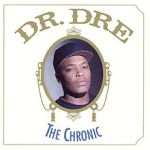
99. Dr. Dre – The Chronic (1992)

If this exercise was an attempt at listing the albums I loved and obsessed over in the 1990s, The Chronic would crack the top ten for sure. I was 10 when Straight Outta Compton came out, so Dr. Dre’s solo debut was my first exposure to the lurid, hilarious and irresistible world of gangsta rap. But listening to it now is a bit of a chore – the production remains some of the best in rap history, and Snoop Doggy Dogg’s flow is unimpeachable, but so much of the lyrics are bogged down by Dre’s obsession with his own personal beefs, and frankly, his mediocre rapping ability. To quote Chris Rock: “It’s hard to drive around singing songs about ‘Easy-E can eat a big fat dick.'” Also, this might be the most misogynistic hit record of all time. The song “Bitches Ain’t Shit” is ironic, because the song is most definitely shit. Hearing this album now makes me understand why I can’t get with artists like Odd Future, despite a sound that appeals to my sensibilities – it’s a pain in the ass to have to constantly rationalize to myself why I like something. Despite all of this, I still can’t deny a genius when I hear him; The Chronic makes this list because of Dre’s production wizardry, a singular talent that would shine even brighter on the superior Doggystyle.

The obvious choice, but my choice nonetheless: “Nuthin’ But A ‘G’ Thang,” one of the greatest tracks of the decade, let alone this album.

98. Lauryn Hill – The Miseducation Of Lauryn Hill (1998)

I don’t want to be one of those people who calls something like Lauryn Hill only releasing one album “tragic.” But it is a bummer. Especially when you consider the major flaw of her magnificent debut – its 77-minute running time. So much of The Miseducation of Lauryn Hill is so impressive, blurring the lines between R&B, gospel and hip hop, laying down a “neo-soul” template that few would come close to matching, brilliantly juxtaposing the bitterness of failed love with the hopes and mysteries of childbirth. Still, it’s tougher than it should be to get through the whole thing, what with the schoolroom skits, the hidden Frankie Valli cover, and the stretch of five long R&B tunes that get you from “Final Hour” to “Everything Is Everything.” One hoped that Hill’s future efforts would maintain this dizzying level of artistry, while exhibiting a stronger ability to self-edit. But that was a lot to expect, it turns out. This one’s all we have, and we should thank god for all 77 of those minutes.

My favorite cut is “Doo Wop (That Thing),” Miseducation‘s biggest hit, and the perfect distillation of its singular neo-soul gumbo.

97. Sublime – Sublime (1996)

By the time ska-punk and swing had infiltrated the mainstream in the mid-’90s, I was immersed in it. Looking back, it’s embarrassing to remember Carson Daly introducing a Reel Big Fish video in a two-tone suit, and it’s more embarrassing to remember how much I loved Reel Big Fish. But even after all this time, and all the guilt I’ve had to process, there’s no doubt in my mind –  Sublime’s third album kicks ass. And I don’t care how many frat boys in pre-torn South Carolina Gamecocks hats agree with me. Bradley Nowell’s swan song revealed him as some kind of stoner-poseur genius. He appropriated hip-hop and reggae tropes in ways that should’ve been embarrassing. He sang about tits, butts and bong loads. But his voice ached and cracked with seemingly unwarranted pathos. Were we hearing an addict struggling to hold on to the good times? Were we just hearing a super-talented guy at his peak? No matter the reason, Sublime rules, bro.

I especially dig “Burritos,” Nowell’s Brian Wilson-ish ode to never getting out of bed, complete with period-appropriate O.J. reference.

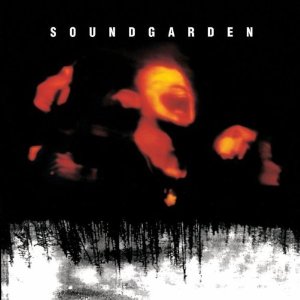
96. Soundgarden – Superunknown (1994)

Grunge is often credited as the genre that snuffed out hair metal, which is probably correct. But it’s ironic that Soundgarden was one of these vaunted acts responsible for killing the Crüe, poisoning Poison, and slaughtering Slaughter (I’ll stop there). While it did a better job with the follow through, the band’s formula wasn’t so different from Whitesnake’s – Zeppelin-esque ambition, Sabbathy riffage and a disarmingly pretty lead singer. If you had to bet on one of those Seattle bands becoming rock stars, they were the obvious choice. And Superunknown made good on all of this critical and commercial potential, a darkly tinged arena rock album with just the right mix of killer riffs, power ballads and moody meditations. Its only misstep is “Kickstand,” an workmanlike attempt at snarling punk that just underlines how different Soundgarden was from Nirvana. But what it lacks in gut-punching attitude, Superunknown makes up for in production value. An immaculately crafted work, performed by a singer and lead guitarist at the pinnacle of their powers, this is Soundgarden realizing its destiny – to play those big-ass venues that David Coverdale and company used to pack to the gills.

“Mailman” is my favorite tune here, a sludge-rock masterpiece spiked with an awesomely bitter chorus – “I know I’m headed for the bottom/But I’m riding you all the way.”

95. Primus – Sailing The Seas Of Cheese (1991)

“As I stand in the shower/Singing opera and such/Pondering the possibility that I pull the pud too much/There’s a scent that fills the air/Is it flatus?/Just a touch/And it makes me think of you.” This, my friends, is the essence of Primus, a band that thrived on bass solos, dissonance, nasal sing-speak and songs like “Grandad’s Little Ditty,” the old-weirdo-in-the-shower vignette that my friends and I would croon to each other like it was a Perry Como ballad. It’s just one of many moments on Sailing the Seas of Cheese made to be obsessed over by strange teenage boys, on an album that should’ve aged terribly on paper. But Les Claypool, Larry LaLonde and Herb Alexander happened to be very gifted musicians, and the obtuse nerd-funk grooves they let fly on “Jerry Was A Race Car Driver,” “Is It Luck?” and “Tommy The Cat” are evergreen. The band eventually lost me with 1995’s Tales From A Punchbowl, but for the record, it wasn’t because I’d become an adult or anything – to this day, “Grandad’s Little Ditty” makes me laugh.

This was a tough choice, but I’ve gotta go with “Tommy The Cat” as the ultimate Cheese cut. The guest spot from Tom Waits doesn’t hurt. Speaking of which …

94. Tom Waits – Mule Variations (1999)

After releasing the harrowing Bone Machine in 1992, Tom Waits took a break (1994’s The Black Rider was the soundtrack to a play he wrote and began recording in 1989). When he returned seven years later, it was to introduce yet another phase of his illustrious career. Not a Swordfishtrombones-level reinvention, mind you, but a nuanced move similar to the one Bob Dylan was making at the time – an organic, nostalgic embrace of Americana. The blues always informed Waits’ sound, whether through the hotel bar piano playing of his early records or the wonky pentatonics of his ’80s avant garde period. But on Mule Variations, the style comes through with a clarity that no Waits album, before or since, has possessed. “Lowside of the Road,” “Get Behind the Mule” and “Filipino Box Spring Hog” could all be Muddy Waters covers, and ballads like “Picture In A Frame” take the 12-bar structure into achingly beautiful places. Waits also dabbles in gospel, spoken word and adult contemporary (still waiting for Rod Stewart’s cover of “Hold On”), all with the same clear-headed approach. He lets the songs do the heavy lifting here, minimizing his vocal flights of fancy and keeping the clanging percussion to a minimum. Now I happen to really like those two things, which makes Mule Variations a second-tier Waits album in my mind. One that still kicked the shit out of most of the albums released in the ’90s.

“Don’t want no Abba-Zaba …” Waits delivery of that phrase is just so damn cool, it makes the candy-coated blasphemy blues of “Chocolate Jesus” my favorite song on Mule Variations.

93. Ice Cube – AmeriKKKa’s Most Wanted (1990)

At NWA’s height, its most talented rapper broke away and went right coast, making a solo album with The Bomb Squad, the production team responsible for Public Enemy’s massive, martial sound. I was too young to know about all of this, but for rap fans at the time, it must’ve been like John Lennon joining The Rolling Stones. To top it off, AmeriKKKa’s Most Wanted delivers. Ice Cube is at his most breathtakingly volatile, charging out the gate yelling, “I’m sick of getting treated like another damn stepchild!” A simultaneous description of his falling out with NWA and the common plight of African-Americans, the song, “The Nigga Ya Love To Hate,” proved Cube was up to the challenge posed by the Bomb Squad’s crackling soul thunder. Like every gangsta record from this period, Cube’s verses devolve into meathead misogyny from time to time. But the prevailing mood is righteous anger, with the ultimate goal of shining big, fat flood lights on life in Los Angeles ghettos, exposing the problem underlined by the Tom Brokaw clip that kicks of “Rollin’ Wit The Lench Mob”: “Few cared about the violence, because it didn’t affect them.”

Just try and resist the emotional and sonic onslaught of “The Nigga Ya Love To Hate.”

92. Everything But The Girl – Temperamental (1999)

I was never more than a casual fan of electronica during its ’90s heyday, appreciating its propulsive energy and imaginative approach to sampling, but always returning to rock and hip-hop at the end of the day. But a few of these records managed to break through my stubborn listening routine, including this one, in which Everything But The Girl suggested a world of listening possibilities that I was willfully ignoring. Temperamental wasn’t like any electronica I’d heard, a mix of moody synthesizers, jazzy samples and laid-back drum loops that wasn’t meant to get anywhere close to the dance floor. Tracey Thorn’s voice floated majestically over these post-punk techno pastiches, analyzing fizzled relationships with a resigned sense of grace. It’s a beautiful soundtrack for a long bout of after-hours introspection, and while this approach was nothing new to EBTG fans (Temperamental was its 10th album), it was, and remains, an eye-opener for me.

Check out “Low Tide Of The Night,” which includes one of the most elegant descriptions of depression I’ve ever heard – “Inside out in the daytime/Outside in in the night time.”

91. Cracker – Kerosene Hat (1993)

Cracker doesn’t get the breathless critical raves of its contemporaries, despite Kerosene Hat being in the same alt-country ether as Uncle Tupelo’s best work. That probably has everything to do with “Low,” the huge-ass hit song that was the only way a kid like me could become aware of David Lowery’s post-Camper Van Beethoven ensemble. Despite its rootsy, Tom Petty & The Heartbreakers groove, “Low” bumped shoulders with “Heart-Shaped Box” and “Today” on radio playlists, meaning Cracker was seemingly all about the “alt,” and not about the “country.” Which just ain’t the case. Dusting off this disc has been the most pleasurable thing about this whole project so far; I’d simply forgotten how great these songs are – “Get Off This” and “Sick Of Goodbyes” join “Low” as examples of alt-country at its peak.

What a segue! Here’s “Sick Of Goodbyes,” whose chorus still gives me goosebumps.

What’s In My Discman, January 2012

Rick Ross – Rich Forever (2012)

With details about Mitt Romney’s Swiss bank accounts clogging the news cycle, it seems like a bad time for Rick Ross to drop a mixtape that tells us how great it is to have a fuckton of dough. But while practically every track on Rich Forever is concerned with materialistic one-upsmanship (in bed, Ross must count Benzes and Bugattis instead of sheep), it’s redundant in all the right ways, developing Ross’s drug kingpin character into something delightfully cartoonish. And while the tape is loaded with guests – most notably an in-top-form Nas on the standout “Triple Beam Dreams” – Ross is never outshone, painting ridiculous Robin Leach panoramas with irresistible panache. His steady baritone is the only thing about Rich Forever that follows a less-is-more aesthetic, providing a perfect counterpoint to all the tremendous, towering beats.

Slayer – Reign In Blood (1986)

If only I knew this existed when I was 13. Sure, the 29-minute onslaught of Slayer’s major label debut is a thrilling kick to the gut when I hear it now, the merciless fretwork and impossibly fast double kick fills exploding from my car speakers like a 5 Hour Energy/kerosene cocktail. But I’m relatively well-adjusted these days, and couldn’t possibly love Reign In Blood with the intensity that my introverted teen self felt toward another 1986 thrash masterpiece, Master of Puppets. And while those records have a lot in common – from their obsession with death right down to some similar-sounding riffs – Slayer’s was wilder, more dangerous. After one listen to “Angel of Death,” you’ll be reaching for the replay button, despite the taste of blood in your mouth.

tUnE-YarDs – w h o k i l l (2011)

It’s one thing to hear a consciously poppy group get all experimental. Like, say, Vampire Weekend on Contra. It’s another thing to listen to Merrill Garbus. While the tUnE-YarDs visionary’s groovy prog-pop suites cover territory similar to VW’s hyperactive Paul Simon impersonations, they’re getting there from the opposite direction – w h o k i l l sounds like it was pulled from the brink of avant garde limbo, so it could briefly frolic in pop music heaven. Garbus likes to gesticulate wildly with her voice, imitating sirens and woodwind sections, screaming and chattering and falsetto harmonizing amongst spare synths and dissonant guitars. This could be an acquired taste for some; w h o k i l l can be as confounding as the artist’s letter casing. But when Garbus anchors everything with one of her killer nerd-funk rhythms – including some of the greatest bass lines this side of Soul Coughing – we’re talking instant gratification.

Top 20 Albums of 2011

Please read my words about these music records that I listened to and thought were good.

20. TV On The Radio – Nine Types Of Light

After a pair of masterfully ambitious rock productions made them critical darlings, these hyper-creative Brooklynites shipped their operation to California at the turn of the decade. And while it’s easy to give too much credit to the city where a recording was made, Nine Types Of Light sure does sound like TVOTR’s “L.A. album.” Overtly catchy melodies are the order of the day, with bright, relatively sparse production backing up Tunde Adebimpe’s newfound romanticism. As a result, we get some of the most unexpected, and memorable, love songs of the year. “You’re the only one I’ll ever love” isn’t exactly a tattoo-worthy lyric, but coming from a guy who used to sing about werewolf coupling, its sincerity is shocking.

19. Nick Lowe – The Old Magic

Rock musicians typically don’t know how to age. The first time they see a shock of grey in their styled-to-look-mussed-up hair, they either double down on their denial and make music that proves they “still got it,” or go off the “reinvent myself” deep end. Which just adds to the pure pleasure of listening to Nick Lowe in the 21st century. With The Old Magic, the 62-year-old pub rock/new wave legend gives us his third straight offering of gently smirking tunes about loving, losing, and getting older all the while. It’s beautifully written material from an artist who’s comfortable in his own wrinkled skin, and a production that keeps its genre jumping to a minimum – relying mostly on soft vocal jazz arrangements and sprightly Buddy Holly shuffles to support Lowe’s curious, cooing voice. Because when you’ve got metaphors for failed love that are as wonderful as “Stoplight Roses,” you don’t need much else.

18. Coldplay – Mylo Xyloto

If you already hated Coldplay, their fifth album wasn’t gonna change your mind. But as somebody who has always been a sucker for the band’s sweeping choruses and earnest “love is nice” aesthetic, Mylo Xyloto had me digging in my heels as a fan. For the first time since its melancholy debut, Coldplay has a defined goal here – marry their arena-baiting elements with those of modern pop and R&B. And with the help of uber-producer Brian Eno, they get the concoction just right, foregoing the usual piano balladry for shimmering synthesizers and throwing a bigger spotlight on Jonny Buckland’s dynamic guitar playing. “Princess of China,” a duet with Rihanna, is a microcosm of this mini-evolution, aiming for Billboard charts, festival stages and crowded dance floors, without ignoring its polarizing, sensitive-guy roots.
17. Pistol Annies – Hell On Heels

Here’s what Carrie Underwood couldn’t quite pull off with that car-upholstery-vandalism song. Hell On Heels is the debut album from Pistol Annies, a country supergroup comprised of Miranda Lambert, Ashley Monroe and Angaleena Presley. Like Underwood’s hit, this is chart-baiting female empowerment country, but the comparisons end there. Yes, these ladies are sick of male bullshit, but they go deeper than petty revenge fantasies (although those crop up here and there, most entertainingly on the killer title track). With little more than guitar, fiddle and pedal steel to guide them, the Annies sing about shotgun weddings, pill addicted tour hounds, embarrassing family squabbles and various trailers of tears. The vocals are as plain and true as the tunes; all three members have the kind of friendly, Dolly Parton drawl that lends a sickly sweetness to lines like “I’ve been thinking about setting my house on fire.”

16. Feist – Metals

It appears that Leslie Feist got just as tired of that iPod commercial as we did. Her third record is titled appropriately, if only because it’s an emotional palette of dark and darker greys. How decidedly un-twee are we talking? “What does sadness see?/The mirror has a mirror in its teeth/That’s what sadness sees,” the vocalist shares over the sullen acoustic chords of “Comfort Me.” Then, right when you’re starting to wonder if this is poignant or insufferable, a big “la-la-la” chorus kicks in, and you’re won over, whether you felt like moping around or not. This is what’s so compelling about Metals – there are hooks-a-plenty here, but they’re weighted down so elegantly, you’ll find yourself at the bottom of a lake, feeling strangely at home.
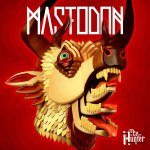
15. Mastodon – The Hunter

The conceptual insanity of Mastodon’s first three records – a water, earth and sky cycle with story lines that I dare you to try and follow – was a big part of their appeal. No metal band has provided better fodder for nerd arguments (“Who’s more powerful, Cysquatch or Megalodon?”). But The Hunter finds the band in a different place. They’ve moved on from the soul-searching grandiosity of Crack The Skye, content to hunker down and just make thunderous rock music. They’re still on their zoology jones, singing about owls and octopi, snakes and swamp creatures, but The Hunter‘s purpose is quintessentially human – to get the party started. When the post-apocalyptic aliens arrive to analyze our civilization, this record will explain why things that made us feel good were described as “kick-ass.”
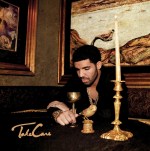
14. Drake – Take Care

Drake’s 2010 debut Thank Me Later was remarkable for its mix of monster rap hooks and confessional booth R&B. For his follow-up, the 25-year-old has put all his eggs in the latter basket, revealing himself as the antithesis of “throw your hands in the air, and wave ’em like you just don’t care.” Take Care is a long, sumptuous gaze in the mirror, with the artist rapping and singing in equal measure over soft beds of synths. It’s a perilous road for any pop star to take, but Drake manages to come off honest, acknowledging his ego and the tax bracket that boosts it, while struggling to find a meaningful relationship with anybody beyond his trusted crew. “We live in a generation of not being in love,” he theorizes on “Doing It Wrong,” a gorgeous bit of quiet storm R&B. Then all the melodrama gets punctuated by a lyrical harmonica solo from Stevie Wonder, and Take Care’s beautiful contradiction is driven home – this is self-centered music that treats its listeners with class.

13. Radiohead – The King Of Limbs

The King of Limbs is a short piece of work by Radiohead standards, which was seen as a disappointment by some. I see it as a sign of the band’s maturity. This is a magnificently dense recording, a world of lurching synths and frantic polyrhythms that unfold like a strange, binary orchid – but only after multiple listens. If it went on for an hour, it would wear down the most devout listener, much like the second half of Hail to the Thief. Plus, the band rewards us by ending the record with a pair of immediately accessible tunes – the gorgeously eerie piano ballad “Give Up the Ghost” and the lite electronica boogie of “Separator.” The only problem I have with TKOL is that it doesn’t feel like a momentous occasion, the band having painted cold, beautiful landscapes like this before. It’s an ingeniously layered production of eight well-written songs, something that could only disappoint a Radiohead fan.

12. Beyoncé – 4

Were it not for an uncharacteristically awkward guest appearance from Kanye West, 4 would be the perfect Beyoncé record, a fantastically sung, finely tuned exploration of love’s ups and downs. Her vocals have never been better, relying less on Mariah acrobatics and more on emotional shading, turning treacle like “Best Thing I Never Had” into a quality pop ballad. All the singles are excellent, from the Sam Cooke-riffing ballad “1+1” to the hyper-charged family values jam “Countdown.” And the deep cuts present varied interpretations of popular R&B, from the unrequited belting of “I Care” to the breezy, ’80s Whitney groove of “Love On Top.” All of them work except for “Party,” a half-finished-sounding summer jam that relies way too much on Kanye’s worst couplet ever: “You a bad girl and your friend’s bad too/We got the swag sauce, we’re drippin’ Swagu.” Luckily, the rest of 4 is so indelible, you can just hum one of its choruses and pretend that you didn’t just hear an endorsement for the most disgusting thing in the grocery store.

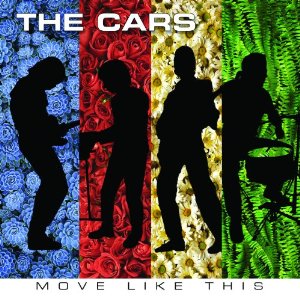
11. The Cars – Move Like This

When a game-changing classic rock band decides to get back together these days, it’s to make bank on a tour, where they play their most famous record front to back and avoid new material like the plague. So when The Cars reunited in 2010, it was refreshing, and more than a bit ballsy, that they jumped right into the studio. Of course, it’s easier to respect a choice when the results are so great. Move Like This opens with “Blue Tip,” which picks up where the band left off, fusing synthesizer earworms with rock guitars and Ocasek sing-speak to create an off-kilter pop chestnut. “It’s Late” and “Sad Song” show that they haven’t forgotten the “Drive” ballad formula either. You could call it a time capsule, but these lovingly crafted synth-pop songs just happen to fit snugly in today’s ’80s-obsessed musical landscape. Move Like This should make us reassess our rock dinosaurs – shouldn’t they still have the urge to create? Isn’t that the least we should expect from them? Which means the next time Roger Waters or The Police ask you to drop $150 to see them trot out the oldies, it’s OK to say, “No, I deserve more from you guys.”

10. The Weeknd – House Of Balloons

Band names are by no means crucial to an artist’s success (Radiohead’s a pretty awful one when you think about it). But Canadian singer Abel Tesfaye has come up with a moniker that adds even more depth to the codeine-addled bump n’ grind R&B that’s his stock in trade. On his debut mixtape as The Weeknd, Tesfaye paints explicit pictures of twisted Friday and Saturday nights, with hazy melodies and underwater drum machines to remind us that every bout of wee-hour debauchery has its aftermath. “You wanna be high for this,” Tesfaye assures us on the opening cut. Don’t trust him, though. House Of Balloons is enough of an altered state on its own. A party album for the id with arrangements that swoon like the morning after, this is a gateway drug to one of the most compelling new artists of 2011.

9. Lil B – I’m Gay (I’m Happy)

Upon hearing that Lil B was releasing an album called I’m Gay, you had to wonder if he was setting himself up for the same backlash that Sasha Baron Cohen experienced with Bruno. Would this attempt at exposing homophobia be seen as kind of homophobic itself? One listen to the record puts those concerns to rest. A concept album it’s not – the title isn’t mentioned lyrically. But it does fit Lil B’s “love everything, make cheddar” philosophy, which he elucidates in simple, straightforward couplets (e.g. “Karma is real/And you gotta love it”). There’s plenty of materialism here, but it’s tinged with a sense of gratitude. Not to mention songs like “Open Thunder Eternal Slumber,” which pleads for fair pay for plumbers. The sample choices line up perfectly with this P.M. Dawn-meets-Cash Money aesthetic – interpolated soul ballads keep things grounded, and the Spirited Away-sampling cut “Gon Be Okay” beautifully overdoses on positivity. As an antidote to hate-fueled rap, I’m Gay (I’m Happy) doesn’t just do its title justice – it transcends it.
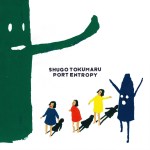
8. Shugo Tokumaru – Port Entropy

It was a banner year for Beach Boys lovers, thanks to the revelatory Smile Sessions box set and a Brian Wilson album of Disney covers (although I admit I haven’t been brave enough to listen to the latter. Sounds like it could be OK, but I fear a tire fire). Then there was Shugo Tokumaru’s Port Entropy, a ingenious and eccentric slab of sunshine pop that’s a direct descendant of Wilson’s and Van Dyke Parks’ most famous creations. Melodies runneth over here, from the children’s choir mantra of “Tracking Elevator” to the psychedelic chorus of “Lahaha,” but Port Entropy would be just a nice record if it weren’t for its arrangements. Each cut has its own distinct personality, with the Japanese multi-instrumentalist digging through his toy trunk for a seemingly endless mix of interesting combinations. “Lahaha” is a magnificently twisted concoction of glockenspiel and flute; “Linne” a piano and trumpet ballad; “Malerina” a pizzicato reggae jam. So if The Smile Sessions has you thinking that they just don’t make records like they used to, Port Entropy is here to prove you wrong. You crusty old coot.

7. Big K.R.I.T. – Return Of 4Eva

When rappers try to give themselves their own colorful mythology, they’re playing with fire. For every Wu-Tang, there are a dozen Nastradamuses. Which makes Big K.R.I.T.’s debut mixtape all the more remarkable. With a name that stands for “King Remembered In Time” and an album title that he describes as a “movement” on its opening track, the Mississippi artist sets the bar sky high before he even gets his first 16 bars off. But Return Of 4Eva’s dreamy, Organized Noize-esque production and measured, introspective lyrics deserve such luxurious boasts. Whether he’s baiting naysayers on “Dreaming,” reminiscing about career struggles on the gorgeous “American Rapstar,” or describing the frightening allure of drug dealing on “Lions & Lambs,” there’s a hard-earned knowledge in K.R.I.T.’s voice that makes them all different paragraphs from the same essay. By the time you get to the record’s heartbreaking tour de force, “Another Naive Individual Glorifying Greed and Encouraging Racism,” the movement’s got you whole.
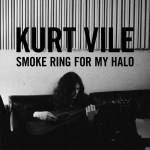
6. Kurt Vile – Smoke Ring For My Halo

Even though the ’90s are far behind us, in 2011, the term “slacker” still dredges up visions of flannel and limp bangs. But before the record companies and film studios started telling us how cool slackers were, slackers were actually kind of cool. The way Bob Dylan lazily dropped those “Subterranean Homesick Blues” cue cards, it seemed like the guy could’ve given a shit, and didn’t we love him all the more for it? It’s this image that comes to mind when I listen to Kurt Vile’s deceptively ramshackle Smoke Ring For My Halo. The man delivers every lyric of these stoner folk songs in a gentle mumble – from the sarcastic “Society Is My Friend” to the romantic “Baby’s Arms.” But instead of coming off like some half-assed bedroom album, SRFMH creates a compelling headspace. Vile’s slacker vocal stylings are likely a put-on; the guy could probably hit all the notes if he wanted to. But I say bring on the posturing – there’s something captivating about this singer who sounds like he doesn’t care if anybody hears him, who just wants to get some things off his chest and then go to bed. Something strangely and indisputably cool.

5. PJ Harvey – Let England Shake

There was good reason to anticipate the release of PJ Harvey’s eighth album this year, a conceptual work about her homeland and the wars it fought during its centuries as a world superpower. Harvey’s last notable work was 2000’s Stories From The City, Stories From The Sea, another album about a specific place, New York City. But if you pardon the pun, Let England Shake blows Stories out of the water. This isn’t a collection of protest songs, or an allegory for specific conflicts in the modern world. It’s a record that gets right into the trenches, and the heads, of British troops throughout history. The language is harrowing, with descriptions of body parts hanging from trees sitting alongside strident patriotic cries, streaking them with regret. And while the music is understandably subdued, with Harvey’s signature dark chord changes leading the way, there’s also beauty to be appreciated, with the singer’s voice rising above the somber acoustics and digital ephemera of “England,” telling us about “the country that I love.” By the time you get to the gut-wrenching Gallipoli singalong “The Colour of the Earth,” the history lesson’s over. But the feeling lingers.

4. Tom Waits – Bad As Me

Yes, Tom Waits is avant garde. His voice is a hyper-expressive growl. His fusion of raw Chicago blues and garbage can-bashing performance art is jaw-droppingly creative. Now that we’re getting close to the 30-year anniversary of Swordfishtrombones, the record that changed it all, it’s awfully easy to forget that before he became the bizarre, trend-bucking artiste, Waits was a loungey singer/songwriter, releasing piano-heavy, Edward Hopper paintings of records throughout the ’70s. Bad As Me, his 19th record, keeps the bar high in terms of legacy-worthy freakiness – especially the whacked-out boogie of “Get Lost,” which is Waits as psycho Elvis impersonator – but it also reminds us of the sensitive hotel bar crooner of old. “Kiss Me” is a crackling, “let’s spice up the marriage” time capsule of a ballad, a quiet, achingly sexy left turn after the screwy, anti-soulmate blues of the title track. And then there’s “New Year’s Eve,” which closes things with a gorgeous, drunken bout of nostalgia. When Waits breaks into “Auld Lang Syne,” you’re reminded of another old standard he knocked out of the park in 1976, “Waltzing Matilda.” Right then and there, it’s the best of both worlds.
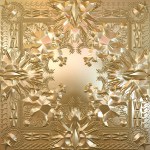
3. Jay-Z & Kanye West – Watch the Throne

In a year marked by politicians explaining why the rich should get richer, we got an album from two of the most talented beneficiaries of the Bush tax cuts. And when you consider that on Watch The Throne, Jay-Z & Kanye West reach some spine-tingling heights on the backs of some crazy-expensive samples, this makes for a quintessentially American success story in 2011. Sure, it’s probably unfair that West might be the only producer out there with the clout to license “Try A Little Tenderness,” but there’s no use whining about it, because he also happens to be the best person for the job. The resulting cut, “Otis,” is a magnificent swash of braggadocio that boldly reframes Redding’s theme – in the place of a tender lover making life “easier to bear,” we now have obscene wealth. Both MCs egg each other on, resulting in some propulsive egomania (e.g. “Welcome to Havana/Smoking cubanos with Castro in cabanas”). It’s the precise formula we hoped for with this pairing – huge, luxurious productions, and a palpable sense of one-upsmanship on the microphone. The best example of it might be the RZA co-production “New Day,” which finds Jay and ‘Ye pleading with their hypothetical future children over a haunting beat that runs Nina Simone through AutoTune (!!!). It’s not a track by track masterpiece a la My Beautiful Dark Twisted Fantasy, but on Watch The Throne, these superstars spread the wealth so generously, trickle-down economics almost starts to make sense.

2. Bill Callahan – Apocalypse

If PJ Harvey made the war movie of the year, then Bill Callahan made the western. On Apocalypse, his third solo effort under his own name instead of Smog, the singer-songwriter tells tales of cowboys sympathizing with their cattle, marriages dissolving in the dust of the prairie, and panoramic vistas that enchant the minds of men. But a traditional country album it’s not – meditative folk is Callahan’s bag, with arrangements that act as delicate foundations for his beautiful, mournful baritone. It’s circular, entrancing stuff, a cowboy Astral Weeks, an attempt to document how small our country can make us feel, and how proud. “It takes a strong/Breaks a strong mind,” Callahan sings about the American wilderness. “And anything less makes me feel like I’m wasting my time.” He could be singing about his own record.

1. James Blake – James Blake

The cover of James Blake’s debut album is a nice bit of synesthesia – a portrait of the artist soaked in icy blue undertones, his face blurred to the point where he’s looking at you from two different places at once. It’s the perfect visual interpretation of Blake’s voice on this record, a silky, soul-inflected alien in a purely electronic world. On “The Wilhelm Scream,” it’s rich and full, dancing lightly over atmospheric synths; on “Lindesfarne I,” it’s distorted and chilling, comparing hope to kestrels through washes of pitch correction. Blake pines for happiness throughout, over distant, subterranean electronics that belie his optimism. It’s a Sade album for a Terminator future, where a singer clearly has soul, and the machines try to strip it from him every step of the way.

Honorable Mentions: Bon Iver – Bon Iver; Heidecker & Wood – Starting From NowhereLykke Li – Wounded Rhymes; My Morning Jacket – Circuital; Wilco, The Whole Love; Wolves In The Throne Room – Celestial Lineage; Eddie Vedder – Ukulele Songs

Coldplay Hate: A Study

In a recent Pitchfork interview, Coldplay singer Chris Martin discussed his relationship with Jay-Z, sharing that some people can’t understand why someone as “cool” as Jay would want to be friends with someone as “nerdy” as himself. I know one thing they could definitely bond on – haters. Whether it’s coming from Foo FightersThe 40-Year-Old Virgin, or critics who can’t get over the U2 aping, moneymaking and/or Paltrow marrying, Martin has to deal with the same petty jealousies as Jay or fellow collaborator Kanye West. But unlike those artists, Coldplay’s stock in trade – huge, starry-eyed love songs with choruses that embrace listeners like teddy bears – doesn’t give him the platform to vent about it.

For now, at least. The band’s fifth album, Mylo Xyloto, finds the group aiming for a more rubbery pop sound, injecting some needed brightness and energy in its brand of moody arena rock. Synths appear as much as pianos; the rhythms have more meat on their bones, and teardrops invariably become waterfalls. It’s an ideal situation for a guest appearance by Rihanna, whose voice winningly intertwines with Martin’s over the soaring synth-pop riffage of “Princess of China.”

You could spin this as a sign of the musical apocalypse if you wanted – a monstrously popular group doing everything it can to sound even more mainstream. But for all of its chart-reaching ambitions, Mylo Xyloto doesn’t sound labored. Martin and his bandmates clearly have an affinity for the trappings of 21st century pop and R&B, and with the help of super-producer Brian Eno, they’ve woven them into their signature sound in subtle yet effective ways – much like U2 did on Achtung Baby. Critics are once again heaping praise upon that album in honor of its 20th birthday, calling it brave, despite the fact that when you took away Bono’s new hair and wardrobe, Achtung was just a tweaked version of the same old formula. It’s a great record, but it has more in common with Mylo Xyloto than U2 fans would probably care to admit.

The reviews are in on MX, and they’re the usual mix of carefully worded praise and straight-up bile. But whether they’re being nice or mean, critics still tend to sound disappointed that Coldplay isn’t an Important Artist, the kind of band that turns fans into apostles for its cause. Which leads to my theory – Coldplay’s biggest problem is that they don’t suck enough. It’s easy to spew hate about Black Eyed Peas or Maroon 5, but those Coldplay choruses are nifty little earworms. They must make it hard on Chris Martin haters, no matter how many clumsy rhymes he forces. So they rage on about how worthless Coldplay is, how they’re an insult to people who “know about music,” how their popularity exposes the ignorance of the general public. Then they catch themselves humming “Paradise,” and the self-flagellation begins.

The Plight of the Spoiled Music Fan

Back in July, AV Club music editor Steven Hyden shared an interesting theory – in order to be classified as a great band, an artist must have released five “very good” to “excellent” records in a row. In the arbitrary world of ranking pop culture, Hyden’s formula is as good as any – it should be awfully hard to earn the distinction of “great” – but it did get me thinking about how spoiled we music fans can be. After having our minds blown by an exceptional work of art, part of us feels grateful to the artist, while the other part busily sets unrealistic goals for them. In this heightened context, if a band’s follow-up is merely “good,” then that qualifies as a letdown. I felt this way about several albums in 2011, and I’ve selected four to discuss. All were created by artists I love; all feature some quality material. But when placed in the context of their back catalogs – and my emotional attachment to them – all are disappointments.

Radiohead – The King of Limbs

In the pantheon of spoiled music fans, Radiohead fans are the worst. Hyden claims the Brit legends don’t pass his five-albums test because of 2001’s Amnesiac, which I disagree with (see #56 on my Top 100 Albums of the 2000s). I don’t think they pass the five-albums test because of 2004’s overlong Hail to the Thief. These are really good albums we’re talking about here, some seriously adventurous, emotionally riveting stuff that we would praise unconditionally from a band of any other name. But because Radiohead was kind enough to make OK Computer and Kid A, they must suffer our nit-pickery! And The King of Limbs has been no exception. It’s a magnificently dense recording, a world of lurching synths and frantic polyrhythms that unfold like a strange, binary orchid. But it’s also immediately accessible in places, especially the last two cuts – the gorgeously eerie piano ballad “Give Up the Ghost” and the lite electronica boogie of “Separator.” Yet TKOL is bereft of the grand statements and avant garde left turns that defined the band at its earth-shattering best. The biggest complaint among fans has been the running time – under 40 minutes – but that doesn’t bug me. In all honesty, the only problem I have with TKOL is that it doesn’t feel like a momentous occasion, the band having painted cold, beautiful landscapes like this before. It’s an ingeniously layered production of eight well-written, adventurous songs, something that could only disappoint a Radiohead fan.

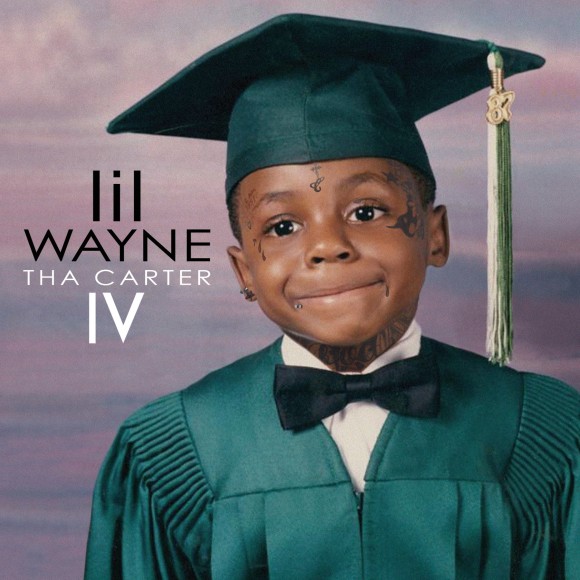
Lil Wayne  – Tha Carter IV

This year, my spoiled ass was the most disappointed by the hotly anticipated return of Lil Wayne. After the across-the-board success of his 2008 masterstroke Tha Carter III, and the ending of his highly publicized prison sentence, Weezy sounded sharp on his pre-Carter IV mixtape, Sorry 4 Tha Wait, rapping over loops from “Gucci Gucci” and “Rolling in the Deep” with understated poise. But when the real album finally dropped in August, the rapper didn’t sound understated – he sounded underwater. He’s never been a speed rapper, but Wayne certainly takes his time delivering his couplets this time around, and his similes tend to not warrant the extra attention (e.g. “The weed’s loud like a lion’s roar”). Guests Rick Ross, Tech N9ne, Busta Rhymes and Andre 3000 deliver life support in the form of fantastic verses, and the beats successfully hearken back to the gangsta/Dirty South gumbo of Tha Carter II. But without Wayne at his scatological-pothead-Martian best, TC4 is merely a good hip-hop album with occasional flashes of the lyrical master of old. The intro, the interludes, “6 Foot 7 Foot,” “John” and “President Carter” are all worthy of Weezy’s legacy, but we’ve come to expect much more from a record with Tha Carter” in its title.

Wilco – The Whole Love

Despite the sonic canyon that separates alt-country from post-punk, Wilco/Radiohead comparisons have been kicking around since Being There and OK Computer set their respective bars impossibly high. But now that both groups have aged, a legitimate parallel can actually be made – both Wilco and Radiohead possess a built-for-the-long-haul dynamic that generates fruitful output in the face of the loftiest expectations. These guys are gonna keep making music, no matter how many bloggers whine about how they’ve lost a step. And thank god for it – The Whole Love, like The King of Limbs, is a pristinely crafted work, with material that’s right in the band’s wheelhouse. The first two songs even get you hoping that this is indeed the “next Yankee Hotel Foxtrot” you were dreaming for. “Art of Almost” is one of the band’s finest tunes, period, a seven-minute opus that pairs bittersweet, close-but-no-cigar sentiments with soaring distortion and menacing synths – a lusher, warmer “I Am Trying To Break Your Heart.” This is followed by “I Might,” a blast of riff-focused power pop that would’ve fit snugly on Summerteeth. But alas, TWL isn’t a full-blown Wilco masterpiece. While the balance of the record is far from one note – the haunting acoustics of “Black Moon” and sunny Sunday shuffle of “Capital City” providing the most welcome dynamic shifts – it’s still bereft of the wild spirit of “Art of Almost.” Like Wilco (The Album) and Sky Blue Sky before it, TWL depicts a band that’s gotten very comfortable doing its thing – and in 2011, that thing is impeccably wrought country-rock, not the unpredictable Americana rollercoasters of yore. A good album? Yes. A disappointing tease? You betcha.

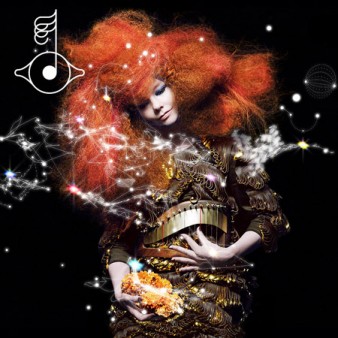
Bjork – Biophilia

As an artist who passes the five-albums test in my book – from Debut to Medulla, she was pretty much unstoppable – it’s impossible for me to look at any new Bjork album objectively. That being said, the flaws in this year’s Biophilia are plain to see – every track on this mega-concept album about the history of the universe comes with its very own iPad app, and what we gain in ambition we lose in listenability. Not to say that the album isn’t enjoyable; it’s frequently gorgeous. Bjork remains one of the most daring artists making music today, with a voice that continues to astound. Yet where her best work always had clear horizon lines, Biophilia is a thicket of notes and concepts, without much traditional songcraft to ground them. The exception is “Crystalline,” an etheral club banger with a whirlwind of a drum n’ bass outro. Here, Bjork shows us what can still happen when she gets out of the way of her own creativity. But like “Art of Almost,” it only serves to make us wonder just how great this album could’ve been. 

What’s In My Discman: October 2011

Nick Lowe – The Old Magic (2011)

Rock musicians typically don’t know how to age. The first time they see a shock of grey in their styled-to-look-mussed-up hair, they either double down on their denial and make music that proves they “still got it,” or go off the “reinvent myself” deep end. Which just adds to the pure pleasure of listening to Nick Lowe in the 21st century. With The Old Magic, the 62-year-old pub rock/new wave legend gives us his third straight offering of gently smirking tunes about loving, losing, and getting older all the while. It’s beautifully written material from an artist who’s comfortable in his own wrinkled skin, and a production that keeps its genre jumping to a minimum – relying mostly on soft vocal jazz arrangements and sprightly Buddy Holly shuffles to support Lowe’s curious, cooing voice. Because when you’ve got metaphors for failed love that are as wonderful as “Stoplight Roses,” you don’t need much else.

Stevie Wonder – In Square Circle (1985)

In my younger, stupider days, I would say things like “NOTHING good came out of the ’80s,” accompanied by the requisite eye-roll. I don’t like to think about me being an ignorant dick, but albums like In Square Circle demand this kind of personal reflection. Stevie Wonder fully embraced the synthetic production values of the decade here, something that would’ve once inspired my passive-aggressive scorn. Thankfully, now I actually listen to albums before judging them, and while Wonder’s 20th record doesn’t possess the warmth and grandiosity of his ’70s earth-shakers, it’s darn close to a pop masterpiece. Two jaw-dropping ballads are the biggest highlights – the scorned-lover-as-missing-person weeper “Whereabouts” and the classic unrequited love song “Overjoyed” – but the minor synth groove of “Part-Time Lover” and the staccato, drum machine funk of “Spiritual Walkers” are also fantastic listens, despite sounding very much like they were recorded in 1985.

Lykke Li – Wounded Rhymes (2011)

Lykke Li made her first splash with the 2007 single “Little Bit,” a simple declaration of love that stayed with you, no matter how silly it looked on paper. And the singer continues to explore the same chilly neo-soul territory on her second album, digging deeper into her vocabulary to express love and devotion. Wounded Rhymes does possess the ruminative quality implied by the title, but it’s in the atmospherics more than the songs themselves, resulting in an album that sounds like Portishead after a fruitful therapy session. “I Know Places” is six-minutes of lo-fi folk strumming, an instrumental track that just might be coma-inducing – if it weren’t for Lykke Li’s light, bluesy vocal. When she sings, “I know places we can go, babe/Comin’ home, come unfold, babe,” the song goes from a slog to a spiritual.

What’s In My Discman, August 2011

Jay-Z & Kanye West – Watch the Throne (2011)

As we get ready for a year’s worth of politicians explaining why the rich should get richer, we get an album from two of the most talented beneficiaries of the Bush tax cuts. And when you consider that on Watch The Throne, Jay-Z & Kanye West reach some spine-tingling heights on the backs of some crazy-expensive samples, this makes for a quintessentially American success story in 2011. Sure, it’s probably unfair that West might be the only producer out there with the clout to license “Try A Little Tenderness,” but there’s no use whining about it, because he also happens to be the best person for the job. The resulting cut, “Otis,” is a magnificent swash of braggadocio that boldly reframes Redding’s theme – in the place of a tender lover making life “easier to bear,” we now have obscene wealth. Both MCs egg each other on, resulting in some propulsive egomania (e.g. “Welcome to Havana/Smoking cubanos with Castro in cabanas”). It’s the precise formula we hoped for with this pairing – huge, luxurious productions, and a palpable sense of one-upsmanship on the microphone. The best example of it might be the RZA co-production “New Day,” which finds Jay and ‘Ye pleading with their hypothetical future children over a haunting beat that runs Nina Simone through AutoTune (!!!). It’s not a track by track masterpiece a la My Beautiful Dark Twisted Fantasy (the mix of pseudo-feminism and rock star hedonism on “That’s My Bitch” just wasn’t thought through), but on Watch The Throne, these superstars spread the wealth so generously, trickle-down economics almost starts to make sense.

Check out “New Day”:

Queen – Sheer Heart Attack (1974)

Everybody knows that Queen could do bombast better than anybody. But it doesn’t seem to be common knowledge that they could straight-up shred, probably because the unbridled adrenaline that fueled this, its third album, would take a back seat to grander production flourishes on later masterpieces. As a result, it might be the least polished record of the band’s oeuvre, and my favorite. Every aspect of the band’s personality is here in its rawest form – towering vocal harmonies, vaudevillian freakouts, proto-thrash exercises and earworm-infested pop gems. From the Moet & Chandon melody of “Killer Queen” to the muscular arena rock of “Tenement Funster,” the halcyon balladry of “Lily of the Valley” to the bloody-fingered metal of “Stone Cold Crazy,” Sheer Heart Attack proved that Queen could do it all, and do it better than your band.

Here’s the harrowing, record execs-are-the-devil rocker, “Flick of the Wrist”:

Tyrone Davis – “Can I Change My Mind” (1968)

This is an idyllic R&B confection that gives credence to that classic advice women get when they want to make a man interested – act like you could give a shit about him. Davis, a singer I hadn’t heard of until I stumbled across this song, shows that he should’ve been in the conversation alongside the Motown and Stax greats of the time. Over a clear-as-day guitar riff and some punchy horns, he gets every drop of regret out of the lyric, with an effortless delivery that’s firmly in the tradition of Davis’ Chicago soul forefather, Sam Cooke. “But y’all, the girl, she fooled me this time,” he sings, going on to explain his emotional discovery to us – he thought he wanted to leave his woman, but he just wanted to get a rise out of her. He’s unsuccessful, of course, which clears the way for the beautiful plea of the chorus.

Experience this sweet soul for yourself: