Netflix Recap: Meek’s Cutoff

If you looked at my instant watching activity for the last few days, you would see that I’ve watched several episodes of the BBC show Merlin. Why would I endure this Smallville-ization of the Arthurian legend? Is it possible to be a masochistic Anglophile? Thankfully, I’m not going to answer those questions here. Instead I’m going to talk about something else I watched recently that makes me seem cooler – the haunting Kelly Reichardt movie Meek’s Cutoff.

Although it features effective, restrained performances from stars Michelle Williams and Paul Dano, the unforgiving landscape should get top billing in this minimalist tale about 19th century settlers who make the regrettable decision to leave the Oregon Trail. Reichardt and screenwriter Jonathan Raymond understand that frightened people clomping through the desert aren’t going to bust out many soliloquies, resulting in a relatively quiet, realistic study of people looking death in the face. And when the visuals are as arresting as they are here, Williams’ stern, heavily bonneted face and Dano’s bug-eyed expressions are all you need. Paranoia abounds from the first minute, where it becomes clear that the settlers don’t trust their guide, the eccentrically brusque Stephen Meek (played by Sweensryche favorite Bruce Greenwood, who plays against his A Dog Named Christmas type, with mixed results). When a Native American crosses the group’s path and eventually becomes Meek’s unwilling replacement, the gap between cultures is as vast as those stunningly arid landscapes.

Reichardt has a thing for the “getting lost” metaphor – Old Joy, her 2006 film about two men attempting to recapture their lost friendship on a camping trip, dealt with the pair losing their way with a mesmerizing sense of patience. Meek’s Cutoff is filmed in a similar style, lulling you with extended shots of the settlers fording rivers and chasing handkerchiefs in the wind. But whereas Old Joy ended with the clear sense that the characters had drifted apart, Meek’s closing shot is harrowingly open-ended. You get the idea that, with paranoia and mistrust worming their way into the settlers’ brains, something bad is on the horizon. Call it American History 101.
What I Learned From “Instinct”

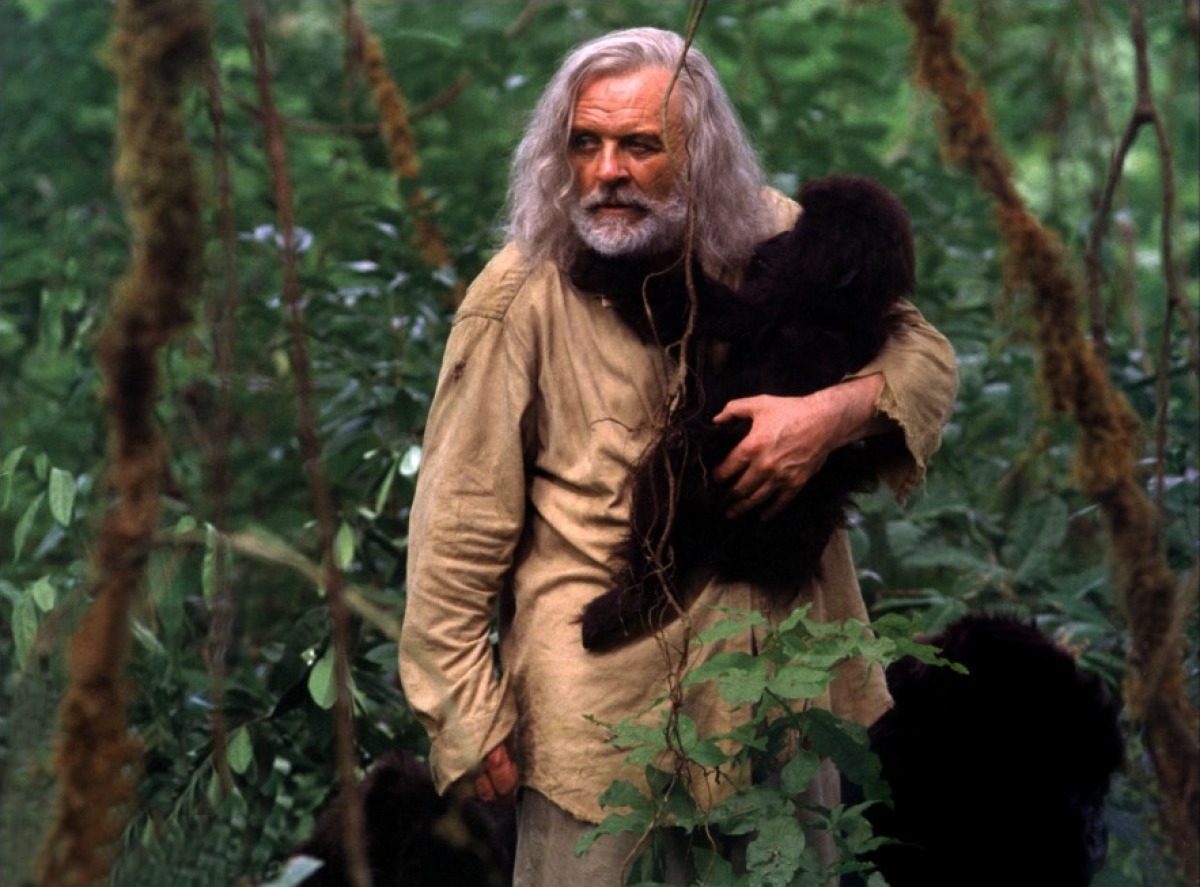
I had so much fun telling you what I learned from The Edge that I’ve picked another post-Silence of the Lambs Anthony Hopkins thriller to glean morals from. Instinct is a movie that – get this – pits a plucky young professional against a brilliant, violent man. Released in 1999, this was Sir Anthony’s fifth “I have bills to pay” movie in a row (after Meet Joe Black, The Mask of Zorro, Amistad and The Edge). He plays Ethan Powell, a genius psychologist who lives off the grid with a pack of gorillas for two years and is arrested for murder in Rwanda. Powell seems to act more like ape than man, never speaking and lashing out violently. Until the ambitious psychologist Theo Caulder (Cuba Gooding, Jr.) makes it his mission to bring Powell out of his monkey trance, and the movie really starts to blow.

Lesson One: Psychology is super easy.

The first 20 minutes of Instinct frames Hopkins as a live wire, somebody lost to civilization for so long that seasoned psychological minds think he’s a lost cause. The Rwandan government wanted to hang him. When his daughter came to visit him, he didn’t even look at her. He beat the shit out of some people at the airport. Then Gooding, Jr. shows up to counsel Hopkins in prison, and he pretty much gets him talking right away. Take note, armchair shrinks: When there’s a psychopathic ape man in front of you, just look wide-eyed and frightened, and ask him questions about his family. He’ll perk right up.

Lesson Two: Prison guards are horrible, horrible people.

The U.S. prison that Hopkins is transferred to is called Harmony Bay, which is of course underfunded, falling apart and staffed by assholes. One of Instinct’s major story lines is a game that the guards play with the prisoners, giving each one a card from a deck, and only allowing the prisoner who gets the ace of diamonds to receive a half-hour of outdoor time, something all of them are technically entitled to. What the prison has to gain by this stupid and cruel system is never explained, but it does set things up for a painfully melodramatic sequence that sees Gooding, Jr. bucking the establishment by putting the prisoners’ names in a box, and then selecting one at random. You know, like a hero would do.

Lesson 3: Prisoners are wonderful, wonderful people.

You can’t establish the fact that prison employees are evil without prisoners that one can sympathize with. Hence, even though we hear plenty about how Harmony Bay is overflowing with dangerously psychotic criminals, we don’t hear much at all about what they did to get locked up in such a terrible place. Which gives director John Turtletaub the freedom to paint them as a rag-tag bunch of eccentrics just waiting to be psychologically rescued (think One Flew Over the Cuckoo’s Nest, except with serial killers). Oh yeah, and we eventually learn that Hopkins didn’t really kill anybody – his gorilla pals were shot by Rwandan soldiers, but he called himself a killer because he felt guilty about it. You know why it’s so hard to find a sensitive man that you want to spend the rest of your life with? Because they’re all serving life sentences.

Lesson 4: Living with animals gives you super strength.

Because Instinct is actually a cloudy glop of environmentalist dogma instead of a movie that asks interesting questions about our own primality, the filmmakers couldn’t be subtle with the very few Hopkins-as-crazy-ape-man scenes. So when he kicks people’s asses in airports and prisons, he doesn’t just beat them – he physically overpowers them with the ease of a superhero. How could gorillas give this ability to a senior citizen in chains? It doesn’t matter, because the movie isn’t really about that kind of thing anyway.

Lesson 5: Ponytails signify recovery.

I don’t want to let Turtletaub off the hook, but Gooding, Jr.’s wet noodle of a performance makes me want to give the director some slack. The actor portrays Caulder as a whimpering snob, a person not cut out to counsel the mentally disturbed. So Turtletaub has to resort to things like wig manipulation to make us believe that Caulder is indeed helping Powell get better – after, like, four sessions, Powell begins to pull back his matted nest of psycho hair into a slick ponytail. Which means that he’s recovering his sanity, because it takes a civilized man to wear the scrunchie of self-discovery.

Franz List: Unintentional Scares

Hey, list fiends. Halloween is creeping around the corner like a scary ghost. Which means it’s time for a list about being scared about stuff. Last year we counted down the “funnest” horror movies of all time, exploring such feel-good titles as The Gingerdead Man and Sleepwalkers. This year, we analyze some pop culture that isn’t supposed to be scary, but still manages to make me pee in my pants a little.

1. Unexpected Cookie Monster
John Lennon, “Hold On”

When I fell in love with John Lennon’s Plastic Ono Band, I was doing a lot of driving – my incredible girlfriend (now my wife) was going to school an hour and a half away, and I sped my Dodge Neon down there every chance I got. On one of these voyages, I heard “Hold On” for the first time. A sparse, sauntering lullaby, “Hold On” is a quiet moment on an album informed by scream therapy. But at the 1:08 mark, just as you start to settle into the song’s aesthetic, a gravelly voice flies out of leftfield, stating “Cookie.” When I first heard this, I whipped my head around in the driver’s seat, fully expecting to see a wild-eyed drifter in the back, making to stab me with a rusty switchblade. Turns out that was John himself, imitating Cookie Monster for reasons I still don’t understand. But that moment has stuck with me – when he sings “It’s gonna be all right” on the chorus, I’m not convinced.

2. The Famous Amos Penis Scene
Burlesque

There’s not much that isn’t frightening about Burlesque, the 2010 musical about a wooden small-town girl who flees to the L.A. of an alternate universe, where one can become a huge star as a burlesque performer, because the general public cares about burlesque. Christina Aguilera wanders through the shots like a lobotomy victim, Cher looks like a Madame Tussauds monster, and the songs are horrible, but those things are to be expected. Not so the scene where Aguilera’s excruciating flirtations with love interest Cam Gigandet come to a head – Gigandet does an extended strip tease that’s intended to be cute (enter the bedroom fully clothed, come back into the living room under some pretense but a little more naked, repeat). Then, just as we’re lulled into a catatonic acceptance of this sequence’s “romantic” endgame, Gigandet walks up to Aguilera with a box of Famous Amos cookies covering his dong. “Wanna cookie?” he asks. It’s gross. It’s nonsensical. It’s not even the funniest box of cookies that one could use to conceal their genitals (Otis Spunkmeyer, anyone?). When you’re done screaming, this is the kind of insult to your intelligence, and your sweet tooth, that lives on in your nightmares.

3. Arnold Knows Best
Commando 

The daddy-daughter montage during the opening credits of Commando is intended to be the brief calm before the storm – because like any brilliant action film, this 1985 Schwarzenegger classic knows to get the character development out of the way as quickly as possible, and get right to the ass-kicking. But nothing in the ensuing shoot-em-up is as frightening as the beginning of this sequence, which finds an especially bulgy Arnold chopping wood. A shadowy presence approaches, and the music implies that this must be a bad guy. Arnold sees his enemy in the reflection of his axe, and at the last second, he spins around and … grabs his daughter Jenny, laughing and shaking her awkwardly. Is this a game they play, where the kid tries to sneak up on her father while he’s wielding an axe? It doesn’t matter, because now they’re goofing around at ice cream stands and feeding fawns in the wild. Still, although the entire premise of Commando is that Arnold loves his daughter so much that he’d annihilate an island nation to save her, you’ve gotta wonder if she’d be safer with the terrorists.

4. You WHAT into me?
Dave Matthews Band, “Crash Into Me”

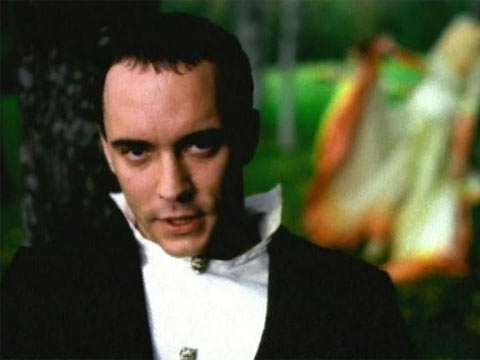
Like most Dave Matthews Band ballads, “Crash Into Me” meanders along inoffensively, pairing pleasant open chords with loving sentiments like adult contemporary hits are supposed to. It’s exactly the kind of tune that shouldn’t have a chorus about having unprotected sex with Dave Matthews. “Crash into me/And I come into you,” Matthews warbles, making for one of the most uncomfortable and messy-sounding come-ons in rock history.

5. Boohbah

As if the concept of tripping human-animal hybrids with TVs for stomachs wasn’t creepy enough, Boohbah ups the ante on grotesque, oddly fascinating programming for babies. The Boohbahs are furry, fluorescent-colored creatures who look like mauled genitalia – bumpy oval heads peeking out of big furry sacks. When they’re not chanting “Booh-bah” like a children’s choir, they’re bobbing their heads up and down and making fart noises. Saying their names in a certain order is a surefire way to raise the dead – Humbah, Zumbah, Zing Zing Zingbah, Jumbah, Jingbah …

6. America’s Sweetheart Has A Seizure
Steel Magnolias

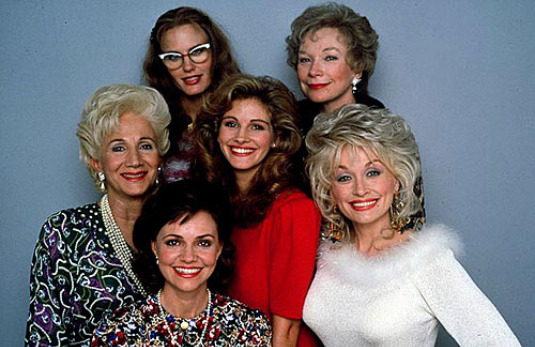
Southern women are sassy and strong. That’s basically the plot of Steel Magnolias. Even when one of them dies tragically, it only serves to underline the point that these ladies are more resilient than a million Tom Skerritts. So when Julia Roberts has a horrifying diabetic seizure in Dolly Parton’s salon chair, with Sally Field and Olympia Dukakis watching, it’s a harrowing chink in the armor of these superhuman Southern belles. But that’s not necessarily scary. What is scary is that Roberts looks like a tapeworm monster in this scene. Which probably explains why I curl up in the fetal position when I hear the words, “Drink your juice, Shelby.”

7. Did you kill my son?
Changeling

Some of the scariest sci-fi stories involve the alien takeover of human consciousness, from Invasion of the Body Snatchers to The Thing. How else can we explain how Angelina Jolie behaves in Clint Eastwood’s underwhelming 2008 period piece Changeling? She plays a woman whose child is kidnapped, only to have the authorities try to pass off some other kid as hers. You’d think there’d be some righteous fury here, something to give the audience the sense of catharsis that results in Oscar nods. But Jolie is bewilderingly robotic. When confronting the man who she thinks is her son’s murderer, the script requires her to ask the question “Did you kill my son?” about 400 times. And while Jolie tries to mix it up, first asking politely and then yelling it in the guy’s face, there isn’t a trace of human emotion to be found – by then, the pod people had completely taken over.

What I Learned From The Edge

Welcome, tens of Sweensryche readers! Today sees the unveiling of a new feature – “What I Learned From …” – in which we explore the lessons that Hollywood movies cram into our eye sockets, so that they can slowly worm their way into our brains and eventually alter our behavior. Today, we focus on the 1997 thriller The Edge, in which Anthony Hopkins, Alec Baldwin and an African-American are stranded in the bear-infested wilds of Alaska. Guess who gets eaten?

Lesson 1: Obscenely rich people have better survival instincts.

Hopkins plays Charles Morse, who is a billionaire from doing something or other. Morse can build a compass out of a paper clip and a leaf, treat the grievous injuries of his companions, and kill a bear in one-on-one combat, all while exuding a Dalai Lama-level sense of calm. Baldwin plays the fashion photographer Robert Green, a character you would imagine does well for himself. But he’s not as rich as Morse, which logically means he’s also weaker, dumber and on the verge of a nervous breakdown.

Lesson 2: Obscenely rich people are Christ-like. 

Within the first five minutes of The Edge, it’s clear that Robert is having an affair with Charles’ model wife, Mickey Morse (!). They attempt to give him a heart attack with a bear suit birthday prank, after which Mickey gives Charles a watch with a lazily phrased engraving, and Robert gives him a knife. Not to mention all their “stolen” looks at each other. Anyways, the viewer isn’t supposed to be sure about all of this, because at the film’s dramatic peak, Robert admits to the affair, and shares that he was plotting to kill Charles all along. (Greed clouds the minds of poorer people, making them ill-suited for survival in the wild. See Lesson 1.) After being outwitted, Robert is impaled at the bottom of a bear trap. What does Charles do? He tries to save him. Before Robert dies, he sees the error of his ways, and confesses to the Hopkins Christ. We assume he goes to heaven.

Lesson 3: Bears are sociopaths.

Every time a bear appears in The Edge, it is ready to maul the shit out of every human being in its path. And it’s not just because they’re hungry: When Charles is teetering on a log that’s spanning some whitewater rapids, a bear comes up and shakes it until Charles falls. Fucker just wanted to see him die.

Lesson 4: Fashion photographers love stoic Native Americans.

How did these guys get themselves into this ursine kerfuffle, you say? Well, it’s because they were in Alaska for Robert’s photo shoot of Mickey (played with glassy-eyed irrelevance by Elle MacPherson), and Robert got sick and tired of the same old model stuff. After seeing a framed photo of a weathered Native American dude on the wall of their lodge, Robert decides they need to go out and find him instead. Because what do fashion magazines love more than the quiet pain of indigenous people?

Lesson 5: If you’re cheating on your husband, and you’re getting him an engraved watch for his birthday, do not also get one for your lover as part of the same order. Then, do not leave the receipt inside the box that holds your spouse’s watch.

See It/Flee It: Wiig Fest

See It: The First Half of Bridesmaids

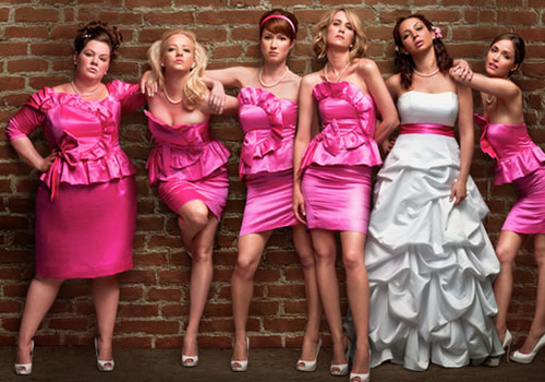
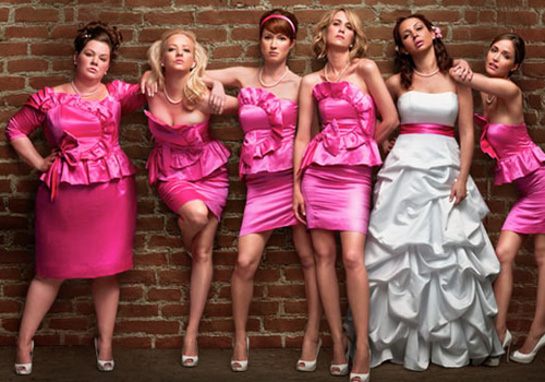
Ever since its release, a demographic-spanning group of friends and family recommended The Hangover to me with the loftiest hyperbole. “The funniest movie ever,” was a common utterance. Which of course meant that when I finally sat down to watch it, the highest grossing R-rated comedy in history couldn’t possibly live up to my expectations. Although I suspect that I would have hated it just as much without the hype, what with its hero christening his friend “Dr. Faggot” because he won’t stand up to his shrill, domineering wife (’cause there ain’t any other kind, right, brah?). Hence, I was really looking forward to Bridesmaids, Kristen Wiig’s take on the wacky wedding party tale that promised to cleanse my Bradley Cooper-hair gel-encrusted soul. And its first hour more than delivers, playing to all the strengths of its superb cast. Wiig’s lovable wise-ass persona lends itself nicely to her lead role as Annie, the downtrodden best friend of the freshly engaged Lillan, played by Maya Rudolph – in an early coffee shop scene, the actresses riff so comfortably together, you imagine they must be friends off-screen. Supporting players Wendy McClendon-Covey and Melissa McCarthy do their share of scene-stealing as well, and Jon Hamm is spot-on as Wiig’s booty-call bastard Ted. It’s the way this kind of movie is supposed to work – its plot is as formulaic as The Hangover or My Best Friend’s Wedding, it’s just written and performed by funny people, and gives them a broad canvas to do their thing. There are too many jokes that hinge on McCarthy’s size, and Rose Byrne’s snobby rich lady character is so cliche she’s barely a person, but for the most part, this is about as funny as ensemble comedy gets in Hollywood.

Flee It: The Second Half of Bridesmaids

Remember how the first hour of Bridesmaids was a fresh take on tired romantic comedy tropes? Well, Wiig, co-writer Annie Mumolo and director Paul Feig saved all of the derivative, boring gal pal stuff for the balance of the film. After a delightful flight to Vegas set piece that involves Wiig getting drugged and announcing that she sees a colonial lady on the wing, Bridesmaids becomes a slog, as we watch Annie’s life systematically fall apart. She gets booted from her apartment, loses her job, moves in with her mom, and has a supremely selfish nervous breakdown at Lillian’s bridal shower. McClendon-Covey  pretty much vanishes, along with her hilarious, repressed housewife rage. McCarthy is thrown into the role of comic relief, and while she tries valiantly, her schtick suddenly feels out of place. And most importantly, that Wiig and Rudolph chemistry turns into the kind of schmaltzy BFF fluff that this movie was supposed to be satirizing. Oh yeah, and Annie’s romantic interest is Nathan, a funny, hard-working, non-threatening guy who cares about her problems. He’s as much of a cartoon as Ted, but far less fun. By the time we get to the final wedding scene, the free-form party of the first hour seems like a distant memory. So, while it’s much funnier than The Hangover, Bridesmaids still feels like a failed relationship – how could something with such potential end like this?

Netflix Recap: Leigh Majors

In my orgasmically entertaining 2011 Oscar prediction post, I revealed that I was rooting for Mike Leigh to win Best Original Screenplay for Another Year, even though I hadn’t seen it. Based on the consistent excellence of his previous work, in which the writer/director developed characters in quiet, organic ways, I figured that Another Year would be yet another relatively profound study of everyday human beings.

Well, I have finally seen the thing. And wouldn’t you know it, I don’t just agree with my February 2011 self, I applaud me! Because Another Year is more than the latest reminder that Leigh is one of our finest storytellers – it’s his best movie in a while. A look at four seasons in the life of the happily married couple Tom and Gerri (no surnames are mentioned in the film, which could be a comment about the balance that’s essential to a great relationship, or more likely I’m overthinking things because I’ve had a few beers), Leigh’s creation is the rarest kind of movie in the 21st century – a commentary on the power of love that in no way resembles the plot of a Taylor Swift song. Tom and Gerri – portrayed with gentle confidence by Jim Broadbent and Ruth Sheen – are seemingly the lone signpost of warmth and positivity in the lives of their friends Mary and Ken; their easygoing, loving natures bringing both characters to tears in heartbreakingly believable scenes.

Lesley Manville gets the Oscar-baitiest role here as Mary, Gerri’s hopelessly adrift co-worker who is painfully alone, yet prefers a fantasy relationship with Tom and Gerri’s son Joe to the very real (and very awkward) proposition from the comparably miserable, compulsive eating Ken. But where, say, Darren Aronofsky would wring every last drop of melodrama out of a character like Mary – full of crying jags in the shower and screamy nervous breakdowns during traffic jams – Leigh leaves it all up to his great actress. When Joe brings his new girlfriend home for the first time, the look on Manville’s face is all you need to learn just how far gone she really is.

Over the four quadrants of his movie, marked by scenes of Tom and Gerri lovingly tending their garden plot, Leigh shows us the unhappiness of regular folks, dealing with sadness, disappointment and death through the eyes of two of the lucky ones. It’s a movie about how beautiful it can be to grow old together, without ever forcing its graying characters to act young and spunky in the name of a cheap laugh. Which is light years more meaningful, and genuinely more entertaining, than the eventual winner for Best Original Screenplay, The King’s Speech.

With the afterglow of Another Year still washing over me, I re-watched Topsy-Turvy, Leigh’s 1999 Gilbert and Sullivan biopic that remains his closest attempt to a big-budget Hollywood spectacle. Of course, it isn’t one of those, despite the faithful recreations of several of the duo’s productions, full of inspired costumes and ornate set designs. But it is a different experience from all of the other Leigh films I’ve seen, its compelling studies of the two leads competing with charming behind-the-scenes glimpses of the inner workings of late-19th century theater. Its two-and-a-half-hour running time and extended chunks of Gilbert and Sullivan productions make it sound like an insufferably boring thing, but as in Another Year, Leigh’s ability to draw honest performances from his actors turns something bland into meaningful entertainment. Especially wonderful here are Broadbent and Manville, playing against their Another Year roles. Broadbent is the blustery one here; his Gilbert is the epitome of a bitchy artist – fuming over negative reviews, complaining about the trappings of high praise. Manville, as Gilbert’s wife Lucy, delivers a performance full of the pursed looks and defeated sighs of a neglected spouse. In Topsy-Turvy’s penultimate scene, Lucy shares her idea for a play with her husband, as he sits on the side of her separate bed. It’s a deft depiction of a withered relationship before one last song and dance, a snapshot of Leigh and his actors at the top of their game.

The Greatest Scene in the History of Motion Pictures

I watched Legion today, a hastily plotted Book of Revelations sci-fi shoot-em-up with an important, if confusing, twist – the bad guy is God, who has lost faith in the human race for some reason. In the middle of trying to figure out how any human being could have a chance against a vengeful, all-powerful being (with or without the help of a rebel angel with a British accent), this happened.

Sure, I might be overstating things with that headline. But I’d like to hear counter arguments. What’s better, “Rosebud”? That dude couldn’t even hold on to a snow globe – no way he’s gonna crawl on any ceiling.

Netflix Recap

Stuff that I’ve “watched instantly” recently:

The Hot Chick (2002)

My wife and I were both feeling a bit under the weather, so we thought we’d opt for the dumbest comedy we could find. And when Rob Schneider’s face popped up on our TV screen, cucumbers covering his nipples, his face covered in a mud mask and a “What did I get myself into this time?” expression, we thought we’d found just the right level of idiocy. But after about 20 minutes of The Hot Chick, we were scrambling for the stop button. Here’s the premise: An ancient Abyssinian princess is betrothed to a horrible prince, and escapes her fate by using a pair of magical earrings to switch bodies with her servant. 2,000 years later, these same earrings end up in a New Age Creations-like store at the mall, where they’re shoplifted by a valley girl, who then ends up switching bodies with Clive Maxtone, a mentally disturbed petty thief who fills his bag with nacho cheese when there’s not enough money in the cash register. Adam Sandler shows up at the beginning, as a dreadlocked employee of the mall store, only to blatantly rehash the “you can put your weed in there” SNL sketch, which wasn’t all that funny in the first place. We didn’t last long enough to see what kind of wackiness ensued, but based on the movie poster, I assume it’s a bunch of lightly homophobic gags about how funny it to watch a guy doing girl stuff.

Tender Mercies (1981)

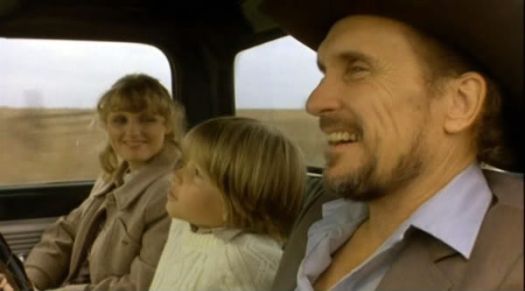
After feeling burned by the comedy route, we took a 180 and checked out this tranquil country drama. While I haven’t seen the much-ballyhooed Crazy Heart, it must be indebted to this powerful character study from director Bruce Beresford. The story of an alcoholic, washed-up country singer who tries to come to terms with his past, with the quietly intense love of a county road motel owner  lighting the way, Tender Mercies could easily have gotten out of hand dramatically (see Exhibit A). But thanks in part to a career-defining turn from Robert Duvall as the main character, Mac Sledge, this is a story of redemptive strength that plays things close to the vest. Awash in craggy, knowing looks, his weathered voice rarely rising above a mumbled twang, Duvall inhabits the space of a guy who’s seen it all, and isn’t all that interested in seeing any of it again. Horton Foote’s Academy Award-winning screenplay is full of simple, profound backs and forths, including the one of the sweetest and most matter-of-fact marriage proposals you’re bound to see. During one of Mac’s bouts of anger, he goes to a bar/restaurant, where he bristles at the waiter’s questions, snapping, “I don’t know what I want yet.” But by the end, as he tosses a football with his stepson, you get the sense that he’s changed his answer.

Law & Order: Criminal Intent (2001-pres.)

Few things in life are as formulaic as an episode of Law & Order, and the same can be said of its offspring. Criminal Intent, however, is the only version that landed Vincent D’Onofrio, whose performance as Detective Robert Goren crackles with a spastic vulnerability that’s deeper than any L&O character deserves (I will not suffer Chris Noth). Still, everything else is much the same – some unsuspecting folks stumble upon a body, the first suspect isn’t guilty, somebody who shows up for a short period of time early on ends up being the killer, and, of course, they always catch him/her. But there’s something soothing about all of this predictability – if I’m having trouble sleeping, an episode of CI works like a lullaby.

“Get it? It’s a metaphor!” –Darren Aronofsky

Yesterday, I watched Black Swan, a movie I had low, low expectations for. All of the previews and reviews made it seem like just another predictable psychological thriller, about a ballerina starring in “Swan Lake,” and the stuff that happens in “Swan Lake” happening to her.

And that’s precisely what it is. The stuff that happens to the White Swan in “Swan Lake” happens to Nina, a prima ballerina whose ensuing nervous breakdown is the only real storyline in the film. While this isn’t necessarily the meatiest concept for a movie, it could make for a visually interesting experience, with the viewer searching for the symptoms of Nina’s breakdown as she eventually loses enough of her mind to actually believe she’s the character she’s playing.

But holy shit, is this movie not that.

Instead of giving his audience the opportunity to take part in the experience, director Darren Aronofsky makes damn sure we don’t miss a thing, cramming practically every frame with as much ham-fisted symbolism as it will hold, telling us what to think like we’re a brood of insipid children. LOOK! Nina’s wearing white and surrounded by stuffed animals! LOOK! Lila the “bad” ballerina is wearing black … and smoking! LOOK! Nina’s mother paints pictures of her younger self and plasters them all over the walls!

The script is almost as relentless as the direction, refusing to give us characters that are anything more than cartoonish stereotypes (the innocent girl, the Jezebel, the past-her-prime star, the crazy stage mom, the foreign asshole ballet instructor), and repeating itself to the point where drinking games become fatal. And other than a few moments that could live on as camp classics (e.g. Barbara Hershey screaming “This role is destroying you!”), the dialogue is as clutzy and embarrassing as everything else.

Then there’s Natalie Portman, whose lauded performance did little to change my opinion of her as a one-note actress. She cries because she’s scared, does ballet stuff, cries because she’s crazy, does more ballet stuff, and then cries because she’s content. Only when placed side by side with the inferior talents of Mila Kunis does she seem Oscar-worthy.

By directing this paint-by-numbers story like it’s going to be a silent movie, throwing in gobs of stylized violence, and combining it with a script that just repeats the same tired motifs – sexual repression is bad, psychotic parents are bad  – Aronofsky has made a film that’s going to give a major headache to anybody expecting a nuanced work of art.

Perhaps Aronofsky knows something we don’t know, and made this movie as a coded message to the few who could read between the lines. Maybe the government and the textile industry are in cahoots, secretly manufacturing clothing that can control the thoughts and behaviors of human beings – white tank-tops make you all wide-eyed, fidgety and weird; black tank-tops make you smoke cigarettes and act like a whore.

Or maybe he, and the three male screenwriters, just weren’t cut out to make a movie about a destructive mother-daughter relationship, and the psychological burden placed on young women in the ageist and sexist ballet world.

One thing is for sure. I’m never seeing another one of his movies again. And I mean it this time.

Who’s gonna win, whether I like it or not.

So, the Oscars are on Sunday. And for a reason I still find tough to define, I’m going to watch them. I expect hosts James Franco and Anne Hathaway to do a passable job – Franco does have some comedic chops, evidenced by his SNL and 30 Rock guest spots. But after the way Ricky Gervais made celebrities squirm, gasp and complain at the Golden Globes, any attempt at humor is going to seem like a Dave Barry column. Guaranteed, neither host will make Robert Downey Jr. get up and call the event “hugely mean-spirited with mildly sinister undertones.” Which is too bad.

Anyhoo, here are my picks for who’s gonna win this silly thing that I care about:

Best Supporting Actor

Who Will Win: John Hawkes, Winter’s Bone. The safe money’s on Christian Bale, whose “I luv my bruddah!!!” histrionics are a hardware magnet. But while WB might be an underdog on Sunday, but it’s also the kind of underdog story that wins Oscars. And Hawkes’ performance as the bad-ass-with-a-heart-of-gold Teardrop is both beautifully fashioned and easy to adore.

Who I’m Rooting For: Hawkes. Though if Geoffrey Rush wins, I’ll be content – his crisp comedic performance got me through The King’s Speech.

Best Supporting Actress

Who Will Win: Melissa Leo, The Fighter. If Bale loses, this is the only other category in which the Academy can reward all the melodrama. Plus, Leo’s a hard-working, somewhat unsung character actor, which always makes for a good story.

Who I’m Rooting For: Jacki Weaver, Animal Kingdom. Her performance as a sickly sweet matriarch was a high point of this well-crafted tale of an Australian crime family. Hailee Steinfeld’s turn as the bull-headed heroine Mattie Ross is also very much deserving.

Best Actor

Who Will Win: Colin Firth, The King’s Speech. While Firth approached this role with the respect and restraint it deserved, the end result just wasn’t all that compelling. Even Bridget Jones’s Diary made better use of his oozing good-naturedness. But, it’s a role that requires altering your vocal patterns (read: ACTING!), so he’ll win.

Who I’m Rooting For: Jeff Bridges, True Grit. It would be awesome if he could pull a Hanks. I’d also applaud if they honored Jesse Eisenberg’s cold, obnoxious turn in The Social Network.

Best Actress

Who Will Win: Natalie Portman, Black Swan. Did you hear that she trained to be a ballerina for this? (read: ACTING!)

Who I’m Rooting For: Annette Bening, The Kids are All Right. While this family dramedy was just all right, Bening’s performance was spot-on as usual, refusing to get all Oscar winner-y when her character gets cheated on, preferring to weather most of the storm on the inside – you know, like real people do.

Best Screenplay (Adapted)

Who Will Win: Aaron Sorkin, The Social Network. Probably the only no-brainer of the night.

Who I’m Rooting For: Sorkin, but the Coens adaptive work is certainly worthy as well.

Best Screenplay (Original)

Who Will Win: Lisa Cholodenko & Stuart Blumberg, The Kids are All Right. The Academy’s gonna want to throw a bone to this movie in some way, to show they support old-fashioned family-centered stories.

Who I’m Rooting For: Mike Leigh, Another Year. Haven’t seen this yet, but the guy’s in a league of his own.

Best Director

Who Will Win: Tom Hooper, The King’s Speech. It’s between Hooper, whose feel-good period piece is certainly well-crafted, and David Fincher, whose steady hand made a cynical, dialogue-driven character study go down easy.

Who I’m Rooting For: Joel and Ethan Coen, True Grit. If they hadn’t won a few years back, perhaps they’d be in the running, a la Scorsese’s compensatory win for The Departed. They did, though, which is too bad, because their vision of this simple American story is as stark, troubled and inspiring as the country itself.

Best Picture

Who Will Win: The Social Network. The Academy will let us know that they still adore light, drab, “important” fare like The King’s Speech, but by giving the big prize to the “Facebook movie,” they’ll also let us know that they’re “with it.”

Who I’m Rooting For: True Grit. My favorite of the bunch, by a lot. TSN’s backs-and-forths are electric, but stacked side by side with the Coens’ simple tale of redemption, it’s all too obvious that, at least in 2010, less was more.