Catching Up With King: Pet Sematary

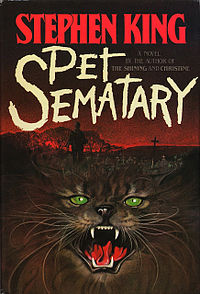
I read very little Stephen King growing up, partly because Douglas Adams was more my kind of thing, and partly because my brother read King and we took care not to infringe on each other’s pop culture obsessions (e.g. I loved Metallica, he loved Megadeth, and never the twain shall meet). But when I moved to King’s home state of Maine in June, I had the frightfully clichéd idea that now was the time for me to catch up on all the stories I’d heard so much about and/or seen in movie form. The first one I picked up might be the Maine-iest of all – 1983’s Pet Sematary.

“…Gage was still in his crib, sleeping in typical Gage fashion, spread-eagled on his back, a bottle within easy reach. Louis paused there looking in at his son, his heart abruptly filling with a love for the boy so strong that it seemed almost dangerous.”
–Stephen King, Pet Sematary

Pet Sematary

As somebody who doesn’t have kids, I’ve been told many times that everything changes once they enter your life, and not just your sleep patterns; your love for this small and helpless thing you helped create becomes so intense, it does something to the fiber of your being. Call me naive or unfeeling, but that scares the shit out of me. Which goes a long way towards explaining why Pet Sematary really got me good.

The plot is standard horror fare – Doctor Louis Creed moves his wife Rachel and two children (Ellie and Gage) from Chicago to a big old farmhouse in Ludlow, Maine, where he was recruited to run a college infirmary. He immediately befriends Jud Crandall, the 83-year-old man who lives across the highway (and regular trucker route), when Jud plucks a bee stinger out of Gage with unexpected dexterity. Jud proves to be a well of knowledge about the woods abutting the Creed property, eventually leading the whole family on a hike up to an old, seemingly harmless pet cemetery. Yet the trip really bothers both Rachel and Ellie, the specter of death not something they’re comfortable thinking about (especially Rachel, whose gruesome, bone-chilling memories of her late sister Zelda make for some of the book’s most visceral moments). Soon after, with the wife and kids away visiting the in-laws, the family cat Winston Churchill is run over by a passing semi, and Louis’ heart breaks at the thought of having to tell his daughter. Jud, who feels he owes Louis for saving his wife Norma when she had a heart attack, tells him there’s a special place they can bury it …

You probably have a good idea where the story goes from there. Suffice it to say that it’s not the last we see of the Creed family cat, and after a gut-wrenchingly tragic human death, things get a whole lot worse. But – and this is something I never really expected to think about King’s writing – the storytelling isn’t what makes Pet Sematary truly horrifying. It’s that the thing driving Louis to drag corpse after corpse into the woods is the same thing that parents always use as a selling point – a love so strong, it changes everything. In the blink of an eye, those unfathomably intense feelings for your fragile creation can transform into crippling fear, or worse – the kind of grief that forever warps the mind.

So while King’s writing is as satisfyingly pulpy as ever, gleefully regaling the sluggish movements of a reanimated house cat in sickening detail – right down to its un-Febreze-able grave-stench – his creation claws at something deeper within our hearts. Yes, this is the kind of scary story you could tell around a campfire. But it’s also one that confronts people who say they’d do anything for their child, and asks them, “Anything?”

On our next trip through King country, we’ll talk about The Shining, a King book that has the rare task of living up to its movie adaptation. I suspect I’ll agree with Stanley Kubrick’s decision to trim the hedge animals (from the script).

Top 100 Albums of the ’90s (65-61)

Dear hypothetical reader –

I haven’t posted in a little bit, I know. But don’t worry, I’m OK. In fact, I’m goddamn marvelous! My wife and I decided to pick up and move to Maine – Portland to be specific – and the breathtaking ocean vistas have made it hard to focus on how I feel about music and movies and stuff. Although I had a complete blast watching The Last Stand and am once again completely in Arnold Schwarzenegger’s sway. He’s the sheriff – of my heart. Anyways, let’s talk about some ’90s albums, shall we? It’s been a while since I left things dangling at #66 with Air’s Moon Safari.

 images-165. Alice In Chains – Dirt (1992)

I’m trying to figure out how to say something different from my take on Pearl Jam’s Ten earlier on this list, but the experience of listening to Dirt for the first time in a decade was similar. But before I crap on your memories, let’s be clear – this is a great metal album, steeped in a malaise that came from a frighteningly real place. It provides moments of clarity that feel like blasts of pain poking through the anesthetic. Alas, not being a teenager anymore means Dirt is not an album I will reach for often. What can I say, I like my bleakness with a chaser of hope these days. Plus, like vintage Eddie Vedder, Layne Staley isn’t as infallible as I once thought. He can truly haunt a song, a la Ozzy Osbourne in his prime. But also like Osbourne, it’s the only setting he’s got. The moments where Staley’s tortured crooning inhabits Jerry Cantrell’s demonically beautiful guitar riffs – e.g. “Them Bones” and “Would?” – are what made Alice In Chains special, and there are enough of them here to make Dirt a classic.

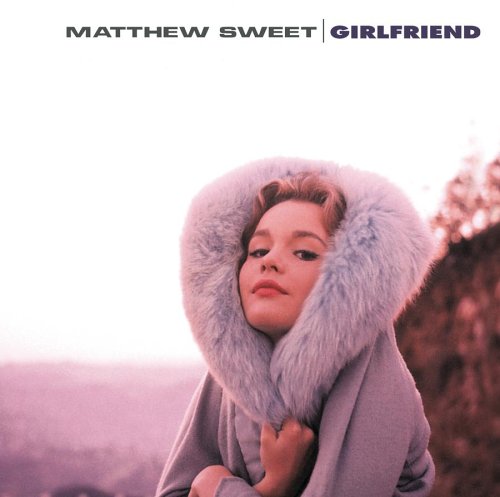
matthew-sweet-1991-girlfriend164. Matthew Sweet – Girlfriend (1991)

To people who grew up on The Beatles, ELO and Cheap Trick, and then had to endure mainstream rock radio throughout the ’80s, Matthew Sweet’s Girlfriend must have felt like a warm hug from mom. Pairing feelings of elation and vulnerability with shimmering power pop riffage and stacked-high vocal harmonies, Sweet’s third album has a timeless quality to it (the song title “Winona” is the only clue that this is from the ’90s). The songs explore the creation and destruction of relationships in universal terms – love makes self-deprecating feelings vanish; somebody falls for a preacher’s daughter; a guy who thought he knew his girl realizes he was wrong. Without getting specific, Sweet turns phrases like knives – “You can’t see how I matter in this world,” he pleads amongst the beautiful wreckage of “You Don’t Love Me.” His kinda nerdy, straightforward tenor makes all of the sentiments feel genuine, those hooks still as fresh and addictive as a long gaze into the eyes of the one you love.

images63. Randy Newman – Bad Love (1999)

After 1988’s Land of Dreams, Randy Newman took a long break from traditional record-making to focus on film music (and his so-so Faust musical). I’d bet the 11 years between Dreams and Bad Love made for the most lucrative period of his career. You might’ve thought that all those Oscar nominations and Pixar paydays would soften the guy, that when he got around to recording another batch of songs, they’d be somewhat pleasant – even, dare I say, optimistic. But Bad Love isn’t just a work of caustic satire typical of Newman’s oeuvre. It’s the bitterest, saddest, most unflinchingly personal work of his career. The songs depict families falling apart in front of televisions, dirty old men cursing at women half their age, native peoples suffering and dying. Which would make for untenable listening if most of this stuff wasn’t also hilarious – especially “The World Isn’t Fair,” an open letter to Karl Marx that finds Newman acknowledging his good fortune by talking about how preposterously undeserving of it he is. Like most self-absorbed people, Randy’s incapable of change here, and we’re all the richer for it.

MercuryRev-DesertersSongs62. Mercury Rev – Deserter’s Songs (1998)

It’s impossible for me to listen to Deserter’s Songs without constantly comparing it to a record that came out a year later – The Soft Bulletin. Mercury Rev’s fourth record shared the same producer as that Flaming Lips masterwork, the brilliant and clearly influential Dave Fridmann. So it’s no coincidence that both records possess the same ambitious, slightly disorienting template, mixing lush, Nelson Riddle arrangements with quirky, contemplative musings, like a band used backing tracks for a Great American Songbook tribute to write songs about spider bites, or moles with telephones for eyes. But while they might be the same type of animal, these records are also different breeds – Deserter’s being one that prowls across much darker emotional territory. As singer Jonathan Donahue spins yarns about nightmares and doomed relationships with an unvarnished Neil Young yodel, Fridmann piles on the woodwinds, strings and saw solos like an old-time Disney composer. It’s a birthday cake with a scotch egg in the center, a walk to the gallows that runs through Martha’s Vineyard, an album with a title drenched in self-imposed loneliness that makes good on it in the most unexpectedly stunning way.

220px-SmashingPumpkins-Gish61. Smashing Pumpkins – Gish (1991)

Gish is one of the most compelling debuts in rock history, and not just because it gives us an unfiltered look at what made Smashing Pumpkins one of the greatest arena-rock bands of the 1990s. It’s that in those very same qualities laid the seeds of the group’s demise. While by far the rawest recording that Billy Corgan has deemed acceptable for our ears, Gish is still marked by a proudly meticulous approach to rock record-making, its guitars layered richly to create walls of sound that envelop you with warmth, even while they strain your speakers to the limit. Of course, once Corgan got on the short list of successors to the Cobain throne and became obsessed with his own brand of stylized melancholy, the speaker straining stayed, and the warmth didn’t. And that just makes songs like “Window Paine” even more of a pleasure to experience in 2013 – a jaw-dropping ballad that features some of the most gorgeously punishing guitar playing of the ’90s. Hopelessly yearning for Corgan to make another record like this someday? That’s a worthwhile kind of melancholy.

Sam & Don

Image

If you read my post yesterday, you massive global audience you, you know I’ve had the season premiere of Mad Men on my mind. The show’s exploration of mid-life crises is reaching new peaks of symbolic grandeur, and new depths of self-absorbed nihilism (e.g. an ad executive, wealthy from birth, complaining that life is nothing but a string of disappointments). With every new wincing cigarette pull from Don Draper, he’s seemingly one step closer to oblivion.

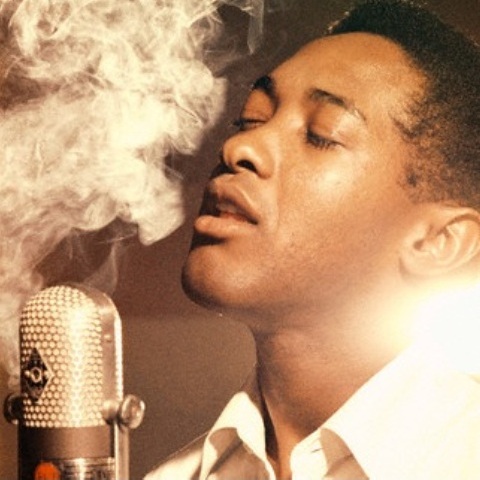
So when the Sam Cooke song “Smoke Rings” came on during my drive to work this morning, it felt like a cosmic pop culture connection – over a crooner-friendly, French horn-happy blues, Cooke ruminates about the product of his exhalations, like Draper staring into space on his Hawaiian vacation. “Please take me above with you,” Cooke pleads in the final refrain. It’s a gorgeously depressing idea, one that begs to play under the closing credits of this season of Mad Men. Start practicing that wince, and check it out here:

Mad Men’s season premiere is obsessed with one thing that is certain (and it’s not taxes).

Image

Don Draper stands silently by his office window, freshly tanned from a Hawaiian vacation, his desk moved by a photographer to a spot he doesn’t like. All he hears, and all we hear, are waves, gently crashing in his mind. Of all the memorable moments from Mad Men’s two-hour season six premiere – which run the gamut from harrowing to hilarious – this is the one that’s sure to stick with me for a long time.

Don has always been a character on the brink, a man with weighty secrets who nonetheless behaves recklessly, someone who treats women like garbage and then complains about how bad it makes him feel. But over the course of five seasons, we never got a good idea of what rock bottom might look like for our dashing anti-hero. “The Doorway” gives us our first glimpse, and it ain’t pretty – after embarrassing himself at a funeral (in a thoroughly entertaining way), Don demands that his doorman share details of a recent near death experience. “You must have seen something,” he pleads, with a lost, childlike daze in his eyes that he can’t entirely blame on booze.

While Don’s psychic breakdown is its main focus, the episode takes its title from a rant Roger Sterling gives to his psychiatrist, about how life is just a series of passageways that “all open the same way, and they all close behind you.” Roger’s the one dealing the most directly with mortality here; the death of a loved one and acquaintance bookend the episode. And while his incomparable wit and panache can’t keep his sadness at bay forever, Roger’s soliloquies on the couch provide clear-headed counterpoints to Don’s odd obsession with his physician neighbor – not to mention Betty’s fairly frightening obsession with one of Sally’s friends (not Glen this time).

All of these intertwined moments of existential crisis would be enough for a great episode of a lesser show, but “The Doorway” takes a moment to balance the scales a bit, showing Peggy Olson on the phone with her old art director Stan Rizzo, each making the other’s late night at work more bearable. When Peggy’s new boss compliments her on her crisis management skills, Stan’s listening in. It’s a sweet and funny moment in a blossoming friendship – the kind of thing that makes a good argument against Roger’s doorway theory.

As Mad Men has progressed, it’s revealed itself as a show that’s less about advertising, and more about the hard truths of existence that advertising was invented to distract us from. “People will do anything to alleviate their anxiety,” Dr. Rosen imparts to Don, before whisking off on his urban skis to save lives on a snowy New Year’s Eve. For two more seasons, it looks like we’re in for a whole new level of “anything.”

What’s In My Discman, March 2013

Let's Get ReadyMystikal – Let’s Get Ready (2000)

It’s amazing what context can do to a listening experience. For a dozen years or so, I’d always thought of Mystikal as a flash-in-the-pan MC who rode a legendary Neptunes beat to fame, his voice a grating, angry growl tailored to please a DMX-infused marketplace. But then I heard “Hit Me,” a leaked single from his forthcoming record that makes a serious argument that Mystikal is carrying the torch of James Brown with more wit, energy and raw ability than any artist around. My expectations thusly altered, and my ears hungry for whatever Mystikal I could get my hands on, I picked up Let’s Get Ready, his breakout 2000 release. And while no cut on here can touch “Hit Me,” it is an insane adrenaline rush from beginning to end, that voice I once saw as an annoyance making me feel I could punch my fist through a brick wall, the beats blunt and dirty, as relentless as a hurricane. Mystikal’s new album is apparently called Original, and it’s slated to come out in June. Until then, Let’s Get Ready will keep my heart pounding just fine.

ArethaAretha Franklin – 30 Greatest Hits (1985)

I recently had the honor of interviewing Aretha Franklin in advance of her show at a local casino (which I also reviewed), and in the name of psyching myself up and keeping the butterflies at bay, I spent the week beforehand listening to her 30 Greatest Hits in my car. It’s still the best collection of its kind, zeroing in on Aretha’s classic Atlantic years with no glaring omissions. Of course, it’s tough to screw it up when you’re talking about one of the most prolific and evergreen periods of any artist, ever. When “Respect” strutted its way onto my speakers, it sounded as fresh and imaginative as the first time I heard it – no matter how many commercials or Bridget Jones movies try to rob it of its essence, “Respect” will never gray. It’s the ultimate unkillable pop song and a gender role gamechanger to boot. Then there’s the knee-buckling pleas of “Ain’t No Way,” the swooning romance of “I Say A Little Prayer,” the slow-building gospel reverie of “Spirit In the Dark” … I won’t mention all 30. If you haven’t heard this stuff, I’d suggest stopping everything in order to fix that problem.

Jim JamesJim James – Regions of Light and Sound of God (2013)

At one point in “A New Life,” the most immediately beautiful tune on Jim James’ proper solo debut, the moonlighting My Morning Jacket frontman delivers the line “There’s more stardust when you’re near” with NPR-ready elocution, painstakingly pronouncing the “t” in “stardust.” It’s not your typical rock singer diction to be sure, the sound of a man who isn’t writing pretty lyrics to sound cute or sensitive – he believes in this stuff, with evangelical fervor. The album title gives you a good idea of the ground James is covering here – a cosmic theology of love, forgiveness and the passage of time that’s certainly headier (and a bit flakier) than My Morning Jacket’s last few records. Musically, it has the homespun feel of a solo record, be it one with the occasional crackling vibraphone sample, huge Eastern melody, and sweeping string arrangement. Then there’s James’ Neil Young/choirboy voice, still as expansive and expressive as ever, making the clunkiest passages feel like mantras. Regions feels a bit less substantive than it wants to be, but it’s still more intriguing than anything James has been a part of since Z, the last time his music was pointed heavenward.

Movies From 2012 That I Saw And That I Liked

Yeah, I know, it’s totally 2013 now. I should have shared my favorite movies of 2012 with you weeks ago. But then I saw the cover of the John Travolta and Olivia Newton John Christmas album, after which I was briefly hospitalized. Now that I have my basic motor skills back, I can get to blathering! So here goes nothin’. My top 10 movies of 2012 are:

WETTEST COUNTY  Scene  16

10. Lawless

In 2012, Guy Pearce continued his criminally underappreciated run as one of the most versatile actors working, including a great, wiseass turn in the delightfully ridiculous “save the president’s daughter from space jail” tale Lockout. But it was in this Prohibition gangster flick that he truly shone. As the sadistic and vain Special Deputy Charlie Rakes, Pearce pursues the Bondurant bootlegging operation with a twisted sense of justice, his eyebrowless face and a thick central part in his hair making him look as disquieting as can be. Director John Hillcoat and screenwriter Nick Cave aimed for a similar kind of grim morality with 2005’s very good The Proposition, but Lawless takes it to thrilling new heights – instead of cops and robbers, it’s just a whole bunch of guys with blood on their hands.

Queen of Versailles, Jackie Siegel

9. The Queen of Versailles

If you ever need a reminder of the chasm that separates documentary film from reality TV, take in this stark, uncompromising but ultimately sympathetic tale of Jackie and David Siegel, a billionaire couple whose time share-fueled gravy train dried up after the economic collapse of 2008 – right after they started construction on what was to be the largest, most expensive single-family home in the U.S. It’s the kind of story that seems readymade for a reality series, beaming dump trucks full of schadenfreude into our insecure brains every week. But Lauren Greenfield’s movie captures the stress, sadness and stubborn hope that’s the stuff of actual reality. The Walmart shopping binges, lingering dog turds and humiliated nannies could easily be treated like laugh-and-point moments, but when contrasted with images of David nursing his wounded pride and Jackie innocently trying to come to terms with the upper middle class life that lies ahead, it’s impossible to ignore their humanity.
jamie-foxx-600

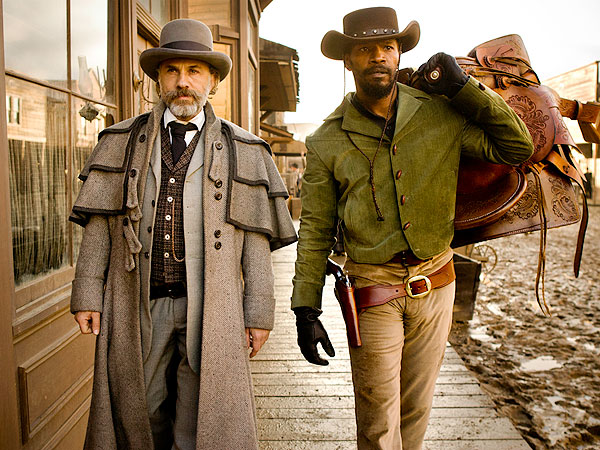
8. Django Unchained

Given how prevalent themes of revenge are in Quentin Tarantino’s stories, it was only a matter of time before he gave us his own, uniquely pulpy take on a Spaghetti Western. Django Unchained is just that – a revenge fantasy/love story/buddy action movie set in the antebellum South, where snappy dialogue and cartoonish, exploding-blood-capsule-style violence is grounded in unflinching depictions of the horrors of slavery. Jamie Foxx, Christoph Waltz and Leonardo DiCaprio are all at the peak of their powers – Foxx in the Eastwood role as the titular freed slave, natural sharpshooter and heroic husband, Waltz as a fatherly dentist-turned-bounty hunter, and DiCaprio as a monstrous Francophile plantation owner. The issue of whether slavery should be an off-limits subject for a genre picture like Django is a thorny one for sure, but to me, Tarantino has given us a reminder of the unforgivable sins our country has committed, and we can’t have too many of those. The fact that he weaves it into a dynamic, darkly funny, exceptionally entertaining midnight movie? What more would you expect from Hollywood’s own “little troublemaker”?

LooperWatch

7. Looper

Time travel will always be a touchstone of science fiction, because more than anything, time makes us its bitch. But in Looper, writer and director Rian Johnson attempts to depict what might actually happen if time travel was invented. Like the war on drugs, it becomes a highly illegal practice appropriated by a criminal underworld, who send people back in time to be killed by “loopers” – men who end their careers by “closing their loop,” a.k.a. killing their older selves. The first half of the movie is spent patiently building this intricate mythology, while introducing us to Joe, the brooding looper junkie played by Joseph Gordon-Levitt. But once Bruce Willis appears as Joe’s future self, Looper becomes much more than your typical sci-fi shoot-em-up. The third act moves the action from Johnson’s slums-o’-the-future to a farm house, and what happens there is a poetic exploration of the nature of evil, the consequences of our mistakes, and the immeasurable impact of the things we do right.

turnmeon

6. Turn Me On, Dammit!

As heartwarming as it is frank, this Norwegian film explores the awkward lows and joyful highs of teenaged sexual awakening, through the prism of its main character Alma – played with believable angst by Helene Burgsholm. As Alma goes through the confusing process of growing up, she gains and loses friends, has innocent fantasies run aground by weirder, far more interesting realities, runs away from home, and bewilders her single mother until, eventually, their bond deepens. There’s no punishment or reward for Alma, no real danger or grand romance. Turn Me On, Dammit! is just trying to show how it feels to be a 15-year-old girl in a backwoods town, being picked on at school and getting caught calling phone sex lines at home. To see this kind of story told with such positivity is as refreshing as Scandinavian mountain air.

hobbit_a

5. The Hobbit: An Unexpected Journey

I understand why Peter Jackson’s new Tolkien trilogy is called The Hobbit. But it would be more accurate to call it Middle Earth. Because while the basic plot follows that timeless children’s adventure story in all the important ways, Jackson’s first installment makes it clear that he wants to tell a grander tale, one that looks at Tolkien’s singular universe with the eye of a storyteller and historian. Hence, on top of the piles of breathtaking whiz-bang, and the skilled characterizations of Bilbo Baggins, Gandalf, and Gollum, we get to explore the tragic, pseudo-Biblical backstory of the dwarves of Erebor, see the seeds being planted for the return of Sauron (aka The Necromancer), and meet Radagast the Brown, a birdshit-covered Jane Goodall of the Hedgehogs. Many have accused this detailed approach of being nothing more than a shameless money grab. But in the eyes of this Tolkien nut, The Hobbit is as much, if not more, a labor of love than the Lord of the Rings movies (which I kinda liked a little). The fact that hours upon hours of lovingly adapted Tolkien texts can be seen as something remotely capitalistic is a credit to Jackson’s ability to film the “unfilmable.”
Tim-and-Erics-Billion-Dollar-Movie-2012-comedy-film-Tim-Heidecker-and-Eric-Wareheim-film-version-of-Tim-and-Eric-Awesome-Show-Great-Job

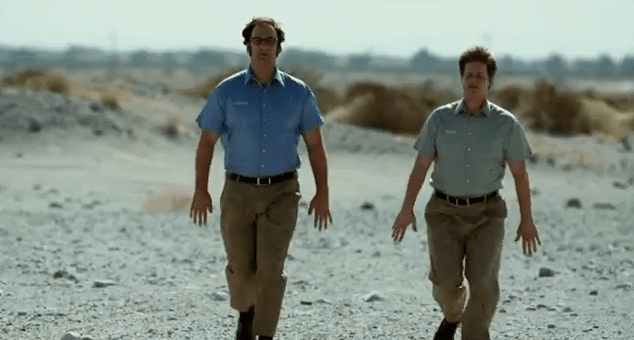
4. Tim and Eric’s Billion Dollar Movie

On their weirdly endearing cut-and-paste cartoon Tom Goes to the Mayor, and the subsequent public access acid trip theater of Tim and Eric Awesome Show Great Job! and Check It Out! With Dr. Steve Brule, Tim Heidecker and Eric Wareheim proved themselves to be masters of disturbingly hilarious short-form comedy. Which made the potential pitfall of their Billion Dollar Movie an obvious one – would their shenanigans translate to the longer, more plot-driven confines of feature film? Well obviously, I think that they did. Billion Dollar Movie is a delightfully anarchic middle finger to mainstream comedies, taking one of their most common plot lines – protagonist must save struggling school/restaurant/shopping mall, hilarity ensues – and using it as a backdrop on which to project their obsessions with local TV commercials, father-son dynamics and diarrhea. Fantastic supporting turns from John C. Reilly, Will Forte and Zach Galifianakis are just cherries on top.

the_cabin_in_the_woods_2

3. The Cabin In The Woods

When I first saw Scream, Wes Craven’s snappy 1996 satire of slasher movies, I enjoyed how it made fun of me and respected me at the same time. But after seeing The Cabin In The Woods, Joss Whedon’s writing credit from 2012 that wasn’t The Avengers, I felt more than entertained. As a self-aware horror fan, this movie felt like a new stage of enlightenment. Director/co-writer Drew Goddard and Whedon make the same broad point as Scream that slasher scripts tend to be like Mad Libs; just change out the location/monster/method of death and presto, you’ve got a different movie – but they do it with an initially baffling, and eventually mindblowing, top-secret government surveillance subplot. What at first looks like just another bunch of dopey teenagers venturing out to be killed in the woods becomes a psychological study of humanity that connects the popularity of horror movies to that of ancient pagan rituals, while taking the time to make an even more salient point – if you’re ever in a bind, trust the stoner, not the hunk.

moonrise-kingdom-05

2. Moonrise Kingdom

It’s no accident that Moonrise Kingdom is set on an island. Its main characters, Sam Shakusky and Suzy Bishop, are kids who don’t feel connected to their surroundings, be it a foster home that looks like an Army barracks or a family that’s quietly fraying around the edges. Wes Anderson’s seventh film is the story of them finding each other, the bliss they feel at finally being understood, and the hilariously low-stakes havoc that their meticulously planned elopement causes. In case your twee-dar is starting to go off, never fear, because Anderson realizes Sam and Suzy’s puppy love in an achingly sweet, thoroughly realistic way, contrasting it all the while by the loneliness of the goofy adults who form the search party (including Bill Murray, Frances McDormand, Ed Norton and Bruce Willis, who are all wonderful). Shot in the gorgeous detail that is Anderson’s stock in trade, Moonrise Kingdom posits that while you might feel like an island from time to time, you never know who might be canoeing your way.

the-master_image_1

1. The Master

People are attracted to things that purport to define their personality, be it the signs of the zodiac or a quiz that tells you what Saved By the Bell character you are. But in the pivotal scene of The Master, Paul Thomas Anderson’s relentless study of the underbelly of belief, this desire for enlightenment about ourselves is abused in the name of ego and profit. In it, Lancaster Dodd (Philip Seymour Hoffman), an L.Ron Hubbard-ish leader of a philosophical movement called “The Cause,” convinces Freddie Quell (Joaquin Phoenix), a volatile WWII vet, to partake in something called “Processing” – a series of quick, probing questions, in which the subject is not allowed to blink. In the performance of the year, Phoenix shows us a deeply disturbed, utterly lonely man who is intoxicated by Dodd’s attentions, through his facial expressions alone. The title of the movie most obviously refers to Dodd, but by the end, it more poignantly applies to Quell – a twisted man who lost everything we see as respectable, except for his free will.

Honorable Mentions: Bernie, The Dark Knight Rises, The Expendables 2, Lincoln, Lockout, Men In Black 3Prometheus

What I Got For Christmas

Like I learned from Santa Claus: The Movie, Santa Claus is some Dutch guy who gets all magical for some reason I don’t remember. Dudley Moore was there, and there was a homeless kid maybe? OK, it’s been a while since I saw Santa Claus: The Movie. And it’s something that Santa has forgiven me for, because he brought me some amazing shit this year – shit I specifically told my wife I wanted. Isn’t that amazing?

886979214927Sam Cooke – The Man Who Invented Soul

Speaking of getting all magical, Sam Cooke made music that sounded like it came straight from heaven. With a voice effortless in its beauty, lyrics that treat true love like it’s oxygen, and arrangements that blend gospel, pop, vocal jazz and calypso with startling efficiency, Cooke’s catalog is a sonic argument for the innate goodness of human beings. After years of compiling random collections of his work, my CD collection has finally been blessed with the big kahuna – this accurately titled, four-disc retrospective, a desert island item for sure

a7b2521a515dc36ea56d181cada01ce0a27bbbb4James Brown – Star Time

The Man Who Invented Soul would’ve been enough to sustain me through 2013. (What’s that, food? You think I need your vitamins? Fuck you!) So upon receiving this, yet another four-disc box set of one of the 20th century’s otherworldly talents, I understood what it feels like to be a spoiled bitch. And to paraphrase the Godfather of Soul himself – the man whose grooves were so combustible they’d inspire Mitt Romney to put down his milk and get on up – it feels good.

Elaine Pagels, The Gnostic GospelsElaine Pagels – The Gnostic Gospels

Once you say that a book contains the word of God, you’re setting yourself up for some problems down the road. Like, say, if ancient texts were discovered that were written around the same time as your God book, using similar source material. And those texts directly contradicted aspects of your God book, which you’ve been using to guilt-trip people for centuries – such as your claim that Jesus had no interest in gettin’ it on. Pagels’ book is the most renowned study of these “heretic” gospels, and the bitter Catholic school kid in me can’t wait to absorb it.


3788568165_b926c4acfeRichard Russo – That Old Cape Magic

You don’t dive into a Richard Russo novel; you slip into one, like an old sweater that provides comfort beyond its fabric. Sure, his protagonists are slightly different versions of the same soft-spoken middle-aged guy who needs to come to terms with his past. But his lazy suburban worlds are so realistically rendered, and his prose is so casually profound, I’m quite sure I don’t care. That Old Cape Magic might not have the narrative heft of Empire Falls or Bridge of Sighs, but merely an echo of those wonders will suit me just fine.


mystery_train_5th_edGreil Marcus – Mystery Train

I claim to be a critic of music. Whose favorite songwriter of all time is Randy Newman. And I have never read this, the Citizen Kane (or, I guess Vertigo now?) of rock criticism, which follows the stories of several artists (including my beloved Randy) to make grand comparisons between rock n’ roll and Herman Melville. Shameful.