Cheeky Monkee

At one point last Friday evening, my wife and I were sitting in the third row of the very intimate Bear’s Den Showroom (within Seneca Niagara Casino), and Davy Jones was on stage with his shirt unbuttoned to the waist, caressing one of his rather pert bosoms in his hand. “When I was a kid, I didn’t know about man boobs!” the ’60s teen idol exclaimed, inspiring a mix of riotous laughter and uncomfortable stares from the crowd. It was possibly the most surreal live concert moment I’d experienced, beating the previous one by a mile (seeing Live singer Ed Kowalczyk get hit in the head with a shoe). It’s also a bit of a microcosm of what this show was like – loads of funny, awkward comedic moments crammed in-between carefree renditions of Monkees classics. Jones isn’t a comic genius by any stretch, but he is a sparkling personality – coming from him, lame one-liners (“We’re getting lots of requests tonight, but we’re gonna sing anyway!”; “I have three daughters, all girls.”) became endearingly silly things. And the music was great – sunshiny hooks, connect-the-dots lyrics and big, boisterous harmonies. From the ’60s pop classics to those 64-year-old moobs, it was a feel-good night all around.

You can read my review (which avoids mention of the Jones boobage), if you so wish.

Everything I review, I review it for you.

I reviewed Bryan Adams for the second time in three years last night, doing pretty much the same thing he did the first time around – presenting stripped-down, acoustic versions of his hits. It made me think about how MTV needs to bring “Unplugged” back, because when it’s the right artist, a look at the skeletons of their songs can be revelatory. Bryan Adams isn’t one of those artists, of course (he did do an “Unplugged” set in 1996, regardless). His songs are simple, sugary pop numbers beefed up with punchy guitars and that strong, sandpapery voice – when you strip away the window dressings, there ain’t much left. Except for lyrics like “It’s so damn easy making love to you” and “Let’s make a night to remember/From January to December.” Adams needs the trappings of ’80s rock stardom for his music to make sense; the intimate acoustic thing just isn’t meant for him.

While doing a little research before the show, I stumbled upon a video of Adams’ performance with Nelly Furtado at the Winter Olympics opening ceremonies. It’s a huge, lip-synced mess (if you don’t believe me, check out Adams missing his backup vocal cue around 32 seconds in).

My last review of this guy inspired some vitriol from the Adams faithful. I’ll let you know if the sequel gets them just as riled.

What’s in my Discman, April 2010

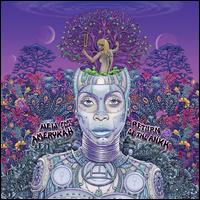
Erykah Badu – New Amerykah, Part Two: Return Of The Ankh

On her fifth album, and second installment of the awkwardly named “New Amerykah” series, Erykah Badu gives us her most commercially viable music of the last decade or so. That’s not to say it’s the kind of glossy, over-emoted sludge that passes for R&B these days – Return of the Ankh goes down easy, but it’s because Badu and her band make these breezy soul grooves look easy. A significant shift from the challenging sprawl of New Amerykah, Part One: 4th World War, Ankh is waiting to be pulled out during the summer months. With the airy funk of “Turn Me Away (Get Munny)” and the slow-burning ode to solo travel “Window Seat” drifting from your speakers, you’ll almost be able to smell the barbecue.

She & Him – Volume Two

She & Him is such a shamelessly cute premise – gal writes sweet love songs, guy produces ’em to sound like mid-’60s pop singles, and they release them in packaging full of fanciful illustrations – I can’t believe I don’t hate it. The duo’s second album follows pretty much the same formula as its first, with Zooey Deschanel’s songs dripping in hooks that would’ve surely been snatched up by The Turtles and Herman’s Hermits back in the day, and M. Ward’s production fleshing them out without weighing down their inherent preciousness. Their back-to-pop-basics philosophy seems trendy on paper, but on Volume Two, She & Him makes Me happy.

Kanye West – 808s & Heartbreak

It took me a while to really give 808s & Heartbreak a chance. I figured Kanye’s “I’m working out my personal issues with Auto-Tune and a TR-808 drum machine as a support system” album would be an interesting, but ultimately forgettable, listen. Lord, was I wrong. West embraces the chilly, impersonal nature of that technology, using it to enhance the feelings of loss, abandonment and unrequited love that dominate these tracks. And he pairs his roboticized voice with beautiful post-punk soundscapes throughout, from the heart-monitor-beep-fueled sexuality of “Say You Will” to the sweeping strings and gnashing drum machines of “RoboCop.” By fusing one of R&B’s lamest trends with the gothic, synthesized pop of bands like The Cure, Kanye West took a wild artistic gamble and created something staggeringly great. I’m just trusting him from now on.

Go Greenwood!

Last night, I did what I do most Sunday evenings – eagerly watch The Simpsons, and then sit though an hour-and-a-half’s worth of pointless pop culture references and “shocking” jokes, courtesy of Seth MacFarlane. My appetite for cartoons is that strong, I guess. But that’s beside the point. In the midst of MacFarlane’s uninspired programming block, a commercial aired for the upcoming Paul Rudd/Steve Carell vehicle, Dinner For Schmucks. After a few seconds, it seemed like this was going to be the next stupid slapstick blockbuster du jour, with Carell taking the pratfalls instead of Ben Stiller.

That is, until BRUCE FRICKIN’ GREENWOOD appeared on screen. That’s right, that Bruce Greenwood, the star of the criminally overlooked Hallmark Hall of Fame masterwork, A Dog Named Christmas (that’s him above, circa 1998. I can’t tell which one’s the stallion!). Apparently my man G-Wood plays Paul Rudd’s pompous boss, a role that couldn’t possibly have the depth of ADNC’s George McCray, a father who doesn’t want his son to rent a dog for Christmas because it reminds him of the dog he had in Vietnam, which was killed by a land mine. But once the dog saves everybody from a mountain lion, including a dachshund and her puppies, George has a change of heart, even though his son gives him the rather short-sighted name “Christmas.”

So if you’re a Greenwood buff, Dinner For Schmucks is reason to rejoice. At least until A Ferret Named Thanksgiving gets green-lighted.

Greenwood fans, please post your fav nicknames for our hero here. I got the ball rolling with G-Wood, and I’ll throw a couple more out there: Brucey Juice and Wooder.

George and Ringo saved by copyright law

This week, American Idol did a Beatles-themed night, which they called “Lennon/McCartney Songbook Week.” I’m guessing they weren’t allowed to say “The Beatles” for legal reasons, which protected “Something,” “Octopus’s Garden,” “While My Guitar Gently Weeps,” “I Want To Tell You” and other George and Ringo-penned classics from getting the amateur karaoke treatment. Even so, I’d rather watch The Apple Dumpling Gang on a loop than watch those jerks crap on a legacy. Well, watching The Apple Dumpling Gang sounds kinda fun, actually. Don Knotts is straight gangsta.

An evening both Phosphorescent and Gray

Things have been a little crazy in my world lately (I just gave birth to my seventh child and haven’t been able to track his father down anywhere! Plus I started a killer new job at friggin’ Travers Collins & Company), so it’s taken me a while to post about last week’s David Gray show. As you’ll see in my review – because you will read it, goddammit – it was a glowingly received performance by the beloved Brit. ‘Twas his first-ever Buffalo gig, and judging by the often-rapturous response he received – we’re talking dudes giving standing ovations and devil horns – it was a long-awaited event.

I wasn’t one of those folks hotly anticipating Gray’s safe, sensitive modern rock in a live setting, but the guy performed admirably, laying into the big hooks and pretty chord changes of his tunes with real fervor. The guy’s never going to blow your mind, but he ain’t gonna get on your nerves, either.

The opening act, on the other hand, was a revelation. Phosphorescent’s blend of country, psychedelia and shoegaze was a total crowd-husher, overflowing with ghostly harmonies and lyrical imagination. I picked up their 2007 record, Pride, at intermission – it’s a gorgeous thing, but I was slightly bummed that it contained none of the tunes I just saw them perform. I impatiently await their next release.

Let me off!!! LET ME OFF!!!!

I had the unenviable task of reviewing Train on Tuesday night, a band whose hyper-polished, pseudo-spiritual rock has made for some of the worst singles of the last decade or so. I went in with an open mind, though, hoping that their live set was a more organic and enjoyable thing – if those ubiquitous melodies were executed in an honest way, it could have made for a bit of a good time. Not so, sadly. Not only was Train going through the motions during their Town Ballroom set, but its singer, Patrick Monahan, fancied himself a sarcastic card with a voice of an angel. He began the horrifically saccharine ballad “When I Look to the Sky” by asking the crowd to quiet down so he could sing a cappella, without a mic. It was a nice idea, don’t get me wrong – a gift from a singer to his fans that you rarely get at big rock shows. But when it’s done with this kind of material (“Sky” is clearly inspired by Richard Marx’s “Right Here Waiting”), it’s just gross. When it comes to every aspect of the artistic process, from songwriting to recording and performing, Train isn’t interested in leaving the cozy confines of their modern rock station.

1,000-pound Gorillaz

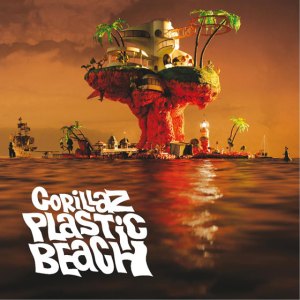
On Plastic Beach, the third effort from the virtual space rock/hip hop group Gorillaz, bandleader Damon Albarn has a revelation akin to that of a Jane Austen character. Ever since his band of animated hipsters released its self-titled debut in 2001, Gorillaz has felt like a lark for Albarn, a fun side project that let him scratch his hip hop itch and do other things he couldn’t do with his primary creative outlet, the much-beloved Britpop group Blur. But at some point over the last few years, the singer/songwriter/producer realized that Gorillaz was more than just a cool diversion. Listening to the wildly eclectic sounds, indelible melodies and post-apocalyptic concepts of Plastic Beach, it’s clear that Albarn has realized that his “other” band is the one he was meant to lead.

On paper, the formula is pretty much the same as the first two Gorillaz discs. Get a crackerjack group of guest artists and let them run wild, countering their ebullient contributions with chilled-out electronic grooves and Albarn’s levelheaded vocals. But Plastic Beach is something more than its thoroughly entertaining predecessors – it’s the result of a fully realized vision, in which every pop hook, stylistic twist and pseudo-sci-fi moral has its place.

The loose concept behind the album isn’t going to win any fiction prizes, but the idea of the world as an industrial wasteland marked by lifeless, synthetic shores is an effectively harrowing one. And it’s more than enough for Albarn and his star-studded peanut gallery to sink their teeth into, whether it’s Mos Def and Bobby Womack breathing soulful fire into the early-Depeche Mode groove of “Stylo,” De La Soul gleefully rapping about futuristic fast food on “Superfast Jellyfish” or Lou Reed lending his incomparable monotone to the gloriously catchy “Some Kind of Nature.”

For the first time, Albarn has made a record that’s as adventurous and bold as its guests, full of moody Britpop atmospheres, burbling funk jams, aching bursts of R&B and full-on orchestral bombast. The magnificent “White Flag” acts as a microcosm of it all, combining the hypnotic Eastern melodies of The Lebanese National Orchestra with bursts of playful electro-rap for a track that has an immediacy and personality all its own. And when Albarn follows it up with the emotionally resonant post-punk ballad “Rhinestone Eyes,” singing about how his love’s eyes glitter “like factories far away,” it becomes clear that there’s nothing at all cartoonish about these Gorillaz anymore.

Like Emma Woodhouse, Damon Albarn has realized that his real muse was right in front of his face all of these years. And he’s made it awfully hard to not fall in love with Plastic Beach.

RIP Mark Linkous

Just heard that Mark Linkous, who wrote and recorded fragile, lo-fi head trips of songs under the name Sparklehorse for the last 15 years, took his own life over the weekend. It’s a great loss for fans of honest, ambitiously weird music; I’m selfishly sad that I only have one more Sparklehorse album to look forward to (his label has confirmed that Linkous was almost finished with a new record). While his 1990s work was beautifully grungy, Linkous really came into his own over the last decade, releasing two surefire masterpieces, 2001’s It’s A Wonderful Life and 2006’s Dreamt For Light Years in the Belly of a Mountain, both of which smacked of a crackling satellite transmission from a musically gifted man on the moon.

I interviewed Linkous around the release of Dreamt …, and was blown away by his humility. When I shared that I’d been a fan of his for a long time, he thanked me with surprising earnestness. You can check it out here.

Get low on E

The eighth album from Eels, End Times, is its bleakest work yet. And that really says something. Since the band – essentially a one-man show with a rotating mix of instrumentalists rounding it out – released its universally acclaimed second album, Electro-Shock Blues, in 1998, its oeuvre has been dominated by themes of untimely death and nihilistic loneliness. But End Times is different, in two fundamental ways. First, it’s a breakup album, which is new territory for singer/songwriter/bandleader Mark Oliver Everett (aka “E”). Second, perhaps because it’s a breakup album, there’s no black humor to be found, something you could always rely on to clear up the stormy skies of prior Eels records. Still, for all of its woebegone self-loathing, End Times mostly works, continuing down the minimalist musical path Everett’s favored on his last few records, and spotlighting his painfully honest, conversational lyrics. “She locked herself in the bathroom again/So I am pissing in the yard,” he sings on the beautifully heartsick “A Line in the Dirt,” bemoaning his self-destructive nature over a plaintive piano. “In My Younger Days” finds the artist grappling with the onset of middle age, finding that it’s tougher to bounce back than it once was. The title track compares the break-up to the rapture over lone, autumnal guitar chords. All of these moments work, however melodramatic they may seem on paper, because the sincerity is palpable in Everett’s lightly graveled voice, as well as his humble arrangements. And if it wasn’t for his pair of attempts at fuzz-rock – especially the jarringly out-of-place, tossed-off-sounding “Paradise Blues” – End Times could be a sad-sack breakup album for the ages, something for miserable hipsters to turn to when they’re feeling especially mopey. If you’re not in the mood to hear a guy falling apart on tape, this album most definitely isn’t for you. But if raw, heart-on-sleeve expression is your bag, and it’s a rainy Sunday morning, you’ll find a lot to love about this relationship apocalypse tale.

This review also appeared in Artvoice. Read it again in a different milieu!

Interested in my thoughts on earlier Eels records? Too bad! Here’s my review of the band’s 2006 live album, Eels With Strings: Live At Town Hall.

And my take on the 2005 double-disc Blinking Lights and Other Revelations (#14 on my Top 100 Albums of the 2000s list).