Top 20 Tracks of 2011

It’s funny that in a year where we received a deluxe reissue of Nevermind, so few traditional rock bands truly mattered. Sixteen of 20 spots on this list belong to a solo artist, all of whom contributed to 2011’s varied and ambitious musical landscape (and one of whom sang about Solo cups).

20. Eddie Vedder – “Sleeping By Myself”

As much as I loved Pearl Jam in 1992, boy was it easy to make fun of Eddie Vedder’s hysterical mumbles. But this Ukulele Songs standout showcases a voice that’s aged well, embodying the sweet ache of unrequited love without a hint of histrionics.

19. Lykke Li – “I Follow Rivers”

Love has been compared to pretty much everything in Mother Nature. But on “I Follow Rivers,” Lykke Li manages to breathe life into another water metaphor. When she sings “You’re my river running high/Running deep, run wild,” over a murk of B3 organ and clanky synth toms, it’s the sound of someone trusting a potentially dangerous current, because to do so is to be alive.

18. Tech N9ne – “He’s A Mental Giant”

It was a year of wasted potential for Tech N9ne. All 6s and 7s had some highlights, but was overlong. His buzzsaw of a guest spot was wasted on Lil Wayne’s underwhelming Tha Carter IV. But this track’s rumbling swagger cut through the clutter as well as anything in 2011, positioning this brilliant, tongue-twisting MC as the brainiac superhero we need to protect us from whatever the Black Eyed Peas plan to do next.

17. Beyoncé – “1+1”

Few artists have captured feelings of dumbstruck yearning like Sam Cooke did with “Wonderful World.” Which makes this Cooke-inspired, octave-leaping gem of a ballad all the more impressive. Our problems might be bigger these days, but one math problem still trumps them all.

16. Tom Waits – “Get Lost”

Tom Waits is old enough to be a grandpa, but he steps into the shoes of a sexy young hood on “Get Lost,” tossing off exquisitely penned pleas for elopement with a trembling, psycho-Elvis warble. Toss in that filthy blues groove, and you’re reaching for the passenger door.

15. Nick Lowe – “Stoplight Roses”

This song nails that moment when you know you’ve fucked up a beautiful thing, and for good this time. Utilizing a killer metaphor for something that will never last, “Stoplight Roses” goes out to everyone who didn’t miss their water until the well ran dry.

14. Beastie Boys – “Make Some Noise”

It’s been a long time since we heard a single like this from the Beasties, a hooky slab of fuzzbox funk and freewheeling rhymes that’s just messy enough to be dangerous.

13. Bill Callahan – “America!”

On this stilted blues-folk epic, Bill Callahan shows love for his homeland by attempting to soothe its damaged psyche, with comedy and drama, self-loathing and bruised patriotism. When he bellows, “Everyone’s allowed a past/They don’t care to mention,” you best remove your hat, out of respect.

12. Coldplay – “Every Teardrop is a Waterfall”

This is the perfect title for a Coldplay song. A phrase so brazenly gag-inducing, you end up respecting the sensitive-guy cojones required to actually use it. Then there’s the insistent kick drum, that beautiful Jonny Buckland guitar hook, and lyrics about the power of music to transport. Sure, you might’ve just puked, but wouldn’t you know it, you feel better.

11. Dominique Young Unique – “Gangster Whips”

Few rappers these days have the energy of this 19-year-old Tampa MC, who makes it indubitably clear that she’s the shit, and that those who disagree can go take one. On “Gangster Whips,” DYU gets all thug romantic over a tremendous, orchestra-hit-heavy beat – sorry T.I., but this is swagger at its best.

10. Heidecker & Wood – “Christmas Suite”

Nothing laid to tape in 2011 was funnier than Starting From Nowhere, the subtly ridiculous yacht-rock album from Adult Swim vets Tim Heidecker and Davin Wood. And “Christmas Suite” is Nowhere’s coup de grace – eight minutes of proselytizing about the importance of “the children.”

9. Brad Paisley – “Toothbrush”

The sweetest love song of the year might’ve looked like a reach on paper (as well as an ad for Reach). But this romance-via-dental-hygiene country shuffle is irresistible, thanks to Brad Paisley’s economy with words, those bouncy guitar licks, and a twist in the third verse that’ll get your waterworks flowing.

8. Beyonce – “Countdown”

This is a jam that grabs you by the ears and doesn’t let go. Beyoncé sings her guts out about her hubby (whom she grinds up on whilst in his boo coupe) and their baby to come, making for a cut that’s simultaneously wholesome and narcotic, 3-2-1 Contact chorus and all.

7. Kurt Vile – “Baby’s Arms”

If you’ve ever loved someone to a borderline sociopathic level, this hazy folk masterpiece is your soundtrack. “I get sick of just about everyone,” Kurt Vile admits, positioning the warmth of his love’s embrace as not only a comfort, but a refuge.

6. Jay-Z & Kanye West – “Otis”

The “golden age” of rap music ended around the same time sampling laws started to be enforced. And this exhilarating single would have us believe that’s no coincidence. Over a brilliant interpolation of “Try A Little Tenderness,” Jay and ‘Ye have the time of their lives.

5. Toby Keith – “Red Solo Cup”

We all know Toby Keith the jingoistic rabble-rouser, but he’s actually more of a goofball Parrothead. And “Red Solo Cup” is more clever by half than anything Jimmy Buffett ever did. An ode to everyone’s favorite keg party drinking vessel, this back porch singalong is catchy, unpretentious, and – when Keith confesses that the cup is his friend – downright hilarious.

4. Nas – “Nasty”

The knock against Nas is that he’s inconsistent. But damn, do his flashes of brilliance burn bright. “Nasty” has no chorus, no guests, and no mainstream ambitions. It’s just Nas, spitting three glorious, amphetamine verses over a skeletal breakbeat. When he lists the places he’s stashed his cash, it’s clear he’s worth every penny.

3. James Blake – “The Wilhelm Scream”

The Wilhelm Scream is a stock 1950s sound effect that’s appeared in countless Hollywood battle scenes, from Star Wars to Captain America. And it’s an ingenious title for James Blake’s icy cover of his father’s song “Where To Turn.” “All that I know is/I’m falling,” Blake sings, describing those moments when we feel like stunt men – silent, non-descript, and floating in space.

2. Nicki Minaj – “Super Bass”

It was no contest – this was the song of summer 2011. With masterfully syncopated verses from one of the most creative rappers around, soaring, shiny synth hooks, and an infectious onomatopoeia (“boom-ba doop boop, boom-ba doom boop, yeah!”), the louder you crank “Super Bass,” the more your worries fade.

1. Adele – “Rolling In The Deep”

“You had my heart inside of your hand/And you played it to the beat,” lamented 2011’s biggest rock star. It’s a great line, but what made “Rolling In The Deep” such a triumph was its organic groove – that thumping bass drum pulse belying all those lyrics about betrayal, making us stronger with every downbeat.

Top 20 Albums of 2011

Please read my words about these music records that I listened to and thought were good.

20. TV On The Radio – Nine Types Of Light

After a pair of masterfully ambitious rock productions made them critical darlings, these hyper-creative Brooklynites shipped their operation to California at the turn of the decade. And while it’s easy to give too much credit to the city where a recording was made, Nine Types Of Light sure does sound like TVOTR’s “L.A. album.” Overtly catchy melodies are the order of the day, with bright, relatively sparse production backing up Tunde Adebimpe’s newfound romanticism. As a result, we get some of the most unexpected, and memorable, love songs of the year. “You’re the only one I’ll ever love” isn’t exactly a tattoo-worthy lyric, but coming from a guy who used to sing about werewolf coupling, its sincerity is shocking.

19. Nick Lowe – The Old Magic

Rock musicians typically don’t know how to age. The first time they see a shock of grey in their styled-to-look-mussed-up hair, they either double down on their denial and make music that proves they “still got it,” or go off the “reinvent myself” deep end. Which just adds to the pure pleasure of listening to Nick Lowe in the 21st century. With The Old Magic, the 62-year-old pub rock/new wave legend gives us his third straight offering of gently smirking tunes about loving, losing, and getting older all the while. It’s beautifully written material from an artist who’s comfortable in his own wrinkled skin, and a production that keeps its genre jumping to a minimum – relying mostly on soft vocal jazz arrangements and sprightly Buddy Holly shuffles to support Lowe’s curious, cooing voice. Because when you’ve got metaphors for failed love that are as wonderful as “Stoplight Roses,” you don’t need much else.

18. Coldplay – Mylo Xyloto

If you already hated Coldplay, their fifth album wasn’t gonna change your mind. But as somebody who has always been a sucker for the band’s sweeping choruses and earnest “love is nice” aesthetic, Mylo Xyloto had me digging in my heels as a fan. For the first time since its melancholy debut, Coldplay has a defined goal here – marry their arena-baiting elements with those of modern pop and R&B. And with the help of uber-producer Brian Eno, they get the concoction just right, foregoing the usual piano balladry for shimmering synthesizers and throwing a bigger spotlight on Jonny Buckland’s dynamic guitar playing. “Princess of China,” a duet with Rihanna, is a microcosm of this mini-evolution, aiming for Billboard charts, festival stages and crowded dance floors, without ignoring its polarizing, sensitive-guy roots.
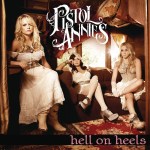
17. Pistol Annies – Hell On Heels

Here’s what Carrie Underwood couldn’t quite pull off with that car-upholstery-vandalism song. Hell On Heels is the debut album from Pistol Annies, a country supergroup comprised of Miranda Lambert, Ashley Monroe and Angaleena Presley. Like Underwood’s hit, this is chart-baiting female empowerment country, but the comparisons end there. Yes, these ladies are sick of male bullshit, but they go deeper than petty revenge fantasies (although those crop up here and there, most entertainingly on the killer title track). With little more than guitar, fiddle and pedal steel to guide them, the Annies sing about shotgun weddings, pill addicted tour hounds, embarrassing family squabbles and various trailers of tears. The vocals are as plain and true as the tunes; all three members have the kind of friendly, Dolly Parton drawl that lends a sickly sweetness to lines like “I’ve been thinking about setting my house on fire.”

16. Feist – Metals

It appears that Leslie Feist got just as tired of that iPod commercial as we did. Her third record is titled appropriately, if only because it’s an emotional palette of dark and darker greys. How decidedly un-twee are we talking? “What does sadness see?/The mirror has a mirror in its teeth/That’s what sadness sees,” the vocalist shares over the sullen acoustic chords of “Comfort Me.” Then, right when you’re starting to wonder if this is poignant or insufferable, a big “la-la-la” chorus kicks in, and you’re won over, whether you felt like moping around or not. This is what’s so compelling about Metals – there are hooks-a-plenty here, but they’re weighted down so elegantly, you’ll find yourself at the bottom of a lake, feeling strangely at home.
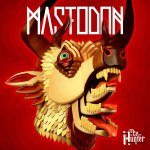
15. Mastodon – The Hunter

The conceptual insanity of Mastodon’s first three records – a water, earth and sky cycle with story lines that I dare you to try and follow – was a big part of their appeal. No metal band has provided better fodder for nerd arguments (“Who’s more powerful, Cysquatch or Megalodon?”). But The Hunter finds the band in a different place. They’ve moved on from the soul-searching grandiosity of Crack The Skye, content to hunker down and just make thunderous rock music. They’re still on their zoology jones, singing about owls and octopi, snakes and swamp creatures, but The Hunter‘s purpose is quintessentially human – to get the party started. When the post-apocalyptic aliens arrive to analyze our civilization, this record will explain why things that made us feel good were described as “kick-ass.”
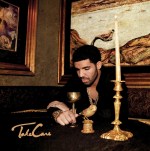
14. Drake – Take Care

Drake’s 2010 debut Thank Me Later was remarkable for its mix of monster rap hooks and confessional booth R&B. For his follow-up, the 25-year-old has put all his eggs in the latter basket, revealing himself as the antithesis of “throw your hands in the air, and wave ’em like you just don’t care.” Take Care is a long, sumptuous gaze in the mirror, with the artist rapping and singing in equal measure over soft beds of synths. It’s a perilous road for any pop star to take, but Drake manages to come off honest, acknowledging his ego and the tax bracket that boosts it, while struggling to find a meaningful relationship with anybody beyond his trusted crew. “We live in a generation of not being in love,” he theorizes on “Doing It Wrong,” a gorgeous bit of quiet storm R&B. Then all the melodrama gets punctuated by a lyrical harmonica solo from Stevie Wonder, and Take Care’s beautiful contradiction is driven home – this is self-centered music that treats its listeners with class.

13. Radiohead – The King Of Limbs

The King of Limbs is a short piece of work by Radiohead standards, which was seen as a disappointment by some. I see it as a sign of the band’s maturity. This is a magnificently dense recording, a world of lurching synths and frantic polyrhythms that unfold like a strange, binary orchid – but only after multiple listens. If it went on for an hour, it would wear down the most devout listener, much like the second half of Hail to the Thief. Plus, the band rewards us by ending the record with a pair of immediately accessible tunes – the gorgeously eerie piano ballad “Give Up the Ghost” and the lite electronica boogie of “Separator.” The only problem I have with TKOL is that it doesn’t feel like a momentous occasion, the band having painted cold, beautiful landscapes like this before. It’s an ingeniously layered production of eight well-written songs, something that could only disappoint a Radiohead fan.

12. Beyoncé – 4

Were it not for an uncharacteristically awkward guest appearance from Kanye West, 4 would be the perfect Beyoncé record, a fantastically sung, finely tuned exploration of love’s ups and downs. Her vocals have never been better, relying less on Mariah acrobatics and more on emotional shading, turning treacle like “Best Thing I Never Had” into a quality pop ballad. All the singles are excellent, from the Sam Cooke-riffing ballad “1+1” to the hyper-charged family values jam “Countdown.” And the deep cuts present varied interpretations of popular R&B, from the unrequited belting of “I Care” to the breezy, ’80s Whitney groove of “Love On Top.” All of them work except for “Party,” a half-finished-sounding summer jam that relies way too much on Kanye’s worst couplet ever: “You a bad girl and your friend’s bad too/We got the swag sauce, we’re drippin’ Swagu.” Luckily, the rest of 4 is so indelible, you can just hum one of its choruses and pretend that you didn’t just hear an endorsement for the most disgusting thing in the grocery store.

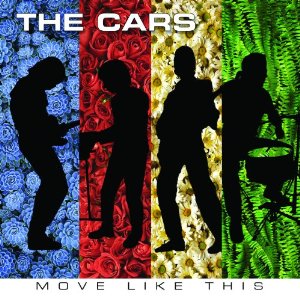
11. The Cars – Move Like This

When a game-changing classic rock band decides to get back together these days, it’s to make bank on a tour, where they play their most famous record front to back and avoid new material like the plague. So when The Cars reunited in 2010, it was refreshing, and more than a bit ballsy, that they jumped right into the studio. Of course, it’s easier to respect a choice when the results are so great. Move Like This opens with “Blue Tip,” which picks up where the band left off, fusing synthesizer earworms with rock guitars and Ocasek sing-speak to create an off-kilter pop chestnut. “It’s Late” and “Sad Song” show that they haven’t forgotten the “Drive” ballad formula either. You could call it a time capsule, but these lovingly crafted synth-pop songs just happen to fit snugly in today’s ’80s-obsessed musical landscape. Move Like This should make us reassess our rock dinosaurs – shouldn’t they still have the urge to create? Isn’t that the least we should expect from them? Which means the next time Roger Waters or The Police ask you to drop $150 to see them trot out the oldies, it’s OK to say, “No, I deserve more from you guys.”

10. The Weeknd – House Of Balloons

Band names are by no means crucial to an artist’s success (Radiohead’s a pretty awful one when you think about it). But Canadian singer Abel Tesfaye has come up with a moniker that adds even more depth to the codeine-addled bump n’ grind R&B that’s his stock in trade. On his debut mixtape as The Weeknd, Tesfaye paints explicit pictures of twisted Friday and Saturday nights, with hazy melodies and underwater drum machines to remind us that every bout of wee-hour debauchery has its aftermath. “You wanna be high for this,” Tesfaye assures us on the opening cut. Don’t trust him, though. House Of Balloons is enough of an altered state on its own. A party album for the id with arrangements that swoon like the morning after, this is a gateway drug to one of the most compelling new artists of 2011.

9. Lil B – I’m Gay (I’m Happy)

Upon hearing that Lil B was releasing an album called I’m Gay, you had to wonder if he was setting himself up for the same backlash that Sasha Baron Cohen experienced with Bruno. Would this attempt at exposing homophobia be seen as kind of homophobic itself? One listen to the record puts those concerns to rest. A concept album it’s not – the title isn’t mentioned lyrically. But it does fit Lil B’s “love everything, make cheddar” philosophy, which he elucidates in simple, straightforward couplets (e.g. “Karma is real/And you gotta love it”). There’s plenty of materialism here, but it’s tinged with a sense of gratitude. Not to mention songs like “Open Thunder Eternal Slumber,” which pleads for fair pay for plumbers. The sample choices line up perfectly with this P.M. Dawn-meets-Cash Money aesthetic – interpolated soul ballads keep things grounded, and the Spirited Away-sampling cut “Gon Be Okay” beautifully overdoses on positivity. As an antidote to hate-fueled rap, I’m Gay (I’m Happy) doesn’t just do its title justice – it transcends it.
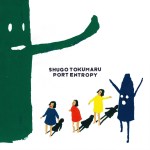
8. Shugo Tokumaru – Port Entropy

It was a banner year for Beach Boys lovers, thanks to the revelatory Smile Sessions box set and a Brian Wilson album of Disney covers (although I admit I haven’t been brave enough to listen to the latter. Sounds like it could be OK, but I fear a tire fire). Then there was Shugo Tokumaru’s Port Entropy, a ingenious and eccentric slab of sunshine pop that’s a direct descendant of Wilson’s and Van Dyke Parks’ most famous creations. Melodies runneth over here, from the children’s choir mantra of “Tracking Elevator” to the psychedelic chorus of “Lahaha,” but Port Entropy would be just a nice record if it weren’t for its arrangements. Each cut has its own distinct personality, with the Japanese multi-instrumentalist digging through his toy trunk for a seemingly endless mix of interesting combinations. “Lahaha” is a magnificently twisted concoction of glockenspiel and flute; “Linne” a piano and trumpet ballad; “Malerina” a pizzicato reggae jam. So if The Smile Sessions has you thinking that they just don’t make records like they used to, Port Entropy is here to prove you wrong. You crusty old coot.

7. Big K.R.I.T. – Return Of 4Eva

When rappers try to give themselves their own colorful mythology, they’re playing with fire. For every Wu-Tang, there are a dozen Nastradamuses. Which makes Big K.R.I.T.’s debut mixtape all the more remarkable. With a name that stands for “King Remembered In Time” and an album title that he describes as a “movement” on its opening track, the Mississippi artist sets the bar sky high before he even gets his first 16 bars off. But Return Of 4Eva’s dreamy, Organized Noize-esque production and measured, introspective lyrics deserve such luxurious boasts. Whether he’s baiting naysayers on “Dreaming,” reminiscing about career struggles on the gorgeous “American Rapstar,” or describing the frightening allure of drug dealing on “Lions & Lambs,” there’s a hard-earned knowledge in K.R.I.T.’s voice that makes them all different paragraphs from the same essay. By the time you get to the record’s heartbreaking tour de force, “Another Naive Individual Glorifying Greed and Encouraging Racism,” the movement’s got you whole.
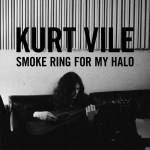
6. Kurt Vile – Smoke Ring For My Halo

Even though the ’90s are far behind us, in 2011, the term “slacker” still dredges up visions of flannel and limp bangs. But before the record companies and film studios started telling us how cool slackers were, slackers were actually kind of cool. The way Bob Dylan lazily dropped those “Subterranean Homesick Blues” cue cards, it seemed like the guy could’ve given a shit, and didn’t we love him all the more for it? It’s this image that comes to mind when I listen to Kurt Vile’s deceptively ramshackle Smoke Ring For My Halo. The man delivers every lyric of these stoner folk songs in a gentle mumble – from the sarcastic “Society Is My Friend” to the romantic “Baby’s Arms.” But instead of coming off like some half-assed bedroom album, SRFMH creates a compelling headspace. Vile’s slacker vocal stylings are likely a put-on; the guy could probably hit all the notes if he wanted to. But I say bring on the posturing – there’s something captivating about this singer who sounds like he doesn’t care if anybody hears him, who just wants to get some things off his chest and then go to bed. Something strangely and indisputably cool.

5. PJ Harvey – Let England Shake

There was good reason to anticipate the release of PJ Harvey’s eighth album this year, a conceptual work about her homeland and the wars it fought during its centuries as a world superpower. Harvey’s last notable work was 2000’s Stories From The City, Stories From The Sea, another album about a specific place, New York City. But if you pardon the pun, Let England Shake blows Stories out of the water. This isn’t a collection of protest songs, or an allegory for specific conflicts in the modern world. It’s a record that gets right into the trenches, and the heads, of British troops throughout history. The language is harrowing, with descriptions of body parts hanging from trees sitting alongside strident patriotic cries, streaking them with regret. And while the music is understandably subdued, with Harvey’s signature dark chord changes leading the way, there’s also beauty to be appreciated, with the singer’s voice rising above the somber acoustics and digital ephemera of “England,” telling us about “the country that I love.” By the time you get to the gut-wrenching Gallipoli singalong “The Colour of the Earth,” the history lesson’s over. But the feeling lingers.

4. Tom Waits – Bad As Me

Yes, Tom Waits is avant garde. His voice is a hyper-expressive growl. His fusion of raw Chicago blues and garbage can-bashing performance art is jaw-droppingly creative. Now that we’re getting close to the 30-year anniversary of Swordfishtrombones, the record that changed it all, it’s awfully easy to forget that before he became the bizarre, trend-bucking artiste, Waits was a loungey singer/songwriter, releasing piano-heavy, Edward Hopper paintings of records throughout the ’70s. Bad As Me, his 19th record, keeps the bar high in terms of legacy-worthy freakiness – especially the whacked-out boogie of “Get Lost,” which is Waits as psycho Elvis impersonator – but it also reminds us of the sensitive hotel bar crooner of old. “Kiss Me” is a crackling, “let’s spice up the marriage” time capsule of a ballad, a quiet, achingly sexy left turn after the screwy, anti-soulmate blues of the title track. And then there’s “New Year’s Eve,” which closes things with a gorgeous, drunken bout of nostalgia. When Waits breaks into “Auld Lang Syne,” you’re reminded of another old standard he knocked out of the park in 1976, “Waltzing Matilda.” Right then and there, it’s the best of both worlds.
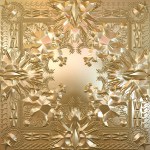
3. Jay-Z & Kanye West – Watch the Throne

In a year marked by politicians explaining why the rich should get richer, we got an album from two of the most talented beneficiaries of the Bush tax cuts. And when you consider that on Watch The Throne, Jay-Z & Kanye West reach some spine-tingling heights on the backs of some crazy-expensive samples, this makes for a quintessentially American success story in 2011. Sure, it’s probably unfair that West might be the only producer out there with the clout to license “Try A Little Tenderness,” but there’s no use whining about it, because he also happens to be the best person for the job. The resulting cut, “Otis,” is a magnificent swash of braggadocio that boldly reframes Redding’s theme – in the place of a tender lover making life “easier to bear,” we now have obscene wealth. Both MCs egg each other on, resulting in some propulsive egomania (e.g. “Welcome to Havana/Smoking cubanos with Castro in cabanas”). It’s the precise formula we hoped for with this pairing – huge, luxurious productions, and a palpable sense of one-upsmanship on the microphone. The best example of it might be the RZA co-production “New Day,” which finds Jay and ‘Ye pleading with their hypothetical future children over a haunting beat that runs Nina Simone through AutoTune (!!!). It’s not a track by track masterpiece a la My Beautiful Dark Twisted Fantasy, but on Watch The Throne, these superstars spread the wealth so generously, trickle-down economics almost starts to make sense.

2. Bill Callahan – Apocalypse

If PJ Harvey made the war movie of the year, then Bill Callahan made the western. On Apocalypse, his third solo effort under his own name instead of Smog, the singer-songwriter tells tales of cowboys sympathizing with their cattle, marriages dissolving in the dust of the prairie, and panoramic vistas that enchant the minds of men. But a traditional country album it’s not – meditative folk is Callahan’s bag, with arrangements that act as delicate foundations for his beautiful, mournful baritone. It’s circular, entrancing stuff, a cowboy Astral Weeks, an attempt to document how small our country can make us feel, and how proud. “It takes a strong/Breaks a strong mind,” Callahan sings about the American wilderness. “And anything less makes me feel like I’m wasting my time.” He could be singing about his own record.

1. James Blake – James Blake

The cover of James Blake’s debut album is a nice bit of synesthesia – a portrait of the artist soaked in icy blue undertones, his face blurred to the point where he’s looking at you from two different places at once. It’s the perfect visual interpretation of Blake’s voice on this record, a silky, soul-inflected alien in a purely electronic world. On “The Wilhelm Scream,” it’s rich and full, dancing lightly over atmospheric synths; on “Lindesfarne I,” it’s distorted and chilling, comparing hope to kestrels through washes of pitch correction. Blake pines for happiness throughout, over distant, subterranean electronics that belie his optimism. It’s a Sade album for a Terminator future, where a singer clearly has soul, and the machines try to strip it from him every step of the way.

Honorable Mentions: Bon Iver – Bon Iver; Heidecker & Wood – Starting From NowhereLykke Li – Wounded Rhymes; My Morning Jacket – Circuital; Wilco, The Whole Love; Wolves In The Throne Room – Celestial Lineage; Eddie Vedder – Ukulele Songs

What I Learned From “Overboard”

As the man behind sitcoms like The Odd Couple, Mork & Mindy and Laverne & Shirley, Garry Marshall taught us that all we need to laugh are two people, hashing out their differences in an apartment. But while he was working to bring that Honeymooners formula to a new generation, he apparently didn’t have the time to properly convey his feelings that women are insipid. Because that is the defining message of the second act of his career, as a director of romantic comedies. From Pretty Woman to Runaway Bride to Raising Helen, Marshall has glorified in telling females that getting a husband should be their top priority (and that being a prostitute is a viable way of achieving that goal).

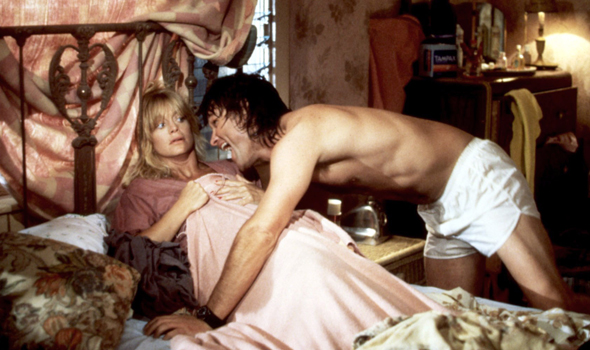
But none of his movies are as brazenly sexist as his hit 1987 romp Overboard. The story of a Oregonian handyman (Kurt Russell) who gets fired by an impossibly spoiled rich lady (Goldie Hawn) and then mind-fucks her into being his slave when she gets amnesia, this is the purest distillation of Marshall’s anti-woman agenda. So, what did I learn from it?

1. Rich people are stupid monsters.

In Overboard‘s opening scenes, Marshall does everything he can to make us hate Hawn’s character, Joanna Stayton. She wears opulent dresses and absurd hairstyles; she bitches out her manservant (Roddy MacDowall!) for serving her the wrong kind of caviar; she refuses to talk to Russell’s aw-shucks everyman Dean Proffitt like he’s an actual person. Of course, this kind of cartoonish villainy is necessary – without it, audiences just might not take Dean’s side when he, you know, kidnaps and rapes her and stuff.

2. Hospitals are super lax.

After falling off her yacht and being rescued by a fishing boat, Joanna’s in fine physical health, but is suffering from amnesia. Dean sees her picture on the local news, hatches his vengeful scheme, and shows up at the hospital to take Joanna “home.” After a doctor and the hospital security guard (played by old-school “Family Feud” host Ray Combs) sympathize with Dean about just how bitchy Joanna is, they ask him for proof that she is indeed his wife, “Annie.” Dean tells them about a birthmark he noticed while working for Joanna, and after making her lift up her gown in full view of everybody to verify this, the hospital staff is satisfied that this smirking, unconcerned man is telling the truth.

3. Women best have kids.

Early in the movie, Joanna has a conversation with her even stupider and richer mother (played by Katherine “Mona” Helmond). In it, Joanna shares that her husband Grant wants to have a kid, and the movie’s disdain for women first rears its ugly head. “Darling,” her mother responds, “if you have a baby, then you won’t be the baby anymore.” By establishing right away that childless women are spoiled brats, Overboard posits that Dean isn’t just teaching Joanna a lesson by making her take care of his unruly brood – he’s putting her in her place.

4. Women best do grueling housework.

Once Dean convinces Joanna that she’s actually Annie, he puts her to work. She scrubs his tarpaper shack, plucks and boils chickens, and tends to his quartet of hellion sons (one who incessantly impersonates Pee Wee Herman, to the point where you think he suffered a head injury too). When she has trouble waking up in the morning, Dean throws her in a tub of freezing water. She becomes more accepting of this ritual as the movie progresses, and by the end, she craves it. It’s a clear case of Stockholm syndrome, but Marshall would have us believe the opposite – that a successful woman had found her true calling as a homemaker.

5. Women in the ’80s would’ve put up with a ton of Kurt Russell’s shit.

So if everything I’ve written about Overboard is true, how could it have been a big hit with the female audience it was targeting? Because it’s shrewdly casted. Both actors are in top form here – Russell has the lovable, blue-collar hunk act down pat, and Hawn has a blast playing the marvelously campy Joanna. Their chemistry is the only reason why anyone could accept Dean’s twisted crimes as anything resembling normal human behavior. “He could kidnap me any day,” I imagine every baby boomer lady saying in ’87. If Steve Buscemi played Dean, I think it might’ve gone differently (e.g. “Kill him, Goldie! Stab him in the face! KILL HIM!”).

Coldplay Hate: A Study

In a recent Pitchfork interview, Coldplay singer Chris Martin discussed his relationship with Jay-Z, sharing that some people can’t understand why someone as “cool” as Jay would want to be friends with someone as “nerdy” as himself. I know one thing they could definitely bond on – haters. Whether it’s coming from Foo FightersThe 40-Year-Old Virgin, or critics who can’t get over the U2 aping, moneymaking and/or Paltrow marrying, Martin has to deal with the same petty jealousies as Jay or fellow collaborator Kanye West. But unlike those artists, Coldplay’s stock in trade – huge, starry-eyed love songs with choruses that embrace listeners like teddy bears – doesn’t give him the platform to vent about it.

For now, at least. The band’s fifth album, Mylo Xyloto, finds the group aiming for a more rubbery pop sound, injecting some needed brightness and energy in its brand of moody arena rock. Synths appear as much as pianos; the rhythms have more meat on their bones, and teardrops invariably become waterfalls. It’s an ideal situation for a guest appearance by Rihanna, whose voice winningly intertwines with Martin’s over the soaring synth-pop riffage of “Princess of China.”

You could spin this as a sign of the musical apocalypse if you wanted – a monstrously popular group doing everything it can to sound even more mainstream. But for all of its chart-reaching ambitions, Mylo Xyloto doesn’t sound labored. Martin and his bandmates clearly have an affinity for the trappings of 21st century pop and R&B, and with the help of super-producer Brian Eno, they’ve woven them into their signature sound in subtle yet effective ways – much like U2 did on Achtung Baby. Critics are once again heaping praise upon that album in honor of its 20th birthday, calling it brave, despite the fact that when you took away Bono’s new hair and wardrobe, Achtung was just a tweaked version of the same old formula. It’s a great record, but it has more in common with Mylo Xyloto than U2 fans would probably care to admit.

The reviews are in on MX, and they’re the usual mix of carefully worded praise and straight-up bile. But whether they’re being nice or mean, critics still tend to sound disappointed that Coldplay isn’t an Important Artist, the kind of band that turns fans into apostles for its cause. Which leads to my theory – Coldplay’s biggest problem is that they don’t suck enough. It’s easy to spew hate about Black Eyed Peas or Maroon 5, but those Coldplay choruses are nifty little earworms. They must make it hard on Chris Martin haters, no matter how many clumsy rhymes he forces. So they rage on about how worthless Coldplay is, how they’re an insult to people who “know about music,” how their popularity exposes the ignorance of the general public. Then they catch themselves humming “Paradise,” and the self-flagellation begins.

Netflix Recap: Meek’s Cutoff

If you looked at my instant watching activity for the last few days, you would see that I’ve watched several episodes of the BBC show Merlin. Why would I endure this Smallville-ization of the Arthurian legend? Is it possible to be a masochistic Anglophile? Thankfully, I’m not going to answer those questions here. Instead I’m going to talk about something else I watched recently that makes me seem cooler – the haunting Kelly Reichardt movie Meek’s Cutoff.

Although it features effective, restrained performances from stars Michelle Williams and Paul Dano, the unforgiving landscape should get top billing in this minimalist tale about 19th century settlers who make the regrettable decision to leave the Oregon Trail. Reichardt and screenwriter Jonathan Raymond understand that frightened people clomping through the desert aren’t going to bust out many soliloquies, resulting in a relatively quiet, realistic study of people looking death in the face. And when the visuals are as arresting as they are here, Williams’ stern, heavily bonneted face and Dano’s bug-eyed expressions are all you need. Paranoia abounds from the first minute, where it becomes clear that the settlers don’t trust their guide, the eccentrically brusque Stephen Meek (played by Sweensryche favorite Bruce Greenwood, who plays against his A Dog Named Christmas type, with mixed results). When a Native American crosses the group’s path and eventually becomes Meek’s unwilling replacement, the gap between cultures is as vast as those stunningly arid landscapes.

Reichardt has a thing for the “getting lost” metaphor – Old Joy, her 2006 film about two men attempting to recapture their lost friendship on a camping trip, dealt with the pair losing their way with a mesmerizing sense of patience. Meek’s Cutoff is filmed in a similar style, lulling you with extended shots of the settlers fording rivers and chasing handkerchiefs in the wind. But whereas Old Joy ended with the clear sense that the characters had drifted apart, Meek’s closing shot is harrowingly open-ended. You get the idea that, with paranoia and mistrust worming their way into the settlers’ brains, something bad is on the horizon. Call it American History 101.

The Plight of the Spoiled Music Fan

Back in July, AV Club music editor Steven Hyden shared an interesting theory – in order to be classified as a great band, an artist must have released five “very good” to “excellent” records in a row. In the arbitrary world of ranking pop culture, Hyden’s formula is as good as any – it should be awfully hard to earn the distinction of “great” – but it did get me thinking about how spoiled we music fans can be. After having our minds blown by an exceptional work of art, part of us feels grateful to the artist, while the other part busily sets unrealistic goals for them. In this heightened context, if a band’s follow-up is merely “good,” then that qualifies as a letdown. I felt this way about several albums in 2011, and I’ve selected four to discuss. All were created by artists I love; all feature some quality material. But when placed in the context of their back catalogs – and my emotional attachment to them – all are disappointments.

Radiohead – The King of Limbs

In the pantheon of spoiled music fans, Radiohead fans are the worst. Hyden claims the Brit legends don’t pass his five-albums test because of 2001’s Amnesiac, which I disagree with (see #56 on my Top 100 Albums of the 2000s). I don’t think they pass the five-albums test because of 2004’s overlong Hail to the Thief. These are really good albums we’re talking about here, some seriously adventurous, emotionally riveting stuff that we would praise unconditionally from a band of any other name. But because Radiohead was kind enough to make OK Computer and Kid A, they must suffer our nit-pickery! And The King of Limbs has been no exception. It’s a magnificently dense recording, a world of lurching synths and frantic polyrhythms that unfold like a strange, binary orchid. But it’s also immediately accessible in places, especially the last two cuts – the gorgeously eerie piano ballad “Give Up the Ghost” and the lite electronica boogie of “Separator.” Yet TKOL is bereft of the grand statements and avant garde left turns that defined the band at its earth-shattering best. The biggest complaint among fans has been the running time – under 40 minutes – but that doesn’t bug me. In all honesty, the only problem I have with TKOL is that it doesn’t feel like a momentous occasion, the band having painted cold, beautiful landscapes like this before. It’s an ingeniously layered production of eight well-written, adventurous songs, something that could only disappoint a Radiohead fan.

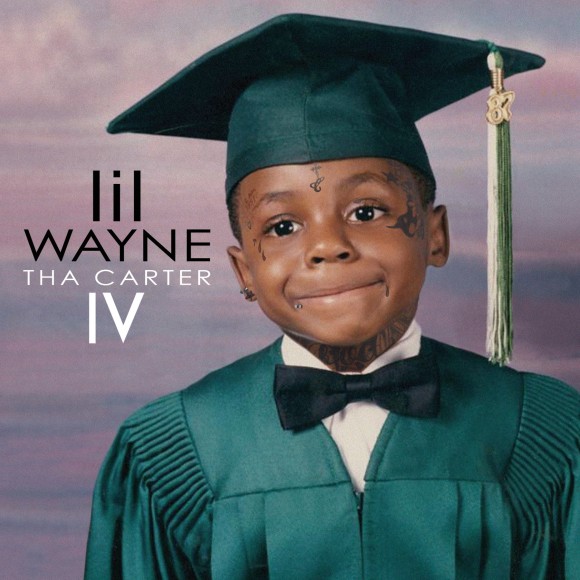
Lil Wayne  – Tha Carter IV

This year, my spoiled ass was the most disappointed by the hotly anticipated return of Lil Wayne. After the across-the-board success of his 2008 masterstroke Tha Carter III, and the ending of his highly publicized prison sentence, Weezy sounded sharp on his pre-Carter IV mixtape, Sorry 4 Tha Wait, rapping over loops from “Gucci Gucci” and “Rolling in the Deep” with understated poise. But when the real album finally dropped in August, the rapper didn’t sound understated – he sounded underwater. He’s never been a speed rapper, but Wayne certainly takes his time delivering his couplets this time around, and his similes tend to not warrant the extra attention (e.g. “The weed’s loud like a lion’s roar”). Guests Rick Ross, Tech N9ne, Busta Rhymes and Andre 3000 deliver life support in the form of fantastic verses, and the beats successfully hearken back to the gangsta/Dirty South gumbo of Tha Carter II. But without Wayne at his scatological-pothead-Martian best, TC4 is merely a good hip-hop album with occasional flashes of the lyrical master of old. The intro, the interludes, “6 Foot 7 Foot,” “John” and “President Carter” are all worthy of Weezy’s legacy, but we’ve come to expect much more from a record with Tha Carter” in its title.

Wilco – The Whole Love

Despite the sonic canyon that separates alt-country from post-punk, Wilco/Radiohead comparisons have been kicking around since Being There and OK Computer set their respective bars impossibly high. But now that both groups have aged, a legitimate parallel can actually be made – both Wilco and Radiohead possess a built-for-the-long-haul dynamic that generates fruitful output in the face of the loftiest expectations. These guys are gonna keep making music, no matter how many bloggers whine about how they’ve lost a step. And thank god for it – The Whole Love, like The King of Limbs, is a pristinely crafted work, with material that’s right in the band’s wheelhouse. The first two songs even get you hoping that this is indeed the “next Yankee Hotel Foxtrot” you were dreaming for. “Art of Almost” is one of the band’s finest tunes, period, a seven-minute opus that pairs bittersweet, close-but-no-cigar sentiments with soaring distortion and menacing synths – a lusher, warmer “I Am Trying To Break Your Heart.” This is followed by “I Might,” a blast of riff-focused power pop that would’ve fit snugly on Summerteeth. But alas, TWL isn’t a full-blown Wilco masterpiece. While the balance of the record is far from one note – the haunting acoustics of “Black Moon” and sunny Sunday shuffle of “Capital City” providing the most welcome dynamic shifts – it’s still bereft of the wild spirit of “Art of Almost.” Like Wilco (The Album) and Sky Blue Sky before it, TWL depicts a band that’s gotten very comfortable doing its thing – and in 2011, that thing is impeccably wrought country-rock, not the unpredictable Americana rollercoasters of yore. A good album? Yes. A disappointing tease? You betcha.

Bjork – Biophilia

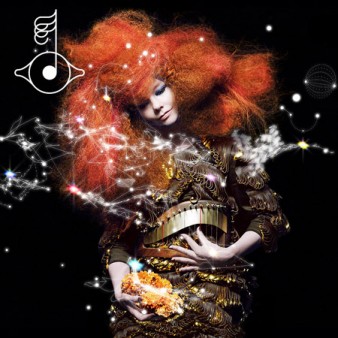
As an artist who passes the five-albums test in my book – from Debut to Medulla, she was pretty much unstoppable – it’s impossible for me to look at any new Bjork album objectively. That being said, the flaws in this year’s Biophilia are plain to see – every track on this mega-concept album about the history of the universe comes with its very own iPad app, and what we gain in ambition we lose in listenability. Not to say that the album isn’t enjoyable; it’s frequently gorgeous. Bjork remains one of the most daring artists making music today, with a voice that continues to astound. Yet where her best work always had clear horizon lines, Biophilia is a thicket of notes and concepts, without much traditional songcraft to ground them. The exception is “Crystalline,” an etheral club banger with a whirlwind of a drum n’ bass outro. Here, Bjork shows us what can still happen when she gets out of the way of her own creativity. But like “Art of Almost,” it only serves to make us wonder just how great this album could’ve been. 

What I Learned From “Instinct”

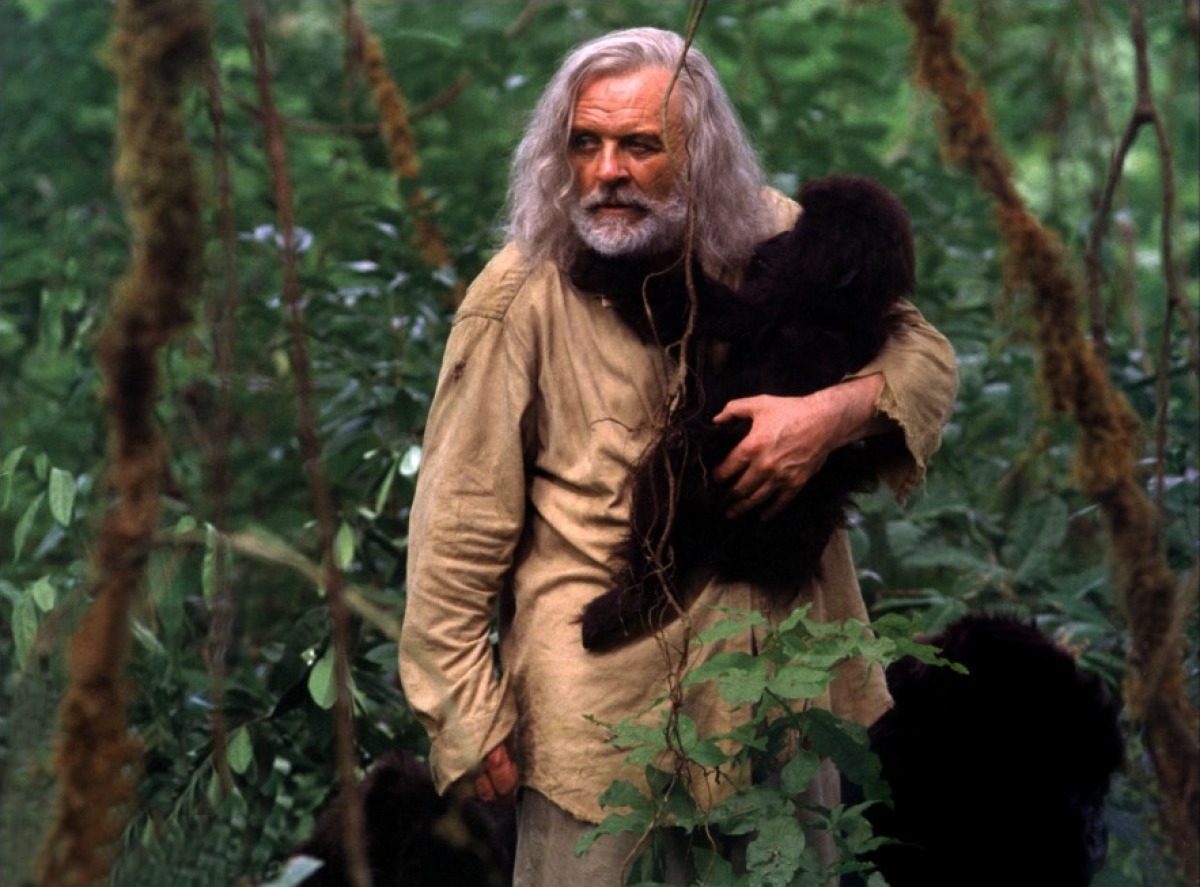
I had so much fun telling you what I learned from The Edge that I’ve picked another post-Silence of the Lambs Anthony Hopkins thriller to glean morals from. Instinct is a movie that – get this – pits a plucky young professional against a brilliant, violent man. Released in 1999, this was Sir Anthony’s fifth “I have bills to pay” movie in a row (after Meet Joe Black, The Mask of Zorro, Amistad and The Edge). He plays Ethan Powell, a genius psychologist who lives off the grid with a pack of gorillas for two years and is arrested for murder in Rwanda. Powell seems to act more like ape than man, never speaking and lashing out violently. Until the ambitious psychologist Theo Caulder (Cuba Gooding, Jr.) makes it his mission to bring Powell out of his monkey trance, and the movie really starts to blow.

Lesson One: Psychology is super easy.

The first 20 minutes of Instinct frames Hopkins as a live wire, somebody lost to civilization for so long that seasoned psychological minds think he’s a lost cause. The Rwandan government wanted to hang him. When his daughter came to visit him, he didn’t even look at her. He beat the shit out of some people at the airport. Then Gooding, Jr. shows up to counsel Hopkins in prison, and he pretty much gets him talking right away. Take note, armchair shrinks: When there’s a psychopathic ape man in front of you, just look wide-eyed and frightened, and ask him questions about his family. He’ll perk right up.

Lesson Two: Prison guards are horrible, horrible people.

The U.S. prison that Hopkins is transferred to is called Harmony Bay, which is of course underfunded, falling apart and staffed by assholes. One of Instinct’s major story lines is a game that the guards play with the prisoners, giving each one a card from a deck, and only allowing the prisoner who gets the ace of diamonds to receive a half-hour of outdoor time, something all of them are technically entitled to. What the prison has to gain by this stupid and cruel system is never explained, but it does set things up for a painfully melodramatic sequence that sees Gooding, Jr. bucking the establishment by putting the prisoners’ names in a box, and then selecting one at random. You know, like a hero would do.

Lesson 3: Prisoners are wonderful, wonderful people.

You can’t establish the fact that prison employees are evil without prisoners that one can sympathize with. Hence, even though we hear plenty about how Harmony Bay is overflowing with dangerously psychotic criminals, we don’t hear much at all about what they did to get locked up in such a terrible place. Which gives director John Turtletaub the freedom to paint them as a rag-tag bunch of eccentrics just waiting to be psychologically rescued (think One Flew Over the Cuckoo’s Nest, except with serial killers). Oh yeah, and we eventually learn that Hopkins didn’t really kill anybody – his gorilla pals were shot by Rwandan soldiers, but he called himself a killer because he felt guilty about it. You know why it’s so hard to find a sensitive man that you want to spend the rest of your life with? Because they’re all serving life sentences.

Lesson 4: Living with animals gives you super strength.

Because Instinct is actually a cloudy glop of environmentalist dogma instead of a movie that asks interesting questions about our own primality, the filmmakers couldn’t be subtle with the very few Hopkins-as-crazy-ape-man scenes. So when he kicks people’s asses in airports and prisons, he doesn’t just beat them – he physically overpowers them with the ease of a superhero. How could gorillas give this ability to a senior citizen in chains? It doesn’t matter, because the movie isn’t really about that kind of thing anyway.

Lesson 5: Ponytails signify recovery.

I don’t want to let Turtletaub off the hook, but Gooding, Jr.’s wet noodle of a performance makes me want to give the director some slack. The actor portrays Caulder as a whimpering snob, a person not cut out to counsel the mentally disturbed. So Turtletaub has to resort to things like wig manipulation to make us believe that Caulder is indeed helping Powell get better – after, like, four sessions, Powell begins to pull back his matted nest of psycho hair into a slick ponytail. Which means that he’s recovering his sanity, because it takes a civilized man to wear the scrunchie of self-discovery.

What’s In My Discman: October 2011

Nick Lowe – The Old Magic (2011)

Rock musicians typically don’t know how to age. The first time they see a shock of grey in their styled-to-look-mussed-up hair, they either double down on their denial and make music that proves they “still got it,” or go off the “reinvent myself” deep end. Which just adds to the pure pleasure of listening to Nick Lowe in the 21st century. With The Old Magic, the 62-year-old pub rock/new wave legend gives us his third straight offering of gently smirking tunes about loving, losing, and getting older all the while. It’s beautifully written material from an artist who’s comfortable in his own wrinkled skin, and a production that keeps its genre jumping to a minimum – relying mostly on soft vocal jazz arrangements and sprightly Buddy Holly shuffles to support Lowe’s curious, cooing voice. Because when you’ve got metaphors for failed love that are as wonderful as “Stoplight Roses,” you don’t need much else.

Stevie Wonder – In Square Circle (1985)

In my younger, stupider days, I would say things like “NOTHING good came out of the ’80s,” accompanied by the requisite eye-roll. I don’t like to think about me being an ignorant dick, but albums like In Square Circle demand this kind of personal reflection. Stevie Wonder fully embraced the synthetic production values of the decade here, something that would’ve once inspired my passive-aggressive scorn. Thankfully, now I actually listen to albums before judging them, and while Wonder’s 20th record doesn’t possess the warmth and grandiosity of his ’70s earth-shakers, it’s darn close to a pop masterpiece. Two jaw-dropping ballads are the biggest highlights – the scorned-lover-as-missing-person weeper “Whereabouts” and the classic unrequited love song “Overjoyed” – but the minor synth groove of “Part-Time Lover” and the staccato, drum machine funk of “Spiritual Walkers” are also fantastic listens, despite sounding very much like they were recorded in 1985.

Lykke Li – Wounded Rhymes (2011)

Lykke Li made her first splash with the 2007 single “Little Bit,” a simple declaration of love that stayed with you, no matter how silly it looked on paper. And the singer continues to explore the same chilly neo-soul territory on her second album, digging deeper into her vocabulary to express love and devotion. Wounded Rhymes does possess the ruminative quality implied by the title, but it’s in the atmospherics more than the songs themselves, resulting in an album that sounds like Portishead after a fruitful therapy session. “I Know Places” is six-minutes of lo-fi folk strumming, an instrumental track that just might be coma-inducing – if it weren’t for Lykke Li’s light, bluesy vocal. When she sings, “I know places we can go, babe/Comin’ home, come unfold, babe,” the song goes from a slog to a spiritual.

Franz List: Unintentional Scares

Hey, list fiends. Halloween is creeping around the corner like a scary ghost. Which means it’s time for a list about being scared about stuff. Last year we counted down the “funnest” horror movies of all time, exploring such feel-good titles as The Gingerdead Man and Sleepwalkers. This year, we analyze some pop culture that isn’t supposed to be scary, but still manages to make me pee in my pants a little.

1. Unexpected Cookie Monster
John Lennon, “Hold On”

When I fell in love with John Lennon’s Plastic Ono Band, I was doing a lot of driving – my incredible girlfriend (now my wife) was going to school an hour and a half away, and I sped my Dodge Neon down there every chance I got. On one of these voyages, I heard “Hold On” for the first time. A sparse, sauntering lullaby, “Hold On” is a quiet moment on an album informed by scream therapy. But at the 1:08 mark, just as you start to settle into the song’s aesthetic, a gravelly voice flies out of leftfield, stating “Cookie.” When I first heard this, I whipped my head around in the driver’s seat, fully expecting to see a wild-eyed drifter in the back, making to stab me with a rusty switchblade. Turns out that was John himself, imitating Cookie Monster for reasons I still don’t understand. But that moment has stuck with me – when he sings “It’s gonna be all right” on the chorus, I’m not convinced.

2. The Famous Amos Penis Scene
Burlesque

There’s not much that isn’t frightening about Burlesque, the 2010 musical about a wooden small-town girl who flees to the L.A. of an alternate universe, where one can become a huge star as a burlesque performer, because the general public cares about burlesque. Christina Aguilera wanders through the shots like a lobotomy victim, Cher looks like a Madame Tussauds monster, and the songs are horrible, but those things are to be expected. Not so the scene where Aguilera’s excruciating flirtations with love interest Cam Gigandet come to a head – Gigandet does an extended strip tease that’s intended to be cute (enter the bedroom fully clothed, come back into the living room under some pretense but a little more naked, repeat). Then, just as we’re lulled into a catatonic acceptance of this sequence’s “romantic” endgame, Gigandet walks up to Aguilera with a box of Famous Amos cookies covering his dong. “Wanna cookie?” he asks. It’s gross. It’s nonsensical. It’s not even the funniest box of cookies that one could use to conceal their genitals (Otis Spunkmeyer, anyone?). When you’re done screaming, this is the kind of insult to your intelligence, and your sweet tooth, that lives on in your nightmares.

3. Arnold Knows Best
Commando 

The daddy-daughter montage during the opening credits of Commando is intended to be the brief calm before the storm – because like any brilliant action film, this 1985 Schwarzenegger classic knows to get the character development out of the way as quickly as possible, and get right to the ass-kicking. But nothing in the ensuing shoot-em-up is as frightening as the beginning of this sequence, which finds an especially bulgy Arnold chopping wood. A shadowy presence approaches, and the music implies that this must be a bad guy. Arnold sees his enemy in the reflection of his axe, and at the last second, he spins around and … grabs his daughter Jenny, laughing and shaking her awkwardly. Is this a game they play, where the kid tries to sneak up on her father while he’s wielding an axe? It doesn’t matter, because now they’re goofing around at ice cream stands and feeding fawns in the wild. Still, although the entire premise of Commando is that Arnold loves his daughter so much that he’d annihilate an island nation to save her, you’ve gotta wonder if she’d be safer with the terrorists.

4. You WHAT into me?
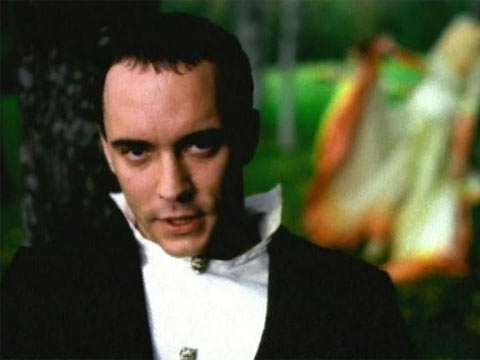
Dave Matthews Band, “Crash Into Me”

Like most Dave Matthews Band ballads, “Crash Into Me” meanders along inoffensively, pairing pleasant open chords with loving sentiments like adult contemporary hits are supposed to. It’s exactly the kind of tune that shouldn’t have a chorus about having unprotected sex with Dave Matthews. “Crash into me/And I come into you,” Matthews warbles, making for one of the most uncomfortable and messy-sounding come-ons in rock history.

5. Boohbah

As if the concept of tripping human-animal hybrids with TVs for stomachs wasn’t creepy enough, Boohbah ups the ante on grotesque, oddly fascinating programming for babies. The Boohbahs are furry, fluorescent-colored creatures who look like mauled genitalia – bumpy oval heads peeking out of big furry sacks. When they’re not chanting “Booh-bah” like a children’s choir, they’re bobbing their heads up and down and making fart noises. Saying their names in a certain order is a surefire way to raise the dead – Humbah, Zumbah, Zing Zing Zingbah, Jumbah, Jingbah …

6. America’s Sweetheart Has A Seizure
Steel Magnolias

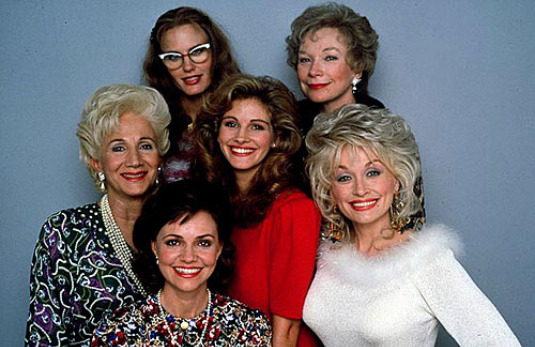
Southern women are sassy and strong. That’s basically the plot of Steel Magnolias. Even when one of them dies tragically, it only serves to underline the point that these ladies are more resilient than a million Tom Skerritts. So when Julia Roberts has a horrifying diabetic seizure in Dolly Parton’s salon chair, with Sally Field and Olympia Dukakis watching, it’s a harrowing chink in the armor of these superhuman Southern belles. But that’s not necessarily scary. What is scary is that Roberts looks like a tapeworm monster in this scene. Which probably explains why I curl up in the fetal position when I hear the words, “Drink your juice, Shelby.”

7. Did you kill my son?
Changeling

Some of the scariest sci-fi stories involve the alien takeover of human consciousness, from Invasion of the Body Snatchers to The Thing. How else can we explain how Angelina Jolie behaves in Clint Eastwood’s underwhelming 2008 period piece Changeling? She plays a woman whose child is kidnapped, only to have the authorities try to pass off some other kid as hers. You’d think there’d be some righteous fury here, something to give the audience the sense of catharsis that results in Oscar nods. But Jolie is bewilderingly robotic. When confronting the man who she thinks is her son’s murderer, the script requires her to ask the question “Did you kill my son?” about 400 times. And while Jolie tries to mix it up, first asking politely and then yelling it in the guy’s face, there isn’t a trace of human emotion to be found – by then, the pod people had completely taken over.

What I Learned From The Edge

Welcome, tens of Sweensryche readers! Today sees the unveiling of a new feature – “What I Learned From …” – in which we explore the lessons that Hollywood movies cram into our eye sockets, so that they can slowly worm their way into our brains and eventually alter our behavior. Today, we focus on the 1997 thriller The Edge, in which Anthony Hopkins, Alec Baldwin and an African-American are stranded in the bear-infested wilds of Alaska. Guess who gets eaten?

Lesson 1: Obscenely rich people have better survival instincts.

Hopkins plays Charles Morse, who is a billionaire from doing something or other. Morse can build a compass out of a paper clip and a leaf, treat the grievous injuries of his companions, and kill a bear in one-on-one combat, all while exuding a Dalai Lama-level sense of calm. Baldwin plays the fashion photographer Robert Green, a character you would imagine does well for himself. But he’s not as rich as Morse, which logically means he’s also weaker, dumber and on the verge of a nervous breakdown.

Lesson 2: Obscenely rich people are Christ-like. 

Within the first five minutes of The Edge, it’s clear that Robert is having an affair with Charles’ model wife, Mickey Morse (!). They attempt to give him a heart attack with a bear suit birthday prank, after which Mickey gives Charles a watch with a lazily phrased engraving, and Robert gives him a knife. Not to mention all their “stolen” looks at each other. Anyways, the viewer isn’t supposed to be sure about all of this, because at the film’s dramatic peak, Robert admits to the affair, and shares that he was plotting to kill Charles all along. (Greed clouds the minds of poorer people, making them ill-suited for survival in the wild. See Lesson 1.) After being outwitted, Robert is impaled at the bottom of a bear trap. What does Charles do? He tries to save him. Before Robert dies, he sees the error of his ways, and confesses to the Hopkins Christ. We assume he goes to heaven.

Lesson 3: Bears are sociopaths.

Every time a bear appears in The Edge, it is ready to maul the shit out of every human being in its path. And it’s not just because they’re hungry: When Charles is teetering on a log that’s spanning some whitewater rapids, a bear comes up and shakes it until Charles falls. Fucker just wanted to see him die.

Lesson 4: Fashion photographers love stoic Native Americans.

How did these guys get themselves into this ursine kerfuffle, you say? Well, it’s because they were in Alaska for Robert’s photo shoot of Mickey (played with glassy-eyed irrelevance by Elle MacPherson), and Robert got sick and tired of the same old model stuff. After seeing a framed photo of a weathered Native American dude on the wall of their lodge, Robert decides they need to go out and find him instead. Because what do fashion magazines love more than the quiet pain of indigenous people?

Lesson 5: If you’re cheating on your husband, and you’re getting him an engraved watch for his birthday, do not also get one for your lover as part of the same order. Then, do not leave the receipt inside the box that holds your spouse’s watch.