Mad Men’s season premiere is obsessed with one thing that is certain (and it’s not taxes).

Image

Don Draper stands silently by his office window, freshly tanned from a Hawaiian vacation, his desk moved by a photographer to a spot he doesn’t like. All he hears, and all we hear, are waves, gently crashing in his mind. Of all the memorable moments from Mad Men’s two-hour season six premiere – which run the gamut from harrowing to hilarious – this is the one that’s sure to stick with me for a long time.

Don has always been a character on the brink, a man with weighty secrets who nonetheless behaves recklessly, someone who treats women like garbage and then complains about how bad it makes him feel. But over the course of five seasons, we never got a good idea of what rock bottom might look like for our dashing anti-hero. “The Doorway” gives us our first glimpse, and it ain’t pretty – after embarrassing himself at a funeral (in a thoroughly entertaining way), Don demands that his doorman share details of a recent near death experience. “You must have seen something,” he pleads, with a lost, childlike daze in his eyes that he can’t entirely blame on booze.

While Don’s psychic breakdown is its main focus, the episode takes its title from a rant Roger Sterling gives to his psychiatrist, about how life is just a series of passageways that “all open the same way, and they all close behind you.” Roger’s the one dealing the most directly with mortality here; the death of a loved one and acquaintance bookend the episode. And while his incomparable wit and panache can’t keep his sadness at bay forever, Roger’s soliloquies on the couch provide clear-headed counterpoints to Don’s odd obsession with his physician neighbor – not to mention Betty’s fairly frightening obsession with one of Sally’s friends (not Glen this time).

All of these intertwined moments of existential crisis would be enough for a great episode of a lesser show, but “The Doorway” takes a moment to balance the scales a bit, showing Peggy Olson on the phone with her old art director Stan Rizzo, each making the other’s late night at work more bearable. When Peggy’s new boss compliments her on her crisis management skills, Stan’s listening in. It’s a sweet and funny moment in a blossoming friendship – the kind of thing that makes a good argument against Roger’s doorway theory.

As Mad Men has progressed, it’s revealed itself as a show that’s less about advertising, and more about the hard truths of existence that advertising was invented to distract us from. “People will do anything to alleviate their anxiety,” Dr. Rosen imparts to Don, before whisking off on his urban skis to save lives on a snowy New Year’s Eve. For two more seasons, it looks like we’re in for a whole new level of “anything.”

What’s In My Discman, March 2013

Let's Get ReadyMystikal – Let’s Get Ready (2000)

It’s amazing what context can do to a listening experience. For a dozen years or so, I’d always thought of Mystikal as a flash-in-the-pan MC who rode a legendary Neptunes beat to fame, his voice a grating, angry growl tailored to please a DMX-infused marketplace. But then I heard “Hit Me,” a leaked single from his forthcoming record that makes a serious argument that Mystikal is carrying the torch of James Brown with more wit, energy and raw ability than any artist around. My expectations thusly altered, and my ears hungry for whatever Mystikal I could get my hands on, I picked up Let’s Get Ready, his breakout 2000 release. And while no cut on here can touch “Hit Me,” it is an insane adrenaline rush from beginning to end, that voice I once saw as an annoyance making me feel I could punch my fist through a brick wall, the beats blunt and dirty, as relentless as a hurricane. Mystikal’s new album is apparently called Original, and it’s slated to come out in June. Until then, Let’s Get Ready will keep my heart pounding just fine.

ArethaAretha Franklin – 30 Greatest Hits (1985)

I recently had the honor of interviewing Aretha Franklin in advance of her show at a local casino (which I also reviewed), and in the name of psyching myself up and keeping the butterflies at bay, I spent the week beforehand listening to her 30 Greatest Hits in my car. It’s still the best collection of its kind, zeroing in on Aretha’s classic Atlantic years with no glaring omissions. Of course, it’s tough to screw it up when you’re talking about one of the most prolific and evergreen periods of any artist, ever. When “Respect” strutted its way onto my speakers, it sounded as fresh and imaginative as the first time I heard it – no matter how many commercials or Bridget Jones movies try to rob it of its essence, “Respect” will never gray. It’s the ultimate unkillable pop song and a gender role gamechanger to boot. Then there’s the knee-buckling pleas of “Ain’t No Way,” the swooning romance of “I Say A Little Prayer,” the slow-building gospel reverie of “Spirit In the Dark” … I won’t mention all 30. If you haven’t heard this stuff, I’d suggest stopping everything in order to fix that problem.

Jim JamesJim James – Regions of Light and Sound of God (2013)

At one point in “A New Life,” the most immediately beautiful tune on Jim James’ proper solo debut, the moonlighting My Morning Jacket frontman delivers the line “There’s more stardust when you’re near” with NPR-ready elocution, painstakingly pronouncing the “t” in “stardust.” It’s not your typical rock singer diction to be sure, the sound of a man who isn’t writing pretty lyrics to sound cute or sensitive – he believes in this stuff, with evangelical fervor. The album title gives you a good idea of the ground James is covering here – a cosmic theology of love, forgiveness and the passage of time that’s certainly headier (and a bit flakier) than My Morning Jacket’s last few records. Musically, it has the homespun feel of a solo record, be it one with the occasional crackling vibraphone sample, huge Eastern melody, and sweeping string arrangement. Then there’s James’ Neil Young/choirboy voice, still as expansive and expressive as ever, making the clunkiest passages feel like mantras. Regions feels a bit less substantive than it wants to be, but it’s still more intriguing than anything James has been a part of since Z, the last time his music was pointed heavenward.

Movies From 2012 That I Saw And That I Liked

Yeah, I know, it’s totally 2013 now. I should have shared my favorite movies of 2012 with you weeks ago. But then I saw the cover of the John Travolta and Olivia Newton John Christmas album, after which I was briefly hospitalized. Now that I have my basic motor skills back, I can get to blathering! So here goes nothin’. My top 10 movies of 2012 are:

WETTEST COUNTY  Scene  16

10. Lawless

In 2012, Guy Pearce continued his criminally underappreciated run as one of the most versatile actors working, including a great, wiseass turn in the delightfully ridiculous “save the president’s daughter from space jail” tale Lockout. But it was in this Prohibition gangster flick that he truly shone. As the sadistic and vain Special Deputy Charlie Rakes, Pearce pursues the Bondurant bootlegging operation with a twisted sense of justice, his eyebrowless face and a thick central part in his hair making him look as disquieting as can be. Director John Hillcoat and screenwriter Nick Cave aimed for a similar kind of grim morality with 2005’s very good The Proposition, but Lawless takes it to thrilling new heights – instead of cops and robbers, it’s just a whole bunch of guys with blood on their hands.

Queen of Versailles, Jackie Siegel

9. The Queen of Versailles

If you ever need a reminder of the chasm that separates documentary film from reality TV, take in this stark, uncompromising but ultimately sympathetic tale of Jackie and David Siegel, a billionaire couple whose time share-fueled gravy train dried up after the economic collapse of 2008 – right after they started construction on what was to be the largest, most expensive single-family home in the U.S. It’s the kind of story that seems readymade for a reality series, beaming dump trucks full of schadenfreude into our insecure brains every week. But Lauren Greenfield’s movie captures the stress, sadness and stubborn hope that’s the stuff of actual reality. The Walmart shopping binges, lingering dog turds and humiliated nannies could easily be treated like laugh-and-point moments, but when contrasted with images of David nursing his wounded pride and Jackie innocently trying to come to terms with the upper middle class life that lies ahead, it’s impossible to ignore their humanity.

jamie-foxx-600

8. Django Unchained

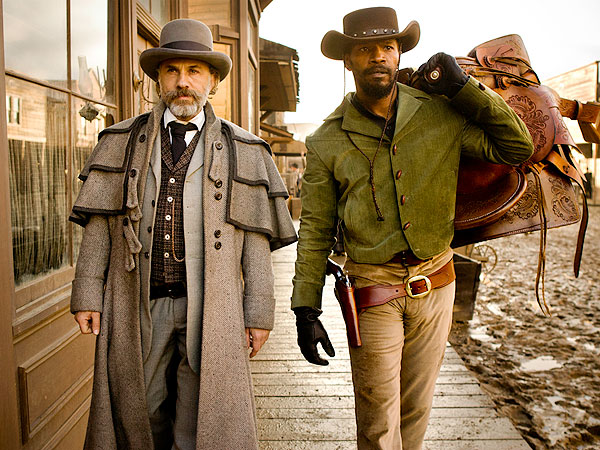
Given how prevalent themes of revenge are in Quentin Tarantino’s stories, it was only a matter of time before he gave us his own, uniquely pulpy take on a Spaghetti Western. Django Unchained is just that – a revenge fantasy/love story/buddy action movie set in the antebellum South, where snappy dialogue and cartoonish, exploding-blood-capsule-style violence is grounded in unflinching depictions of the horrors of slavery. Jamie Foxx, Christoph Waltz and Leonardo DiCaprio are all at the peak of their powers – Foxx in the Eastwood role as the titular freed slave, natural sharpshooter and heroic husband, Waltz as a fatherly dentist-turned-bounty hunter, and DiCaprio as a monstrous Francophile plantation owner. The issue of whether slavery should be an off-limits subject for a genre picture like Django is a thorny one for sure, but to me, Tarantino has given us a reminder of the unforgivable sins our country has committed, and we can’t have too many of those. The fact that he weaves it into a dynamic, darkly funny, exceptionally entertaining midnight movie? What more would you expect from Hollywood’s own “little troublemaker”?

LooperWatch

7. Looper

Time travel will always be a touchstone of science fiction, because more than anything, time makes us its bitch. But in Looper, writer and director Rian Johnson attempts to depict what might actually happen if time travel was invented. Like the war on drugs, it becomes a highly illegal practice appropriated by a criminal underworld, who send people back in time to be killed by “loopers” – men who end their careers by “closing their loop,” a.k.a. killing their older selves. The first half of the movie is spent patiently building this intricate mythology, while introducing us to Joe, the brooding looper junkie played by Joseph Gordon-Levitt. But once Bruce Willis appears as Joe’s future self, Looper becomes much more than your typical sci-fi shoot-em-up. The third act moves the action from Johnson’s slums-o’-the-future to a farm house, and what happens there is a poetic exploration of the nature of evil, the consequences of our mistakes, and the immeasurable impact of the things we do right.

turnmeon

6. Turn Me On, Dammit!

As heartwarming as it is frank, this Norwegian film explores the awkward lows and joyful highs of teenaged sexual awakening, through the prism of its main character Alma – played with believable angst by Helene Burgsholm. As Alma goes through the confusing process of growing up, she gains and loses friends, has innocent fantasies run aground by weirder, far more interesting realities, runs away from home, and bewilders her single mother until, eventually, their bond deepens. There’s no punishment or reward for Alma, no real danger or grand romance. Turn Me On, Dammit! is just trying to show how it feels to be a 15-year-old girl in a backwoods town, being picked on at school and getting caught calling phone sex lines at home. To see this kind of story told with such positivity is as refreshing as Scandinavian mountain air.

hobbit_a

5. The Hobbit: An Unexpected Journey

I understand why Peter Jackson’s new Tolkien trilogy is called The Hobbit. But it would be more accurate to call it Middle Earth. Because while the basic plot follows that timeless children’s adventure story in all the important ways, Jackson’s first installment makes it clear that he wants to tell a grander tale, one that looks at Tolkien’s singular universe with the eye of a storyteller and historian. Hence, on top of the piles of breathtaking whiz-bang, and the skilled characterizations of Bilbo Baggins, Gandalf, and Gollum, we get to explore the tragic, pseudo-Biblical backstory of the dwarves of Erebor, see the seeds being planted for the return of Sauron (aka The Necromancer), and meet Radagast the Brown, a birdshit-covered Jane Goodall of the Hedgehogs. Many have accused this detailed approach of being nothing more than a shameless money grab. But in the eyes of this Tolkien nut, The Hobbit is as much, if not more, a labor of love than the Lord of the Rings movies (which I kinda liked a little). The fact that hours upon hours of lovingly adapted Tolkien texts can be seen as something remotely capitalistic is a credit to Jackson’s ability to film the “unfilmable.”

Tim-and-Erics-Billion-Dollar-Movie-2012-comedy-film-Tim-Heidecker-and-Eric-Wareheim-film-version-of-Tim-and-Eric-Awesome-Show-Great-Job

4. Tim and Eric’s Billion Dollar Movie

On their weirdly endearing cut-and-paste cartoon Tom Goes to the Mayor, and the subsequent public access acid trip theater of Tim and Eric Awesome Show Great Job! and Check It Out! With Dr. Steve Brule, Tim Heidecker and Eric Wareheim proved themselves to be masters of disturbingly hilarious short-form comedy. Which made the potential pitfall of their Billion Dollar Movie an obvious one – would their shenanigans translate to the longer, more plot-driven confines of feature film? Well obviously, I think that they did. Billion Dollar Movie is a delightfully anarchic middle finger to mainstream comedies, taking one of their most common plot lines – protagonist must save struggling school/restaurant/shopping mall, hilarity ensues – and using it as a backdrop on which to project their obsessions with local TV commercials, father-son dynamics and diarrhea. Fantastic supporting turns from John C. Reilly, Will Forte and Zach Galifianakis are just cherries on top.

the_cabin_in_the_woods_2

3. The Cabin In The Woods

When I first saw Scream, Wes Craven’s snappy 1996 satire of slasher movies, I enjoyed how it made fun of me and respected me at the same time. But after seeing The Cabin In The Woods, Joss Whedon’s writing credit from 2012 that wasn’t The Avengers, I felt more than entertained. As a self-aware horror fan, this movie felt like a new stage of enlightenment. Director/co-writer Drew Goddard and Whedon make the same broad point as Scream that slasher scripts tend to be like Mad Libs; just change out the location/monster/method of death and presto, you’ve got a different movie – but they do it with an initially baffling, and eventually mindblowing, top-secret government surveillance subplot. What at first looks like just another bunch of dopey teenagers venturing out to be killed in the woods becomes a psychological study of humanity that connects the popularity of horror movies to that of ancient pagan rituals, while taking the time to make an even more salient point – if you’re ever in a bind, trust the stoner, not the hunk.

moonrise-kingdom-05

2. Moonrise Kingdom

It’s no accident that Moonrise Kingdom is set on an island. Its main characters, Sam Shakusky and Suzy Bishop, are kids who don’t feel connected to their surroundings, be it a foster home that looks like an Army barracks or a family that’s quietly fraying around the edges. Wes Anderson’s seventh film is the story of them finding each other, the bliss they feel at finally being understood, and the hilariously low-stakes havoc that their meticulously planned elopement causes. In case your twee-dar is starting to go off, never fear, because Anderson realizes Sam and Suzy’s puppy love in an achingly sweet, thoroughly realistic way, contrasting it all the while by the loneliness of the goofy adults who form the search party (including Bill Murray, Frances McDormand, Ed Norton and Bruce Willis, who are all wonderful). Shot in the gorgeous detail that is Anderson’s stock in trade, Moonrise Kingdom posits that while you might feel like an island from time to time, you never know who might be canoeing your way.

the-master_image_1

1. The Master

People are attracted to things that purport to define their personality, be it the signs of the zodiac or a quiz that tells you what Saved By the Bell character you are. But in the pivotal scene of The Master, Paul Thomas Anderson’s relentless study of the underbelly of belief, this desire for enlightenment about ourselves is abused in the name of ego and profit. In it, Lancaster Dodd (Philip Seymour Hoffman), an L.Ron Hubbard-ish leader of a philosophical movement called “The Cause,” convinces Freddie Quell (Joaquin Phoenix), a volatile WWII vet, to partake in something called “Processing” – a series of quick, probing questions, in which the subject is not allowed to blink. In the performance of the year, Phoenix shows us a deeply disturbed, utterly lonely man who is intoxicated by Dodd’s attentions, through his facial expressions alone. The title of the movie most obviously refers to Dodd, but by the end, it more poignantly applies to Quell – a twisted man who lost everything we see as respectable, except for his free will.

Honorable Mentions: Bernie, The Dark Knight Rises, The Expendables 2, Lincoln, Lockout, Men In Black 3Prometheus

What I Got For Christmas

Like I learned from Santa Claus: The Movie, Santa Claus is some Dutch guy who gets all magical for some reason I don’t remember. Dudley Moore was there, and there was a homeless kid maybe? OK, it’s been a while since I saw Santa Claus: The Movie. And it’s something that Santa has forgiven me for, because he brought me some amazing shit this year – shit I specifically told my wife I wanted. Isn’t that amazing?

886979214927Sam Cooke – The Man Who Invented Soul

Speaking of getting all magical, Sam Cooke made music that sounded like it came straight from heaven. With a voice effortless in its beauty, lyrics that treat true love like it’s oxygen, and arrangements that blend gospel, pop, vocal jazz and calypso with startling efficiency, Cooke’s catalog is a sonic argument for the innate goodness of human beings. After years of compiling random collections of his work, my CD collection has finally been blessed with the big kahuna – this accurately titled, four-disc retrospective, a desert island item for sure

a7b2521a515dc36ea56d181cada01ce0a27bbbb4James Brown – Star Time

The Man Who Invented Soul would’ve been enough to sustain me through 2013. (What’s that, food? You think I need your vitamins? Fuck you!) So upon receiving this, yet another four-disc box set of one of the 20th century’s otherworldly talents, I understood what it feels like to be a spoiled bitch. And to paraphrase the Godfather of Soul himself – the man whose grooves were so combustible they’d inspire Mitt Romney to put down his milk and get on up – it feels good.

Elaine Pagels, The Gnostic GospelsElaine Pagels – The Gnostic Gospels

Once you say that a book contains the word of God, you’re setting yourself up for some problems down the road. Like, say, if ancient texts were discovered that were written around the same time as your God book, using similar source material. And those texts directly contradicted aspects of your God book, which you’ve been using to guilt-trip people for centuries – such as your claim that Jesus had no interest in gettin’ it on. Pagels’ book is the most renowned study of these “heretic” gospels, and the bitter Catholic school kid in me can’t wait to absorb it.


3788568165_b926c4acfeRichard Russo – That Old Cape Magic

You don’t dive into a Richard Russo novel; you slip into one, like an old sweater that provides comfort beyond its fabric. Sure, his protagonists are slightly different versions of the same soft-spoken middle-aged guy who needs to come to terms with his past. But his lazy suburban worlds are so realistically rendered, and his prose is so casually profound, I’m quite sure I don’t care. That Old Cape Magic might not have the narrative heft of Empire Falls or Bridge of Sighs, but merely an echo of those wonders will suit me just fine.


mystery_train_5th_edGreil Marcus – Mystery Train

I claim to be a critic of music. Whose favorite songwriter of all time is Randy Newman. And I have never read this, the Citizen Kane (or, I guess Vertigo now?) of rock criticism, which follows the stories of several artists (including my beloved Randy) to make grand comparisons between rock n’ roll and Herman Melville. Shameful.

The Top 20 Tracks of 2012

cat listening to music-thumb-238x317-369715

I listened to enough songs this year to choke a horse. And while digging through the bloated horse corpse that I like to call 2012, I found 20 of them that I especially liked.

20. Kanye West (Ft. DJ Khaled) – “Cold”

Over computer blips and orchestra hits, ‘Ye infuses his verses with that on-the-verge-of-a-nervous-breakdown passion we know and love, including a PETA-baiting line on the chorus that’s one for the ages.

19. Psy – “Gangnam Style”

There’s a moment in “Gangnam Style” where the music cuts out, and for just a second, Psy waits before delivering the chorus. The anticipation we all feel right then, in spite of ourselves? That explains how pop music can take over the world.

18. The Beach Boys – “Summer’s Gone”

Mike Love has done more than enough to deserve the claim of “the biggest asshole in rock history.” But there could be a silver lining to his latest dick move, because if the Beach Boys never record together again, their final musical statement will be this gorgeous, mortality-laden track. “Summer’s gone/It’s finally sinking in,” Brian Wilson croons over a sea of swooning strings, echoey woodblocks, and artfully stacked harmonies – taking our breath away one last time before the leaves turn.

17. Japandroids – “The House That Heaven Built”

Japandroids pull off quite a trick here, putting inspirational poster sentiments and stadium-ready riffage in a blender, and churning out a fist-pumping rock anthem for the downtrodden. No guitar could be loud enough to drown out its big, bloody, beating heart.

16. Dirty Projectors – “Impregnable Question”

The newly found, homespun sweetness of Dirty Projectors latest work is summed up in this chorus: “I need you/And you’re always on my mind.”

15. Ty Segall – “There Is No Tomorrow”

After a year spent pounding our eardrums like Tiny Keith Moon™, Ty Segall closed out his last of three records with this, a supremely catchy fuzzbox ballad that could be a lost Plastic Ono Band demo.

14. Frank Ocean – “Forrest Gump”

Over a smooth, Isley Brothers groove, Frank Ocean took a piece of pop culture I revile and transformed it into one of the sweetest romantic sentiments of the year: “You running on my mind, boy.”

13. Killer Mike – “Southern Fried”

The ultimate song to drive to in 2012, “Southern Fried” is quintessential Killer Mike, full of towering swagger, scythe-sharp wit, and a flow so commanding, it makes you feel like your 2005 Honda Civic is indeed your “meanest machine.”

12. Bob Dylan – “Soon After Midnight”

“I’m searching for phrases/To sing your praises.” How great is it that this, the most romantic opening line I heard this year, came from a grizzled old goat like Bob Dylan? And it doesn’t hurt that what follows is a total stunner of a country & western ballad, one of the prettiest tunes of the legend’s third act renaissance.

11. Angel Haze – “Werkin’ Girls”

With little more than a basic beat behind her, this brilliant, up-and-coming Brooklynite makes you stop whatever you’re doing and pay attention. An ode to females gettin’ cheddar, “Werkin’ Girls” doesn’t just break the glass ceiling – it crushes it back down to the sand from whence it came.

10. Usher – “Twisted”

Over a Pharrell Williams beat that radiates classic soul sunshine, Usher reboots Chubby Checker in the guise of a possessive man whose woman just refuses to play it straight. A summer jam if there ever was one.

9. Tenacious D – “Roadie”

Mythologizing the concert roadie as the heroic warrior who never gets knighted, The D pairs skillfully melodramatic wordplay with soaring melodies. In between belly laughs, there lies the urge to sing along as loudly as can be.

8. Trey Songz – “2 Reasons”

I’m just finishing up David McCullough’s massive 1992 biography of Harry Truman, a plain-spoken man who had to fill the shoes of the far more eloquent FDR. I think that if Truman were alive today, he’d enjoy “2 Reasons,” at least on principle. Because when Trey Songz outlines, in no uncertain terms, the pair of reasons why he came to the club, he’s as straightforward as a Missouri farmer.

7. Nicki Minaj – “I Am Your Leader”

It’s too bad that Nicki Minaj albums remain nothing more than places to corral her singles, but damn, there’s nothing quite like those singles. “I Am Your Leader” was the best of several good ones this year, awash in Minaj’s masterful mic control and silly sense of humor, an example of the artist at her unpolished best. And Cam’ron’s hysterical cameo gets my vote for best guest verse of 2012.

6. Randy Newman – “I’m Dreaming”

No matter how many Pixar movies he scores, Randy Newman will always be one bitter son of a bitch. And “I’m Dreaming” – a piece of right-wing election year satire just begging to be misunderstood, a la 2004’s “A Few Words in Defense of Our Country” – is as beautifully, caustically sarcastic as the guy has ever been.

5. Screaming Females – “Doom 84”

Very few guitar riffs can sound fresh after seven minutes of jamming. “Doom 84” has two of them, and Marissa Paternoster wields them like fiery broadswords, breaking down our natural inclination to refrain from banging our heads, caring not that our necks will be sore.

4. Mystikal – “Hit Me”

James Brown’s influence on hip hop can’t be overstated. But it’s never been so apparent as it is in this song, in which Mystikal appropriates Brown’s energy, rhythms and vernacular in pursuit of his own, Dirty South-ified version of “Star Time.” It’s an instant party, a blast of adrenaline, and a showcase for the emcee’s irresistible, raspy exuberance.

3. Frank Ocean – “Bad Religion”

A soul-searching confession, a tale not only of unrequited love, but of potentially unrequited moral fiber, “Bad Religion” is a jaw dropper. Ocean sings his open vein of a lyric sheet with a power that only comes from autobiography, that one squealed high note a window to his vulnerability. Art rarely gets this real.

2. Kendrick Lamar – “Sing About Me, I’m Dying Of Thirst”

My grandfather passed away a few months ago, right around the time Kendrick Lamar’s Good Kid, M.A.A.D. City album was released. Which left me in a state of mind to be floored by this song, a 12-minute existential epic about how human beings long to be remembered after they’re gone. They say that once you put something on the Internet, you can never truly erase it, so maybe these words about Thomas M. Sweeney, Sr., will indeed live forever: He was a good, humble man, who worked hard, loved his wife, and never had a negative thing to say to me. I miss him.

1. Miguel – “Adorn”

As devastatingly sexy a pop song as its clear influence, “Sexual Healing,” “Adorn” swoons in lady worship, Miguel’s voice gliding over the synths and drum machines, confident in its innate silkiness, like something beautiful that just happens naturally. Like love.

The Top 20 Albums of 2012

Beyond being the year that Randy Newman was inducted into the Rock and Roll Hall of Fame, 2012 was a hell of a good year for music. But what year isn’t, honestly? Oh yeah. 2002. Screw you, 2002.

front20. Action Bronson – Blue Chips

If Mario Batali could spit like Ghostface Killah (and was obsessed with hookers), you’d have the makings of Blue Chips, Action Bronson’s grimy, propulsive, breakthrough mixtape. Weaving through flurries of beats like the nimblest of driving range employees – often within the space of one track – this former chef paints disparate pictures of high-end gastronomy and sordid city streets. But whether he’s talking about drizzling vinaigrette on rosemary bread or a prostitute pissing in a fountain, Bronson does it with imagination, his flow loose and in the pocket, his nasal voice touched with post-bong-hit grit.

Santigold_-_Master_of_My_Make-Believe19. Santigold – Master Of My Make-Believe

If you had trouble distinguishing Santigold from M.I.A. before Master Of My Make-Believe, then you were in for a heap of trouble. Because while in the grand scheme of things, the album finds Santigold evolving the ska-tronica sound of her pre-copyright-lawsuit debut Santogold in intriguing new ways, it does sound a hell of a lot like that other funky lady. Full of stuttering rhythms, compressed electronic grooves, and lotsa shit talk, MOMMB toes the same fault lines that Maya did – between dance music and hip hop, punk and pop, bliss and rebellion. All of this is a good thing in my book, because Santigold does this whole swagger thing so well, whether it’s over the ominous kabuki funk of “Go!” or the murky dub of “Pirates in the Water.” The fact that we have two artists exploring this twisted pop terrain? To me, that’s something to celebrate.

Rize_of_the_Fenix18. Tenacious D – Rize Of The Fenix

All the backstory you need for Tenacious D’s first non-soundtrack album since 2001 lies in its opening, self-titled song. In which the f-bomb-toting classic rock satirists mourn their failed movie (Tenacious D And The Pick Of Destiny, which was a disappointment, yes), ponder the excruciating tattoo removals their fans must be suffering through, and eventually decide that a hit song could get them back on top. And while Jack Black and Kyle Gass didn’t achieve that elusive “one hit” on Rize Of The Fenixthey proved that they still got it on both levels – comedically, as a pair of melodramatic doofuses who love making fun of rock almost as much as rock itself; and musically, as two strong vocalists who write hard rock sing-alongs with the best of ’em, and get dudes like Dave Grohl to propel them heavenward. Fenix isn’t as generous as that 2001 debut, faltering on all of its skits and a song about the Death Star. But it’s got several of the best rock songs of 2012, especially the hilariously earnest “Roadie” – where else can you get chills while hearing someone sing, “I don’t want you roadie/I want KG’s chode!”
Nas_-_Life_is_Good17. Nas – Life Is Good

When something negative happens to an artist we love, and it results in them making some of the best music they’ve put out in years, it usually puts us in an awkward place. Are we thankful for that near death experience/loss of a loved one/messy break-up? Would we gladly have our heroes miserable so long as they keep delivering the goods? But when listening to Life Is Good, 2012’s prime example of career rejuvenation born from sadness, that conflict isn’t there. On top of featuring Nas’ most focused performance in years, one that gives us a unfiltered look into his state of mind after his divorce from Kelis, the artist’s 11th album leaves us feeling nourished instead of hopeless, its title a celebration of honesty over irony. Over one warm, immaculate beat after another (especially those provided by No I.D.), Nas wonders how good of a father he’s been, waxes nostalgic about his childhood in Queens, admits he’s been rich longer than he was poor, and directly addresses his ex-wife in verses full of regret, respect, and love. It’s tempting to call this the Blood On the Tracks of rap, but it’s really a much different animal – a work that respects the past no matter how tumultuous it might’ve been, foregoing bitterness in favor of a battle-scarred kind of hope.

Sleigh_Bells_-_Reign_of_Terror_cover16. Sleigh Bells – Reign Of Terror

It’s rare for an album cover to give you a precise idea of what the music inside might sound like, but that’s exactly what a bloody pair of Keds does on the front of Reign of Terror, a record full of simple sentiments delivered in punishingly loud ways. Sleigh Bells doesn’t reinvent the formula of its 2010 debut, Treats – huge-ass drum machine beats, Derek Miller’s huger-ass stadium riffs, Alexis Krauss’ cooing vocals – but it does buff the edges a bit in the name of atmosphere. The chorus of “Born to Lose” might deliver bass drum hits with an AK-47, but it’s part of a carefully constructed assault of sounds that support Krauss’ suicide-baiting vocals. Whereas Treats could sound like two people battling over the volume dial, its follow-up is more cohesive – with hooks as sticky as these, and sentiments as endearingly straightforward (e.g. “I’ve got a crush on you”), Reign of Terror stays in your head, even after your ears have stopped ringing.
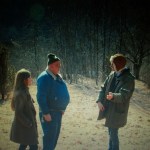
Swing_Lo_Magellan15. Dirty Projectors – Swing Lo Magellan

With 2009’s Bitte Orca, Dirty Projectors became indie darlings, thanks to a mix of angular riffs, wonky vocals and one especially lovely, Nico-biting ballad. But originality isn’t a synonym for quality, and as time passes and its sheen wears off, Bitte Orca’s flights of fancy tend to grate just a bit. But I doubt the same will be said of Swing Lo Magellan. Scaling back the dynamics and acrobatics of its predecessor, Dave Longstreth is in greater command of his talent here, building quieter, more pastoral templates to house his Geddy Lee-ish tenor. But this isn’t a McCartney/Ram kinda deal. Whether it’s a swirling pastiche of string plucks and drum machines or an out-of-leftfield horn section, Magellan is a rich, imaginative affair. It just doesn’t feel the need to declare itself in bold strokes. And thank god for it. Because while Dirty Projectors is far from done experimenting, it proves here that sometimes, a calculated move to the center can be revolutionary.

TySegallBandSlaughterhouse14. Ty Segall Band – Slaughterhouse

There’s an art to fucking shit up. To making such an unholy racket that a portion of the population wouldn’t even classify it as music. In 2012, nobody perfected this art like Ty Segall. Slaughterhouse, the California dynamo’s second of three albums released this year (yes, you read that right), is the most off the rails of the lot, a seething onslaught of haymaker riffage, squalls of feedback and often-unintelligible screams. And thanks to Segall’s songwriting chops, weakness for British Invasion melodies, and palpable, youthful energy, it’s a freshly culled test tube of undiluted adrenaline unlike anything else I heard this year – except for those other Segall records, of course (see below). If for no other reason, the album matters because it reminds us that few things get the blood pumping like a talented artist beating the hell out of his instruments and vocal chords. You could call it the art of fucking shit up. Or you could just call it rock.
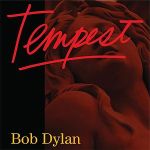
Bob_Dylan_-_Tempest13. Bob Dylan – Tempest

When Bob Dylan visited Woody Guthrie in the hospital, the latter was in his early 50s, and rapidly deteriorating from Huntington’s disease. Now that Dylan is 71 and still releasing music as textured, immediate and Americana-laden as Tempest, his debt to Guthrie is as clear as ever, and his presence as a going concern a rare gift to all of us. If we’d lost him after Time Out of Mind, one of the most brilliant ruminations on age and sickness in rock history, we’d consider ourselves lucky. Yet here he is, 15 years later, laying down haunted blues grooves and crystalline country love songs, singing about trains and the Titanic and John Lennon with wit and mystery. Roll on, Bob.

Miguel-Kaleidoscope_Dream12. Miguel – Kaleidoscope Dream

Anytime an R&B artist releases a single that sounds like Marvin Gaye, or an album that isn’t heavily influenced by hip hop, it’s hard not to just pigeonhole them as throwbacks, slap a tag like “neo-soul” on them, and call it a day. Miguel does both of these things on his second album, Kaleidoscope Dream, but if anything, he’s looking to the future. Over production that nods to the dark, narcotic atmospheres of The Weeknd and the warmer instrumentation of Erykah Badu’s Amerykah albums, the singer delivers wry plays on words, romantic come-ons and spiritual rallying cries with creativity and conviction. Yes, his gorgeous single “Adorn” is indebted to “Sexual Healing,” but Miguel is reminiscent of Gaye on a deeper level here. Like the legend, he never sounds like he’s trying too hard; his lithe performance goes light on trills, sounding just as comfortable, believable and sexual no matter the context. Which makes Kaleidoscope Dream an album for contemplation, babymaking, and partying, depending on your mood.

Screaming_Female's_Ugly_album_cover11. Screaming Females – Ugly

With a remake of Total Recall, the reunion of Soundgarden and [insert questionable decision here] happening in 2012, it can’t be denied that 1990s nostalgia is something we’ll all have to deal with for a while. And instead of going down retread lane, I suggest listening to Screaming Females’ fifth album. Ugly is a molten-hot shitkicker of a rock record that hearkens back to Smashing Pumpkins’ Gish and Sleater-Kinney’s Dig Me Out, with walls of guitars thicker than a bank safe and vocals that tremble and snarl. (The fact that Marissa Paternoster is solely responsible for said vocals and guitars is a testament to her genius.) But Ugly is much more than some rock and roll time capsule; after delivering one indelible riff after another, and treating us to late-record masterpieces like the epochal “Doom 84,” Screaming Females distinguishes itself as one of the gutsiest bands of the here and now.

homepage_large.60b385d010. Matthew E. White – Big Inner

After reading about Matthew E. White’s borderline-insane obsession with Randy Newman (he tracked him down at home so he could personally hand him demos), I had to hear his debut album, sure it couldn’t live up to the high standards set by my own Newman fanaticism. But impressively, Big Inner did that and more – this is a gentle, intoxicating bear hug of an album, one that pairs richly layered, Newman-esque arrangements with White’s deep, casual vocal stylings, on songs about drinking hot toddies, not having to rush love, and the friend we have in Jesus. Jumping from tender meditations to stone-cold soul grooves, while never making you feel like you have to move from your spot by the fireplace, White is something much more than a guy with great influences. He’s got a sound and a vision all his own, one that could inspire a whole new generation of hero worship.

kendrick-lamar-good-kid-maad-city-cover9. Kendrick Lamar – good kid, m.A.A.d city

On the first single of his major label debut, Kendrick Lamar raps about being alone in his childhood bedroom, nursing a shot and dreaming of adoring fans. One voice in his head tells him that he should dive in a swimming pool full of liquor. Another says that he’s noxious and on the wrong path. It’s a compelling, heartbreaking metaphysical struggle, and only one kind of conflict that arises on good kid, m.A.A.d city, the rapper’s concept album about growing up with all the cards stacked against you. He falls in love, gives in to peer pressure, almost gets arrested and watches his friend commit murder, all while ignoring the voicemails from his mother (who isn’t worried about him, she just wants the car so she can leave the house). Words spill from Lamar’s mouth in a flow that’s second nature; every time he spits 16, it sounds like he could go for 160. Which makes his incisive personal and sociological observations all the more powerful, woven through laid-back loops that belie his Compton roots.
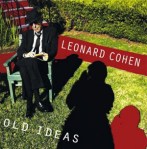
LeonardCohenOldIdeas8. Leonard Cohen – Old Ideas

With both this album and Tempest making my list, I guess my secret is out – I’ve got a thing for grizzled septuagenarians. When they complain about the cold, it makes me so, so hot … Anyways, where was I? Oh yeah. Old Ideas is really good. Even though Leonard Cohen’s resurgence on the road and in the studio has more to do with money than the need to create, the 78-year-old is still the best in the game when it comes to writing songs about religion from the perspective of a sinner. “Amen” is an elegant, seven-minute blasphemy shuffle that we can now turn to for solace after hearing the 11 billionth “Hallelujah” cover. And “Show Me the Place” casts Jesus as a slave to his father, humanizing him more than any Christmas pageant ever could. Couple this caliber of writing with producer Ed Sanders’ subtle country & western touches and some solemn female backup singers, and you’ve got Cohen’s best work in 20 years.
Chromatics_-_Kill_for_Love7. Chromatics – Kill For Love

It’s easy to think of the 1980s as a wasteland of synthesizers and gated reverb. But it was also a time period where those elements were used to create beautiful, otherworldly sonic experiences, supporting organic instruments instead of merely replacing them. And it’s these kinds of arrangements that Chromatics simply nail on Kill For Love. This is a band that understands the potential of synths to create expansive frameworks, making listeners feel like they’re in a sonic Monument Valley, horizons all around. Taking cures from The Cure’s artful melancholy and Everything But the Girl’s introspective techno, Kill For Love is generous when building these landscapes. The eight-minute opus “These Streets Will Never Look the Same” takes a subdued “Eye of the Tiger” loop and transforms it into a breathtaking alternate universe, narrated by an Auto-Tune skewed voice repeating the line “The screen stayed flashing in my mind.” Full of shameless melodrama and cinematic production (it comes as no surprise that band member Johnny Jewel had a hand in two songs on the Drive soundtrack), Kill For Love is stuck in an ’80s haze. May their DeLorean never work again.
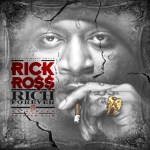
6. Rick Ross – Rich Forever (2012)

With details about Mitt Romney’s Swiss bank accounts clogging the news cycle, 2012 seemed like a bad time for Rick Ross to drop a mixtape that told us how great it is to have a fuckton of dough. But while practically every track on Rich Forever is concerned with materialistic one-upsmanship (in bed, Ross must count Benzes and Bugattis instead of sheep), it’s redundant in all the right ways, developing Ross’s drug kingpin character into something delightfully cartoonish, and featuring an unbelievable string of monster beats and instant-classic choruses that made me recalibrate my expectations of a mixtape. While Rich Forever is loaded with guests – most notably an in-top-form Nas on the standout “Triple Beam Dreams” – Ross is never outshone, painting ridiculous Robin Leach panoramas with irresistible panache, coming up with another dozen brilliant ways to say he’s rich on every cut (my current favorite: “Gotta run your credit just to bring my name up”). His steady baritone is the only thing about Rich Forever that follows a less-is-more aesthetic, providing a perfect counterpoint to all the tremendous, towering beats.
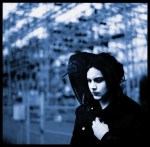
Jack_White_Blunderbuss_cover5. Jack White – Blunderbuss

I love that Jack White is a rock star. There’s just something beautiful about a mild-mannered guy who looks like an Edward Scissorhands stunt double making music that hipsters can listen to with their parents. And what finely crafted music it is. Blunderbuss is far from his first non-White Stripes album, but it is his first solo album, and a hell of a good argument against him ever forming another side project. Sounding more vibrant, organic and fully formed than anything since Icky Thump, the album hits a variety of Americana sweet spots, from the slinky soul of “Love Interruption” to the airy country of the title track and a seriously swinging cover of Little Willie John’s “i’m Shakin’.” Plus, White’s uncanny ability to turn mundane dude problems into poetry remains as sharp as ever. “Smile on her face/She does what she damn well please,” he bemoans on “Freedom At 21,” admitting defeat, yet sounding just a little bit like he enjoys it. It’s theater for sure, but like any rock star worth his salt, Jack White still has me believing every word.

fantasea-azealia-banks_3204. Azealia Banks – Fantasea

I am a big Nicki Minaj fan. But I can’t help but wish my first exposure to her wasn’t Pink Friday, but one of the world-beating mixtapes that put her on the map. Her official releases are packed with great singles, but their reliance on chart-baiting dance-pop minimizes her talents. Lucky for me, I can take solace that I’m with Azealia Banks at the ground floor, before she inevitably rockets into the hip hop stratosphere. Comparisons to Minaj on her debut mixtape Fantasea are inevitable, what with her rapid-fire flow, cocksure attitude and club-ready beats. But the differences are crucial – there’s nothing cartoonish about Banks; she’s not one to scream for attention, and her music follows suit. Fantasea is 19 tracks of quick-pulsed, subterranean dance music, with very few hooks to be found. Banks is the hook here, her brilliantly syncopated rhymes proving that the human voice can be the ultimate percussion instrument.

homepage_large.755e37bd3. Ty Segall – Twins

Ty Segall’s second entry on this list came out after he’d already blown our minds with Slaughterhouse, not to mention Hair, his album with White Fence. Twins is certainly proof of a prolific artist at work, somebody whose writing and recording processes must be as intense and immediate as the high-octane garage rock that is his stock in trade. And amazingly, it’s the best of the three. I mentioned Segall’s affinity for British Invasion melodies above, and he lets them shine through more than ever before on Twins, which, when coupled with his Lennon-esque tenor, inspires visions of The Beatles honing their chops in the dive clubs of Munich. Where Slaughterhouse took its name to heart in its sonic approach, Twins isn’t out to bludgeon, keeping its hooks relatively pristine, whether they’re part of the hyperactive hard rock of “You’re the Doctor” or the incredibly catchy ballad that closes the album, “There Is No Tomorrow.” If this kid finally takes a break, it’s safe to say he deserves it.

Vets_large2. Killer Mike – R.A.P. Music

On his sixth album, Killer Mike makes it absolutely clear that he thinks real rap music is “the opposite of bullshit.” So by his own definition, R.A.P. Music is as real as it gets, a masterpiece of the form from a true gangsta scholar who never sounds like he’s full of it – whether he’s threatening Atlanta tourists, proselytizing about his art form, or dancing on Ronald Reagan’s grave. Unless by “it,” you mean a booming voice, mastery of language, political incisiveness, and an exhilarating sense of swagger. Nobody on earth can give a middle finger to the man like Killer Mike, and here he delivers them like a man possessed, slaying every hard, thumping beat that’s thrown his way, making you feel bad for every guest rapper, and damn good to be alive.
Channel_ORANGE1. Frank Ocean – channel ORANGE

After a long night reviewing at show at Darien Lake this past summer, I decided to take the back roads home. Once I escaped the hell that is that parking lot and entered the wooded regions of Route 62, I put on Frank Ocean’s channel ORANGE for the first time. As the highway wound through farm country with open skies above, I was swept away by the starry-eyed romantic plea of “Thinking About You.” Then I reached the outer ring of suburbs, while being treated to  a pair of brilliant deconstructions of rich people problems – the breezy, Stevie Wonder-ish “Sweet Life” and the “Bennie And The Jets”-biting “Super Rich Kids.” As Buffalo’s troubled East Side neighborhoods loomed, the golden age hip hop beat of “Crack Rock” provided a spoonful of sugar for a frank take on what happens to addicts. And as I got closer to home, where my wife was waiting up for me, I heard the slinky Isley Brothers lick of “Forrest Gump,” and reveled in how she was running through my mind.

Homorable mentions (in alphabetical order): The Beach Boys – That’s Why God Made The Radio; Beach House – Bloom; Himanshu – Nehru Jackets; Japandroids – Celebration Rock; Nicki Minaj – Pink Friday: Roman Reloaded; Various Artists – Kanye West Presents Good Music: Cruel Summer

Easy Targets: Liz & Dick

Easy Targets is an idea for a blog series that I just made up, which I imagine will cover moments in pop culture that are of such obvious heinousness that making fun of them is unnecessary. And then, you know, I’ll make fun of them. Our first entry? Liz & Dick, the glorious tire fire of a Lifetime Original Movie that debuted this past Sunday, pissing all over the freshly turned soil of Elizabeth Taylor’s grave.

Let me take a moment to thank god for made-for-TV movies. Thank you for giving us easy access to hysterical trash-drama and thickly slathered camp, saving us from the depths of the straight-to-DVD bargain bin and The Films of Sandra Bullock. Thank you for being a community theater for actors whose dreams would’ve otherwise died. Thank you for paying Dean Cain’s heating bill. Thank you for helping Joanna Kerns avoid having to go back to school and get that hotel management degree. And thank you for lowering all of our standards to allow something as lazy and absurd as Liz & Dick to become an actual viewing event.

What separates Liz & Dick from your typical made-for-TV movie is that it’s not a bad idea for a movie. The tumultuous romance of Elizabeth Taylor and Richard Burton is one of the most compelling love stories in Hollywood history, full of ferocity and tenderness in equal amounts – a production devoted to exploring their one-of-a-kind dynamic, with the height of 1960s Hollywood ostentation as a backdrop, could be biopic gold. So, just by holding to the typical, low-rent Lifetime Original Movie template, Liz & Dick is already committing a sin. And lucky for us, it doesn’t stop there.

Lo, Liz & Dick wallows in its own unworthiness, with Lindsay Lohan delivering an “I couldn’t give a shit” performance for the ages. Faced with playing one of the 20th century’s most iconic and recognizable figures, Lohan doesn’t bother with the details, barely attempting to alter her own pack-a-day rasp of a voice, and generally behaving like a sleepwalker. (I know Liz loved her mood-altering substances, but to my knowledge, she never had a lobotomy.) In a cringeworthy scene where her and Grant Bowler (who actually attempts to make us believe he’s Burton, which is bo-ring) meet Who’s Afraid of Virginia Woolf? screenwriter Ernest Lehman at a party, we’re supposed to believe Taylor is talking Lehman into letting her and Burton star in it by staging a argument. But in real life, the dazed woman droning “What was he, some Roman homosexual that you buggered?” would be asked to leave the premises. (The decision to reprise scenes of Woolf, the movie that best illustrated the battered genius of both actors, was just cruel – even for this.)

Lohan’s presence is, of course, what made Liz & Dick must-see trainwreck TV, and yes, our cups filleth over with delicious schadenfreude thanks to her performance. But to paraphrase the movie’s painfully overused line of dialogue, its flaws are more like an ocean. As far as the filmmakers would have us believe, Richard Burton was a bitchy guy who drank on occasion and died all pretty-like, and Liz Taylor was a drugged out zombie who could barely tip over a table when angry. These were two brilliant, gruesomely spoiled alcoholics who subsisted on brutally barbed exchanges, but the most the script provides is the occasional fat joke. Yes, Lohan trying would’ve helped, but there’s a bigger problem – this movie is only interested in its own existence, in the fact that it would get people to exclaim “She’s playing Elizabeth Taylor?!?!” Shining any kind of light on what these fascinating people were like behind closed doors? Fuck that. Taylor herself, in her prime, couldn’t salvage this.

By which I mean to say it was everything I’d hoped for. Less, even. Thank you, Lifetime, for understanding that funding, promoting and airing an insult to a legend a year after her death makes for the perfect kind of classless mess – a transcendently horrible made-for-TV movie.

Top 100 Albums of the ’90s (70-66)

70. Beck – Midnite Vultures (1999)

“Loud/quiet/loud” is about as standard as rock n’ roll formulas get. But few artists have applied the concept to entire albums the way Beck did from the mid-’90s to the early ’00s. After his sample-heavy, Def Jam-meets-Folkways pastiche Odelay made him an alt-rock hero in ’96, he followed it up with a gorgeous, late afternoon stroll of a country album. Which meant that he was due for a “loud” album by the time Midnite Vultures came around. And holy shit, did he deliver. Not only is the album in-your-face in a sonic way – being pretty much a string of intense electro-funk workouts from beginning to end – but its overall aesthetic is as thrillingly brash as the neon-green cover art. Beck’s trademark non sequiturs remain in full force, but they’re applied in a more distinctly sexual milieu, with titles like “Peaches & Cream” and “Milk & Honey,” and pick-up lines that reference satin sheets, tropical oils, Hyundais and JC Penney. It’s like a parody of a Prince album that just happens to be as musically adventurous as it is hilarious, a snapshot of an artist dealing with supersized expectations by making the craziest party album he possibly could. The music is wildly imaginative throughout, from the slick game show horns of “Sexx Laws” to the fembot synth pop of “Get Real Paid” and the classic Stax groove of “Debra,” Midnite Vultures’ shit-hot closer. With full-on falsetto verses, whispery sex talk and Vegas-ready horn stabs, “Debra” is an ingeniously absurd epic, and one of the most purely enjoyable R&B cuts of the decade. It’s that mix of rare quality and endearing irreverence that still makes Midnite Vultures a thrill of a listen. Of course, Beck’s next release was a tear-streaked breakup album.

No track embodies this album’s horndog-nerd-funk spirit like “Hollywood Freaks,” which satisfies your desire for hot milk nipple baths and Old Navy shout outs.

69. Wu-Tang Clan – Wu-Tang Forever (1997)

If a decision to make a double album ever felt like a no-brainer, it was this one. After Wu-Tang Clan blew the doors off of hip-hop with the indefatigable Enter the Wu-Tang: 36 Chambers, ensuing solo albums from GZA, Ghostface Killah, Ol’ Dirty Bastard and Method Man all became classics in their own right. So if Wu-Tang Forever was going to give all of these evolving mythologies and expanding egos any kind of breathing room, it was going to take two discs. RZA makes the most of the extended running time, his approach more cinematic than ever before, wrapping those trademark kung-fu sound bites and blaxploitation soul loops in ominous layers of strings. Which was all too appropriate, because if anything, the crew’s successes had made their worldview darker. This was the second album from the biggest rap crew on the planet, and they rarely, if ever, brag about money on it – something that would probably never happen in our post-Puffy and -Kanye world. The first single, “Triumph,” was a killer bee swarm of a showcase track; from the molten-hot rhymes of Inspectah Deck’s first verse on, the mood is more confrontational than triumphant. Because at its peak, the Wu wasn’t interested in non-fiction boasts. It was about world-building. They knew that if Wu-Tang Forever could do what most movie sequels can’t – stay true to the characters while taking them in compelling new directions – the money would come. And as all of the Wu Wear in my closet circa 1997 could attest, they most definitely pulled it off.

Give “For Heavens Sake” a spin, and marvel at how RZA can turn an old soul sample into a billowing thunderstorm.

68. Nirvana – In Utero (1994)

If what happened hadn’t happened, and In Utero didn’t end up being Nirvana’s de facto swan song, it wouldn’t be taken so gosh darn seriously. Which would be infinitely to its benefit. Because while the record does work as Kurt Cobain’s ragged middle finger to the trappings of rock stardom (his lyrics had never been so beautifully barbed), it works even better as a snapshot of geniuses fucking around. Beyond the accomplished demon-wrestling you get from the singles, In Utero is littered with blasts of punk deconstruction that are the sonic equivalent of a movie scene where an actor gets to destroy something. As Cobain screams maniacally during “Tourette’s” or bends his squealing guitar skyward on the riff to “Scentless Apprentice,” it sure sounds like he was having fun. Then there’s the irrefutable evidence. Toward the end of my favorite of these anarchic cuts, “Milk It,”  Cobain laughs as he delivers the thoroughly batshit chorus for the last time – “DOLL STEAK! TEST MEAT!” In that moment, any angst you were feeling goes up in smoke.

Listen to “Milk It,” whydontcha?

67. Beastie Boys – Ill Communication (1994)

With the release of Ill Communication, its third-straight stone-cold masterpiece, the Beastie Boys had completed one of the most remarkable artistic evolutions in pop music history. Within an eight-year period, the trio had gone from a snotty frat boy marketing concept to one of popular music’s most sonically expansive and socially conscious acts. If Licensed To Ill purists had any hopes that this one would hearken back to that fun-in-spite-of-itself debut, they were dashed on the opening cut, “Sure Shot.” Over that hallowed jazz flute sample, MCA poured out his regret over the Beasties’ once-misogynistic bent: “I want to say a little something that’s long overdue/The disrespect to women has got to be through/To all the mothers and the sisters and the wives and friends/I offer my love and respect to the end.” Blending this kind of soul-searching with infectious rap free-for-alls, blistering punk romps and Mayfield-caliber funk instrumentals, Ill Communication is the sound of hip-hop ending its adolescence, flexing its muscles and realizing its own power.

Can any rap song boast the kind of dynamic chemistry the Beasties and Q-Tip possessed on “Get It Together”? It makes for one of my favorite tracks of the ’90s, despite my dislike of pineapple Now And Laters.

66. Air – Moon Safari (1998)

If you wanted to look cool smoking a cigarette in the late-’90s, putting Moon Safari on repeat was a pretty safe bet. Taking all of the stereotypical American ideas of what constitutes “French music” – loungey jazz, whisper-soft female vocalists, songs with “sexy” in the title – and filtering them through electronica’s spaciest kaleidoscope, Air’s debut album was a beautiful, warm bath of an acid trip. This was music that people in the ’90s would put on “chill-out” mixtapes to show they were men of many moods, deeper than the stammering, opinionated goofball on the surface. Not that I ever did that or anything. But Moon Safari is so much more than “chill-out” music – it’s not so much dreamy as it is an actual dream, a hazy sonic adventure that makes good on the promise of its title, where elegant bass lines guide you through alien, synthetic landscapes, with the occasional full-blown pop song to remind you that you’re earthbound. Air went on to make even more adventurous music, much of it lovely, none of it a voyage like this one.

Here’s one of those aforementioned pop songs, the otherworldly “All I Need.”

Hot Fun in the Summertime: My Top 5 Shows of the Season

“Man, didn’t summer just fly by?” ‘Tis the season for remarks like this, which people invariably pull out when confronted by somebody they don’t like very much, because better to feign friendliness and move on than have to deal with the fallout of saying “I don’t like you very much.”

Anyways, didn’t summer just fly by? I haven’t posted since way back in those halcyon days of June 2012, when the summer was young and full of possibilities, there was a policeman on every corner, and American families cared about a little something called morals. Also the summer concert season was just getting underway in Western New York. My dance card was pretty darn full with reviews throughout, only two of which predictably turned out to be duds (sorry, Rascal Flatts and Def Leppard, but you’ve earned those reputations). This meant I had to miss some good shows in order to restore my proper sleep patterns – Sleigh Bells and Tune-Yards most regrettably – but as you’ll see in my top 5 list below, this was a wonderfully eclectic time to go check out major concerts in Buffalo.

5. The Beach Boys, June 29 at Darien Lake Performing Arts Center

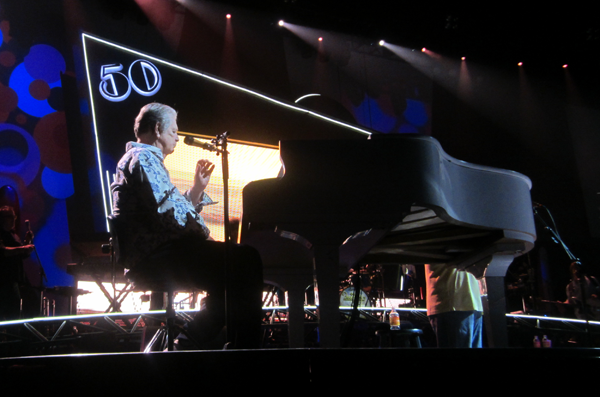
Speaking of romanticizing a past that was never as idyllic and simple as we’d like to think it was, the surviving members of The Beach Boys got back together for a 50th anniversary tour this summer. And, much like the new LP that accompanied it, That’s Why God Made The Radio, this show was flawed, but still better than it had any right to be. Backed by a battalion of musicians and vocalists, Brian Wilson, Mike Love, Al Jardine, Bruce Johnston and David Marks made some of the most beautiful and ambitious compositions in pop history sound organic and true. Wilson’s voice was a little shaky, and his stage presence was catatonic, but that’s par for the course – hearing him sing the full-throated plea of “Please Let Me Wonder” was a gift, ditto the impeccably executed suites of “Heroes and Villains.” My only complaint echoes the sentiments of many a Beach Boys fan – Mike Love is a creepy cornball. Way too much of this show was dedicated to the elemental surf-rock ditties that place The Ballcapped One front and center; I understand the need to include “Surfin U.S.A.” and “Surfin’ Safari,” but did we seriously need “Hawaii,” “Catch a Wave,” “Be True to Your School” and the like? 50 years on, the contrast between these tunes and Wilson’s ballads of the same period is striking. The heartbreaking high of seeing him sing “In My Room” was enough to carry me through the stuff I’d rather just pretend didn’t happen (There was no encore performance of “Kokomo.” There was no encore performance of “Kokomo.” There was no encore performance of “Kokomo” …).

4. Feist, July 15 at Buffalo Place Rocks the Harbor

Last year, Nitsuh Abebe wrote a great piece for New York magazine called “Indie Grown-Ups,” which posited that artists like Wilco and Feist are our generation’s Sting – a once-unique voice that softened to the point where his music can be piped in at your dentist’s office. I agree with his point for the most part, and as someone who unabashedly loves Ten Summoner’s Tales, I don’t find it all that insulting either. But while Feist does have some of the trappings of middle-of-the-road adult contemporary, her most recent album Metals, and her thunderous set this past June that leaned heavily on its songs, proved that she’s more dangerous than you’d think (unlike Wilco, who completely deserves the AC tag after the comfortable groove they’ve been in for the last five years). Seeing these songs performed live was a revelation – I already liked the album’s more visceral, sinister rhythms, but in concert they bowled me over like an unexpected storm. “How Come You Never Go There” swung hard. “Comfort Me” stomped and swooned. And “A Commotion” was a percussive blast the likes of which you most definitely did not hear at Sting’s Artpark show a few weeks earlier. Feist’s trio of backup singers unleashed powerful harmonies, dressed in what looked like sackcloth and dancing with ritualistic, glassy-eyed abandon. In my review, I compared them to the witches from “Macbeth.” Which might sound silly in the light of day. But in the shadow of the storm, anything seemed possible.

3. Girl Talk, August 23 at the Outer Harbor Concert Series

When you hear an eclectic mix of music, presented with carefully thought-out segues and an uncanny sense of timing, you know you’re listening to a great DJ. And on the Buffalo radio dial, it’s nigh-on impossible to find that kind of listening experience, what with pre-formatted playlists and strict genre-based guidelines (unless you’re close enough to pick up WBNY 91.3, Buffalo State’s student-run station). Which I think is the main reason why Girl Talk’s perpetual sweat machine of a set a few weeks back was just as comforting as it was propulsive. The one-man show of Gregg Michael Gillis – a wiry little guy with more energy than Usain Bolt – officially kicked off the latest new concert series on the waterfront with a non-stop stream of mindblowing mash-ups, cherry-picking riffs and choruses from 50 years of Billboard charts and re-purposing them in intoxicating new ways. He’s clearly a DJ who cares deeply for everything he’s sampling, a man who wants to show us just how good it sounds when Elton John and Biggie Smalls share the same space, reveling in the unpredictability that has become the mortal sin of corporate radio. In the moment, of course, all I knew was that Gillis was making me happy, churning out an irresistible party by the water by using the same fanboy passion that had the teenaged me making mixtapes for anyone who would pretend to listen to them. This kind of thing probably won’t infiltrate the mainstream as much as it should – the second Outer Harbor concert was a radio station festival headlined by Evanescence, that apparently attracted way more people than GT – but for one glorious night at least, it felt like anybody could play anything they wanted.

2. Iron Maiden, July 16 at Darien Lake Performing Arts Center

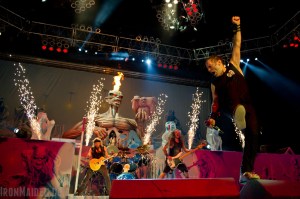
When I told the guy sitting next to me that this was my first time seeing Iron Maiden, he looked confused. Noticing the grey in my hair and the fact that I wasn’t wearing anything with the Maiden logo on it, he nodded, smiled awkwardly, and turned his head back toward the stage, politely giving me the brush like I was a homeless man singing for pennies. Although I like this band very much, my lack of devotion to it stood out like a nun at a satanist convention. Never in my life have I witnessed a fan base show such lockstep love for its heroes than at this concert, where I was possibly the only person who wasn’t draped in Iron Maiden merchandise, some of it bought that night, much more of it procured over the course of decades of concert-going. Brilliant branding has something to do with it, of course – the band’s mascot, Eddie, continues to be placed in one new, cartoonishly violent scenario after another, resulting in an endless stream of merchandise for fans to crave. But if Iron Maiden wasn’t such a toweringly awesome band, Eddie would have no soul, and not in the cool way. And after 30-some years, these guys still shred like no other, making my Maiden voyage an epic, blisteringly loud, blissfully nostalgic experience. They focused exclusively on classic material, playing most of the 1988 “Seventh Son of a Seventh Son” concept album alongside “The Trooper,” “The Prisoner,” “The Number of the Beast” and other crazy-ass crowd-pleasers. Singer Bruce Dickinson wailed like a tortured opera singer and scampered around the stage non-stop, and guitarists Adrian Smith, Dave Murray and Janick Gers soloed like men possessed, the bright smiles on their faces an incongruous delight. Metal is a hip, underground thing these days, leaving Iron Maiden as one of the few true monsters of rock still delivering the goods to adoring stadium crowds. And during this show, it was obvious that their passion hasn’t ebbed one bit. If that doesn’t make you grateful enough to buy a t-shirt, then I don’t know what will.

1. Drake, June 8, Darien Lake Performing Arts Center

After filing my review after Drake’s stunning performance this June, I got turned around a bit on my way to the always-horrible Darien Lake parking lot. During my search for another exit, I just happened to run into the artist as he exited a backstage trailer en route to his tour bus. Unaware that I was watching him, Drake was bursting with post-show adrenaline, pumping his fists and grinning from ear to ear. It was encouraging to see this for a few reasons:

1. As a fan of Drake’s lush, nakedly emotional approach to rap, this private, unabashed display of childlike joy made me believe that he’s not trying to play us, that the feelings he espouses on record are his actual feelings.

2. This was a big star, getting as swept up in his music’s energy as his fans. I’m sure the boatloads of cash don’t hurt, but this sure looked like a guy who loves performing as much as anything else on earth.

I know, I know. I’m reading into this 10-second encounter way too much. But I can’t help myself. After seeing his set, a pristinely executed offering of ruminative R&B grooves and top-flight Dirty South beats, shot into the stratosphere by the emcee’s steady flow and infectious energy, I was thinking about Drake as an Important Artist, somebody who could feasibly keep mainstream hip-hop honest for years to come. Then I saw him celebrating like a kid who just got a bike for his birthday – not your typical, too cool for school Important Artist behavior.  “Hey, great set,” I shared. Drake stopped in his tracks like I’d actually said something he hadn’t heard a billion times. “Thanks, man,” he responded, with complete sincerity. At that moment, I couldn’t have been more of a fan.

What’s In My Discman, June 2012

In two days, I’ll be catching The Beach Boys’ 50th Anniversary Tour stop at Darien Lake Performing Arts Center. DLPAC is normally a stressful, unsatisfying place to see a show – if you want to get thousands of people to start throwing punches, give them a whole mess of rollercoaster rides and $11 beers. But fuck if I don’t give a damn this time. Seeing Brian Wilson on stage with the remaining original Beach Boys, cherry-picking tunes from one of the most beautiful and haunting back catalogs in pop music history, is sure to make every other possible annoyance fade away, like a sandcastle in the tide. Naturally, I’ve been listening to Beach Boys albums like crazy this month, something I do when the warm weather hits every year anyways. Here are the three records that’ve been getting the most spins. (And thank you to my stunning, loving wife, who gave me these tickets for my birthday, and will be by my side Friday night, even though she couldn’t care less about the old farts on stage.)

The Beach Boys – That’s Why God Made The Radio (2012)

It was easy to be skeptical about this project, a seemingly rushed-together LP released to coincide with the tour I’ll be experiencing on Friday. But while aspects of That’s Why God Made The Radio do feel a bit half-baked, and a few tracks get cornily self-referential, it is most definitely more than a lowest common denominator cash-grab. It’s also the perfect example of the clashing artistic visions of Brian Wilson and Mike Love. If you were in any way confused why the two haven’t worked together in a while, listen to the gorgeously morbid three-song suite the closes the album, where Wilson sings “Summer’s gone/It’s finally sinking in.” Then listen to “Spring Vacation,” a dopey good-time pop song in which Love sings “Driving around, living the dream/I’m cruising the town, I’m living the scene.” Brian’s still the fragile genius, all about introspection and the interplay of darkness and light; Mike’s still the aging rock star, all about Hawaiian shirts, cool cars and (I imagine) creepy leers. I don’t mean to put a line in the sand here – Wilson’s Jersey Shore-referencing “The Private Life of Bill and Sue” is an embarrassing attempt at relevance, and Love’s “Daybreak Over the Ocean” is rather sweet in its simplistic pleas. But the biggest wins are Wilson’s – the incredibly pretty, “Our Prayer”-ish opener, the title track with its wonderful, cascading chorus, and that jaw-dropping trilogy at the end (was any Beach Boys fan expecting such a perfect coda?). So if TWGMTR is wildly inconsistent, it’s still an accurate representation of where the Beach Boys are in 2012 – a band that might not be on the same page, but one that still sings like angels through it all.

The Beach Boys – 15 Big Ones/Love You (1976-1977)

Some of the biggest artists of the ’60s have dealt with their various mid-life crises by making albums filled with the songs of their youth – and like David Bowie’s Pin Ups and John Lennon’s Rock ‘n’ Roll before it, 15 Big Ones is a fun listen, if not a particularly life-altering one. As the first LP since Pet Sounds to feature the credit “produced by Brian Wilson” on the gatefold, the album must have been a bit of a disappointment at the time, but it’s actually aged pretty well, with originals like the cheerful, organ-peppered “It’s OK,” the breezy “Had to Phone Ya” and the bluesy “Back Home” fitting the old-time rock ‘n’ roll vibe while still giving Wilson room to scratch that harmonic itch. There are some throwaways here (e.g. a grating, dated-sounding “Chapel of Love,” a sluggish “Blueberry Hill”), but the lushly produced, reverent take on The Righteous Brothers’ “Just Once In My Life” ranks up there with the Boys’ best ’70s work. And who’s going to complain about these vocalists tackling “In the Still of the Night”?

Love You, the second of this two-album set (thank you Capitol Records) was the last Brian Wilson-produced Beach Boys album before this year’s That’s Why God Made The Radio. And while it’s a ramshackle shadow of his glorious ’60s work, it’s an oddly compelling little masterpiece all the same, and my favorite of all the ’70s Beach Boys albums I’ve heard (Carl & the Passions and Holland have still managed to evade my ears). Wilson’s songwriting is straight-up goofy in places, and at times painfully childlike, but it adds to Love You’s ragged blend of synthesizers and doo-wop harmonies – “Johnny Carson” is the weirdest Beach Boys song ever, a straight-faced ode to the celebrity whose verses have a strangely ominous melody. And “Solar System” is a 2nd grade astronomy lesson sung by a blissed-out organist – but because it features Brian’s voice at its hoarsest, it’s also a bit of pop innocence that’s streaked with something sadder. Then there’s the heartbreakers – “Let’s Put Our Hearts Together,” a crushing duet between Wilson and his indifferent-sounding wife Marilyn, and “Love Is A Woman,” where Wilson, Mike Love and Al Jardine compel us to treat women nicely over a Fats Domino-ish arrangement. When Wilson sings, “Tell her she smells good tonight,” it’s so awkward, and so perfectly earnest, I can’t help but get chills.
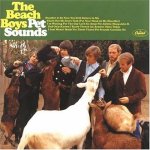
The Beach Boys – Pet Sounds (1966)

I’m not really sure what the critics think about this one, but I’ll be bold enough to come right out and say it – Pet Sounds is good. Honestly, it would be a waste of all of our precious time to blather on about the swirling, magnificently dense arrangements, the bittersweet love songs to beat all bittersweet love songs, the force of nature that is the band’s vocal harmonies. The Beach Boys have always been obsessed with the trappings of summer, but I think Brian Wilson was more obsessed with the brutally temporary nature of that season – before you know it, school’s back in session, the leaves are falling, and you’re starting to wonder if you were made for these times. Pet Sounds was summer for the Beach Boys, a time when their talents were in full blossom, their ingenious leader was as confident and prolific as he ever would be, and their songs were on the charts. Then they blinked an eye, and it was September.