A Boy and His Dog …

I caught the end of the 2000 Frankie Muniz vehicle My Dog Skip over the weekend. Skip dies. And the movie ends with this speech from the narrator, a grown-up version of Muniz’s character in full Wonder Years mode: “He and my mama wrapped him in my baseball jacket. They buried him out under our old elm tree, they said. That wasn’t totally true, for he really lay buried … in my heart.” I was surprised to find myself crying, until I realized that I had puked with my mouth closed, and that vomit was leaking out of my eye sockets.

Franz List: Horrors!

Hey, Franz here. While horror movie-related lists are a dime a dozen in October, I can’t refrain from making one myself. I did get more specific than just listing the scariest flicks of all time, however (He’s Just Not That Into You would’ve been in the top five for sure). Here are ten horror movies that are just fun to watch – we’re not talking about directors digging into your psyche to mine your deepest fears, or trying to make you think at all for that matter. “A hell of a good time” is the only criterion.

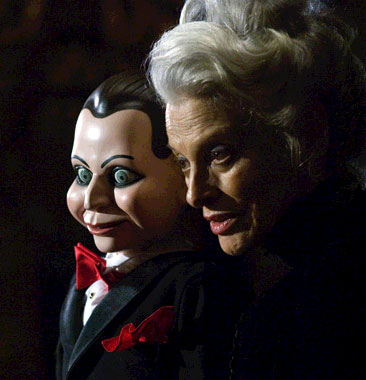
10. Dead Silence (2007)
In movieland, grizzled cops have predictable vices – booze, acting like a loose cannon, and … that’s about it. But in Dead Silence, Donnie Wahlberg plays a grizzled cop whose obsession is grizzliness itself. The character, Detective Jim Lipton, is more prone to pulling out an electric razor than a gun. It’s an awesome running gag amidst a beautifully idiotic, post-Puppet Master plot line, a steady reminder that the filmmakers aren’t taking their vengeful-ventriloquist-from-beyond-the-grave story seriously.

9. Halloween V: The Revenge of Michael Myers (1989)
While the first two installments of the Halloween saga were genuine thrillers, with Michael Myers playing the relatively believable role of a psycho ward escapee on a killing spree, ensuing sequels got progressively more unrealistic, and more fun. Halloween V is my favorite, if only because Donald Pleasance, who plays Myers’ long-time psychiatrist Dr. Sam Loomis, is at his sweetest and frailest, trying with all his might to convince the authorities that Myers’ niece has a psychic connection, that she knows he didn’t die when he fell down that mine shaft at the end of Halloween IV. His earnestness garners some genuine sympathy in thoroughly stupid surroundings.

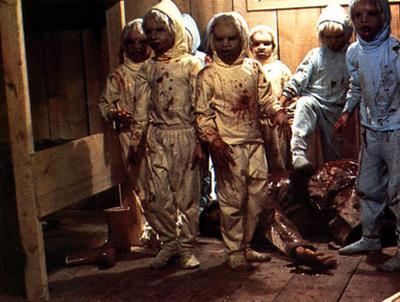
8. The Brood (1979)
A horror movie designed to freak out a generation of privileged, self-absorbed therapy addicts, this 1979 David Cronenberg weirdfest tells the story of a psychotherapist who invents a way for his patients to create physical manifestations of their negative feelings. Which, of course, leads to bloodthirsty troll children in adorable winter coats wreaking havoc at the whim of their “mother,” played by an understandably dazed Samantha Eggar. It might be overlong and hard to follow, but The Brood’s uber-twisted Grapes of Wrath-acid-trip ending will wake you up right quick.

7. Silver Bullet (1985)
After a paraplegic Corey Haim murders a werewolf priest by shooting him in the face, the girl who played Anne of Green Gables turns to him and asks “Are you alright?” He responds, “All except for my legs. I don’t think I can walk.” Cue the laughter. Oh yeah, and Gary Busey is there.

6. Bones (2001)
The clichés at the center of Bones sound too daunting to overcome. Snoop Dogg plays a ’70s numbers runner called Jimmy Bones, whose spirit haunts his old nightclub in the form of a red-eyed dog. But as Jimmy’s beloved neighborhood crumbles under crack’s ironclad grip, Jimmy’s spirit gets pissed, and his movie gets wildly entertaining. This is Evil Dead-meets-Superfly, pairing gallons of fake blood, arguments with severed heads and out-of-leftfield parallel universes with real ghetto commentary and a feasible love story. Snoop clearly relishes the role, and is magnetic throughout. And while the surprise ending isn’t necessary, that doesn’t make it any less cool.

5. Santa Buddies: The Legend of Santa Paws (2009)
The Lord is my shepherd, I shall not want. He makes me lie down in green pastures; He leads me beside quiet waters. He restores my soul; He guides me in the paths of righteousness For His name’s sake. Even though I sat through Santa Buddies, a movie about a post-apocalyptic future in which packs of talking dogs fly around the world every Christmas, spewing Christian propaganda and perpetuating black and female stereotypes everywhere they go, I fear no evil, for You are with me; Your rod and Your staff, they comfort me.

4. The Gingerdead Man (2005)
Gary Busey’s second appearance on this list is for a horror-comedy masterpiece that takes the rules from Child’s Play and applies them to a six-inch high gingerbread man. After psycho killer Millard Findlemeyer gets the death penalty, his witch mom mixes his ashes into some gingerbread dough, which she drops off at a bakery where Sarah Leigh (hilarious!) works – the woman whose testimony sealed Millard’s fate. Of course, somebody bakes the dough into a cookie shape, the cookie kills the shit out of people even though all you’d have to do is stomp on him or spray him with a hose, and everything is left open for a hopefully endless string of sequels. Plus, there’s the ultra-convenient 70-minute running time – you can watch this puppy on your lunch break.

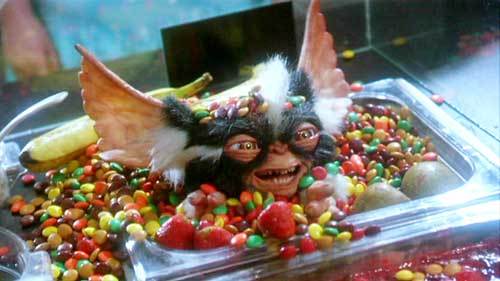
3. Gremlins 2: The New Batch (1990)
As dark and imaginative as Gremlins was – it remains the ultimate cautionary tale about the evil that lurks inside all very cute things – the sequel is much more fun. Director Joe Dante returns for The New Batch, and does all the crazy stuff he probably wanted to do in the first, Chris Columbus-penned film, ending up with an anarchic, horror-comedy gem. When Gizmo shows up in a state-of-the-art NYC office building (where his old owners Billy and Kate both happen to work), he gets wet and spawns a brand new litter of havoc-wreaking bi-ped lizards. As the Gremlins infiltrate research labs and TV studios, become super-intelligent and transform into bat- and spider-like creatures, they create a chaos that’s both hilarious and cathartic – if only today’s massive corporations could be taken over with such ease and panache.

2. Sleepwalkers (1992)
Of the reams of junk that Stephen King has slapped his name on, the screenplay for Sleepwalkers is his campiest, most gloriously tossed-off accomplishment. A small town is terrorized by a mother and son who are telekinetic, vampiric shapeshifter werewolves that must feed on the life force of virgin women to survive. Director Mick Garris delivers it all with the requisite wink and a nudge, creating two of the most unforgettable horror/comedy moments of all time – a graveyard fight with a corkscrew-in-the-eye coup de grace, and a climactic slow dance between the main character Tanya and the half-dead monster Charles. Not to mention a catchphrase that should’ve took the world by storm – “Stop looking at me, you fucking cat!”


1. Trick ‘r Treat (2007)
This straight-to-DVD effort is the easily the best Halloween movie of the 21st century, and stands up there with anything John Carpenter has churned out over the years. An anthology of horror story vignettes that weave together in wonderfully clever fashion on one eventful Halloween night, Trick ‘r Treat gives us spooky urban legends, vengeful ghosts, werewolves, a sadistic principal, and Sam, a tiny trick or treater in a creepy, burlap bag Jack-o-Lantern costume. Writer/director Michael Dougherty lets us see the events unfold in provocative, Tarantino-esque ways, without overcomplicating things – amidst the swirl of converging plot lines, Dougherty anchors everything on the crippling guilt of one old man. So while Trick ‘r Treat is loads of fun to watch, it’s also an important reminder for horrorphiles – nothing is scarier than a story told well.


Inception: Wake me for the cool parts

I scored free passes to a sneak preview of Christopher Nolan’s hotly anticipated sci-fi/action opus Inception last night. And although I hadn’t been exposed to all that much of the hype, I had been tainted enough to go in hoping for a jaw-dropping spectacle.

What I got was a mess. An ambitiously constructed, sporadically clever mess, but a mess nonetheless. Inception is basically a cross between Ocean’s Eleven and Flatliners – a group of slick, attractive guys (and token girl) who perform elaborate heists in the dreamworlds of their victims. Tempted by the promise of one last score, involving the tricky process of “inception” – planting an idea in a subject’s head and making him think it was his – Dom Cobb (played a little too forcefully by Leonardo DiCaprio) assembles a crack team of subconscious bandits to make it happen. But a “projection” from his turbulent past does everything it can to sabotage the mission.

The concept is interesting enough, and sets the stage for some amazing sequences, where activity in the real world bends the laws of physics in the dream (a zero-gravity fight scene being the most memorable). But if you’re looking to go beyond the fantastical to elicit some kind of meaning – something the film practically demands with its oh-so-serious score and pseudo-religious lingo – get ready for a headache. Cobb’s backstory is intriguing at first, his questionable relationship with his now-deceased wife (Marion Cotilliard) giving some emotional resonance to all the high-octane action. But after what seems like dozens of scenes with DiCaprio and Cotilliard staring morosely at each other, this initial intrigue evaporates. And as the plot lines get progressively more complicated – boy meets girl in real life, then they get trapped in a dream world and live together there for 50 years, then they return to reality but aren’t sure if it’s really reality, then continue to see each other in dreams after one of them dies, or something like that – it becomes impossible to care.

Nolan must have thought this sort of heavy-handedness would provide the dramatic heft necessary to upgrade Inception from sci-fi popcorn flick to philosophical tour de force, but it only succeeds in dragging everything down, making an already bloated two-and-a-half hour run time feel like three.

Which is too bad, because there’s an awfully fun summer movie hiding beneath all the weepiness and high-minded ideas. The chase scenes are taut and imaginative, CGI sequences of exploding cafes and runaway freight trains are beautifully executed, and the supporting cast is pretty wonderful. Joseph Gordon-Levitt gives a masterfully reserved performance as Cobb’s sidekick Arthur, including a total charmer of a scene with sort-of love interest Ariadne (a workmanlike Ellen Page), and Tom Hardy is a godsend as Eames, the smarmy, sarcastic “Forger” (a guy that impersonates people in dreams).

But Inception is out to show you more than a good time, and becomes a murky metaphysical puzzle as a result. You’re gonna be better off exploring dream worlds of your own.

See It/Flee It: Monsters and Monstrosities

See It: Nightbreed

Some of the most effective fantasy/horror films involve a reshuffling of the heroes and villains deck – an awkward way of saying that the monsters become the good guys. And lately, a prevalent source for stories like these has been Guillermo del Toro, the visionary director of The Devil’s Backbone, in which the ghost of a murdered boy is a misunderstood hero, and Hellboy, where a top-secret government bureau of monsters and freakazoids protects an unassuming public from paranormal danger. Del Toro’s affinity for stories like these, and obsession with elegantly freaky creatures, means he must have watched Nightbreed on a loop back in the day. Clive Barker wrote and directed this 1990 adaptation of his novel Cabal, and the resulting tale of a forgotten society of shapeshifters, undead sages and imaginatively deformed beings – and the police witch hunt bent on destroying it – is an inspired allegory for any kind of uprising of the downtrodden. That might be high-falootin’ talk about a movie that depicts an obese housewife getting murdered in her kitchen, or a guy in makeup that’s a cross between Jar-Jar Binks and Darth Maul hissing “Y’all come back now, y’hear?” But Nightbreed is well made – Barker isn’t a master storyteller like Del Toro, but his creatures are beautifully bizarre, with the exception of the one I just referenced and another that looks like Jay Leno with a condom hat and douche bag goatee. And it’s decently acted – Craig Sheffer’s turn as main character Aaron Boone is strong, effectively toeing the line between humanity and monstrosity, and David Cronenberg is unforgettable as the mad psychologist/serial killer Philip K. Decker. Regardless, Barker must have been doing something right, because by the explosion-heavy climax, when the residents of Midian decide to fight back against their oppressors, the desire to see them triumph comes from a real place.

Flee It: The Bride

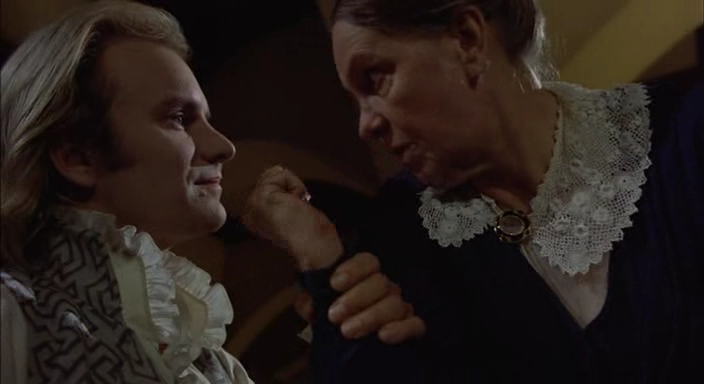
The characters of Count Dracula, The Wolfman, Mummy, and the Drs. Frankenstein and Jekyll have been the subjects of so many bad movies. And 1985’s The Bride has gotta rank as one of the lamest. A reimagining of James Whale’s iconic The Bride of Frankenstein, the film stars Sting as the tortured outcast Baron Charles Frankenstein, and Jennifer Beals as Eva, the creation he cobbled together from various corpses to be a mate for his original monster (tenderly portrayed by Clancy Brown). But for a reanimated, coat-of-many-colors abomination, Eva has no visible scars or abnormalities. She just looks like that girl from Flashdance in period garb, with pouffy ’80s hair intact. And this is the least of The Bride’s problems. The Frankenstein character is vicious and tormented; in his perverse love for his creation lie the seeds of his own destruction. But Sting’s attempts at brooding are so wooden, he comes off better suited to a Twilight installment. More importantly, director Franc Roddam’s movie doesn’t add anything to the legend of either monster, save a subplot of monster #1 befriending a circus performer and Eva growling at a house cat because Frankenstein hadn’t taught her they exist – “I thought it was a little lion,” she explains afterwards. (Sting’s lesson plans must be comprehensive, because we’re supposed to believe his pupil had learned about everything on earth, except for cats.) Of course, the twisted Count gets his, the two monsters reunite and run off together. But we’ve already learned these lessons before – you can’t live healthily without accepting death as a reality, don’t judge a book by its cover or it’ll kill you with its superstrength, etc. Beyond establishing the facts that Sting has great bone structure and Beals is awful, all The Bride teaches us is that lovers of classic horror stories will sit through some horrible stuff, just to get the faintest taste of the original.

See It/Flee It: Adaptation Madness

In my latest movie-going ventures, I’ve learned that when adapting a story for the screen, you can have the most state-of-the-art technology and stunning visual sensibilities on your side, and still make a stinker that will bore the most Ritalin-addled child. At the end of the day, a compelling story, simply told, has more flash and dazzle than any CGI effect. Now’s the part where I tell you what to do.

See It: A Single Man

In director Tom Ford’s adaptation of the Christopher Isherwood novel A Single Man, there’s plenty of opportunities for swelling melodrama and soapbox shouting. The movie details a day in the life of George Falconer (played with subtle precision by Colin Firth), a British professor at a Los Angeles university in the early-’60s whose world is shattered when his lover dies. His loneliness consumes him, invades his dreams and fogs his mind while giving a lecture about an Aldous Huxley novel. And because his lost love was another man, Falconer has nobody to turn to for solace – even his best friend Charlotte from across the pond (Julianne Moore at her booziest) passes George’s love off as a flight of fancy, arguing that they should have been together instead. Thankfully, Ford has little time for tear-soaked temper tantrums, depicting Falconer’s emotional breakdown as a subterranean entity that drives its host to the brink, and using the character’s suicide attempts as fodder for black humor. By the end, although a light at the end of the tunnel flickers brightly, it’s not enough to save a man who spent his life loving, and mourning, in the shadows.

Flee It: Alice In Wonderland

By the end of Tim Burton’s latest take on a beloved tale, the main character has learned valuable lessons about the kind of life she wants to lead. If only the movie itself could have had such definitive ideas. On paper, of course, Alice In Wonderland seemed a perfect marriage of director and subject matter – a master of modern fairytales reimagining one of the most fantastical stories in all of children’s literature. But perhaps because the match was so perfect, and such a surefire moneymaker, Burton didn’t bother to take the story apart and rebuild it with the loving, critical eye of a fanboy, like he did in Batman, where we were introduced to characters we knew and loved as if we’d never met them before. Here, it’s assumed that you know who The Mad Hatter is, so there’s no point in explaining why he’s mad, beyond showing that he used to have a gig with the White Queen, and now he doesn’t. Johnny Depp is equally disinterested in adding anything to the character, beyond a lazy giggle and a dance sequence that’s the most embarrassing moment of Burton’s career. (Helena Bonham Carter’s spirited, hilarious take on the Red Queen makes Depp’s stumblings all the more glaring.) And the story itself is a hodge-podge of British fantasy cliches – a child finds a magical world, becomes its most famous resident, joins the battle between good and evil, slays a dragon and goes home forever changed. It’s an insult to the deranged brilliance of Lewis Carroll, and makes the 1951 Disney version seem artfully told by comparison. The biggest change of Burton’s adaptation is the addition of C.S. Lewis’ most famous idea to the plot’s gloppy stew – Alice is now a 19-year-old girl who’s been visiting Wonderland since she was six, although it takes her a while to remember that. As she makes her way through this beautifully visualized place, Alice feels like the characters she meets are somewhat familiar, but she can’t quite place them in her mind. Maybe that’s because behind all the fabulous makeup, spot-on costumes and stunning CGI, there are only echoes of real creativity.

The Top 25 Flicks of the 2000s

I know, I know. The deadline has passed for Best of the 2000s listmania. But I just enjoy making lists so much, you could call me Franz Liszt, or Listy Brinkley, or Listerine, or The Listine Chapel. Hence, here’s my dry, uninformed take on the Top 25 Movies of the Decade. Picking #1 was easy, much easier than it will be ten years from now, when I’ll be deciding what was better, “Valentine’s Day” or “The Tooth Fairy.” Until then, I guess you’ll be feeling somewhat listless.

25. Persepolis (2007)
A beautiful, moving adaptation of the graphic novel of the same name, this feat of black and white animated storytelling is a coming-of-age tale, war movie and Iranian history primer rolled into one. This is more than just an interesting memoir; it’s a treatise on what truly defines a nation – not the people who make rules, but the people who make families.

24. Little Otik (2001)
Sometimes, people are more obsessed with the idea of having a child than the child itself. This imaginatively twisted tale from Czech director Jan Svankmajer details the depths that some couples will go, just to say they’ve got a bouncing baby something (in this case, a bloodthirsty, anthropomorphic tree stump). A horrifying, darkly whimsical, one-of-a-kind experience.

23. Coraline (2009)
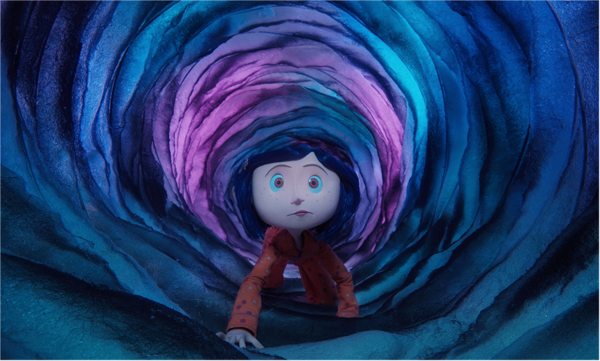
My favorite movie of the past year was this stop-motion-animated gift from screenwriter/director Henry Selick (The Nightmare Before Christmas). This eccentric, wondrously visualized story about a little girl’s discovery of her seemingly perfect “other parents” takes tired, no-duh morals like “don’t judge a book by its cover” and “be thankful for what you have” and reminds you why they became cliches in the first place.

22. Eternal Sunshine of the Spotless Mind (2004)
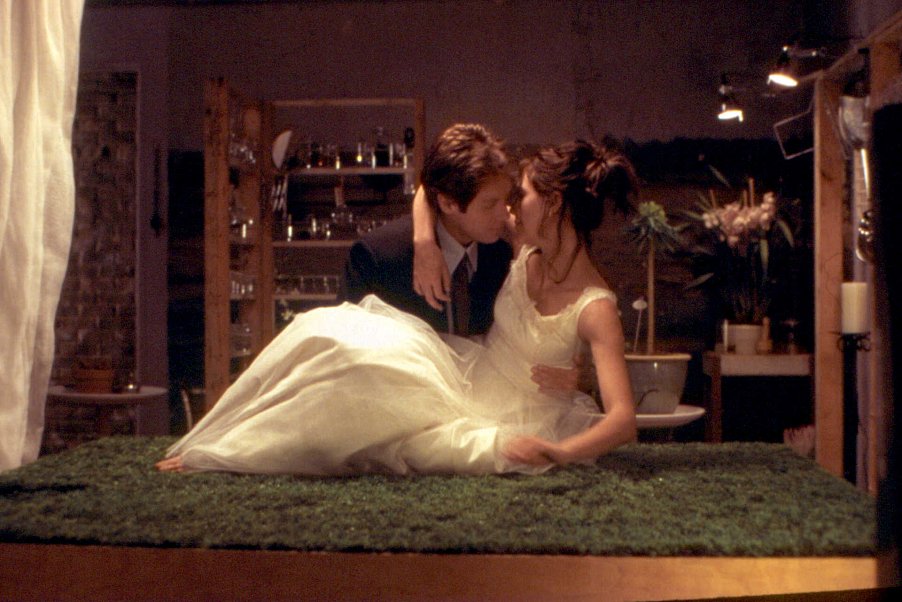
This movie begins with an all-too-familiar criticism of Valentine’s Day, with its hero, Joel Barish, lamenting, “Today is a holiday invented by greeting card companies to make people feel like crap.” This might lead one to expect a self-absorbed soap opera a la Reality Bites to ensue, but instead, writer Charlie Kaufman and director Michel Gondry smack us upside our rom-com-addled heads with the decade’s most breathtakingly creative interpretation of love conquering all. Part science fiction, part loopy comedy, and 100% positive on the existence of soul mates, Eternal Sunshine of the Spotless Mind is as convincing and entertaining a pro-Valentine’s Day argument as we’re bound to come across.

21. Walk Hard: The Dewey Cox Story (2007)
This decade had more than its share of trite, lazy biopics, from the cliche-ridden Ray to the unabashedly rose-colored Walk the Line. And if it wasn’t for Walk Hard: The Dewey Cox Story, we’d have to make fun of them on our own. This largely overlooked satire of “behind the music” movies (and rock stars in general) featured the funniest actor of the decade, John C. Reilly, and a script that mercilessly mocks the way that your average biopic insults its audience – from actors in their 40s playing teens to telegraphed childhood tragedies, the requisite “dark periods” and hyperbolic displays of the power of the music. The original tunes are spot on as well, resulting in the most satisfying rock and roll comedy since Spinal Tap.

20. Secretary (2002)
No movie in the 2000s ignored the rules of romantic comedy as effectively as Secretary, a story of two lonely, misunderstood people who fall in love, wholeheartedly and realistically. There’s romance here, and comedy, but Sandra Bullock wouldn’t touch it with a ten-foot pole, and not just because of the characters’ non-traditional sexual proclivities. The way they test each other, understand each other’s problems and learn how to leverage their love to overcome them – this is the stuff of human relationships, the kind of bond that makes happily ever after a real possibility.

19. The Dark Knight (2008)
It’s a tired observation, but Heath Ledger’s performance in The Dark Knight is a revelation. The actor’s turn as The Joker was a glimpse into the eyes of pure nihilism – a fearless, captivating sociopath obsessed with outing the inherent selfishness and cowardice of his fellow man. Christopher Nolan’s movie doesn’t prove its villain right, going out of its way to show the heroic instincts of regular folks, but it blurs the line between good and evil with an honest, unflinching eye, making it the quintessential superhero epic of the decade.

18. Palindromes (2004)
Nobody captures the awkwardness of adolescent life quite like Todd Solondz, and in Palindromes, the director contrasts the resiliency of youth with the ignorance of adults in painfully funny, thought-provoking ways. With a battalion of heartbreakingly good child actors at his disposal, Solondz tells the story of Aviva, a girl dead set on finding herself, no matter how many self-centered parents and religious whack jobs get in her way.

17. Team America: World Police (2004)
Back in ’04, whether you were up in arms over the United States’ recent efforts to cast itself as a big, dumb superpower, or just in the mood for a great extended puke scene, Trey Parker and Matt Stone’s puppet action movie was just what the doctor ordered. From songs that pair Top Gun cheese with W. administration arrogance to brilliant send-ups of action movie cliches and vigorous rounds of celebrity lambasting, Team America makes you view its inherent social commentary through tears of riotous laughter.

16. Three … Extremes (2004)
What Hollywood did to Japanese horror movies in the 2000s is way more horrific than the remakes themselves. If you had to sit through The Ring 2, this trio of Asian short films will remind you that movies can be awfully scary. After taking in “Dumplings,” an instant classic of a horror story in which an aging actress will consume anything to hold onto her youth, chances are you’ll forget about that grudge you were holding onto, as well as The Grudge.
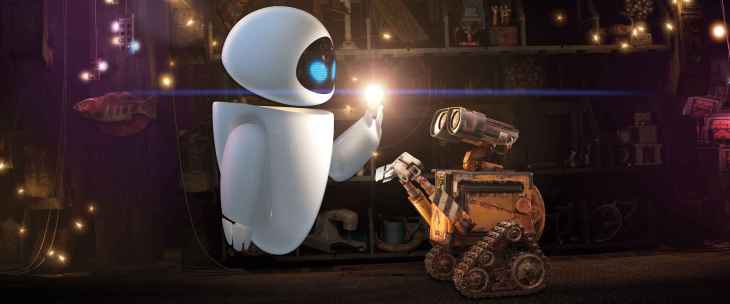
15. Wall-E (2008)
A largely dialogue-less, computer-animated adventure about robot love, Wall-E proved once and for all that family movies don’t need wisecracking animals vomiting out early-’90s catchphrases to be successful (e.g. “Shake what yo mama gave ya!” – Alvin from Alvin and The Chipmunks: The Squeakquel). A timeless romance between a pair of machines that have more heart between them than the whole obese, drone-like human race, Wall-E challenges the mind and stirs the spirit.

14. Napoleon Dynamite (2004)
That rare case of a cultural phenomenon stuffed with one liners that don’t get old, Napoleon Dynamite is a humble geek love story that withstood the most unexpected merchandising blitz of the decade (e.g. Liger stickers were on sale at my gas station). Which only adds to its charm, of course. A hopeful story that celebrates teenage nerd-dom for all of its ugliness, discomfort and facades of superiority, rooting for Napoleon Dynamite feels so good that by the end, you’re ready to start all over again.
13. The Royal Tenenbaums (2001)
Have the movies ever given us a family more impossibly eccentric than the Tenenbaums? They’re a mess of obsessive-compulsiveness, shattered dreams, blasé attitudes and chronic self-obsessions. And thanks to director Wes Anderson’s inimitable quirks, these cartoonishly dysfunctional characters are also thoroughly lovable. But while Anderson’s style makes The Royal Tenenbaums special (e.g. the closet full of board games, the matching track suits, Royal’s stab-happy best buddy), its themes of love and redemption make it timeless.

12. The Station Agent (2003)
When you’re in need of a friend, the last thing you want to hear is that you just have to “let it happen.” The Station Agent is about the merit of that advice, following the lives of three characters, all outcasts in their different ways, as they slowly and organically become friends. A sweet, quiet ode to the power of human companionship, Thomas McCarthy’s movie is an affirmation for anybody out there who’s ever felt alone (which is all of us, I presume).
11. Signs (2002)
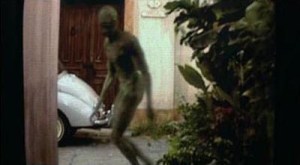
Signs is a movie about loss, belief, family bonds and murderous aliens. As a thriller, it does all the right things, taunting the senses instead of assaulting them, using a rustling cornfield or the whimpering of a dog to strike fear in our hearts. As a drama, it tugs at our heartstrings without insulting them, detailing the dissolution and reconstruction of a family, in parallel to the spiritual doubt and reaffirmation of its minister father, played with surprising force by Mel Gibson. M. Night Shyamalan may not be capable of movies like this anymore, but the tender comedy, sharply honed horror and stark spirituality of Signs is evidence of a master at work.

10. Step Brothers (2008)
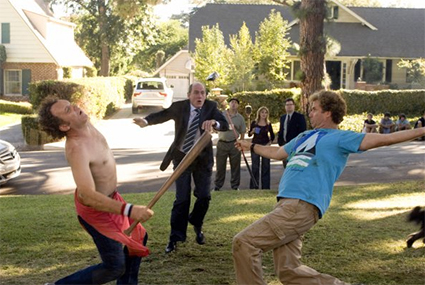
Of writer/director Adam McKay’s trilogy of attempts at groundbreaking absurdity, this is the purest – take a loose concept (40-year-old guys still living with their parents who become stepbrothers), give it to Will Ferrell and John C. Reilly, and film what happens. The result is an anarchic comedy masterpiece, in which the leading men lead each other down increasingly juvenile, wildly funny paths, and supporting players Richard Jenkins, Adam Scott and Kathryn Hahn turn in hilarious performances as they play along.

9. Gosford Park (2001)
Gosford Park is a sumptuous treat in every way. From the detailed country house interiors to the beautifully interwoven story and tremendous ensemble of actors, Robert Altman’s last great achievement is an even larger embarrassment of riches than the combined bank accounts of its characters. A completely engrossing whodunit and exploration of classist attitudes in 1930s England, this is a period piece that looks old, but will never feel that way.
8. Borat (2006)
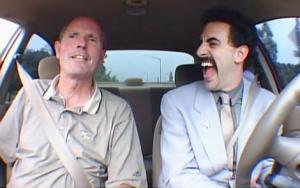
Most of the social experiment-as-entertainment projects of the 2000s were forgettable, from the trash barge of reality TV shows that began with Survivor to gimmicky documentaries like Super Size Me. But there was nothing formulaic or remotely trite about Borat, a hilarious and harrowing practical joke of a movie that shines a harsh light on our country’s collective ethnocentrism, mining it for several of the most explosively funny moments of the decade.

7. Capturing the Friedmans (2003)
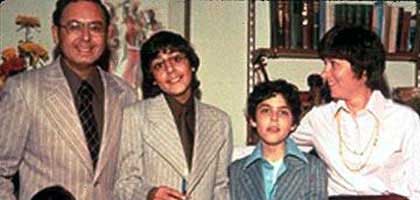
A common complaint against a poorly told story is that there are no grey areas – the good guys are Christ-like, the bad guys are repugnant. Few movies have explored the grey areas of real human existence like Capturing the Friedmans, a documentary about a family destroyed by the horrible compulsions of its father, the questionable tactics of the people who investigated his crimes, and the son who may or may not have deserved to get swept up in it all. Splicing modern day interviews with home movies that the family filmed as it was disintegrating, Friedmans leaves you disturbed, shaken and completely unsure whose side you were on.

6. Bad Santa (2003)
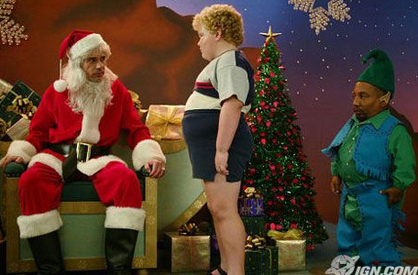
Christmas is supposed to be about selflessness, doing whatever it takes to make your loved ones happy. Which makes Bad Santa the perfect Christmas movie. Sure, this masterful piece of black comedy includes alcohol abuse, filthy language, armed robbery and child beating, but it also relays a strong message about the importance of family – when you care about somebody enough to bleed for their Christmas present, that’s the reason for the season.

5. There Will Be Blood (2007)
In theory, the American dream is an idyllic, magnetizing thing, a world of big, clean houses, white picket fences and laughing children. In practice, it’s dark and destructive, but just as magnetic. This concept is at the heart of Paul Thomas Anderson’s mesmerizing There Will Be Blood, an imperialist allegory that positions cutthroat businessmen and fiery men of religion as two sides of the same twisted coin. Daniel Day-Lewis’ monumental performance as the heartless, fascinating oil man Daniel Plainview is one for the ages, as is Anderson’s crackling script and Jonny Greenwood’s sparse, disturbing score.

4. The Devil’s Backbone (2001)
Children banding together to fight a frightening common enemy – in terms of horror stories, it’s about as original as a monster under the bed. But in Guillermo del Toro’s enthralling, Spanish Civil War-era tale The Devil’s Backbone, the enemies are human, the group of children includes the spirit of a murdered orphan, and the overarching emotion is one of tenderness, not fear. An effective exploration of youth during wartime and man’s capacity for evil, this is a ghost story with soul.

3. Brokeback Mountain (2005)
Brokeback Mountain was the great romance of the past decade, featuring two characters who fall in love against all odds, and not in a Serendipity kind of way. Under Ang Lee’s masterful eye, the story of Ennis and Jack’s pure, intense, ill-fated love is told with the quiet simplicity of a Wyoming landscape. There are no speeches in the rain or last-second rushes to the airport here, just two soul mates whose feelings for each other are demonized by society. And when the time does come for high drama, Lee gets it from two shirts, a faded photograph and three muttered words – “Jack, I swear.”

2. Spirited Away (2001)
For all of the highly conceptualized, visually stunning animation that the 2000s had in store, none of it came close to Spirited Away, the heart song of the legendary Hayao Miyazaki and one of the most imaginative fairy tales this side of Through the Looking Glass. When the main character, Chihiro, and her parents stumble across an enchanted, abandoned theme park en route to their new hometown, the ensuing adventure bubbles over with charming encounters, unexpected friendships, bizarre terrors and universal lessons about greed, loyalty and growing up. An extravaganza for the eyes, and a joyride for the mind.

1. The Lord of the Rings (2001-03)
Three epic-length movies with gargantuan budgets, heavily reliant on unproven CGI technology, tackling the “unfilmable” Holy Grail of fantasy stories, directed and co-written by a guy known mostly for campy horror flicks. This doesn’t sound like the recipe for the crowning achievement of the decade, but Peter Jackson’s The Lord of the Rings trilogy is just that – a mindblowing distillation of J.R.R. Tolkien’s intricately interwoven and minutely detailed story, delivered with the kind of fanboy loyalty and filmmaking magic that turns the grumpiest naysayers into born again devotees. (Yeah, I know they’re three movies, but I didn’t want them to suck up three spots on the list; plus, I’m still not sure what my favorite installment is.) For all of their technical achievements, which made us believe it was Middle Earth we were looking at, it’s the adapted screenplays that made these movies sing. Without skimping on the battles, creatures and other eye candy, Jackson, Philippa Boyens and Fran Walsh made a point to develop these characters in concert with the books, not shying away from depictions of love between Frodo and Sam, capturing Gandalf’s aloofness along with his power, treating Gollum’s tragic, schizophrenic struggles with a sympathetic flair. These 10 hours of film show us how strength and salvation can come from the most unexpected places – like the quiet gardens of The Shire, or the ambitious minds of New Zealanders.