Inception: Wake me for the cool parts

I scored free passes to a sneak preview of Christopher Nolan’s hotly anticipated sci-fi/action opus Inception last night. And although I hadn’t been exposed to all that much of the hype, I had been tainted enough to go in hoping for a jaw-dropping spectacle.

What I got was a mess. An ambitiously constructed, sporadically clever mess, but a mess nonetheless. Inception is basically a cross between Ocean’s Eleven and Flatliners – a group of slick, attractive guys (and token girl) who perform elaborate heists in the dreamworlds of their victims. Tempted by the promise of one last score, involving the tricky process of “inception” – planting an idea in a subject’s head and making him think it was his – Dom Cobb (played a little too forcefully by Leonardo DiCaprio) assembles a crack team of subconscious bandits to make it happen. But a “projection” from his turbulent past does everything it can to sabotage the mission.

The concept is interesting enough, and sets the stage for some amazing sequences, where activity in the real world bends the laws of physics in the dream (a zero-gravity fight scene being the most memorable). But if you’re looking to go beyond the fantastical to elicit some kind of meaning – something the film practically demands with its oh-so-serious score and pseudo-religious lingo – get ready for a headache. Cobb’s backstory is intriguing at first, his questionable relationship with his now-deceased wife (Marion Cotilliard) giving some emotional resonance to all the high-octane action. But after what seems like dozens of scenes with DiCaprio and Cotilliard staring morosely at each other, this initial intrigue evaporates. And as the plot lines get progressively more complicated – boy meets girl in real life, then they get trapped in a dream world and live together there for 50 years, then they return to reality but aren’t sure if it’s really reality, then continue to see each other in dreams after one of them dies, or something like that – it becomes impossible to care.

Nolan must have thought this sort of heavy-handedness would provide the dramatic heft necessary to upgrade Inception from sci-fi popcorn flick to philosophical tour de force, but it only succeeds in dragging everything down, making an already bloated two-and-a-half hour run time feel like three.

Which is too bad, because there’s an awfully fun summer movie hiding beneath all the weepiness and high-minded ideas. The chase scenes are taut and imaginative, CGI sequences of exploding cafes and runaway freight trains are beautifully executed, and the supporting cast is pretty wonderful. Joseph Gordon-Levitt gives a masterfully reserved performance as Cobb’s sidekick Arthur, including a total charmer of a scene with sort-of love interest Ariadne (a workmanlike Ellen Page), and Tom Hardy is a godsend as Eames, the smarmy, sarcastic “Forger” (a guy that impersonates people in dreams).

But Inception is out to show you more than a good time, and becomes a murky metaphysical puzzle as a result. You’re gonna be better off exploring dream worlds of your own.

K.R.E.M.A.

If you’re a Buffalonian who loves high-energy Latin rhythms, then man, you’ve been in hog heaven this past week. After Ozomatli put on a typically ferocious show on Thursday, you had Sunday’s powerful set by local act La Krema – 11 dudes who dish out salsa and merengue grooves with serious authority. Led by singer Jesse Pabon, whose voice was even smoother than his fedora, sunglasses and jeans ensemble, La Krema is dominated by waves of percussion – congas, timbales, cowbells, guiro, etc. Delivered by four talented players, this wall of rhythm is an intoxicating thing – enough to get people who typically don’t dance to get up and make asses of themselves.

As I sat on the Albright Knox’s back steps, where the show was being held (the first of this summer’s Buffalo News-sponsored jazz series), I saw plenty of amazingly awful moves, ranked in order of offensiveness here:

1. A middle-aged couple, man in a “Beers of Massachusetts” t-shirt, woman in flip-flops, lazily freaked each other right in front of the stage.

2. A senior citizen with a huge beard started hopping on one foot.

3. When Pabon told the crowd to “throw your hands in the air,” most of the crowd raised their arms like a referee confirming a field goal. The “wave ’em like you just don’t care” concept was lost on them.

I joke, but seriously, this show was a testament to the power of a great rhythm. People of all ages were shaking what their mother provided for them, not caring that assholes like me were criticizing their every move. And that’s a beautiful thing.

Check my review, in which I leave the dancers alone.

I want to believe (in Ozomatli)

Of the myriad of reasons why a hopelessly awkward teen in the 1990s would love The X-Files – the escapist plot lines full of devilish conspiracies, cool monsters and clever humor helping him forget he was still a virgin, at least for an hour – one was that a secondary character was an Ozomatli fan. Richard “Ringo” Langly, one of The Lone Gunmen, Fox Mulder’s go-to trio of hackers and conspiracy nuts, frequently wore the L.A. salsa/hip hop/funk band’s t-shirts on the show. As a result, the show spoke to alien obsessives, will-they-or-won’t-they morons, and Ozo-loving nerds like myself.

And the band’s sizzling set at Thursday at the Square showed that they’re still a party band of the highest order, and as eclectic and energetic as ever – a nifty thing to witness, now that this Ozo-loving nerd is in his 30s. Now a septet, without a DJ in tow, Ozomatli still boasts a hugely syncopated sound, with two percussionists and a drummer throwing rhythmic flourishes all over the solid bass playing of original member Wil-Dog Abers. Justin Poree is their MC these days, and he seemed like a talented guy with a steady flow on Thursday – unfortunately, P.A. troubles meant that pretty much all the vocals were low in the mix, so it was tough to hear any of the lyrics.

As expected, tunes from the 2010 disc “Fire Away” were the order of the day, which was fine. The record is certainly the most easily digestible of all of Ozo’s works, boasting some lovingly polished R&B hooks and some never-before-seen, tender balladry. But to be honest, I would have preferred to see the late-’90s version of the group, with Chali 2na busting out verses over the impeccably arranged funk and salsa grooves of its 1998 self-titled debut. Not a complaint exactly, just a feeling.

Still, this was a fiery, incredibly enjoyable set that touched on all that makes Ozomatli great. Fusing such a wide variety of styles into its hyperactive live show, the band is a sonic melting pot filled with an irresistible, bubbling brew.

If you’re looking for some mind-bendingly great musicians who know how to rock a party without ever resorting to clichés, then thanks to Ozomatli, the truth is out there.

You can check my review here.

See It/Flee It: Monsters and Monstrosities

See It: Nightbreed

Some of the most effective fantasy/horror films involve a reshuffling of the heroes and villains deck – an awkward way of saying that the monsters become the good guys. And lately, a prevalent source for stories like these has been Guillermo del Toro, the visionary director of The Devil’s Backbone, in which the ghost of a murdered boy is a misunderstood hero, and Hellboy, where a top-secret government bureau of monsters and freakazoids protects an unassuming public from paranormal danger. Del Toro’s affinity for stories like these, and obsession with elegantly freaky creatures, means he must have watched Nightbreed on a loop back in the day. Clive Barker wrote and directed this 1990 adaptation of his novel Cabal, and the resulting tale of a forgotten society of shapeshifters, undead sages and imaginatively deformed beings – and the police witch hunt bent on destroying it – is an inspired allegory for any kind of uprising of the downtrodden. That might be high-falootin’ talk about a movie that depicts an obese housewife getting murdered in her kitchen, or a guy in makeup that’s a cross between Jar-Jar Binks and Darth Maul hissing “Y’all come back now, y’hear?” But Nightbreed is well made – Barker isn’t a master storyteller like Del Toro, but his creatures are beautifully bizarre, with the exception of the one I just referenced and another that looks like Jay Leno with a condom hat and douche bag goatee. And it’s decently acted – Craig Sheffer’s turn as main character Aaron Boone is strong, effectively toeing the line between humanity and monstrosity, and David Cronenberg is unforgettable as the mad psychologist/serial killer Philip K. Decker. Regardless, Barker must have been doing something right, because by the explosion-heavy climax, when the residents of Midian decide to fight back against their oppressors, the desire to see them triumph comes from a real place.

Flee It: The Bride

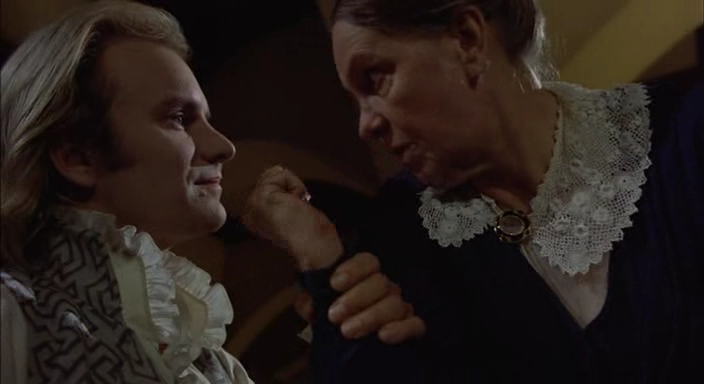
The characters of Count Dracula, The Wolfman, Mummy, and the Drs. Frankenstein and Jekyll have been the subjects of so many bad movies. And 1985’s The Bride has gotta rank as one of the lamest. A reimagining of James Whale’s iconic The Bride of Frankenstein, the film stars Sting as the tortured outcast Baron Charles Frankenstein, and Jennifer Beals as Eva, the creation he cobbled together from various corpses to be a mate for his original monster (tenderly portrayed by Clancy Brown). But for a reanimated, coat-of-many-colors abomination, Eva has no visible scars or abnormalities. She just looks like that girl from Flashdance in period garb, with pouffy ’80s hair intact. And this is the least of The Bride’s problems. The Frankenstein character is vicious and tormented; in his perverse love for his creation lie the seeds of his own destruction. But Sting’s attempts at brooding are so wooden, he comes off better suited to a Twilight installment. More importantly, director Franc Roddam’s movie doesn’t add anything to the legend of either monster, save a subplot of monster #1 befriending a circus performer and Eva growling at a house cat because Frankenstein hadn’t taught her they exist – “I thought it was a little lion,” she explains afterwards. (Sting’s lesson plans must be comprehensive, because we’re supposed to believe his pupil had learned about everything on earth, except for cats.) Of course, the twisted Count gets his, the two monsters reunite and run off together. But we’ve already learned these lessons before – you can’t live healthily without accepting death as a reality, don’t judge a book by its cover or it’ll kill you with its superstrength, etc. Beyond establishing the facts that Sting has great bone structure and Beals is awful, all The Bride teaches us is that lovers of classic horror stories will sit through some horrible stuff, just to get the faintest taste of the original.

Paisley Park: A country megastar hits Darien Lake

Over the course of my concert reviewin’ tenure, I’ve been assigned several country shows that I wouldn’t have considered buying a ticket for. For each of these, I held an outside hope going in – that what I was about to experience would erase my prejudices about contemporary country music, that I would finally get why so many people love the junk. Each time, the stereotypes proved true. The music was uninspired, super-glossy pop with a fiddle thrown in. The lyrics were about beer, sex, small towns, America and beer-soaked sex in small American towns.

So when I took in Brad Paisley’s smart, inspired set last weekend at Darien Lake Performing Arts Center, the feeling was of excitement long-delayed. With the exception of the poppy twang of his tunes, and his cowboy hat n’ blue jeans, Paisley’s performance was a completely unexpected joy. First, the guy’s an incredible guitarist, shifting from muscular Southern rock licks to lyrical pop passages with ease, and soloing like a madman without ever seeming masturbatory. And when he reached his guitar down to the outstretched arms of the crowd, letting them strum the final chord of a song with a beaming grin on his face, you could see that he was having as good a time as everyone else.

Then there are the songs themselves, which embody that sense of unpretentiousness and self-abasement that other country artists always talk about having. Tunes like “Online” and “Celebrity” may sound dated in a decade, but for now, they effectively lampoon our plasticine culture in endearingly silly ways. Paisley’s love songs, on the other hand, are undoubtedly timeless. The ballad “She’s My Everything” makes good on its title, with lyrics tender and true, and not trying to double as poetry. Paisley injected some soul into the cut, injecting a handful of inspired solos in between the verses.

And “Waitin’ On A Woman,” with its accompanying video depicting Andy Griffith waiting for his wife in the afterlife, floored me. After writing my review, I ran to the car to avoid the traffic, and sped home to be with the woman I love.

A little bit country, a little bit ukulele-folk-pop

Until last night, all I knew about Ingrid Michaelson was that she contributed a likable, sweetly romantic tune to an Old Navy commercial a few years back. My wife was a fan of the song, called “The Way I Am,” and given that it depicts a woman loving her man while he gets old and bald, I dared hope that she’d actually stay with me forever (so far, so good). But at last night’s Thursday at the Square show, I realized that Michaelson is a pretty big deal – with the youngsters, at least. Swarms of people crowded the stage and yelled their asses off when the singer/songwriter emerged. Fronting a solid, vocally talented five-piece group, Michaelson’s light, chirpy voice and ukulele strumming went over like gangbusters. Honestly, her style is a little too precious for my taste, but this set was fun, with more than one melody standing out – her performance of “You and I” made me want to hear the recorded version.

On a more introspective, less shiny-happy-people tip, opening act A.A. Bondy dished out a slew of beautiful, country-psychedelic-indie ballads. It didn’t seem to be the crowd’s cup of tea, but standing by the stage with a handful of hardcore Bondy fans beside me was a fairly breathtaking experience. On top of the mysterious elegance of his music, there was the recently salved burn on the singer’s upper arm and his bandaged left hand – Bondy didn’t mention the reasons for either injury, making him seem all the more like a silent, tortured troubadour.

Read my review, if you dare.

Kiss my grits.

Last Saturday night, I reviewed the annual tween screamfest known as “Kiss the Summer Hello.” Like the previous events I’ve endured that were organized by our local “hit music station” – whose DJ “Kev Diddy” is pictured here – it was a parade of slick R&B singers, bland pop-punk bands and rappers. But unlike the KTSHs and “Kissmas Bashes” of yore, there weren’t any surprisingly good performers that made the rest of the night somewhat bearable – The Ting Tings and Sean Kingston having given me those merciful reprieves in the past. Spose, a wise-ass rapper from Maine, and Shontelle, a Beyonce-ish R&B belter, were the high points, if only because neither could be described as obnoxious. Of course, I’m not the target demographic for stuff like this, and the kids in the crowd went nuts for the whole thing, screeching and clamoring with such unending fervency, I couldn’t believe their vocal cords were still functional.

Clearly these youngsters were hearing a frequency in this music that I couldn’t pick up on. Which only supports my theory that kids are like dogs.

And I’m guessing that Kev Diddy enjoyed the show, given that he lists “Chippewa” and “Tony Walker” as two of his favorite things about Buffalo.

Hungry for more Kiss-related crotchetiness? Check out my takes on Kissmas Bash 2009 and Kissmas Bash 2007.

The Album of the Year, so far

Janelle Monaé – The ArchAndroid

After seeing Janelle Monaé last summer – when she was the relatively unheard-of opening act on No Doubt’s reunion tour – and being thoroughly blown away, I scampered over to the merch tent and picked up her Metropolis: The Chase Suite EP. After writing a review in which I compared the R&B singer/songwriter/bandleader to James Brown (which is no hyperbole), my wife and I listened to the EP on the ride home, hoping for an onslaught of funky adrenaline comparable to her live set. And while it’s a very good record, Metropolis’ complicated sci-fi storyline and uneven production values couldn’t live up to the lofty expectations of that moment. Monaé’s debut LP The ArchAndroid, on the other hand, would’ve most certainly extended our post-concert high. A nearly flawless mix of stomping R&B grooves, richly produced pop ballads, twisted Latin rhythms, jazz crooning and orchestral suites, this is a dizzying accomplishment that puts Monaé on a short list of artists who can push the envelope and cross over in the same supercharged breath.

After an over-the-top cinematic intro, complete with booming brass, whispering woodwinds and ominous string passages, Monaé breaks into “Dance or Die,” an Outkast-meets-Gloria Estefan barnburner that’s a great example of what she does best – laying into a simple groove in a way that makes it more than the sum of its parts. This segues into “Faster,” an equally propulsive dance floor cut on which Monaé confesses she’s “shaking like a schizo” over sped-up jazz guitar licks.

But The ArchAndroid is an 18-track concept album about cyborg clones, time travel and futuristic psycho wards – it can’t get along solely on the funky stuff. Hence some deftly sequenced moments where Monaé slows things down and shows off her range, doing her best Lauryn Hill impression over the Willy Wonka strings of “Neon Valley Street,” dipping into some English folk melodies on the solemn “57821” and delivering a romantic pop masterpiece in “Oh, Maker.” And when certain songs fall short – which is bound to happen on such a long record – they’re still drenched in the same unflagging creative spirit as everything else. Even though the out-of-place Of Montreal collaboration “Make the Bus” temporarily derails things, you’ve got to respect its boldness.

“So much hurt/On this earth/But you loved me/And I really dared to love you too,” Monaé sings on “Oh, Maker,” over a light-as-air arrangement that sprinkles back-up vocals through the verses like so many raindrops. As the sonic equivalent of raising your eyes to the heavens and enjoying what you see, this track is the centerpiece of The ArchAndroid. Because like one of Monaé’s inspired live sets, this album’ll knock you on your ass like a bolt of lightning hurtled by the gods.

See It/Flee It: Crimes Against Humanity

See It: The No. 1 Ladies’ Detective Agency

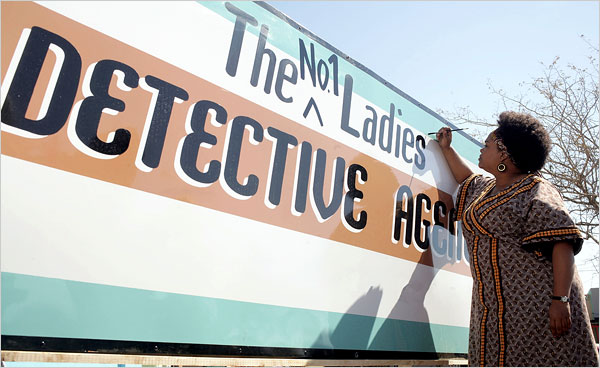
Everything about this seven-episode BBC series has been done to death – the friendly sleuth with a god-given talent for nabbing bad guys, a buttoned-up sidekick, burgeoning love interest and turbulent past. Except for the setting, that is. Like the Alexander McCall Smith novels it’s based on, The No. 1 Ladies’ Detective Agency is set in Botswana, a country in Southern Africa. And the fact that it was also shot there gives the show its soul – for all of its lighthearted touches and lovable characters, it’s the stunningly beautiful backdrops and unique cultural/geographical elements that stick with you. In the middle of figuring out a mystery, main character Mma Ramotswe – played with down-to-earth vibrancy by Jill Scott – stops to watch a pair of giraffes roaming a few feet from her car. The culprit of a long-running mystery turns out to be a roving band of baboons. When Ramotswe trails the daughter of a wealthy client, she’s led through a bustling open-air market of kaleidoscopic colors. Not to say there’s nothing else to offer than the window dressing here. The mysteries are cleverly constructed, especially a classic poison-related whodunit, and it’s impossible not to root for Ramotswe – to get her business off the ground, solve every case that comes her way, and stand strong when a dark period of her past rears its ugly head. But as much as you’ll love this lady detective, her native country is the real star.

Flee It: The Lovely Bones

After spending a decade in the ether of massive CGI blockbuster-dom, director Peter Jackson and his loyal co-screenwriters, Fran Walsh and Philippa Boyens, must have thought it was time to scale things back a bit – hence their adaptation of The Lovely Bones, the Alice Sebold novel that got to the guts of the grieving process in such an engaging way. Unfortunately, the hopelessly trite, saccharine mess they made of Sebold’s work proves they should stick to the fantastical. Jackson’s film doesn’t get beyond a back-of-the-DVD-case synopsis of the story – 14-year-old Susie Salmon is brutally murdered by a neighbor, after which her spirit goes to “the in-between,” a place between earth and heaven that allows her to watch over the people she loves, as well as her murderer. Most of the novel is concerned with how Susie’s family and friends deal with their intense grief, each in their own way. Jackson chooses to either eliminate or gloss over 90% of this insightful human struggle, making it awfully hard to sympathize with these characters – which shouldn’t be a tall order for a story with this kind of dramatic heft. Part of the problem is Mark Wahlberg, whose sad, dopey take on Susie’s father is completely unwatchable. Everybody else is a composite – Jackson apparently deemed the mother’s character unworthy of attention; Susie’s egghead love interest Ray Singh becomes pointless eye candy; Ruth Connors, the artsy outcast obsessed with the spirits of murdered girls, is barely present. And for what? A pile of god-awful, candy-coated CGI sequences of Susie frolicking in “the in-between.” And one unforgivably flaky moment, nowhere to be found in the novel, that depicts Susie’s spirit making a dead flower blossom in her father’s hands. Scenes like these make Jackson’s intentions clear – his Lovely Bones is so enamored with the supernatural, it doesn’t bother to remind us how it feels to be alive.

What’s in my Discman, May 2010

I’m really into albums from 1971 these days, for some reason. I guess I’m just swept up in the memories they inspire – you know, me at -7, eating Tootsie Pops and playing four square while living in the twinkle of my pappy’s eye.

Paul & Linda McCartney – Ram

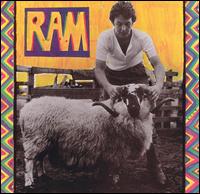
Like any aspect of Beatles history, the band’s attempt to get back to its roots on its muddled-with-patches-of-brilliance swan song, Let It Be, has been analyzed to death. But you don’t need an insider biography to tell you that Paul McCartney was leading this charge towards stripped down rock and blues constructions. All you need as evidence are his first two solo records, 1970’s jarringly spare McCartney and 1971’s Ram. The latter is the much stronger album, presenting the ideal mixture of the farmhouse rusticity Macca was obsessed with and the gloriously produced melodies that have always been his strong suit. You’ve got the unadorned Delta blues of “3 Legs” and the light, scatman folk of “Heart of the Country,” as well as the beautiful Beach Boys harmonies of “Dear Boy” and the looking-ahead-to-Wings power ballad “Back Seat of My Car.” Unlike any other McCartney album, Ram never goes to extremes; even Linda’s hopelessly flat back-up vocals fit the homestyle milieu. The Cute One went on to do some great things, but he never again made an album as balanced as this.

Bill Withers – Just As I Am

Bill Withers is the quintessential R&B folksinger, and this, his debut album, is prime evidence to back up that claim. Over the course of a dozen tracks, the music world was introduced to the steady, hypnotic bluesiness of Withers’ voice, his soul-infused acoustic guitar playing, and the gut-wrenching drama of his songwriting. Withers tells gripping stories as easily as he delivers those buttery vocal runs – “Grandma’s Hands” mourns the loss of a matriarch; “I’m Her Daddy” is the stirring plea of a man who realizes he has a six-year-old daughter; “Better Off Dead” is a suicide note from an abusive alcoholic. Producer Booker T.’s arrangements are subtle and tasteful throughout, letting Withers’ glue-you-to-your-seat tunes carry the day – just thinking about “Ain’t No Sunshine” gives me goosebumps.

David Bowie – The Man Who Sold The World

Few artists have dabbled with as many different styles as David Bowie. But until I heard The Man Who Sold The World, I didn’t realize that prog-rock and early metal were on the list. Before the pop perfection of Hunky Dory or the conceptual, glammed-out brilliance of The Rise and Fall of Ziggy Stardust and The Spiders From Mars, there was this album – a loud, roughshod recording dominated by huge guitars and huger concepts. “Running Gun Blues” is an unflinching Vietnam critique, “All the Madmen” a harrowing depiction of a man about to be released from a sanitarium, “Saviour Machine” a plea from a governmental leader to help him kick his power addiction. It’s all bathed in chugging Sabbath riffage and epic early-Zeppelin arrangements – while the towering melodies and glamorous sensibilities of classic Bowie are ever-present, the guy never rocked harder than he does here.