I know, I know. The deadline has passed for Best of the 2000s listmania. But I just enjoy making lists so much, you could call me Franz Liszt, or Listy Brinkley, or Listerine, or The Listine Chapel. Hence, here’s my dry, uninformed take on the Top 25 Movies of the Decade. Picking #1 was easy, much easier than it will be ten years from now, when I’ll be deciding what was better, “Valentine’s Day” or “The Tooth Fairy.” Until then, I guess you’ll be feeling somewhat listless.

25. Persepolis (2007)
A beautiful, moving adaptation of the graphic novel of the same name, this feat of black and white animated storytelling is a coming-of-age tale, war movie and Iranian history primer rolled into one. This is more than just an interesting memoir; it’s a treatise on what truly defines a nation – not the people who make rules, but the people who make families.

24. Little Otik (2001)
Sometimes, people are more obsessed with the idea of having a child than the child itself. This imaginatively twisted tale from Czech director Jan Svankmajer details the depths that some couples will go, just to say they’ve got a bouncing baby something (in this case, a bloodthirsty, anthropomorphic tree stump). A horrifying, darkly whimsical, one-of-a-kind experience.

23. Coraline (2009)
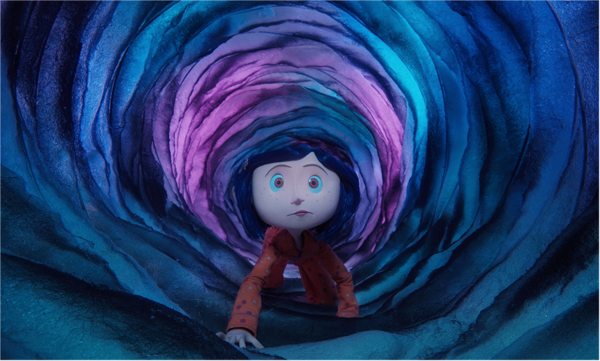
My favorite movie of the past year was this stop-motion-animated gift from screenwriter/director Henry Selick (The Nightmare Before Christmas). This eccentric, wondrously visualized story about a little girl’s discovery of her seemingly perfect “other parents” takes tired, no-duh morals like “don’t judge a book by its cover” and “be thankful for what you have” and reminds you why they became cliches in the first place.

22. Eternal Sunshine of the Spotless Mind (2004)
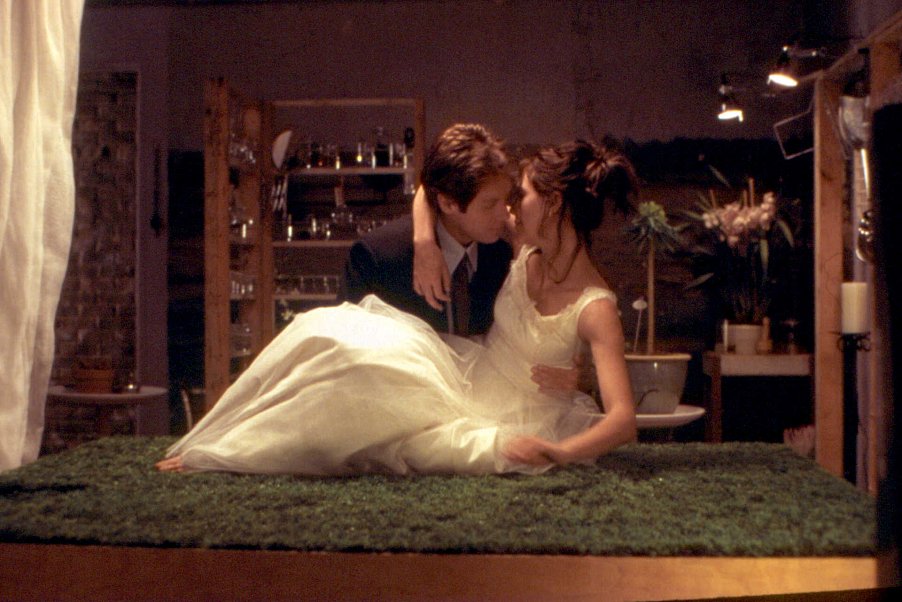
This movie begins with an all-too-familiar criticism of Valentine’s Day, with its hero, Joel Barish, lamenting, “Today is a holiday invented by greeting card companies to make people feel like crap.” This might lead one to expect a self-absorbed soap opera a la Reality Bites to ensue, but instead, writer Charlie Kaufman and director Michel Gondry smack us upside our rom-com-addled heads with the decade’s most breathtakingly creative interpretation of love conquering all. Part science fiction, part loopy comedy, and 100% positive on the existence of soul mates, Eternal Sunshine of the Spotless Mind is as convincing and entertaining a pro-Valentine’s Day argument as we’re bound to come across.

21. Walk Hard: The Dewey Cox Story (2007)
This decade had more than its share of trite, lazy biopics, from the cliche-ridden Ray to the unabashedly rose-colored Walk the Line. And if it wasn’t for Walk Hard: The Dewey Cox Story, we’d have to make fun of them on our own. This largely overlooked satire of “behind the music” movies (and rock stars in general) featured the funniest actor of the decade, John C. Reilly, and a script that mercilessly mocks the way that your average biopic insults its audience – from actors in their 40s playing teens to telegraphed childhood tragedies, the requisite “dark periods” and hyperbolic displays of the power of the music. The original tunes are spot on as well, resulting in the most satisfying rock and roll comedy since Spinal Tap.

20. Secretary (2002)
No movie in the 2000s ignored the rules of romantic comedy as effectively as Secretary, a story of two lonely, misunderstood people who fall in love, wholeheartedly and realistically. There’s romance here, and comedy, but Sandra Bullock wouldn’t touch it with a ten-foot pole, and not just because of the characters’ non-traditional sexual proclivities. The way they test each other, understand each other’s problems and learn how to leverage their love to overcome them – this is the stuff of human relationships, the kind of bond that makes happily ever after a real possibility.

19. The Dark Knight (2008)
It’s a tired observation, but Heath Ledger’s performance in The Dark Knight is a revelation. The actor’s turn as The Joker was a glimpse into the eyes of pure nihilism – a fearless, captivating sociopath obsessed with outing the inherent selfishness and cowardice of his fellow man. Christopher Nolan’s movie doesn’t prove its villain right, going out of its way to show the heroic instincts of regular folks, but it blurs the line between good and evil with an honest, unflinching eye, making it the quintessential superhero epic of the decade.

18. Palindromes (2004)
Nobody captures the awkwardness of adolescent life quite like Todd Solondz, and in Palindromes, the director contrasts the resiliency of youth with the ignorance of adults in painfully funny, thought-provoking ways. With a battalion of heartbreakingly good child actors at his disposal, Solondz tells the story of Aviva, a girl dead set on finding herself, no matter how many self-centered parents and religious whack jobs get in her way.

17. Team America: World Police (2004)
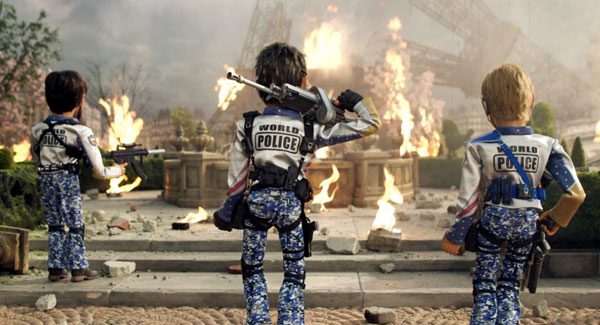
Back in ’04, whether you were up in arms over the United States’ recent efforts to cast itself as a big, dumb superpower, or just in the mood for a great extended puke scene, Trey Parker and Matt Stone’s puppet action movie was just what the doctor ordered. From songs that pair Top Gun cheese with W. administration arrogance to brilliant send-ups of action movie cliches and vigorous rounds of celebrity lambasting, Team America makes you view its inherent social commentary through tears of riotous laughter.

16. Three … Extremes (2004)
What Hollywood did to Japanese horror movies in the 2000s is way more horrific than the remakes themselves. If you had to sit through The Ring 2, this trio of Asian short films will remind you that movies can be awfully scary. After taking in “Dumplings,” an instant classic of a horror story in which an aging actress will consume anything to hold onto her youth, chances are you’ll forget about that grudge you were holding onto, as well as The Grudge.
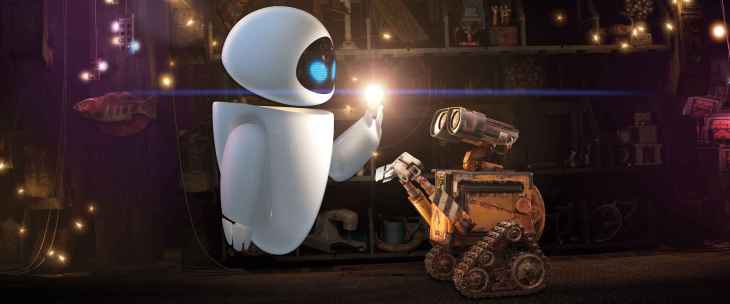
15. Wall-E (2008)
A largely dialogue-less, computer-animated adventure about robot love, Wall-E proved once and for all that family movies don’t need wisecracking animals vomiting out early-’90s catchphrases to be successful (e.g. “Shake what yo mama gave ya!” – Alvin from Alvin and The Chipmunks: The Squeakquel). A timeless romance between a pair of machines that have more heart between them than the whole obese, drone-like human race, Wall-E challenges the mind and stirs the spirit.

14. Napoleon Dynamite (2004)
That rare case of a cultural phenomenon stuffed with one liners that don’t get old, Napoleon Dynamite is a humble geek love story that withstood the most unexpected merchandising blitz of the decade (e.g. Liger stickers were on sale at my gas station). Which only adds to its charm, of course. A hopeful story that celebrates teenage nerd-dom for all of its ugliness, discomfort and facades of superiority, rooting for Napoleon Dynamite feels so good that by the end, you’re ready to start all over again.
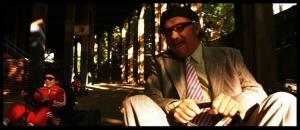
13. The Royal Tenenbaums (2001)
Have the movies ever given us a family more impossibly eccentric than the Tenenbaums? They’re a mess of obsessive-compulsiveness, shattered dreams, blasé attitudes and chronic self-obsessions. And thanks to director Wes Anderson’s inimitable quirks, these cartoonishly dysfunctional characters are also thoroughly lovable. But while Anderson’s style makes The Royal Tenenbaums special (e.g. the closet full of board games, the matching track suits, Royal’s stab-happy best buddy), its themes of love and redemption make it timeless.

12. The Station Agent (2003)
When you’re in need of a friend, the last thing you want to hear is that you just have to “let it happen.” The Station Agent is about the merit of that advice, following the lives of three characters, all outcasts in their different ways, as they slowly and organically become friends. A sweet, quiet ode to the power of human companionship, Thomas McCarthy’s movie is an affirmation for anybody out there who’s ever felt alone (which is all of us, I presume).

11. Signs (2002)
Signs is a movie about loss, belief, family bonds and murderous aliens. As a thriller, it does all the right things, taunting the senses instead of assaulting them, using a rustling cornfield or the whimpering of a dog to strike fear in our hearts. As a drama, it tugs at our heartstrings without insulting them, detailing the dissolution and reconstruction of a family, in parallel to the spiritual doubt and reaffirmation of its minister father, played with surprising force by Mel Gibson. M. Night Shyamalan may not be capable of movies like this anymore, but the tender comedy, sharply honed horror and stark spirituality of Signs is evidence of a master at work.

10. Step Brothers (2008)
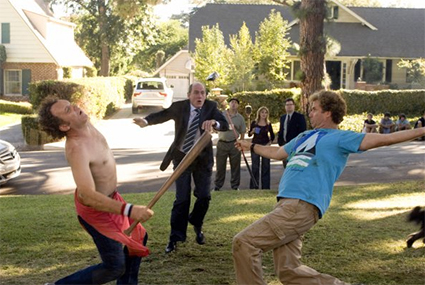
Of writer/director Adam McKay’s trilogy of attempts at groundbreaking absurdity, this is the purest – take a loose concept (40-year-old guys still living with their parents who become stepbrothers), give it to Will Ferrell and John C. Reilly, and film what happens. The result is an anarchic comedy masterpiece, in which the leading men lead each other down increasingly juvenile, wildly funny paths, and supporting players Richard Jenkins, Adam Scott and Kathryn Hahn turn in hilarious performances as they play along.

9. Gosford Park (2001)
Gosford Park is a sumptuous treat in every way. From the detailed country house interiors to the beautifully interwoven story and tremendous ensemble of actors, Robert Altman’s last great achievement is an even larger embarrassment of riches than the combined bank accounts of its characters. A completely engrossing whodunit and exploration of classist attitudes in 1930s England, this is a period piece that looks old, but will never feel that way.
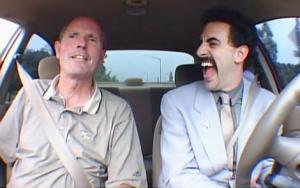
8. Borat (2006)
Most of the social experiment-as-entertainment projects of the 2000s were forgettable, from the trash barge of reality TV shows that began with Survivor to gimmicky documentaries like Super Size Me. But there was nothing formulaic or remotely trite about Borat, a hilarious and harrowing practical joke of a movie that shines a harsh light on our country’s collective ethnocentrism, mining it for several of the most explosively funny moments of the decade.

7. Capturing the Friedmans (2003)
A common complaint against a poorly told story is that there are no grey areas – the good guys are Christ-like, the bad guys are repugnant. Few movies have explored the grey areas of real human existence like Capturing the Friedmans, a documentary about a family destroyed by the horrible compulsions of its father, the questionable tactics of the people who investigated his crimes, and the son who may or may not have deserved to get swept up in it all. Splicing modern day interviews with home movies that the family filmed as it was disintegrating, Friedmans leaves you disturbed, shaken and completely unsure whose side you were on.

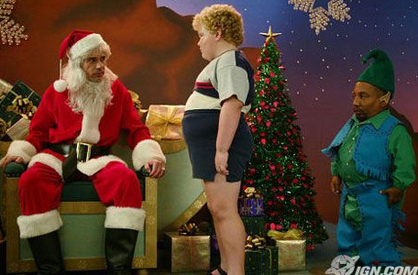
6. Bad Santa (2003)
Christmas is supposed to be about selflessness, doing whatever it takes to make your loved ones happy. Which makes Bad Santa the perfect Christmas movie. Sure, this masterful piece of black comedy includes alcohol abuse, filthy language, armed robbery and child beating, but it also relays a strong message about the importance of family – when you care about somebody enough to bleed for their Christmas present, that’s the reason for the season.

5. There Will Be Blood (2007)
In theory, the American dream is an idyllic, magnetizing thing, a world of big, clean houses, white picket fences and laughing children. In practice, it’s dark and destructive, but just as magnetic. This concept is at the heart of Paul Thomas Anderson’s mesmerizing There Will Be Blood, an imperialist allegory that positions cutthroat businessmen and fiery men of religion as two sides of the same twisted coin. Daniel Day-Lewis’ monumental performance as the heartless, fascinating oil man Daniel Plainview is one for the ages, as is Anderson’s crackling script and Jonny Greenwood’s sparse, disturbing score.

4. The Devil’s Backbone (2001)
Children banding together to fight a frightening common enemy – in terms of horror stories, it’s about as original as a monster under the bed. But in Guillermo del Toro’s enthralling, Spanish Civil War-era tale The Devil’s Backbone, the enemies are human, the group of children includes the spirit of a murdered orphan, and the overarching emotion is one of tenderness, not fear. An effective exploration of youth during wartime and man’s capacity for evil, this is a ghost story with soul.

3. Brokeback Mountain (2005)
Brokeback Mountain was the great romance of the past decade, featuring two characters who fall in love against all odds, and not in a Serendipity kind of way. Under Ang Lee’s masterful eye, the story of Ennis and Jack’s pure, intense, ill-fated love is told with the quiet simplicity of a Wyoming landscape. There are no speeches in the rain or last-second rushes to the airport here, just two soul mates whose feelings for each other are demonized by society. And when the time does come for high drama, Lee gets it from two shirts, a faded photograph and three muttered words – “Jack, I swear.”

2. Spirited Away (2001)
For all of the highly conceptualized, visually stunning animation that the 2000s had in store, none of it came close to Spirited Away, the heart song of the legendary Hayao Miyazaki and one of the most imaginative fairy tales this side of Through the Looking Glass. When the main character, Chihiro, and her parents stumble across an enchanted, abandoned theme park en route to their new hometown, the ensuing adventure bubbles over with charming encounters, unexpected friendships, bizarre terrors and universal lessons about greed, loyalty and growing up. An extravaganza for the eyes, and a joyride for the mind.

1. The Lord of the Rings (2001-03)
Three epic-length movies with gargantuan budgets, heavily reliant on unproven CGI technology, tackling the “unfilmable” Holy Grail of fantasy stories, directed and co-written by a guy known mostly for campy horror flicks. This doesn’t sound like the recipe for the crowning achievement of the decade, but Peter Jackson’s The Lord of the Rings trilogy is just that – a mindblowing distillation of J.R.R. Tolkien’s intricately interwoven and minutely detailed story, delivered with the kind of fanboy loyalty and filmmaking magic that turns the grumpiest naysayers into born again devotees. (Yeah, I know they’re three movies, but I didn’t want them to suck up three spots on the list; plus, I’m still not sure what my favorite installment is.) For all of their technical achievements, which made us believe it was Middle Earth we were looking at, it’s the adapted screenplays that made these movies sing. Without skimping on the battles, creatures and other eye candy, Jackson, Philippa Boyens and Fran Walsh made a point to develop these characters in concert with the books, not shying away from depictions of love between Frodo and Sam, capturing Gandalf’s aloofness along with his power, treating Gollum’s tragic, schizophrenic struggles with a sympathetic flair. These 10 hours of film show us how strength and salvation can come from the most unexpected places – like the quiet gardens of The Shire, or the ambitious minds of New Zealanders.














 My wife and I watched Mike Nichols’ film version of Who’s Afraid of Virginia Woolf? again recently. What a well-written and executed sum’ bitch. I know this makes me sound like a smelly curmudgeon, but it got me wondering why we don’t get movies like this anymore. Sure, we get movies based on plays, but they don’t seem to be put together in a way that lets the original work breathe. After seeing the film version of Doubt, with its painstaking attention to visual details and script that insults our intelligence (well, the last scene does, at least), it’s hard to see how the thing could make an arresting piece of theater.
 sweensryche.com